When deciding between indoor and outdoor lifestyles for your cat, consider health, safety, and ecological effects. Indoor cats generally live longer, safer lives but need mental and physical stimulation. Outdoor cats face dangers like traffic and disease, plus they impact local wildlife. Regular vet consultations are essential for both lifestyles to tailor health and enrichment plans. Consider safe alternatives for outdoor time, like catios. To uncover more insights, explore further.
Key Takeaways
- Indoor cats generally have longer lifespans, living 10 to 15 years compared to outdoor cats’ 2 to 4 years.
- Outdoor cats face higher risks of diseases and injuries from traffic and predators, requiring regular veterinary check-ups.
- Indoor environments need enrichment like toys and climbing structures to keep cats mentally and physically stimulated.
- Outdoor cats can significantly impact local wildlife, resulting in millions of bird and native species deaths annually.
- Safe outdoor alternatives, such as catios or supervised outdoor time, offer controlled exploration for indoor cats without free-roaming risks.
Choosing the Best Lifestyle for Your Cat
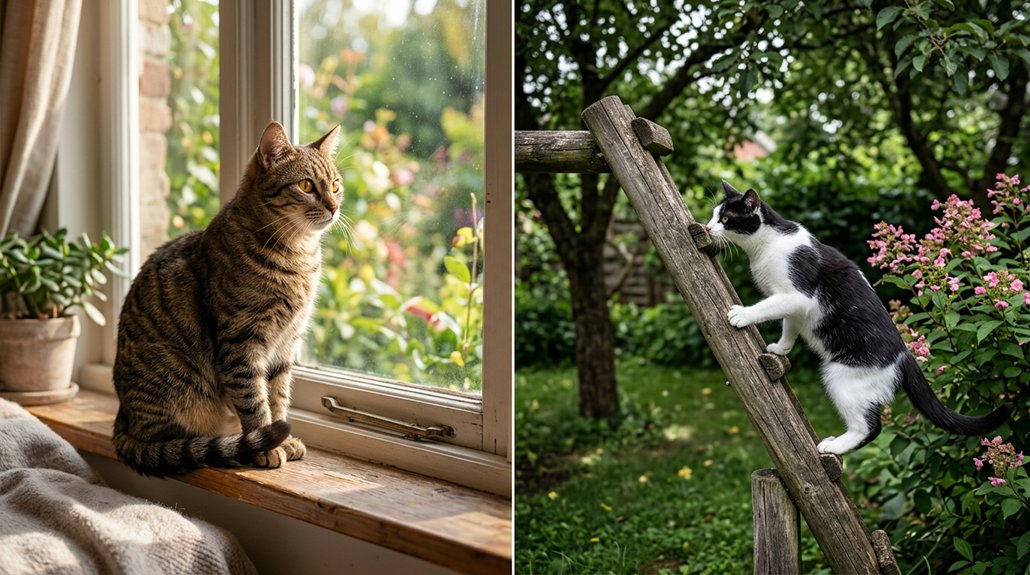
When you’re deciding on the best lifestyle for your feline companion, it is crucial to weigh the benefits of an indoor versus outdoor existence. Indoor cats enjoy a longer lifespan, typically living between 10 to 15 years. To keep them mentally and physically engaged, prioritize indoor enrichment. Create a stimulating environment with climbing structures, interactive toys, and cozy resting spots. These additions help mitigate boredom and promote healthy activity levels.
On the other hand, outdoor exploration poses many risks, such as traffic, predators, and diseases. If your cat craves the outdoors, consider safer alternatives like building a catio, harness training for walks, or supervised outdoor time. These options provide the thrill of exploration while ensuring your cat’s safety and longevity.
Consulting a Veterinarian for Lifestyle Advice
Consulting a veterinarian is key to creating a tailored lifestyle plan for your cat, whether they live indoors or outdoors. They provide insights into health and safety that are customized to your cat’s personality and history, ensuring both physical and mental well-being. Regular check-ups will guide you in merging enrichment strategies with essential preventive care, offering a balanced approach to your cat’s life.
Tailored Cat Lifestyle Plans
Although each cat is unique, consulting a veterinarian is essential in creating a lifestyle plan that caters to your pet’s individual needs. Veterinarians provide tailored advice that addresses both personalized enrichment and lifestyle adaptability, ensuring your cat’s well-being. By collaborating with a vet, you’ll gain insights on creating enrichment activities suited to your cat’s personality and environment.
- Discuss specific needs to optimize both indoor and outdoor experiences.
- Develop preventive care strategies with vaccinations and regular health screenings.
- Schedule regular check-ins to adjust plans as your cat grows and their behaviors change.
A vet’s insights help balance safety with enriching experiences, whether your feline companion thrives indoors or enjoys outdoor adventures. This approach promotes a healthy, happy life for your cat.
Health and Safety Guidance
Understanding your cat’s health and safety is essential, whether they roam outdoors or stay inside. Consulting a veterinarian gives you valuable insights into cat behavior, ensuring you’re equipped to make informed choices. Regular health screenings are crucial for both indoor and outdoor cats. Outdoor cats, however, face more exposure to parasites, requiring vigilant prevention measures.
| Key Aspect | Indoor Cats | Outdoor Cats |
|---|---|---|
| Health Screenings | Regular check-ups | More frequent due to risks |
| Behavior | Enrichment recommended | Natural behaviors are expressed |
| Safety Measures | Secure environment | Supervised or safe outdoor time |
Enrichment Recommendations
When it comes to ensuring your cat’s well-being, integrating enrichment into their daily routine is a key component that veterinarians often highlight. Consulting a veterinarian is essential for understanding your cat’s specific enrichment needs, tailored to their health, age, and personality. Enriching your cat’s lifestyle involves engaging them in:
- Physical activity: Use interactive toys and climbing structures to encourage exercise.
- Behavioral enrichment: Provide scratching posts for natural behaviors and stress relief.
- Mental challenges: Introduce sensory stimulation through variety-rich play sessions.
Veterinary advice can be indispensable, offering insights to prevent behavioral issues like boredom or stress. Such consultation aligns enrichment initiatives with overall wellness goals, ensuring your indoor cat enjoys a happier, healthier life. Regular evaluations keep your strategy effective and adaptable.
Understanding Indoor vs. Outdoor Cat Differences
When deciding between an indoor or outdoor lifestyle for your cat, it’s essential to weigh the health and safety risks each environment presents. Indoor cats generally enjoy a longer lifespan and are less likely to contract diseases, while outdoor cats face hazards like traffic, wildlife, and exposure to infections such as FeLV and FIV. Additionally, consider the environmental impact and the structured enrichment needed for indoor cats versus the natural stimulation outdoor cats receive.
Health and Safety Risks
Many pet owners face essential decisions regarding their cat’s lifestyle, with considerable health and safety risks tied to whether a cat is primarily kept indoors or allowed to roam outdoors. Outdoor hazards include traffic, wildlife, and toxins, which drastically reduce a cat’s lifespan to just 2 to 4 years, compared to the 10 to 20 years seen in indoor cats.
Health disparities arise from:
- Disease Exposure: Outdoor cats face higher risks of Feline Leukemia (FeLV) and Feline Immunodeficiency Virus (FIV).
- Parasites: Free-roaming cats often battle fleas and ticks; indoor cats benefit from regulated environments.
- Injury and Toxins: Accidents and exposure to harmful substances are prevalent among outdoor cats.
Indoor benefits, paired with routine veterinary care, can greatly enhance your cat’s lifespan and overall well-being.
Environmental Impact Considerations
Although you might think letting your cat roam outdoors gives it a more natural lifestyle, the environmental impact tells a different story. Outdoor cats contribute to the decline of native species, with considerable consequences for local wildlife and biodiversity. They’re responsible for the loss of hundreds of millions of birds and small mammals annually, disrupting ecosystems. By keeping your cat indoors, you greatly aid bird conservation strategies and help preserve vulnerable wildlife species. Indoor cats help prevent the predation threat that exacerbates environmental challenges posed by stray and feral cat populations. Effective feral cat management can mitigate overpopulation and health risks. As a conscious pet owner, opting to keep your cat indoors is a critical step in reducing their negative environmental impact.
Lifespan and Longevity Factors
Indoor and outdoor lifestyles considerably affect a cat’s lifespan, with indoor cats living up to 10 to 15 years on average, while their outdoor counterparts often only reach 2 to 4 years. This stark contrast in lifespan expectations results from differing health factors. Outdoor cats face multiple hazards, from traffic and predators to weather extremes. Additionally, studies indicate that a significant number of outdoor kittens don’t survive past six months due to these risks. Indoor cats, however, enjoy greater longevity due to:
- Reduced exposure to infectious diseases and parasites.
- Controlled surroundings that decrease trauma occurrences.
- Enhanced medical care, including regular vet check-ups.
Adopting an indoor lifestyle guarantees you’re providing an environment that minimizes potential health risks and promotes a longer, healthier life.
Protecting Your Cat From Diseases: Health Risks
When deciding whether your feline friend should be an indoor or outdoor cat, it’s imperative to contemplate the increased health risks associated with outdoor life. Outdoor exposure increases the chance of encountering infectious diseases like FeLV and FIV. Emphasize preventive measures such as vaccinations and regular health screening to maintain feline wellness. Disease awareness is essential; understand signs of illness symptoms to spot problems early. Prioritize parasite control, as outdoor environments heighten risks of fleas, ticks, and worms, leading to serious health issues. Moreover, zoonotic risks, such as ringworm, can affect both cats and humans. Balancing your cat’s lifestyle with these considerations is important. By focusing on vaccination importance and health protocols, you can safeguard your cat’s health effectively.
Navigating Hazards: Outdoor Cat Safety Concerns
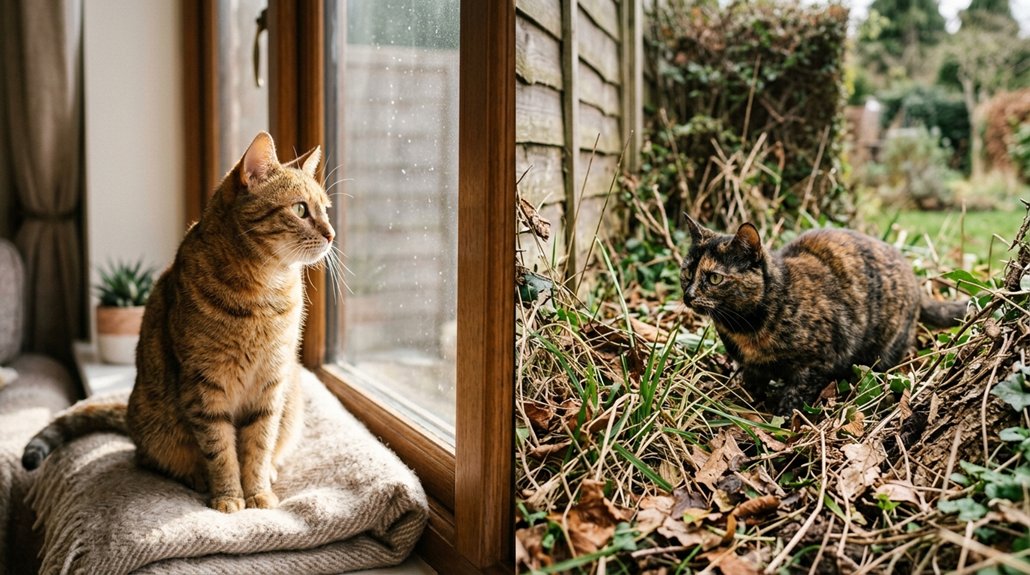
As you consider the adventurous allure of letting your cat roam outdoors, it’s vital to understand the myriad hazards they face. Outdoor exploration, while fulfilling natural cat behavior, comes with significant risks. Traffic is a major concern, as many cats suffer fatal injuries from vehicle collisions. Wildlife predators like coyotes and raccoons also present dangers, potentially causing serious harm. Additionally, outdoor environments expose them to various toxins and infectious diseases.
Keep these points in mind to enhance safety:
- Traffic Risks: Monitor areas with heavy traffic to minimize fatal accidents.
- Predatory Threats: Be aware of local wildlife that could endanger your cat.
- Disease Exposure: Guarantee your cat is vaccinated to reduce the risk of contracting illnesses like feline leukemia.
Staying informed helps protect your outdoor-exploring cat.
How Outdoor Cats Affect Wildlife
While ensuring the safety of your outdoor cat is paramount, it’s also important to contemplate the broader environmental implications of their outdoor activities. Cats’ natural predatory behavior means they pose significant threats to local wildlife, including birds and small mammals. Each year, outdoor cats contribute to hundreds of millions of wildlife deaths, disrupting ecological balance. Studies show they’re responsible for 60-100 million bird deaths annually in the U.S. alone. This impact is particularly severe near bird feeders and nesting sites, areas teeming with vulnerable species. The presence of free-roaming cats can lead to imbalances in biodiversity by preying on native species. To mitigate these effects, consider responsible pet ownership measures, like restricting outdoor access and supporting local wildlife conservation efforts.
Enrichment for Indoor Cats: Keeping Them Stimulated
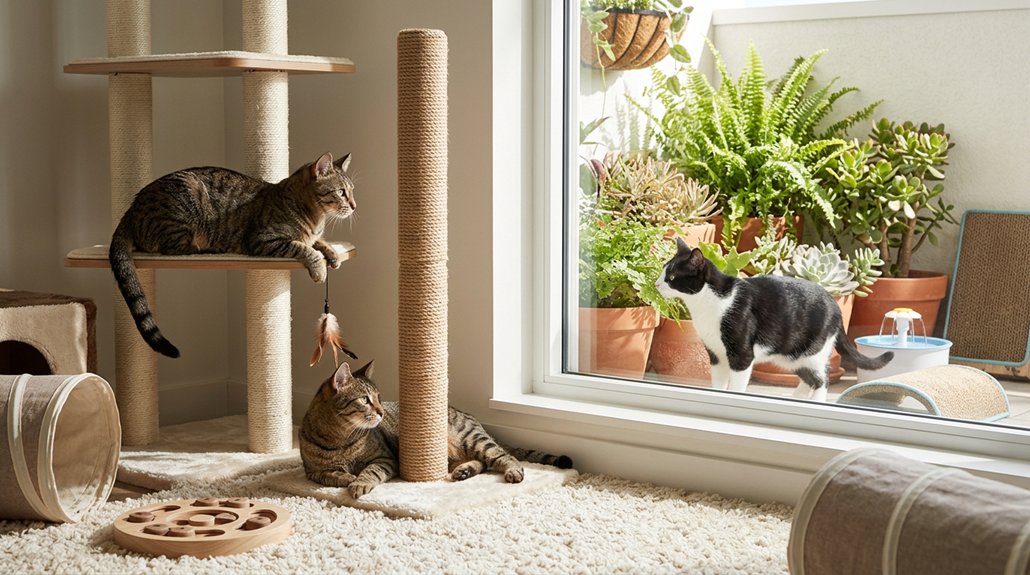
Providing adequate enrichment for indoor cats is essential to keeping them mentally and physically stimulated. To create a fulfilling environment for your feline friend, consider these important elements:
- Interactive toys: Use puzzle feeders and engaging items that boost mental stimulation.
- Climbing structures: Cat trees and shelves support natural climbing urges and provide essential exercise.
- Window perches: These allow mesmerizing views of the outside world, stimulating their curiosity and senses.
Implement a rotation strategy with these items to prevent boredom. Regularly swapping toys and structures maintains interest and encourages your cat to explore and play. Additionally, dedicate time for interactive play with your cat. This not only strengthens the bond between you and your pet but also promotes their health and happiness.
Outdoor Dietary Habits and Health Implications
Although outdoor cats may appear self-sufficient by catching and eating small animals, these hunting habits can have significant health and ecological implications. Cats’ natural hunting instincts drive them to catch prey regardless of being fed at home, potentially disrupting local wildlife populations and increasing mortality rates. Moreover, outdoor dangers such as parasites (fleas, ticks, worms) latch onto your cat when they consume infected prey, leading to health complications. Regular vet visits are vital for monitoring and addressing these issues. Also, consuming rodents not only exposes them to potential toxins and parasites but also raises the risk of zoonotic diseases impacting human health. It’s essential to understand these risks before allowing your cat to roam outdoors freely.
Exploring Safe Outdoor Alternatives for Cats
When considering alternatives for allowing your cat to experience the outdoors safely, understanding the balance between stimulation and health precautions is key. Creating safe outdoor spaces, such as catios, guarantees your feline enjoys fresh air while staying protected from external dangers like predators and traffic. Additionally, leash and harness training provides a supervised exploration opportunity, letting your cat relish outdoor adventures without the risks of free-roaming.
Here are practical ways to enrich your cat’s outdoor experience:
- Build a catio: An enclosed structure keeps your cat secure while feeling the breeze.
- Leash train your cat: Allows controlled adventures, perfect for energetic explorers.
- Supervised outdoor time: Use fenced yards for safe, monitored play, keeping threats at bay.
Frequently Asked Questions
How Can I Transition an Outdoor Cat to an Indoor Lifestyle Smoothly?
Start by gradually introducing them to indoor spaces to avoid sudden behavioral changes. Provide environmental enrichment like toys, scratching posts, and climbing trees to keep them stimulated and healthy. Consistent routines will ease their change considerably.
What Personality Traits Are Suited for Exclusively Indoor Cats?
You’re looking for cats with a playful demeanor and an independent nature. They’ll thrive indoors if they’re curious yet not anxious when not exploring. These traits guarantee your cat remains mentally stimulated and happy without outside access.
Are Certain Cat Breeds Better Suited for Outdoor Life?
Certain breeds, like Bengal and Norwegian Forest cats, might be better suited for outdoor life due to their natural adaptability and high activity levels. Consider their health needs and environment to guarantee they thrive safely outdoors.
How Do Indoor and Outdoor Environments Impact a Cat’s Behavior?
When it rains, it pours; indoor environments curb feline aggression with structured environmental stimulation, while outside, cats might face aggression due to territory conflicts. Balance stimulation indoors to prevent stress and guarantee a healthy, happy lifestyle.
Can Technology Enhance the Indoor Cat Experience?
Yes, technology can enhance your indoor cat’s experience by using smart toys and interactive feeders for mental stimulation. Cat cameras guarantee safety, while environmental enrichment provides varied activities, keeping your feline companion healthy and engaged indoors.
Conclusion
In deciding between an indoor or outdoor lifestyle for your cat, it’s important to weigh health risks and environmental impacts. Curiously, indoor cats live an average of two to three times longer than outdoor cats, thanks to reduced disease exposure and accidents. Consult your vet to tailor the best lifestyle for your feline. Whether you enrich your indoor cat’s life or explore outdoor alternatives, prioritize safety and wellness to guarantee a fulfilling, healthy life for your furry companion.