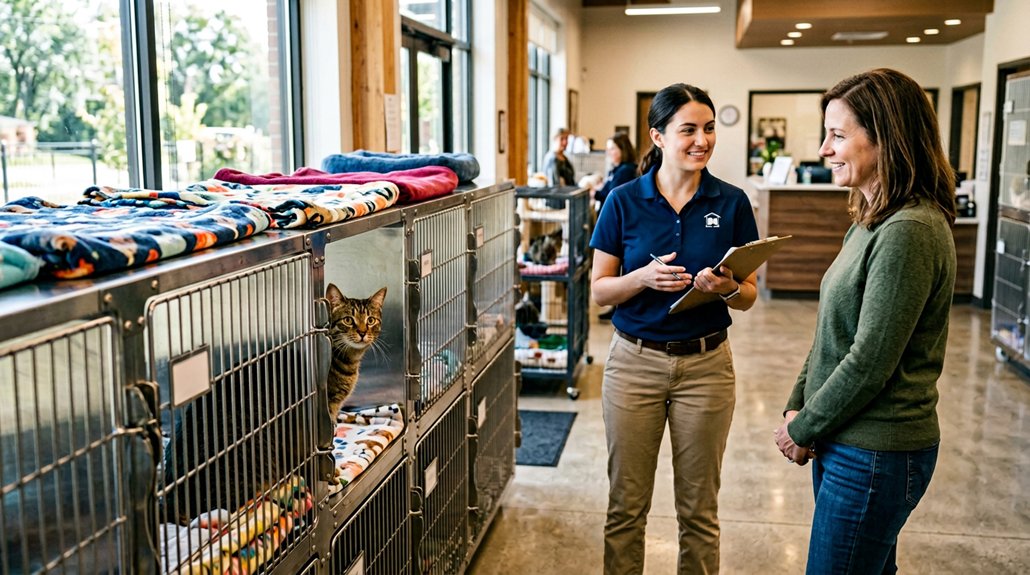
When choosing a cat shelter or rescue, match your lifestyle with the cat’s temperament. Evaluate the shelter’s cleanliness, veterinary care, and staff interactions. Reputable shelters offer support like return options and detailed cat histories. Engage with staff for insights and build rapport for a smooth adoption process. Seek feedback from past adopters for extra assurance. Considering these factors guarantees a successful adoption experience. Explore further to discover all you need for a fulfilling adoption journey.
Key Takeaways
- Evaluate the shelter’s cleanliness and observe staff interactions to gauge care quality and atmosphere.
- Confirm shelters offer spaying, neutering, and vaccinations as part of comprehensive veterinary care.
- Ensure available detailed information on each cat’s history, personality, and health conditions.
- Verify the shelter’s return policies and post-adoption support services for adaptability.
- Seek feedback and reviews from previous adopters to assess shelter reputation and experience.
Match Cat Temperament With Your Lifestyle
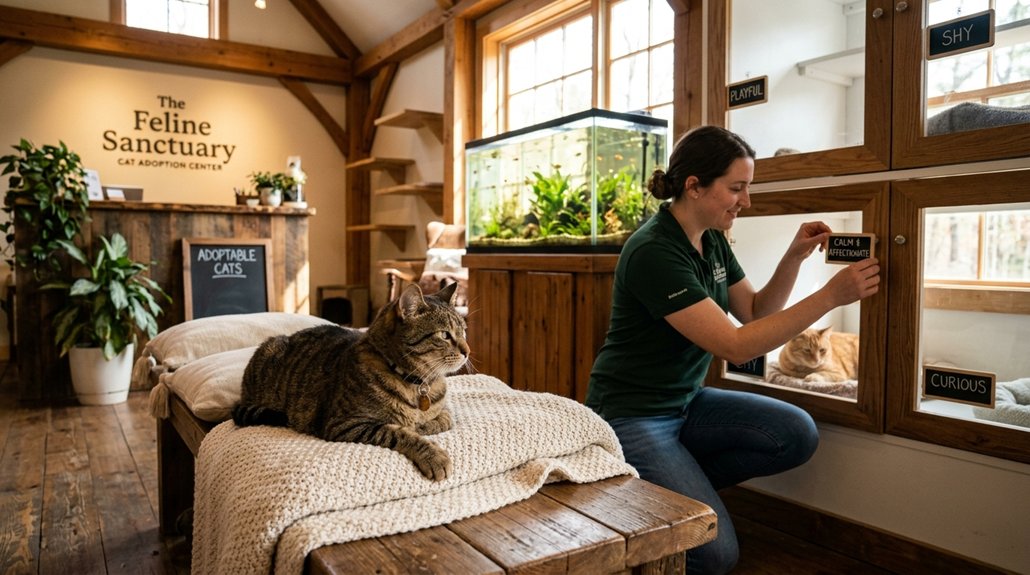
When choosing a feline companion, consider your daily routine and energy levels to guarantee a good fit between the cat’s temperament and your lifestyle. If your home is lively, high kitten energy might match perfectly with creative playtime, but delicate care is needed, especially around young children. On the other hand, an adult cat typically comes with a more settled temperament, suitable for quieter homes or individuals often pulled away by travel or long work hours. Breeds differ, with some naturally more playful while others are content with solitude. Consult knowledgeable shelter staff for insights connecting a cat’s behavior to your lifestyle—it’s essential for harmonious living. Reflect on your commitments and space to welcome a kitty that will complement your life beautifully.
Check Shelter Conditions
A vital step in choosing a cat for adoption is thoroughly evaluating shelter conditions. It’s important to verify the shelter provides clean and spacious housing, reflecting the quality of care and environment the cats receive. Pay close attention to the provision of veterinary care, which should include spaying, neutering, and vaccinations, to assure the health of the cats.
| Factors to Evaluate | Importance |
|---|---|
| Shelter Cleanliness | Indicative of care and maintenance |
| Veterinary Care | Guarantees health and readiness for adoption |
| Staff Interaction | Promotes a positive environment |
| Knowledgeable Staff | Facilitates better matching |
Observing staff interaction with cats is vital; engaged and happy cats typically signal a stimulating shelter atmosphere. Prioritize finding a knowledgeable team who can discuss each cat’s history and personality, aiding in a suitable adoption match.
Understand Shelter Support
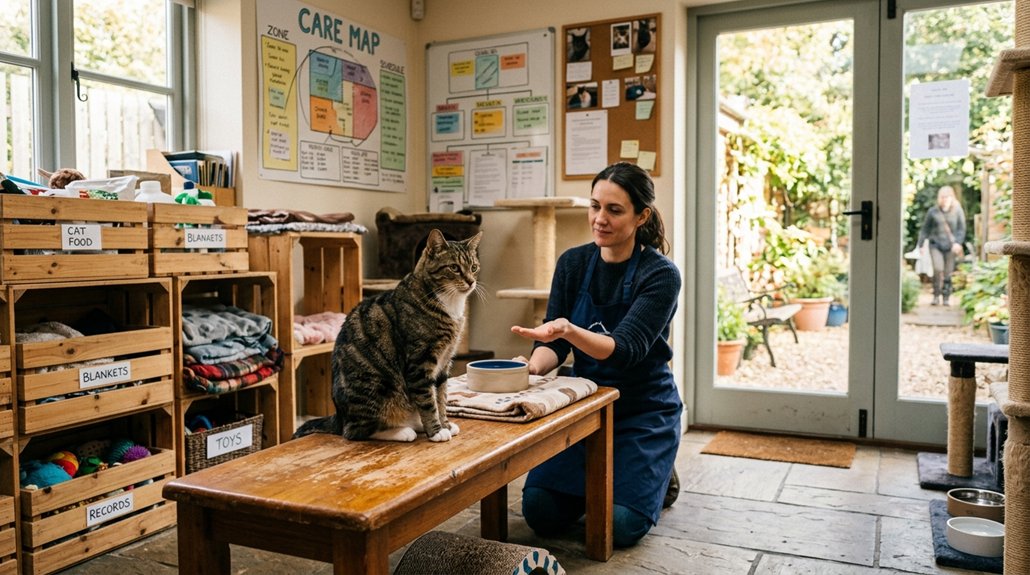
Although choosing the right shelter or rescue for adopting a cat can be challenging, understanding the level of support offered by these organizations can make a significant difference in your adoption journey. A reputable shelter guarantees that all cats receive regular veterinary care, including spaying, neutering, and vaccinations. This commitment to health assures your new companion starts off on the right paw. Additionally, good shelters often offer the option to return the pet if circumstances change, reflecting their dedication to animal welfare.
Reputable shelters ensure cats receive vital veterinary care, starting your adoption on a healthy foundation.
Look for shelters that provide:
- Detailed information about each cat’s history and personality
- Extensive resources on cat care and routine maintenance
- Behavioral training guidance
- Interactive staff and volunteers
- Strong return policies to support adopters
Such support creates a smooth change to your home.
Connect With Shelter Staff
Engaging directly with shelter staff is essential in finding the perfect feline companion. Their expertise offers crucial cat personality insights, informing you of each cat’s temperament and behavior. Don’t hesitate to ask questions about health history, vaccinations, and medical conditions to make an informed decision. Open communication allows you to discover details about the cat’s background and specific needs, aiding in selecting a suitable match for your home. Building a rapport with adoption staff enriches your experience, fostering trust and support. They can guide you through the adoption process, suggest resources for a smooth change, and provide advice for integrating the cat into your life. Harness their knowledge and commitment to guarantee a successful and fulfilling adoption journey.
Seek Feedback From Other Adopters
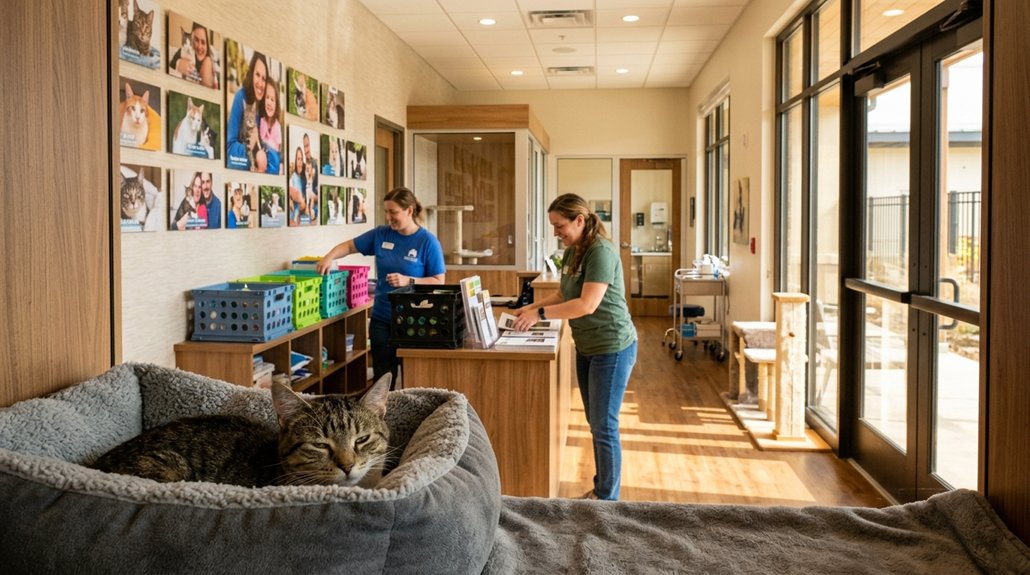
How can you guarantee you’re choosing the right shelter or rescue for adopting a cat? Seek feedback from others who have successfully navigated the adoption process. Adopter experiences can reveal much about a shelter’s reputation. Here’s how to gather valuable insights:
- Read reviews and testimonials from previous adopters to learn about their experiences.
- Engage in online forums or social media groups where cat owners share feedback about local adoption centers.
- Attend adoption events to speak directly with adopters and hear firsthand accounts.
- Inquire about post-adoption support from former adopters, asking if they received adequate assistance.
- Consult ratings or rankings from reputable organizations that evaluate shelters on their dedication to animal welfare.
This due diligence will guide you in making an informed decision.
Frequently Asked Questions
What Is the 3 3 3 Rule for Shelter Cats?
The 3-3-3 rule helps you understand the cat adjustment period. Initially, give shelter cats three days for decompression, three weeks to adapt to your home routine, and three months to reveal their unique behavior and personality fully.
Is It Better to Adopt a Cat From a Shelter or a Rescue?
It’s not about better or worse; it’s about your needs. Shelter adoptions offer variety and lower fees, while rescues provide personalized matchmaking with higher care. Consider both adoption benefits and rescue differences when deciding what’s right for you.
What Is the #1 Cause of Death in Cats?
Did you know up to 30% of senior cats develop chronic kidney disease? CKD is the leading cause of death in cats, affecting cat health by hindering waste filtration and altering feline behavior due to discomfort and illness.
Do Cats Feel Abandoned When Rehomed?
Yes, cats do feel abandoned when rehomed. Their strong emotional bonds with caregivers and environments are disrupted. Feline attachment styles suggest gradual changes help them cope with new situations and reduce anxiety, promoting healthier adjustment.
Conclusion
By choosing the perfect shelter, you’re not just adopting a cat; you’re gaining a lifelong companion who’ll fill your days with joy. Remember to match their temperament with your lifestyle, ensuring it’s a purr-fect fit. Don’t forget to inspect the shelter’s conditions and understand the support offered. Engage warmly with the shelter staff. Finally, seek advice from other adopters—it’s like revealing a treasure chest of insights. Your heart and home will thank you immensely!