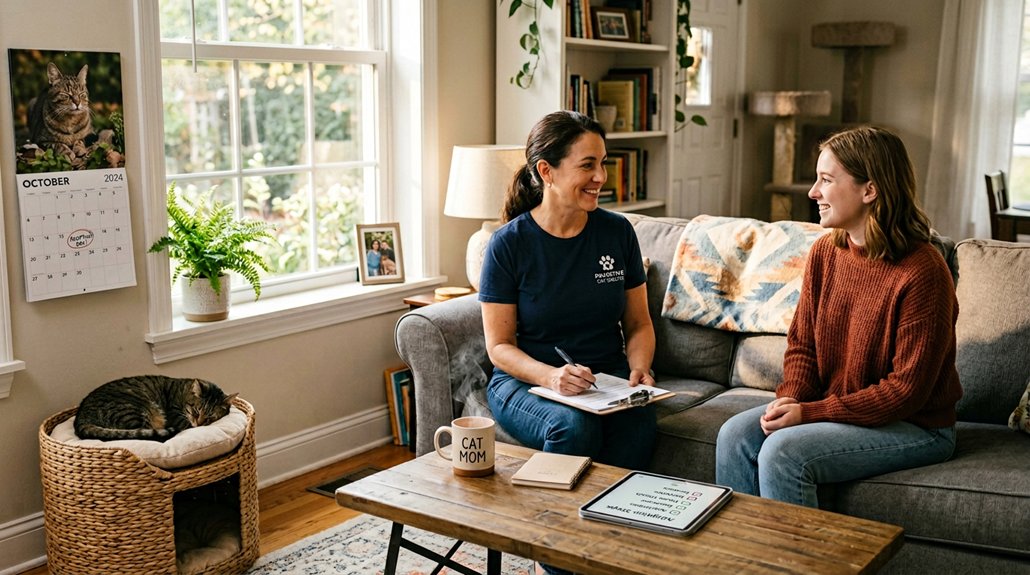
While waiting to adopt a cat, create a peaceful sanctuary room with essentials like a litter box, food, water, and toys. Secure potential hazards in your home and gather quality cat supplies, including sturdy dishes and a scratching post. Understand feline behavior to guarantee a stress-free adjustment. Schedule a first vet visit and plan for routine enrichment activities for mental stimulation. Establish a consistent daily routine, and there’s more you can do to facilitate a smooth change.
Key Takeaways
- Prepare a cat sanctuary room with essentials like food, water, litter, and hiding spots for the new cat’s comfort.
- Purchase sturdy, easy-to-clean food and water bowls with high-quality cat food and unscented clumping litter.
- Cat-proof your living space by removing hazards like toxic plants and securing dangling cords to ensure safety.
- Schedule a veterinary visit within the first week to discuss wellness, vaccinations, and preventive care options.
- Plan a structured routine with regular playtimes and grooming to encourage bonding and stability.
Set Up a Cat Sanctuary Room

When preparing to welcome a new feline friend into your home, establishing a sanctuary room can be an essential step in ensuring a smooth adjustment. This haven helps minimize cat anxiety by providing a quiet, controlled environment for your cat to explore and feel safe. Choose a small, tranquil space like a guest bedroom, equipped with essentials such as a litter box, food, water, bedding, toys, and multiple hiding spots. These areas, like cardboard boxes, allow your cat to retreat as necessary while encouraging gradual exploration, an effective socialization technique. Sit quietly in the room daily, offering treats and gentle interactions to build trust. This isolation also protects against potential illnesses from other pets, facilitating a healthy acclimation period.
Collect Essential Cat Supplies
Before bringing your new cat home, it’s essential to gather important supplies that will cater to their health and comfort needs. Start with sturdy, easy-to-clean food and water bowls, making sure they’re the appropriate size. Prioritize high-quality cat food to support ideal cat health. A litter box with unscented clumping litter offers a safe, comfortable bathroom experience. For feline grooming, incorporate a scratching post or pad, helping maintain healthy claws and providing an outlet for natural behaviors. A soft bed or blanket guarantees a cozy resting place. Enhance safety with a collar and ID tag, significant if they venture outdoors. Finally, keep tasty treats on hand; they’re invaluable for socializing and establishing trust with your feline friend.
Cat-Proof Your Living Space

While waiting to welcome your feline friend, focus on securing potential hazards like open windows and dangling cords to guarantee their safety. It’s important to lock away chemicals, medications, and cleaning supplies to prevent accidental ingestion by curious paws. Additionally, designate safe areas by closing off restricted zones and checking for any gaps where your cat might escape, ensuring a harmonious and secure environment.
Secure Dangerous Items
Transform your living space into a safe haven for your soon-to-be feline friend by meticulously identifying and securing potential hazards. Many common houseplants, like lilies and philodendrons, are toxic to cats. It’s vital to remove these life-threatening plants. Equally important is securing hazardous chemicals—lock household cleaners away to prevent accidental ingestion. Dangling cords and wires pose risks of entanglement, chewing, and electrical shock. Secure or hide these objects to protect your curious cat. Additionally, breakable items should be moved or replaced to prevent injury caused by climbing mishaps.
- Identify and remove toxic plants
- Secure hazardous chemicals in locked cabinets
- Tie up or hide dangling cords and wires
These actions help guarantee you’re welcoming your cat into a secure, nurturing environment.
Prevent Escape Routes
Safeguarding your living space against unplanned feline escape demands diligence and attention to detail. First, confirm all windows and doors are securely latched, as even small gaps can be prime escape routes. Consider implementing escape prevention safety measures like using window screens and sturdy door guards. Minimize hazards by removing or securing dangling cords and blinds, which could tempt a curious climber. It’s vital to keep hazardous chemicals and potentially toxic plants out of reach to prevent accidental ingestion. Restrict access to off-limits areas with baby gates or closed doors, especially places like basements or garages. Finally, designate a safe zone for your cat, ensuring essential items are readily available and there’s no easy escape route during the adjustment.
Understand Feline Behavior & Needs
Acquiring an understanding of feline behavior and needs is essential for anyone considering adopting a cat, as these creatures possess unique social and environmental requirements. To begin with, familiarizing yourself with feline body language is important. Cats communicate through tail positioning, ear movements, and more, which can provide key insights into their mood and intentions.
Understanding feline behavior is crucial: body language clues reveal a cat’s mood and intentions.
Understanding their territorial instincts is just as significant. Cats are solitary hunters by nature and need well-defined boundaries to feel secure, often seeking out vertical spaces and hiding spots. Additionally, respecting their routine is critical for reducing stress and ensuring they adapt smoothly to a new home environment.
- Feline body language: interpret needs, moods
- Territorial instincts: vertical spaces, hiding spots
- Routine: consistency in feeding, play, interactions
Plan a Gradual Home Introduction

To guarantee a smooth shift for your new feline friend, start by preparing a sanctuary room with all the essentials like a litter box, food, water, and comfortable bedding, creating a safe haven as they adjust. Gradually allow them to explore the rest of the house over time, paying close attention to their comfort levels and offering reassurance. By allowing your cat to become familiar with each area at their own pace, you promote a stress-free adaptation that respects their individual needs.
Prepare Cat’s Sanctuary Room
Setting up a sanctuary room for your soon-to-be-adopted cat is a crucial step in fostering a smooth adjustment into their new home. Choose a small, quiet room like a laundry or guest bedroom for your sanctuary design, and guarantee it includes comfort items that cater to feline needs. Start by creating a reassuring atmosphere with unscented clumping litter; it’s one of their preferred choices.
- Essential Supplies: Include a litter box, bedding, food and water bowls, toys, and secure hiding spots.
- Monitor Behavior: Observe your cat closely, providing them with space to explore and approach you at their own pace.
- Timing: Allow at least two weeks for acclimation before considering wider home exploration.
Empathetically understanding your cat’s pace is crucial in guaranteeing their adjustment feels safe and welcoming.
Gradually Expand Territory
After setting up a comfortable sanctuary room, it’s important to think about gradually expanding your new cat’s living space. Begin with a confined, stress-free area complete with essentials—litter box, food, water, and hiding spots. This initial confinement is vital for reducing anxiety. Give your cat time to become familiar with this space before considering any territory expansion. Monitor them closely, waiting at least a week to guarantee they feel secure in their surroundings.
Once confidence builds, introduce additional parts of the home incrementally. For feline safety, observe their behavior attentively during this phase. You can facilitate comfort through scent swapping—exchange blankets or toys with other pets to ease the shift. Eventually, broaden their domain, prioritizing gradual comfort and exploration.
Schedule Your Cat’s First Vet Visit
As soon as your new feline friend steps paws into your home, it’s crucial to prioritize their health by scheduling a vet visit. This should occur within the first week to guarantee a thorough wellness check and establish a care routine. Bring any medical records or information from the shelter, such as vaccination history.
During the visit, address:
- Spaying or Neutering: Discuss options to prevent future health concerns and behaviors.
- Parasite Check: Cats can bring worms or fleas, so request a detailed examination.
- Health Concerns: Evaluate diet, weight, and any behavioral issues for a healthy start.
Approaching this with expert advice safeguards your cat’s best health and happiness. The initial vet visit lays the foundation for their lifelong well-being.
Select the Right Diet and Transition Plan
Selecting the right diet and carefully planning a shift can smooth your cat’s adjustment to their new home. Start by evaluating their nutritional needs to guarantee you’re providing high-quality food that matches their age and health requirements. Once your cat arrives, observe their eating behavior closely and follow a gradual change plan to prevent any gastrointestinal distress or appetite changes.
Gradual Food Transition Steps
When preparing to bring a new cat home, it’s important to know that a gradual change in diet is key to minimizing digestive upset. Begin by continuing the diet from the shelter to assess food allergies and adjust feeding schedules. Over 7–10 days, gradually mix the new food:
- Days 1-2: 75% old food, 25% new food.
- Days 3-4: 50% old food, 50% new food.
- Days 5-6: 25% old food, 75% new food.
Nutritional Needs Assessment
Understanding a cat’s nutritional needs is essential for selecting the right diet and modification plan that guarantees their health and well-being. Start by evaluating the diet variations available and seek advice from the shelter on what’s currently being fed. Mimicking their existing food initially helps prevent digestive upset. When adapting to a new diet, do so gradually over 7–10 days, adjusting from a 25%-75% mix to 100% new food. Confirm the food is high-quality and matches the cat’s age, size, and health needs since nutritional requirements differ widely among felines. Thoughtfully establishing feeding schedules supports consistency, promoting healthier eating habits. Be patient and attentive during this period to foster your cat’s well-being and gently acclimate them to their new environment.
Monitoring Eating Behavior
Monitoring your cat’s eating behavior during the initial adjustment period is essential for ensuring their adaptation and health. Close observation helps you identify eating patterns and any changes due to stress. Begin with the shelter’s food, gradually shifting over a week to prevent digestive upset. Start with 25% new food and 75% old, adjusting the ratio every two days.
- Follow a consistent feeding schedule: Feed once or twice daily based on your cat’s needs, avoiding free-choice feeding to prevent obesity.
- Ensure a slow adjustment: By day 7, aim for a complete shift to your chosen diet to support gut health.
- Enhance feeding experience: After acclimating, introduce food-dispensing toys to stimulate and enrich your cat’s mealtime environment.
Prepare Fun Enrichment Activities
While you’re keenly waiting to welcome your new feline friend, preparing enrichment activities can make a profound difference in your cat’s physical and mental well-being. Start with cat agility exercises using interactive puzzles, like DIY feeders, to stimulate their problem-solving skills. Sensory toys such as feather wands and crinkle balls can mimic natural hunting instincts, essential for physical health.
| Activity Type | Example | Benefit |
|---|---|---|
| Agility & Movement | DIY Puzzle Feeders | Problem-solving & healthy eating |
| Sensory Stimulation | Feather Wands, Crinkle Balls | Mimic hunting & enhance agility |
| Nature Observations | Window Perch | Visual stimulation & entertainment |
Don’t forget to rotate toys to keep them engaged. A cozy window perch allows for nature observations, providing mental stimulation and reducing boredom. These setups guarantee a thriving, happy environment for your pet.
Build a Routine for Your Cat
Once you’ve set up enriching activities for your upcoming feline companion, it’s equally important to establish a consistent daily routine. A structured schedule guarantees stability, aiding in smoother adjustments. Focus on integrating:
- Daily interaction: Engage in regular playtimes. This not only strengthens your bond but also provides essential exercise and mental stimulation.
- Grooming techniques: Incorporate grooming into the routine to gently acclimate your cat to being handled. This helps avoid stress and supports good hygiene.
- Feeding and litter habits: Set specific mealtimes tailored to your cat’s age and dietary requirements. Maintain litter box hygiene by scooping daily and doing a deep clean every couple of weeks.
Connect With Shelters & Resources
Many prospective cat adopters find it beneficial to connect with local shelters and utilize various resources during their wait. Shelter outreach is essential—reach out to local shelters or adoption centers to inquire about available cats and specific adoption processes. Engage with adoption counselors for tailored advice on cat compatibility and care. By attending adoption events or open houses, you can learn about different cats in a relaxed environment, which helps in understanding their personalities. Online webinars offered by animal welfare organizations provide invaluable insights into cat care, enhancing your readiness. Additionally, following shelters on social media keeps you updated on new arrivals, adoption specials, and volunteer opportunities. These connections offer important guidance on the enriching journey to cat adoption.
Frequently Asked Questions
What Is the 3 3 3 Rule for Adopting a Cat?
The “3 3 3 Rule” helps you understand a cat’s adjustment post-adoption. Expect three days of stress, three weeks bonding, and three months becoming family. Consider fostering during the adoption process for smoother changes and emotional readiness.
What Color Cat Is Least Desired?
Based on shelter preferences and cat color psychology, black cats are the least desired due to superstitions. Orange tabbies fare better. Understanding their affectionate nature can help alter perceptions, encouraging adoption and enhancing emotional well-being for both.
Can You Adopt if You Have Diabetes?
Absolutely, you can adopt a cat if you have diabetes. Isn’t emotional support essential for diabetes management? With expert feline care and consultation with your healthcare provider, both you and your new cat can thrive!
What Is “I Love You” in Cat Language?
“I love you” from a cat often emerges in slow blinks and gentle purrs. Their cat body language, like head-butting and feline meows, shows affection. Understand these signs as non-verbal cues of trust and love.
Conclusion
As you anticipate your feline friend’s arrival, every moment is a brush stroke on the canvas of your shared future. You’ve laid the groundwork with care, ensuring an environment as welcoming as a warm embrace. Like nurturing a delicate plant, your understanding of feline behavior blossoms, enriching both your lives. With each passing day, you’re not just preparing a home; you’re crafting a sanctuary. Keep your heart open, for soon, you’ll commence a journey of companionship and joy.