
Animal shelters seek cat owners who are ready for a lifelong commitment and can provide a safe, loving home. You should guarantee your home is pet-friendly, with necessary supplies and no hazards. Financial readiness for veterinary care and other expenses is vital, along with your family’s agreement on roles and responsibilities. Active participation in your cat’s health and nutrition, plus behavior management, is essential. Discover how to align your lifestyle with these requirements.
Key Takeaways
- Demonstrated commitment to providing lifelong care for the cat, recognizing their long lifespan and ongoing needs.
- Home is prepared and safe for a cat, with necessary supplies and secure spaces.
- Financial readiness to cover initial and annual costs of caring for a cat.
- Whole family is engaged and schedules allow for adequate attention and care for the cat.
- Routine veterinary care is ensured, including regular check-ups, vaccinations, and dental care.
What to Look for in Potential Cat Adoption Candidates

When considering candidates for cat adoption, it’s important to prioritize those who exhibit a genuine commitment to providing lifelong care. In the adoption process, shelters conduct thorough applicant screening to confirm you’re fully prepared for the responsibilities associated with cat ownership. This involves evaluating your long-term responsibility, factoring in that cats can live over a decade requiring ongoing care, such as vet visits and daily interaction. You must consider your living situation, confirming rental agreements allow for pets. Financial readiness is also assessed, covering initial fees, supplies, and yearly veterinary costs ranging from $300 to $500. Your willingness to provide references and undergo interviews reflects your preparedness, highlighting your genuine interest in nurturing and engaging with a cat for a successful adoption.
Ensuring Your Home Is Ready for Adoption
Before welcoming a new feline friend, it’s essential to assess your home for potential hazards from a cat’s perspective, ensuring windows and doors are secure to prevent any escapes. Next, prepare a checklist of essential supplies, including a litter box, food, and a scratching post, and have a safe room ready for your new companion’s adjustment. Finally, engage your entire household in the adoption process to share responsibilities and foster a nurturing environment for your new pet.
Safety Measures Assessment
Preparing your home for a new cat involves several essential safety measures to confirm a smooth and secure changeover for your future pet. Start by evaluating the environment from a cat’s perspective, focusing on cat proofing strategies to minimize risks such as unsecured windows and electrical cords. It’s vital for everyone in the household to be part of this assessment, as their understanding of cat care is paramount. Establishing a safe room setup will aid your cat in initially adjusting to their new home. Make sure it’s a calm, secure area before giving them full run of the house.
- Check for and remove toxic plants.
- Secure blinds and cords to avoid entanglement.
- Keep doors locked to prevent escapes.
- Monitor household hazards thoroughly.
- Engage family in safety education.
Pet Supplies Checklist
Setting up your home with the right pet supplies is indispensable for guaranteeing a smooth changeover for your new cat. Start with essential supplies like a litter box, non-plastic bowls for food and water, quality cat food, toys, and a scratching post. Supplies importance can’t be understated as they contribute to your cat’s comfort and well-being. Include a cat-approved carrier for safe transport and initial setup in a designated safe room. Prepare cleaning products for any accidents and grooming tools like brushes designed for your cat’s coat length. Ascertain identification items like collars and tags are prepared to maintain your cat’s safety. Begin with their current diet from foster care, then gradually introduce fresh vegetables and yogurt to support their health.
Family Engagement Importance
While gathering pet supplies is a tangible way to prepare for your new feline friend, it’s equally important to involve your family in the adoption process. This guarantees everyone is on board with the decision and understands the family roles involved in caring for the cat. Recognizing the adoption benefits extends beyond just gaining a pet; it strengthens family bonds through shared responsibilities.
- Discuss family roles to define who’s responsible for feeding and cleaning.
- Meet the pet together to guarantee everyone feels comfortable and ready.
- Hold family discussions to address concerns and align on the adoption benefits.
- Assess daily schedules to guarantee the cat receives ample attention and care.
- Evaluate family dynamics to guarantee compatibility with the new addition.
Engagement fosters a harmonious home environment for your pet.
Why Family Involvement Matters in Cat Adoption
When considering adopting a cat, involving every family member can greatly enhance the experience, guaranteeing it becomes a cohesive and rewarding process for both humans and the feline. Understanding family roles and establishing effective communication strategies are essential. Each member’s involvement lets everyone know their responsibilities in caring for the new cat, creating a supportive environment. This collective participation allows for compatibility assessments, making certain the pet fits well with each individual.
Family dynamics markedly influence the new cat’s adjustment period, as interactions impact its comfort and behavior. Holding family meetings can help address any challenges, encouraging open dialogue and united commitment. Engaging everyone in decision-making guarantees the adoption is thoughtful, aligning expectations and reducing potential disappointments or returns.
Introducing New Cats to Existing Pets
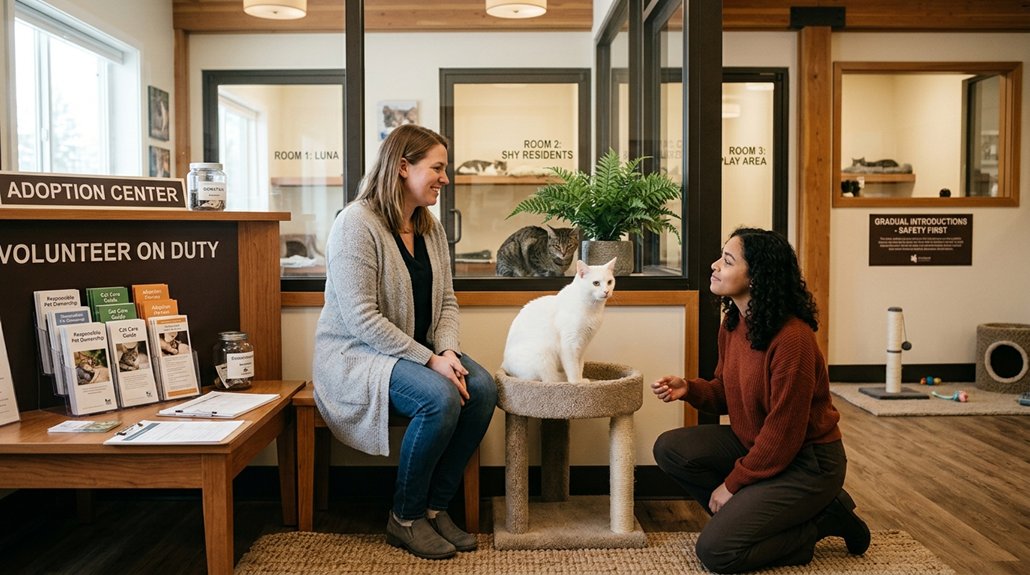
Creating a harmonious environment when introducing new cats to your existing pets is vital for a successful integration. Start introductions in neutral territories to prevent territorial disputes. Gradual introductions will allow both parties to adjust at their own pace. Use scent swapping—exchange bedding to familiarize them with each other’s scent before face-to-face meetings.
Always engage in supervised visits initially, monitoring signs of stress or aggression. This vigilance is important for detecting compatibility issues early on.
Here are key steps:
- Neutral Territory: Begin introductions away from existing pets’ primary space.
- Gradual Introductions: Use short, supervised encounters over weeks.
- Scent Swapping: Exchange items like bedding to reduce fear.
- Stress Monitoring: Watch for and address stress signals.
- Separate Spaces/Resources: Guarantee each pet has access to necessities without competition.
Navigating First-Time Cat Ownership Challenges
As a first-time cat owner, you’ll face daily responsibilities like managing shedding and potential accidents, all while providing a safe home environment for your new feline friend. It’s important to anticipate common behaviors such as scratching and climbing, ensuring you implement effective training techniques early on. By establishing routines with high-quality nutrition and regular veterinary care, you’ll lay the foundation for a healthy and balanced life for your cat.
Preparing for Daily Responsibilities
Stepping into the world of cat ownership for the first time can be both exciting and intimidating, yet with the right preparation, you’re more likely to foster a happy home for both you and your new feline friend. Litter box maintenance guarantees a clean environment and prevents unpleasant odors, so make it a part of your daily routine. Daily feeding not only nourishes your cat but also establishes a routine that cats find comforting. Being ready with essential supplies is vital for a smooth shift. Here’s what to focus on:
- Daily litter box cleaning
- Consistent daily feeding routine
- Quality food and necessary supplies
- Provision of scratching posts and toys
- Understanding and managing common behaviors
With these steps, you’ll be well-prepared for your new responsibilities.
Managing Behavioral Expectations
While stepping into the rewarding world of cat ownership, it’s important to manage your expectations about feline behavior. Cats naturally exhibit behaviors such as shedding, scratching, and exploring through playfulness. Being prepared with scratching posts and interactive toys will satisfy their instincts and protect your home. Behavioral patience is key as you navigate these common challenges. Before adopting, understand their dietary needs, grooming, and proper socialization techniques. Establish a consistent routine for feeding, playtime, and litter box maintenance to foster a secure environment. Remember, both you and your cat will experience an adjustment period, sometimes lasting weeks, where trust and comfort will develop gradually.
| Challenge | Solution | Benefit |
|---|---|---|
| Shedding | Regular grooming | Cleaner home |
| Scratching furniture | Use scratching posts | Furniture protection |
| Playful exploring | Interactive toys | Safe play environment |
| Unfamiliar surroundings | Socialization techniques | Trust development |
| Litter box accidents | Routine maintenance | Hygienic conditions |
Selecting the Best Nutrition for Your Adopted Cat

Selecting the best nutrition for your recently adopted cat isn’t just a helpful tip—it’s essential for a smooth adjustment into their new home. Understanding your cat’s nutritional requirements and implementing feeding strategies can make a significant difference. Start with the same high-quality food they ate in foster care to prevent digestive issues. Reading labels and comparing brands allows you to select nutrient-rich diets tailored to their specific health needs. Here are some strategies:
Understanding your cat’s nutrition is key for a smooth transition into their new home.
- Include fresh vegetables and plain yogurt for additional nutrients and digestive support.
- Maintain consistency in feeding routines to reduce anxiety and promote security.
- Consult a veterinarian for personalized dietary advice based on age and health status.
- Choose nutrient-rich brands by reading labels carefully.
- Gradual food changes can help prevent digestive upset.
The Role of Routine Veterinary Care in Cat Health
Routine veterinary care is essential to your cat’s wellbeing because it guarantees early detection and treatment of potential health issues. Annual veterinary check-ups play a significant role in preventive healthcare, allowing veterinarians to spot changes in your cat’s health that you might not notice. These visits often involve vaccinations, which are critical in shielding your cat from common diseases, typically costing between $300-500 annually.
Importantly, dental care shouldn’t be overlooked; at-home teeth cleaning combined with professional check-ups can stave off periodontal disease. Spaying and neutering, often required by shelters, contribute not only to a healthier pet but also a balanced temperament. Keeping up with routine visits strengthens the bond you share with your cat and keeps your household safe.
Managing Scratching and Grooming in Cats
Annual veterinary visits certainly lay the foundation for a cat’s health, but managing their day-to-day behaviors, like scratching and grooming, is equally important. To address scratching habits, provide designated surfaces like cat trees. Consider training methods, using positive reinforcement or gentle deterrents such as water sprays. Regular claw maintenance is essential for preventing damage. Equip yourself with high-quality claw clipping tools or consult a vet for reliable grooming techniques.
Annual vet visits are crucial, but day-to-day management of scratching and grooming habits is equally vital.
For effective grooming:
- Use different brushes tailored to your cat’s coat length.
- Regular grooming reduces shedding and enhances skin and coat health.
- Employ flea combs for removing mats and fleas.
- Schedule consistent grooming sessions to improve your cat’s wellbeing.
- Stay informed through veterinary advice for ideal grooming practices.
Choosing a Cat That Matches Your Lifestyle
When choosing a cat, it’s crucial to think about how your lifestyle and activity level align with your new feline companion’s needs. Some cats thrive in bustling homes with constant companionship, while others feel more comfortable in quieter, independent settings. Guarantee a harmonious environment by evaluating your living situation, including existing pets, and reflect on any allergy concerns to create a comfortable home for everyone.
Lifestyle and Activity Level
Choosing a cat that aligns with your lifestyle is essential for guaranteeing a harmonious and happy relationship. By evaluating your daily routine and activity balance, animal shelters aim to recommend a cat that’s a great fit. Cats have diverse activity levels and personalities, so understanding their needs is vital. Consider these aspects:
- Active Households: Cats needing ample playtime suit homes with energetic routines.
- Quiet Environments: Less active cats may prefer a calm, low-stimulation setting.
- Independent Personalities: Ideal for those with long work hours or frequent travel.
- Sociable Cats: Require more interaction and thrive with dedicated companionship.
- Commitment Level: Regular play, grooming, and socialization needs vary among cats.
Understanding these elements guarantees you’ll find a feline friend that complements your lifestyle perfectly.
Home Environment Compatibility
Creating a cat-friendly home environment is essential for a successful and rewarding adoption. Start by ensuring your home has cat friendly architecture, like secure windows and doors, for safe outdoor access. Feline friendly furnishings, such as scratch posts and cozy beds, are vital to support enrichment activities. Evaluate noise considerations, as cats are sensitive to loud sounds. Space requirements should be ample enough for a cat to explore comfortably, while maintaining proper temperature control for their comfort. Discuss declawed implications with shelters as some cats may have specific needs. Consider allergy implications if anyone in your home is sensitive to pet dander. Embracing this lifestyle is a long-term commitment, encompassing financial responsibilities for food and veterinary care, affecting the daily routine.
Understanding the Costs of Cat Ownership
Though the joys of cat ownership are numerous, understanding the costs involved is essential for potential cat owners. Steering through shelter requirements and the adoption process is just the beginning of your financial commitment. Budgeting essentials include a range of foreseeable and unpredictable expenses.
- Adoption Fees: Typically $10 to $100; spaying/neutering $75-$200.
- Monthly Supplies: Quality food starts at $10, litter around $5.
- Health Care: Annual vet check-ups between $150-$500; consider pet insurance for unexpected expenses.
- Grooming Necessities: Professional grooming services from $10, plus tools.
- Long-Term Planning: Account for lifetime costs like veterinary care and unexpected medical needs.
Owning a cat involves various responsibilities, so thoughtful financial planning is vital for a loving and stable home.
Frequently Asked Questions
What Is the 3-3-3 Rule for Cats?
The 3-3-3 rule for cats guides their acclimation: 3 days to decompress, 3 weeks to adjust, and 3 months to reveal their personality. Understanding this timeline is essential in fulfilling your responsibilities as a compassionate owner.
What Color Cat Is Least Desired?
Black cats often have lower cat color preferences in adoption statistics. Despite being wonderful companions, they face biases and misconceptions. Remember, a cat’s personality and compatibility with you matter more than fur color in choosing a pet.
Can Cats Lower Cortisol?
Yes, cats can notably lower cortisol levels. Imagine feeling stress melt away as you pet your cat, experiencing tranquility and relief. It’s not just about affection; it’s about enjoying stress reduction and heightened well-being through feline companionship.
What Is the 3-3-3 Rule for Shelter Pets?
The 3-3-3 Rule is essential in the adoption process. It helps manage shelter requirements, highlighting a cat’s three-day acclimation, three-week adjustment, and three-month bonding period, ensuring you’re patient during your new pet’s changeover.
Conclusion
Adopting a cat isn’t just about finding the perfect furball; it’s about preparing your home and family too. Remember, “A stitch in time saves nine”—address potential challenges early, like integrating pets and preparing for costs. Routine care and understanding your cat’s needs will lead to a happier, healthier life together. Choose a cat that fits your lifestyle and involve your loved ones in the journey. With preparation and love, you’re ready for this rewarding commitment.