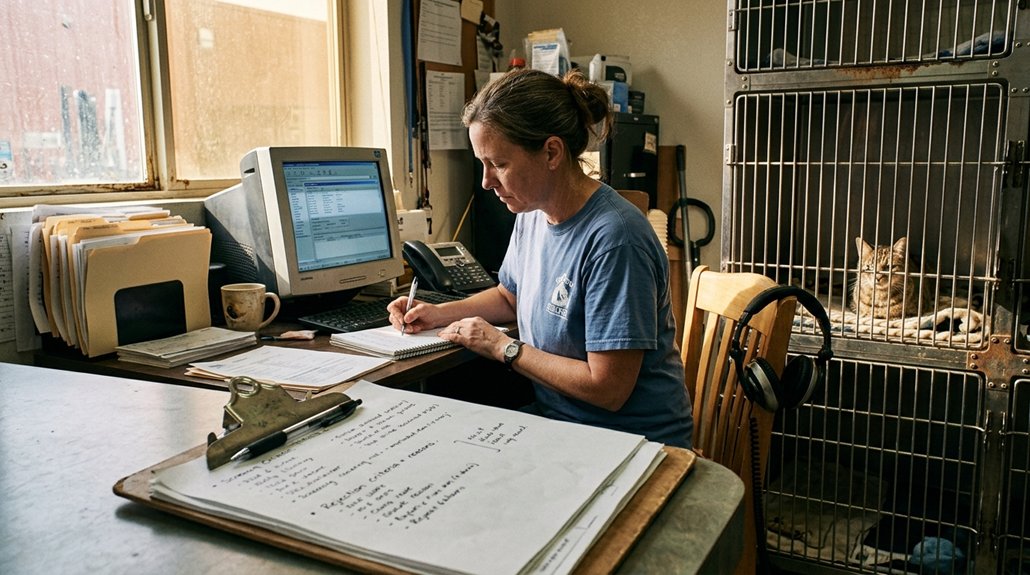
Your cat adoption application might get denied if it contains misleading information or isn’t thorough. Shelters look for proof of financial stability and a safe home environment to guarantee the cat’s well-being. You’ll need references and landlord approval, especially if you’re renting. Having existing pets fixed and vaccinated can also be essential. Shelter policies, like declawing rules, play an important role in the decision. Understanding these factors can enhance your chances. Explore further for valuable tips.
Key Takeaways
- Providing misleading or incomplete information can result in denial of the cat adoption application.
- Having unfixed or non-vaccinated pets at home may lead to application rejection.
- Insufficient financial stability to cover ongoing care costs can hinder adoption approval.
- Non-compliance with shelter policies, such as declawing rules, impacts application outcomes.
- Unsafe living environments with hazards or escape routes can cause application denial.
What You Need to Know Before Applying for Cat Adoption
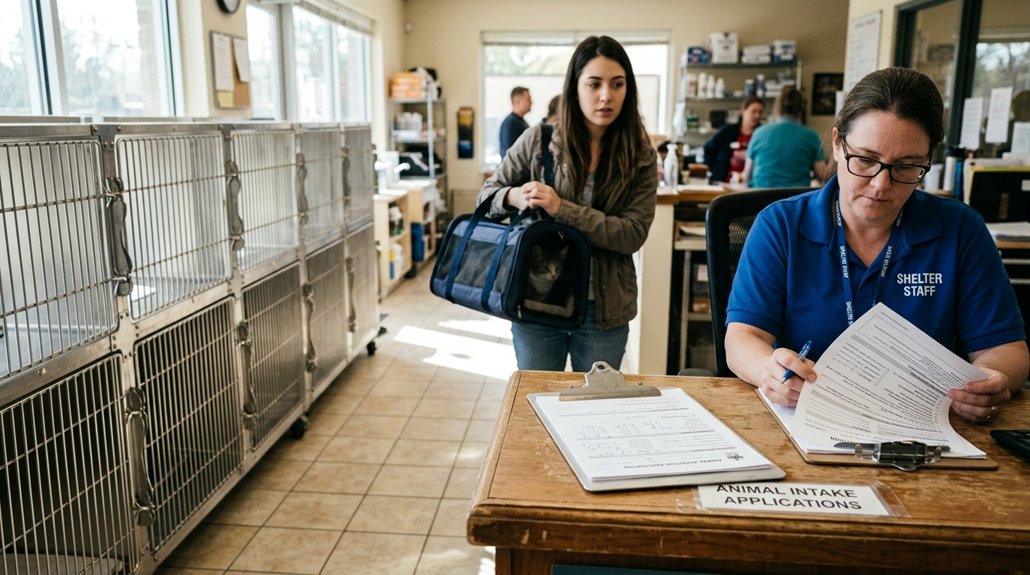
Before diving into the rewarding journey of cat adoption, it’s essential to understand the key requirements set forth by shelters to guarantee a successful application. One common application mistake you can avoid is submitting misleading or incomplete information. Honest and thorough applications demonstrate your commitment to pet ownership responsibilities. Shelters often deny applications if existing pets aren’t fixed or vaccinated, so make sure your pets are up to date on medical care. Also, be ready to provide personal or veterinary references vouching for your responsible history as a pet owner. Financial stability is assessed, so reflect on whether you can afford ongoing care, which extends beyond just adoption fees. Being transparent and properly prepared will help you find your feline friend.
Why Your Living Space Matters in Cat Adoption
Have you considered how your living space impacts your ability to adopt a cat? Rescue organizations conduct a hazard assessment to guarantee your indoor environment is safe. Toxic plants or small objects can pose risks, hindering adoption. You must also provide sufficient space for care and playtime, essential for a kitten’s development. If you’re renting, check lease agreements for pet restrictions; they can affect your application’s approval. Additionally, home environments should guard against escape routes and insecure areas to assure safety.
Assessments Focus | Importance
—|—
Toxic Plants | Safety of the cat
Small Objects | Hazard for kittens
Pet Restrictions | Impact on approval
Understanding these factors enables you to create a nurturing indoor environment, adhering to rescues’ standards for adopting a cat.
Financial and Lifestyle Readiness for Adopting a Cat

When contemplating cat adoption, it’s vital to assess whether you’re financially and lifestyle-ready for the commitment. Budget planning is key; being able to consistently cover costs such as food, vetting, and supplies signifies readiness. Adopters need to demonstrate financial stability to shelters, as unexpected expenses like emergency vet visits can arise. Without this preparation, adoption applications might be denied.
Equally important is time management. An adequately planned schedule that allows for daily care, social interaction, and playtime is fundamental to a cat’s wellbeing. Carefully consider your work schedule and daily routines, as they will be scrutinized during the adoption process. Ensuring you have enough time and resources can make all the difference in providing a loving, stable home for a cat.
Understanding Shelter Rules for Cat Adoption
While adopting a cat may seem straightforward, it’s crucial to understand the rules and requirements shelters put in place to guarantee animal welfare. Shelters have specific application criteria to guarantee pet health and well-being.
| Application Criteria | Reason for Rule |
|---|---|
| Spay/Neuter and Vaccinations | Guarantee health of existing and new pets |
| Personal and Veterinary References | Verify applicant’s commitment and capability |
| Landlord Approval | Protect against future housing issues |
| Financial Stability | Guarantee ability to cover ongoing pet expenses |
Not meeting these criteria might result in a denied application. Unwillingness to follow shelter policies, like prohibiting declawing, also impacts decisions. Understanding these guidelines helps align your journey with the shelter’s dedication to responsible pet ownership, keeping both your future cat and current pets healthy and happy.
How Shelters Guide You to Be a Great Cat Parent
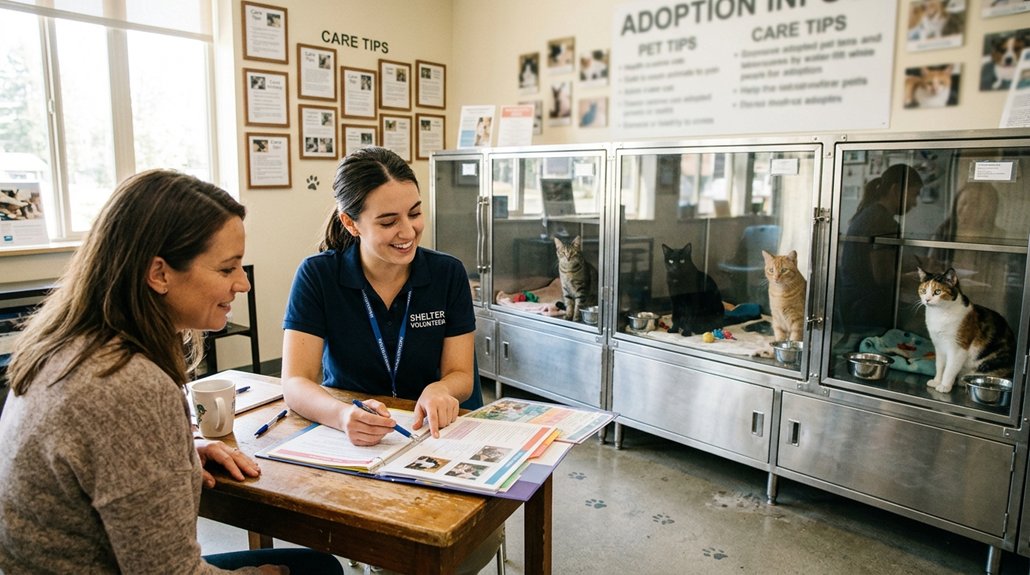
Understanding the importance of being a responsible cat parent often begins at the shelter, where guidance is key. Shelters offer essential preparation tips that help guarantee a smooth changeover for both you and your new feline friend. Here’s how they guide you:
Guidance at shelters ensures a smooth transition to responsible cat ownership for both you and your new feline friend.
- Compatibility Assessments: Shelters evaluate your lifestyle to pair you with a cat whose temperament suits your home and routine.
- Educational Workshops: Gain essential knowledge on topics like behavior and veterinary care to prepare you for lifelong cat ownership.
- Home Safety Evaluations: They help you identify and eliminate potential hazards, providing a safe environment for your pet.
- Ongoing Support: Post-adoption, shelters provide resources and advice to help address any concerns and reinforce successful bonding.
Their support guarantees a loving, prepared home for your new cat.
Frequently Asked Questions
What Disqualifies You From Adopting a Cat?
You might be disqualified from adopting a cat if your home environment isn’t pet-friendly or your previous pets weren’t well-cared for. Consider all aspects, from landlord restrictions to the care history of existing or past pets.
What Is the 3-3-3 Rule for Cat Adoption?
The 3-3-3 Rule in the adoption process explains how fostering cats means understanding their adjustment phases: three days hiding, three weeks exploring, and three months settling. Your patience guarantees a smooth change and successful companionship.
What Are the Hardest Cats to Get Adopted?
You might find black cats, adults, or those with behavior issues the hardest to get adopted. It’s easy to overlook them due to common misconceptions, but they can be loving pets with the right care and patience.
Why Would Someone Be Rejected for Adoption?
You might be rejected for adoption due to adoption misconceptions. It’s essential to follow interview tips like honesty and preparation. Make sure your home, finances, and existing pets meet rescue requirements to increase your chances.
Conclusion
Adopting a cat is like opening your heart to a song waiting to be sung. Before you apply, guarantee your living space and finances align with the commitment needed. Understand that shelters aren’t just gatekeepers; they’re guides helping you commence on this beautiful journey. While it can be disheartening to face a denial, remember it’s not rejection but a redirection toward becoming the best possible cat parent. You’re investing in a life, and that’s undeniably precious.