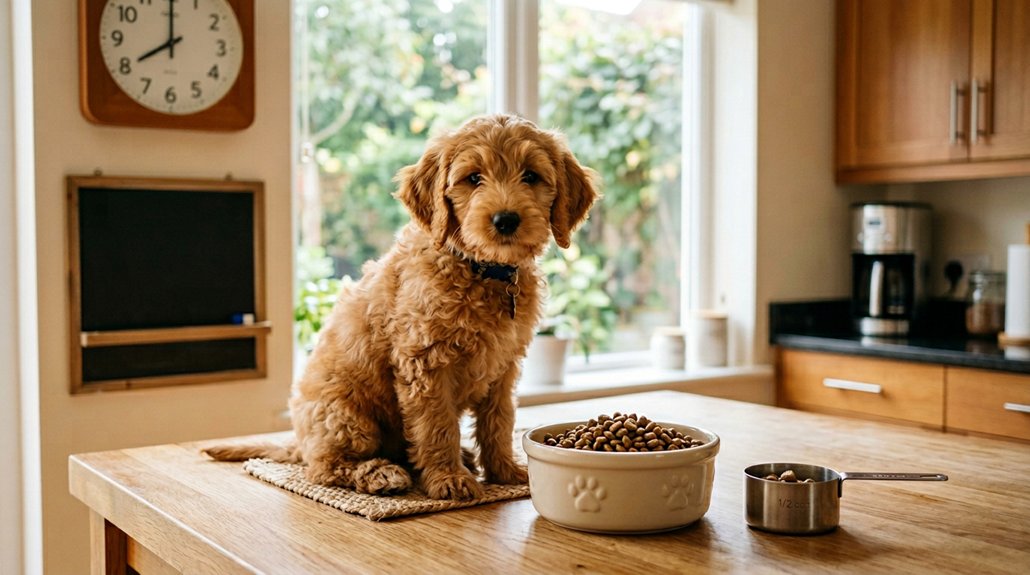
Feed your puppy based on their developmental stage: under 3 months, provide four meals daily; at 3 to 6 months, reduce to three meals; and after 6 months, give two meals per day. Small breeds require more frequent meals due to a faster metabolism. Adjust portion sizes according to the puppy’s weight and energy needs, consulting with a veterinarian for tailored advice. Discover how these feeding practices enhance your puppy’s growth and well-being.
Key Takeaways
- Feed puppies under 3 months four small meals daily to meet their energy needs.
- Transition to three meals daily for puppies aged 3 to 6 months.
- At 6 months, reduce meal frequency to two per day.
- Small breeds may require more frequent meals due to faster metabolism.
- Consult a veterinarian for a feeding schedule tailored to your puppy’s needs.
How Often Should You Feed Your Puppy?
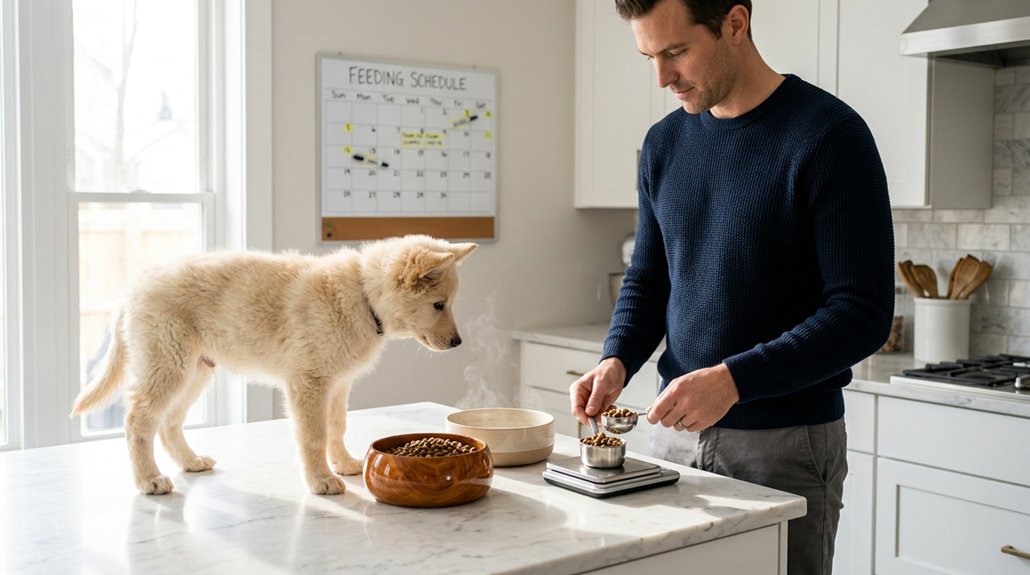
Feeding your puppy with the right frequency is essential for their growth and health, but how often should this occur? During the initial 12 weeks, four small meals daily are vital to satiate puppy hunger and counter feeding challenges due to their high-energy requirements. From 3 to 6 months, you can reduce the frequency to three meals, as your puppy’s stomach capacity increases. Most puppies can shift to two meals per day after 6 months, aligning with their growing developmental needs. However, small breeds require more frequent meals to accommodate their faster metabolism—consulting a veterinarian is recommended for tailored advice. Consistent feeding schedules enhance digestion and routine, assisting greatly with puppy hunger management and developmental challenges.
Why Meal Frequency Matters in Puppy Growth
Understanding the appropriate feeding frequency for puppies isn’t merely about filling an empty stomach—it’s a fundamental aspect of supporting their rapid growth and development. Meal frequency notably impacts their nutrition intake, directly influencing growth milestones. Puppies possess high energy requirements and smaller stomach volumes, necessitating multiple meals to maintain ideal metabolism and health.
Here’s a quick overview:
| Puppy Age | Meals Per Day | Purpose |
|---|---|---|
| Under 3 months | 3-4 | Accommodate high energy needs |
| 3-6 months | 3 | Support developmental growth phase |
| Consistent Schedule | Importance | Routine aids in behavior management |
| Obesity Prevention | Proper Meals | Prevents weight gain |
| Nutritional Health | Ideal Intake | Avoids malnutrition |
This structured approach guarantees that puppies achieve essential growth milestones while mitigating risks such as obesity and malnutrition.
Feeding Schedule for Puppies Under 6 Months

Establishing an effective feeding schedule for puppies under 6 months is essential for their health and development. You should implement a structured puppy feeding regimen that supports their high energy demands and nutritional needs. Provide four meals per day from 6 to 12 weeks of age, then slowly shift to three meals as they near 6 months. It’s vital to distribute the total daily food intake evenly across all scheduled feedings to guarantee consistent growth. Adhering to specific feeding times assists in routine establishment, which can improve behavior management and potty training success. Always consult puppy food labels for detailed guidance on meal types and portion adjustments based on your puppy’s weight and age to optimize health and development.
Transitioning to Two Meals: Ages 6 Months to 1 Year
As puppies reach six months of age, it becomes important to gradually adjust them to two meals per day, typically set in the morning and evening. This change guarantees balanced meal timing and proper nutritional partitioning. By dividing their total daily food intake into these two servings, you help maintain ideal growth and health. Consistent feeding routines support both nutritional needs and continue aiding potty training efforts. To effectively manage this shift, consult your veterinarian for portion adjustments tailored to your puppy’s activity level.
Here’s a guide to aid in structuring this new routine:
| Time | Meal Type | Portion Size |
|---|---|---|
| Morning | Breakfast | Half of daily intake |
| Evening | Dinner | Half of daily intake |
| Variable | Snack or Treats | Minimal, occasional inclusion |
Keep monitoring their appetite and adjust as needed.
Customizing Your Puppy’s Diet Over Time

With the shift to two meals per day achieved, it’s important to adapt your puppy’s diet to match their evolving nutritional needs as they age. As they mature (12-24 months depending on breed size), adjusting portion control is essential in managing puppy nutrition effectively. Regularly assess your puppy’s weight and body condition to guarantee balanced nutrient intake and prevent obesity. Puppies’ energy needs decrease as they grow, necessitating adjustments in calorie distribution and portion sizes. Collaborate with a veterinarian to devise a feeding plan tailored to your puppy’s specific requirements, taking into account factors like breed, age, and activity level. This evidence-based approach secures ideal health, supporting both growth and development while preventing overfeeding or undernutrition.
Frequently Asked Questions
Is 1 Cup of Food Too Much for a Puppy?
One cup may be excessive or insufficient for puppy growth, depending on age, breed, and weight. Adjust feeding frequency and monitor body condition. Consult with your vet to guarantee nutritional needs align with feeding guidelines.
What Is the 7 7 7 Rule for Puppies?
The 7 7 7 rule for puppy feeding suggests seven meals daily until seven weeks old, ensuring ideal nutrition for growth stages. Then, shift to four meals at seven weeks, and three meals by three months. Tracking weight’s essential.
How Much Food Should My Puppy Eat a Day?
Imagine feeding your puppy like painting a masterpiece, carefully balancing nutrition and growth. Follow puppy feeding guidelines: account for puppy growth stages—use weight charts, consider energy levels, and adjust portions for ideal health. Regular vet consultations guarantee precision.
What Is the Best Time to Feed a Puppy?
Feed your puppy at consistent intervals, ideally morning, midday, and evening. A structured puppy feeding schedule reinforces his routine. Meal timing importance relates directly to digestion, energy balance, and successful potty training. Consult your vet for specifics.
Conclusion
In the whirlwind journey of puppyhood, feeding schedules are your steadfast compass, guiding growth like a well-calibrated metronome! Skipping a meal isn’t just a mere misstep; it’s akin to a symphony missing its crescendo. By meticulously adhering to age-specific feeding frequencies, you’re ensuring that your furball flourishes into an energetic, healthy dynamo. Remember, customizing your puppy’s diet isn’t just a choice; it’s an essential, synthesizing science and touch, optimizing their lifelong health!