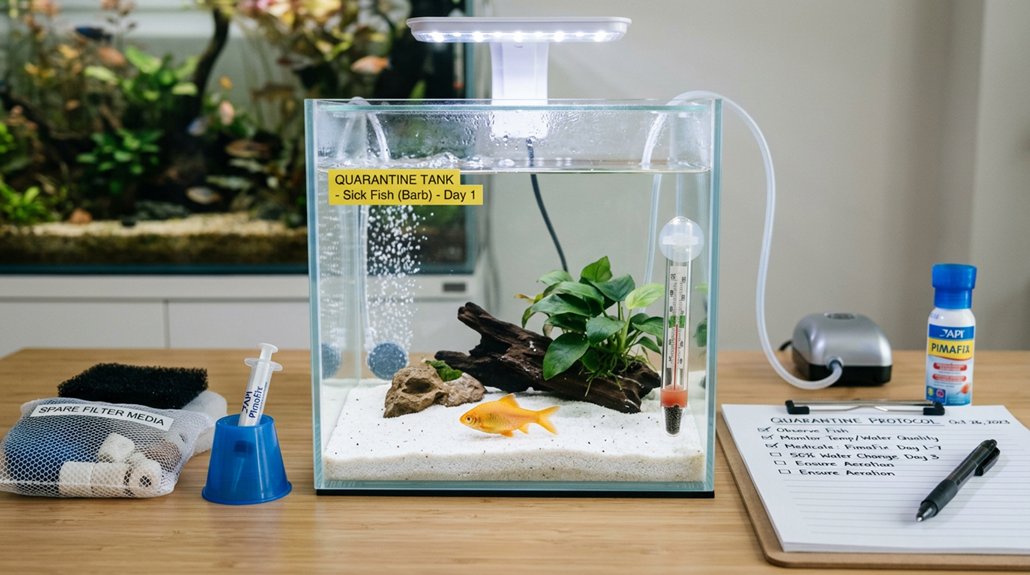
Quarantine a sick fish in a separate hospital tank, not the display tank, so you can limit pathogen spread and observe the cause before treatment. Use a bare-bottom 5–15 gallon setup with heater, lid, airstone, and seeded filter media, and match temperature and water chemistry before transfer. Monitor ammonia, nitrite, appetite, respiration, and lesions twice daily. Keep treatment isolated until signs resolve, then hold quarantine for at least four more weeks, where more details help you avoid common mistakes.
Key Takeaways
- Isolate the sick fish in a separate hospital tank to prevent spreading pathogens to the main aquarium.
- Set up a bare-bottom quarantine tank with heater, filter, lid, and nonporous hides before moving the fish.
- Acclimate slowly by matching temperature and water chemistry, then keep the fish in low light and quiet.
- Test ammonia and nitrite daily, keep water clean, and log appetite, breathing, spots, and behavior twice daily.
- Keep the fish quarantined until symptoms are gone and for at least four more weeks before reintroducing it.
Why Sick Fish Need Quarantine
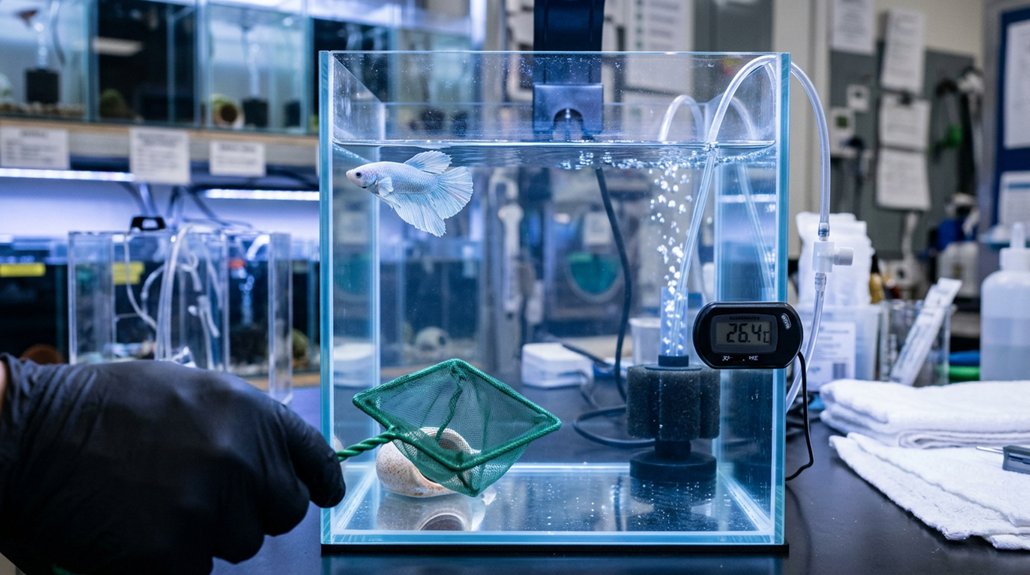
Quarantine is essential because even a mildly infected fish can shed pathogens into the main aquarium and seed a broader outbreak, so moving the animal to a separate hospital tank limits pathogen loading and protects the display. You’re using observational isolation to contain ich, bacteria, or other agents while you identify the cause and choose targeted treatment. This protects healthy tankmates from unnecessary exposure to antibiotics, antiparasitics, or elevated salts. In quarantine, you can monitor behavior, respiration, appetite, and lesion progression with precision. Separation also reduces stress, competition, and social disruption, which supports recovery. Keeping the fish isolated for at least four weeks after symptoms resolve helps confirm clearance and reduces the risk of reintroducing latent infection, strengthening preventing outbreaks.
Set Up a Hospital Tank
To set up a hospital tank, move the fish into a separate 5–15 gallon clear plastic tub or small aquarium in a different room from your display tanks to reduce cross-contamination. Fit it with a lid drilled for airflow and cable routing, then install a seeded sponge filter or established media plus a heater and thermometer for immediate biological filtration and stable temperature. Keep the setup bare-bottom, adding only nonporous hides such as PVC or plastic plants. Remove chemical filtration and UV sterilizers before dosing. Mark gallon lines for accurate medication rotation, maintain an airstone for oxygenation, and use dedicated nets, siphons, and tools. Prepare water conditioner and prescribed medications in advance for careful behavior observation and clinical response tracking.
Acclimate the Fish With Minimal Stress
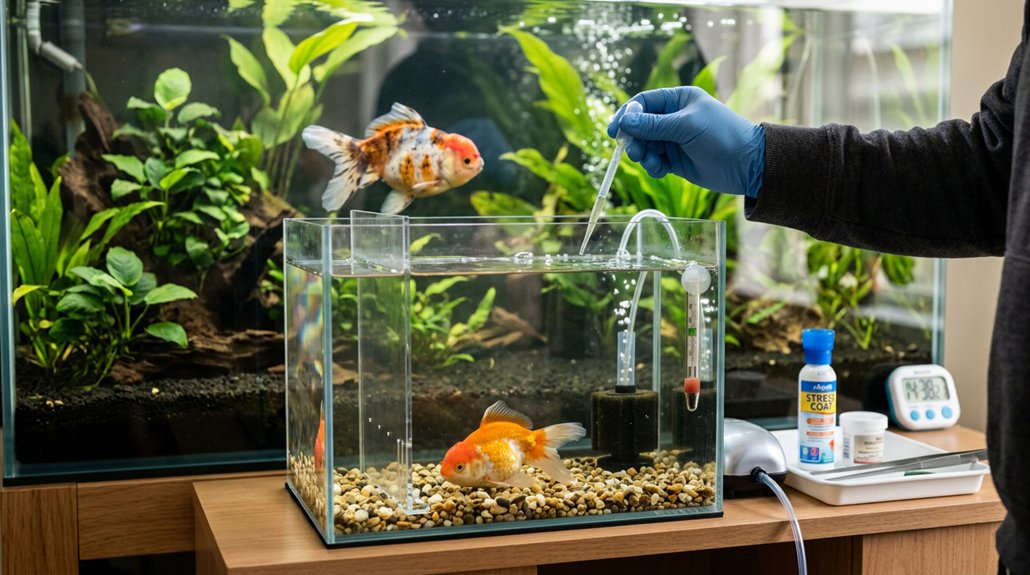
Typically, you should acclimate the fish slowly to reduce thermal, osmotic, and handling stress. Match quarantine water to the display within ±1–2°F and similar pH/hardness, and neutralize chlorine/chloramine first. Float the bag 15–30 minutes, then use slow drip acclimation, adding 10–20% quarantine water every 5–10 minutes for 30–60 minutes. For gentle transfer, use a clean, soft net only if needed; pouring into a clean container is better than chasing or netting. Keep lights low and the room quiet for 24–48 hours.
| Step | Purpose |
|---|---|
| Float bag | Equalize temperature |
| Add water تدريجياً | Reduce osmotic shock |
| Gentle transfer | Limit scale/slime damage |
| Low-light rest | Minimize transport stress |
Monitor Symptoms and Water Quality
Monitoring both clinical signs and water quality is essential during quarantine, because poor water conditions can mimic disease, worsen existing pathology, and interfere with treatment. You should check ammonia and nitrite daily; both must stay at 0 ppm, and nitrate should remain below 40 ppm through partial water changes. Use daily logs to record appetite, respiration, fin condition, spots, flashing, bloating, and any lethargy, hiding, or abnormal swimming. Observe the fish twice daily and note onset, progression, mortality, lesions, and visible parasites. Temperature monitoring is critical: keep the species’ target range with a reliable thermometer, since temperature can alter parasite cycles and disease speed. Correlate behavior with water-parameter records to distinguish stress from infection, and document any medication timing, doses, and water changes.
Treat the Fish and Finish Quarantine
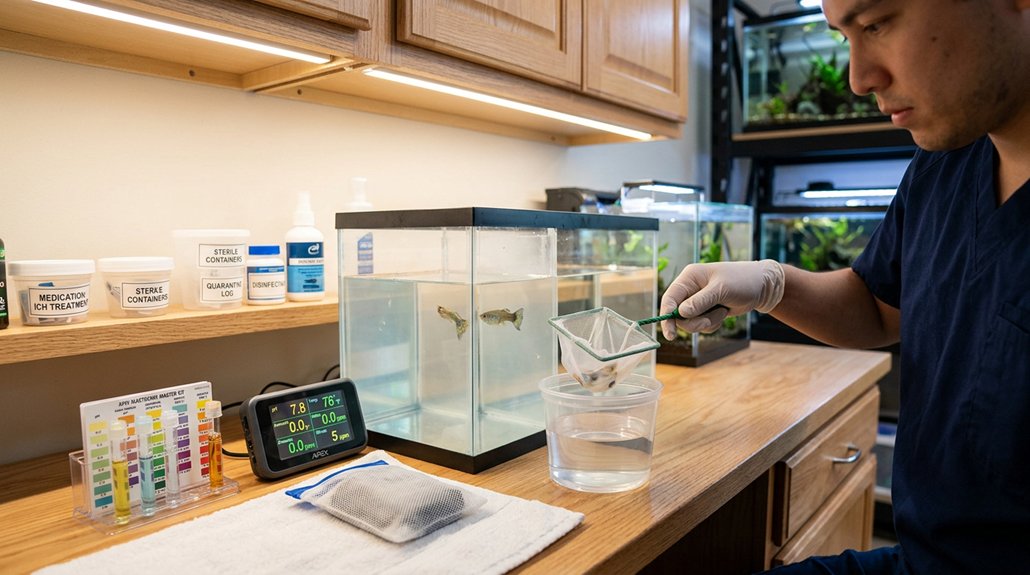
Once you’ve confirmed the fish’s symptoms and water quality are stable, continue the chosen treatment until all clinical signs have fully resolved. Keep the fish in quarantine at least 4 more weeks; use 6 weeks for ich or other high-risk pathogens. During this period, you should do weekly 25–50% water changes and test ammonia and nitrite so medications dissipate safely.
- Use medication rotation only when indicated to prevent resistance.
- Add prophylactic deworming with fenbendazole or praziquantel in food every two weeks for at least six weeks if the source is untrusted.
- Provide minimal behavioral enrichment, then inspect for normal feeding, bright coloration, healed fins, and no visible parasites before release.
Before transfer, disinfect or replace all quarantine gear; bleach hard surfaces at 200 ppm, or air-dry or boil sponge media, and optionally add two healthy tankmates to confirm no latent disease transmission.
Frequently Asked Questions
How Long Should I Quarantine My Sick Fish?
You should quarantine your sick fish for at least 4 weeks after the last symptom or death; for deworming or confirmed infections, use 6 weeks. Follow a strict treatment duration and observation schedule.
How to Isolate a Sick Fish?
Use a clinic tank, or if needed a tank divider, to separate it immediately. You’ll transfer it with a dedicated net, keep equipment sterile, and monitor symptoms daily while minimizing stress and cross-contamination.
How to Quarantine Fish Quickly?
Quarantine fish quickly by moving it to a bare-bottom hospital tank with matched temperature and dechlorinated water; use rapid acclimation, seeded filtration, low flow, and immediate behavior monitoring, then medicate appropriately and check ammonia daily.
What Are the Quarantine Medications for Fish?
You’d typically use Maracyn, ParaCleanse or praziquantel, and Ich-X; think of them as your quarantine triad. You can rotate medications only when indicated, and herbal remedies shouldn’t replace targeted therapy, diagnostics, or label-based dosing.
Conclusion
Quarantining sick fish properly protects your display tank and gives your fish the best chance to recover. You’ve reduced stress by setting up a hospital tank, acclimating carefully, and monitoring water quality and symptoms. Now you must complete treatment and observe the fish until it is stable. Remember, an ounce of prevention is worth a pound of cure. When you act early and keep conditions controlled, you’re far more likely to achieve a full, healthy recovery.