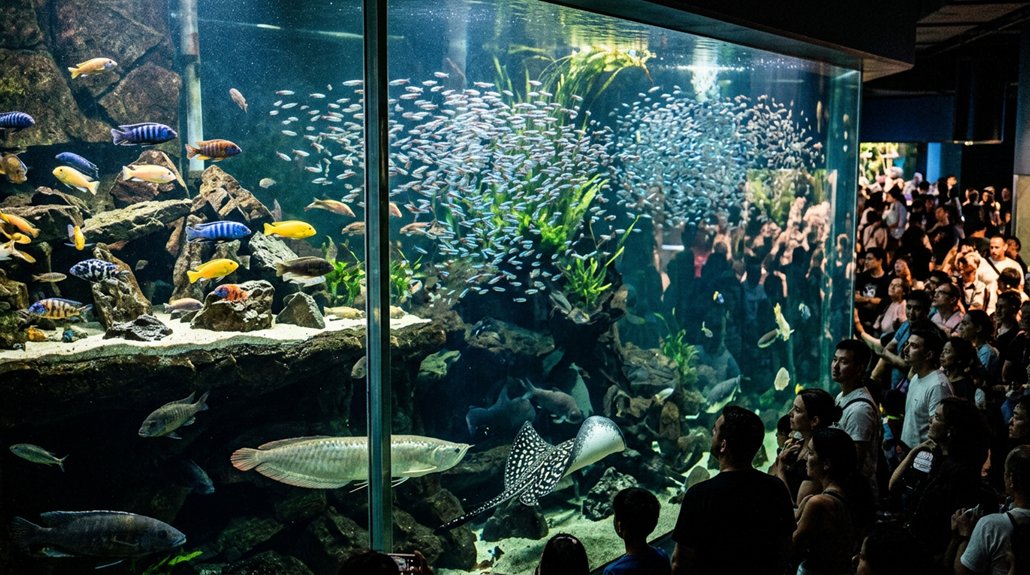
You should not keep aggressive fish, fin nippers, predators, or fish with very different water needs together. Male bettas, cichlids, and some barbs can chase, bite, or bully tank mates, while fish like angelfish, fancy guppies, and neon tetras can be badly injured by nipping or swallowed by larger predators. Goldfish also shouldn’t live with tropical species. Bad pairings cause stress, torn fins, and disease, and there’s more to watch for if you keep going.
Key Takeaways
- Do not keep aggressive fish like cichlids or male bettas with peaceful community fish.
- Avoid fin nippers such as tiger barbs with long-finned fish like angelfish, bettas, or fancy guppies.
- Do not mix large predators like oscars, arowanas, or big catfish with small fish such as neon tetras.
- Do not pair goldfish with tropical fish because they need different temperatures and water chemistry.
- Avoid cramped tanks for territorial species, because poor space and few hiding spots trigger fighting and stress.
What Fish Should Not Be Kept Together?
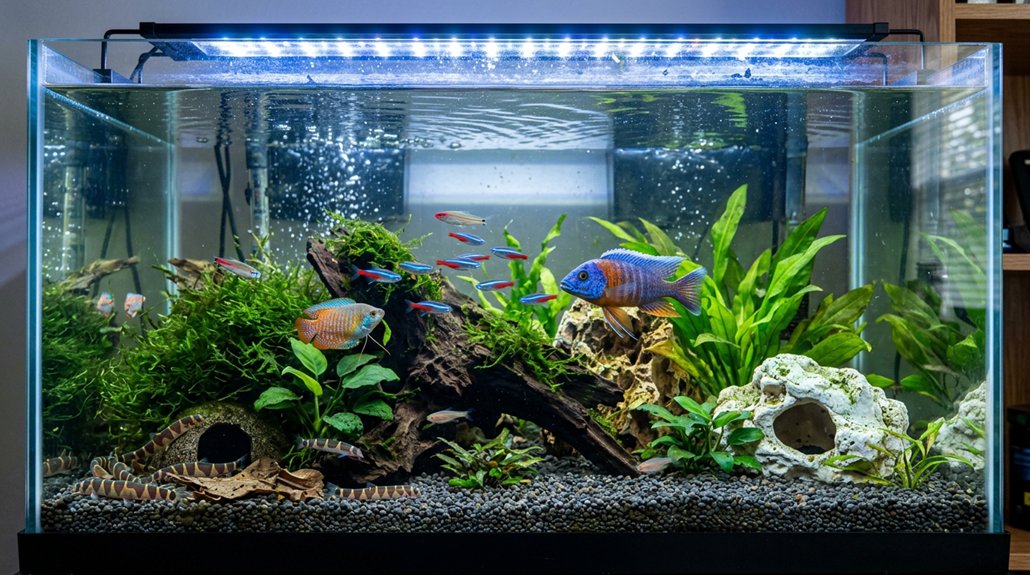
You shouldn’t mix fish that have incompatible temperaments, sizes, or water needs, because the wrong pairing can lead to injury, chronic stress, or even one fish eating another. You’ll want to keep male bettas apart and away from flashy, long-finned guppies, since territorial behavior and fin-nipping can damage fins fast. Don’t place cichlids, especially larger or South American types, in casual community tanks unless you’ve planned for hiding spots and species-specific care. Tiger barbs and other nippers shouldn’t share space with angelfish, bettas, or fancy guppies. Predatory fish like oscars, arowanas, and large catfish can swallow small tankmates. Also, avoid pairing goldfish with tropical fish, because mismatched temperatures, pH, and hardness cause stress, breeding behaviors, and coloration conflicts.
Why Aggressive Fish Fight Tank Mates
Aggressive fish don’t usually fight tank mates for no reason; they’re often reacting to territory, competition, or the simple fact that another fish looks like a threat or a meal. You’ll see this in cichlids, bettas, and other dominant species that use social hierarchies and resource defense to control space. Their behavior can look like this:
- Chasing intruders
- Guarding caves and rocks
- Nipping fins
- Bullying weaker fish
- Attacking smaller tank mates
In a crowded aquarium, these instincts don’t fade; they intensify. A fish that seemed calm may still escalate once it claims a shelter, food area, or breeding site. If you’re choosing tank mates, assume aggression is part of the fish’s nature, not a temporary mood.
Why Fin Nippers and Slow Swimmers Clash
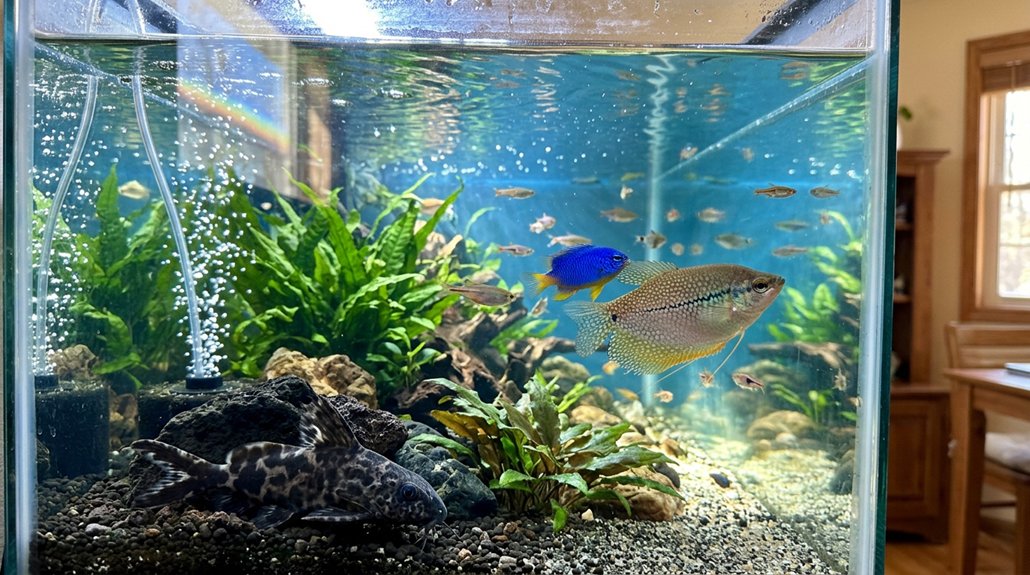
If you keep fin nippers like tiger barbs with slow, long-finned fish, you’ll often see repeated biting that tears fins and opens the door to infection. Slow swimmers can’t outpace or escape these quick attacks, so the stress and damage build fast, especially in small or understocked groups. To prevent this, match fast, boisterous fish with similarly active tank mates and keep fancy fins well away from persistent nippers.
Fin Nipping Behavior
Fin nippers like tiger barbs and some danios can turn a peaceful tank into a constant stress zone by repeatedly biting flowing fins, especially on slow-swimming, long-finned fish such as angelfish, bettas, and fancy guppies. You’ll see shredded tails, and fin care quickly becomes urgent.
- Keep tiger barbs in a school size of 6+
- Don’t pair nippers with long fins
- Provide hiding spots and open space
- Watch for repeated nipping, not one-offs
- Remove injured fish early
When nippers stay bored or understocked, they single out weaker tankmates. Once damage starts, it often invites more attention and can lead to bacterial or fungal infections. You’ll prevent most trouble by matching swimming speed, choosing compatible species, and giving every fish room to move and recover.
Slow Swimmer Vulnerability
Slow swimmers are especially vulnerable because fin nippers like tiger barbs don’t just make a single mistake—they often keep biting flowing fins until the target is damaged. If you keep angelfish, male bettas, or fancy guppies with these fish, their long tails become an easy target. Because they can’t escape fast enough, the attacks can turn into ragged fins, open wounds, and ongoing stress. Once a fish is singled out, the damage often doesn’t stop. Injured fins also raise infection risk and can slow growth by weakening immunity. Good fin care means preventing injuries, not treating them after the fact. Use enrichment strategies and avoid overcrowding so boredom doesn’t fuel repeated nipping. For safety, don’t house slow, long-finned species with known nippers like tiger barbs, serpae tetras, or some barbs.
Matching Speed And Fins
Match speed and fin type to avoid constant harassment in the tank. When you keep tiger barbs or other fin nippers with slow swimmers, their swim speed mismatch turns every meal into a chase. Long-fin fish, especially fancy guppies and veil tail bettas, draw bites on fin length and often end up with torn tissue and infections.
- Don’t pair fast, boisterous fish with deliberate swimmers.
- Avoid mixing long-finned and nipping species.
- Give nippers larger, species-specific groups.
- Add hiding spaces to break up chasing.
- Choose tankmates with similar fin length and swim speed.
If you want peace, keep active tetras or barbs with similarly quick fish, not angelfish or bettas. Once nipping starts, it usually keeps going, so prevention matters most.
Why Predators and Small Fish Never Mix
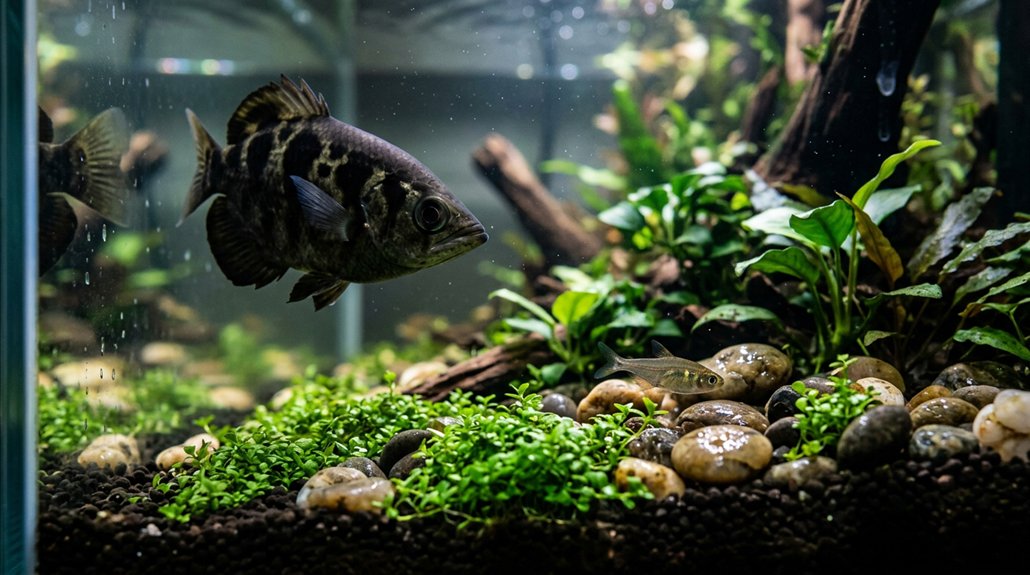
Predators and small fish rarely make safe tankmates because size, not appearance or early behavior, determines what gets eaten. You need to judge size thresholds carefully: many predators can swallow fish about one-third to one-half their body width, so a 12 cm hunter may target 4–6 cm tankmates. Oscars, arowanas, and adult catfish may seem calm at first, but predator instincts don’t disappear when they’re well fed. Juveniles can look harmless in stores, yet they may turn dangerous as they mature, so always check adult size, not shop size, before buying. Neon tetras, guppies, and similar schoolers often vanish fast in mixed predator tanks. Even if they aren’t eaten, smaller fish can be stressed by chasing and feeding disruption.
When Territorial Fish Fight Over Hiding Spots
If you keep territorial fish like dwarf cichlids with cave-loving bottom dwellers in a tank under about 24 inches long, they’ll often fight over the same caves and rock crevices. When hiding spots are limited, you’ll usually see torn fins, faded color, and less feeding within days as the strongest fish claims the best shelter. To cut conflict, give each adult fish at least one hiding place and separate the tank into distinct zones so their territories don’t overlap.
Cave Ownership Battles
Territorial fish can turn a single cave or crevice into a battleground, especially when dwarf cichlids or similar species decide a hiding spot is theirs alone. You’ll see cave hierarchy form fast, and shelter economics get ugly when one fish claims the best refuge.
- Expect chasing
- Watch for torn fins
- Separate breeding caves
- Add rockwork and dense plants
- Check species territory size
When two cave-lovers share cramped quarters, conflict usually escalates into nonstop harassment. Males guarding spawning sites are often the worst offenders, and their targets may stop eating and become more vulnerable to disease. To avoid this, give each fish clearly separated cover and avoid mixing cave-dominant species with similarly territorial bottom dwellers. For many dwarf cichlids, plan 20–30 cm of cave frontage per fish.
Space And Shelter Conflict
When caves, crevices, and shaded hiding spots are limited, territorial fish can turn shelter into a constant source of conflict. You’ll see dwarf cichlids guard caves and rock cracks, then chase loaches that try to use the same cover. In tanks under 75 liters, those disputes can become daily, leaving fish stressed and injured. If you keep plecos, cichlids, or other shelter-seekers together, dominant individuals may monopolize every hide and block weaker fish from resting. Crayfish and cave-spawning fish can also clash, and eggs may be eaten when hiding sites are packed too tightly. Give the tank multiple shelters, spaced apart, with caves, rock stacks, and plant clumps. If you can’t do that, choose solitary keepers instead.
Why Water Mismatch Stresses Fish
Even a peaceful-looking tank can stress fish badly if the water parameters don’t match their needs. You’ll see chronic osmotic strain and weak metabolic acclimation long before obvious illness appears.
- Temperature out of range suppresses immunity.
- Wrong pH makes osmoregulation costly.
- Hard water can damage soft-water species’ skin.
- Oxygen and temperature mismatches slow metabolism.
- Stress builds quietly, inviting disease.
If you keep fish from different habitats together, you’re asking them to spend energy surviving water chemistry instead of growing, breeding, and fighting infection. Goldfish, for example, don’t cope well with warm tropical conditions, while discus and cardinal tetras can struggle in hard, alkaline water. Over weeks or months, that hidden stress shortens lifespan and makes outbreaks like ich and fungus more likely.
Why Betta Fish and Guppies Are a Bad Match
Beyond matching water parameters, you also need to match fish behavior, and bettas with guppies are a classic bad pairing. Male bettas are highly territorial, so they’ll chase or attack guppies, especially those with flowing tails. Flashy male coloration on guppies can trigger aggression, and even female guppies may spark mating confusion or be seen as rivals or prey. The result is often persistent nipping, torn fins, and chronic stress. Because bettas do best alone while guppies prefer schooling, their social needs clash in a confined tank. Repeated bites can open the door to fin rot and other infections, so you may end up treating sick fish instead of enjoying them. In tanks under 20 gallons, the risk is even higher, so don’t combine them unless you’ve got a very large, planted setup.
The Worst Community Tank Fish Pairings
Some fish look peaceful at the store, but they can become problems fast once they share a tank. You’ll avoid damage by matching species with similar size, temperament, and lighting preferences, but some pairings just don’t work.
Peaceful-looking fish can turn destructive in shared tanks, so match species by size, temperament, and needs.
- Male bettas with male guppies
- Tiger barbs with angelfish or fancy guppies
- Oscars, arowanas, or big catfish with neon tetras
- Most cichlids with peaceful community fish
- Goldfish with tropical species
Bettas may shred flashy fins, while barbs nip relentlessly, especially in small groups. Large predators won’t stay “safe” just because they’re young; they’ll grow into tank bullies. Cichlids often show breeding aggression and defend territory hard. Goldfish also need cooler water than tropical fish, so the mismatch stresses both. Choose compatible adults, not impulse buys.
Frequently Asked Questions
What Fish Can Live in Pairs?
You can keep some cichlids, like angelfish or convicts, in pairs, and certain breeding larger fish too. Look for pair bonding and watch for synchronized swimming, but only with enough space, hiding spots, and monitoring.
What Fish Can Live Together Peacefully?
You can keep peaceful tetras, rasboras, corydoras, and danios together. About 70% of tank problems come from mismatched tank compatibility, so you’ll want similar water parameters, space, and feeding habits for lasting harmony.
What Fish Are Best in Pairs?
You’ll find true pair-bonded fish best in pairs: German blue rams, apistogramma, convict cichlids, angelfish, and some livebearers. Their breeding behavior and pairing compatibility matter most, so keep them in suitable, spacious tanks.
Conclusion
When you choose tank mates, think of your aquarium like a crowded neighborhood. If one fish is a bully, another a pickpocket, and a third a hungry hunter, peace won’t last long. You’ll save yourself stress by matching temperament, size, and water needs before anyone moves in. That way, your fish can swim without fear, eat without competition, and thrive together in a balanced, healthier home.