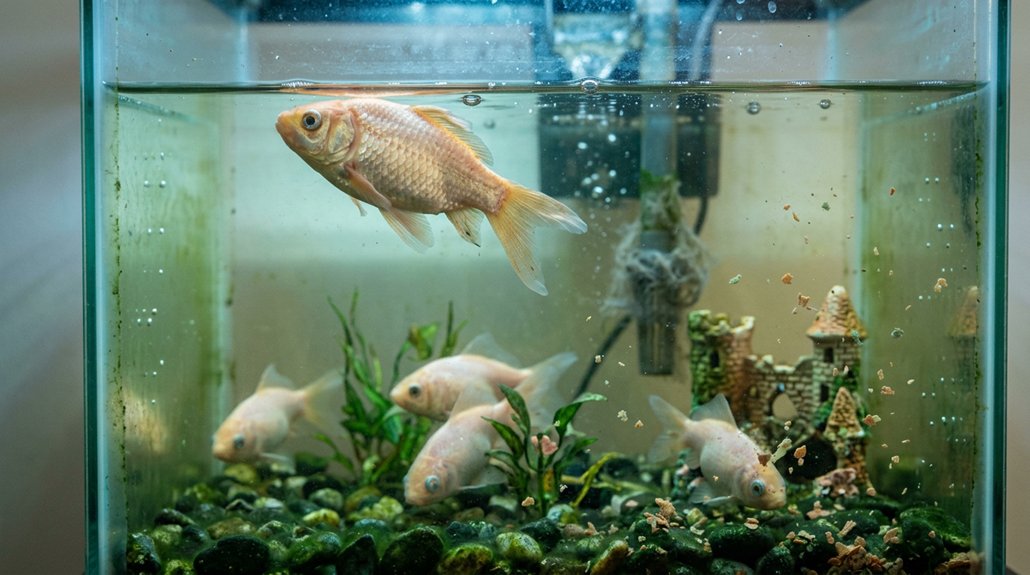
Your fish keep dying in a new aquarium because the tank’s biofilter is not fully cycled, so ammonia and nitrite build up faster than beneficial bacteria can process them. These toxins burn gills, suppress appetite, and can cause lethargy, surface gasping, and death, especially after overstocking or filter resets. Test daily with liquid kits, keep ammonia and nitrite near 0 ppm, and use partial water changes plus dechlorinated, temperature-matched water. There’s more you should know.
Key Takeaways
- New aquariums often lack enough nitrifying bacteria, so ammonia and nitrite build up and poison fish.
- Fish deaths commonly follow a cycling pattern: ammonia spike, then nitrite spike, then nitrate appears.
- Ammonia and nitrite damage gills, reduce oxygen transport, and cause lethargy, gasping, and loss of appetite.
- Overstocking, overfeeding, or cleaning the filter too aggressively can overwhelm or restart the biological cycle.
- Test daily with liquid kits and do partial water changes, reduce feeding, and add fish slowly until ammonia and nitrite stay at 0 ppm.
What Is New Tank Syndrome?
New Tank Syndrome is a common cause of fish loss in newly set-up aquariums because the biological filter hasn’t fully established yet. You’re seeing insufficient bacterial establishment, so the tank can’t reliably convert toxic ammonia to nitrite and then nitrate. During aquarium maturity, the nitrogen cycle usually needs four to six weeks, and ammonia and nitrite spikes are expected. Testing often shows rising ammonia first, then nitrite, and later nitrate as nitrifying bacteria develop. A new or recently disturbed filter history, plus high ammonia and/or nitrite with little nitrate, supports the diagnosis. You may also notice lethargy, reduced appetite, cloudy water, or a foul smell. Careful monitoring during cycling helps you recognize this unstable phase before conditions become unsafe for fish.
Why Fish Die in a New Aquarium
Fish die in a new aquarium because the tank’s biological filtration hasn’t matured enough to process waste safely. In the first 4–6 weeks, beneficial bacteria are still colonizing your filter, substrate, and surfaces, so ammonia from fish waste can rise fast. As the nitrogen cycle develops, nitrite follows ammonia, and both can damage gills, suppress appetite, and cause lethargy or excess slime coat. If you overstock a small tank, you’ll overwhelm nascent bacteria and see deaths over days, not instantly. You can also trigger a reset by swinging pH or replacing filter media. Test ammonia, nitrite, and nitrate right away, then use partial water changes and dechlorinator. Don’t let aquarium aesthetics or flashy beginner equipment distract you from biological stability.
Signs Your Tank Is Still Cycling
If your daily tests still show ammonia or nitrite above 0.25 ppm, your tank’s biofilter hasn’t finished cycling. You may also see lethargy, reduced appetite, excess slime coat, or surface gasping, which are consistent with ammonia or nitrite toxicity. Cloudy, foul-smelling water, plus a recent pH drop or filter cleaning with chlorinated water, can mean the tank’s cycling process is still active or has restarted.
Ammonia Spike Signs
When ammonia spikes in a tank that’s still cycling, fish often gasp at the surface, breathe rapidly, and show red or inflamed gills, especially once levels climb above 0.25 ppm and become more dangerous at 1–4+ ppm. You may also notice gill inflammation, behavioral lethargy, reduced feeding, and fish lingering in corners or along the glass. Cloudy, foul-smelling water and visible waste signal excess decay.
| Sign | What you’ll see | Meaning |
|---|---|---|
| Surface gasping | Frequent trips upward | Oxygen stress |
| Lethargy | Slow, inactive fish | Toxic exposure |
| Water quality | Cloudy, odorous water | Ammonia buildup |
If tests show ammonia without nitrite or nitrate, your cycle’s disrupted. Do partial water changes, add conditioner, and recheck pH, since swings can worsen toxicity.
Nitrite Toxicity Clues
Sudden lethargy, surface gasping, or rapid gill movement in a new tank often points to nitrite toxicity rather than disease, especially during the cycling phase. If you see this gasping behavior, test immediately: low or zero ammonia with a high nitrite reading means your biofilter isn’t finished. Nitrite commonly peaks after the ammonia spike, then declines as Nitrobacter establish and nitrate appears. It disrupts oxygen transport through hemoglobin oxidation, causing brown blood disease; you may notice pale or brownish gills and extra slime coat. Daily testing helps you track the cycle precisely. Your fish aren’t necessarily infected; they’re reacting to a toxic intermediate. Until the filter matures, keep waste input low and monitor parameters closely, because nitrite can stress fish fast.
Cycling Water Changes
Frequent positive ammonia or nitrite tests are the clearest sign your tank is still cycling, so you’ll need daily monitoring until both read 0 ppm. During this phase, you may also see cloudy water, a sour odor, and unstable pH. Use partial changes to dilute toxins, but keep them modest so you don’t disrupt beneficial bacteria.
| Test result | Meaning | Action |
|---|---|---|
| Ammonia >0 ppm | Waste isn’t processed | Partial changes |
| Nitrite >0 ppm | Biofilter’s incomplete | Daily testing |
| Nitrate rising | Cycle’s advancing | Continue monitoring |
If you’re still making frequent 20–30% changes, or occasional 50% changes, your biofilter isn’t established yet. The usual pattern is ammonia spike, nitrite spike, then nitrate detection. Once ammonia and nitrite stay at 0 ppm, cycling’s ending.
How to Test Ammonia, Nitrite, and Nitrate
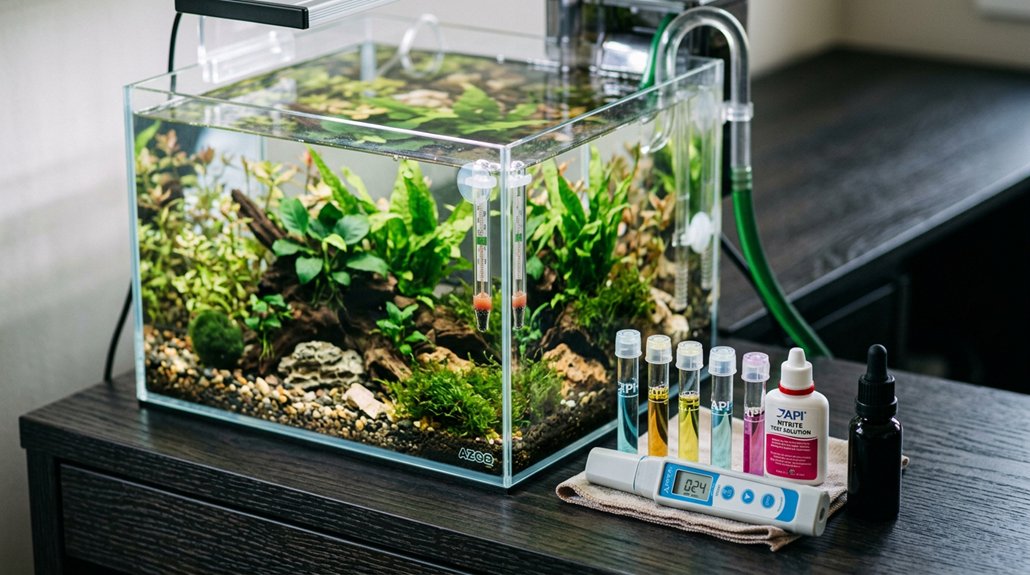
You should use a liquid test kit, not strips, to measure ammonia, nitrite, and nitrate in ppm, since it’s more accurate for tracking your cycle. Test daily by collecting tank water in a clean container at tank temperature, then follow the kit’s timing and color chart exactly to read each value. Ammonia and nitrite should be 0 ppm and never above 0.25 ppm, while nitrate should stay under 40 ppm with partial water changes if it rises.
Ammonia Test Basics
To track a new aquarium’s cycle accurately, use a liquid test kit or reliable test strips to measure ammonia (NH3/NH4+), nitrite (NO2−), and nitrate (NO3−), with liquid kits preferred because they provide more precise ppm readings. Your kit comparison should favor liquid tests when you need exact numbers, since strips’re less precise. During the first 4–6 weeks, keep a strict test frequency: test daily or every other day. You’ll often see ammonia rise first, sometimes above 0.5–2.0 ppm, then nitrite, then nitrate as biofiltration develops. Ammonia and nitrite should stay at 0 ppm; any measurable amount is toxic. If either exceeds 0.25 ppm, do a partial water change, treat new water with conditioner, and reduce feeding. Record each result so you can verify cycle progress.
Reading Nitrite And Nitrate
Once ammonia starts to drop, nitrite usually rises next, then nitrate climbs as the biological filter matures. You should test nitrite and nitrate daily, or every other day, during the first 4–6 weeks with a liquid kit, not a strip. Read the result at the exact time the manufacturer specifies. Any measurable nitrite above 0.25 ppm is dangerous, and new tanks may spike from 0.5 to 5+ ppm. If that happens, do a partial water change, no more than 50%, and condition replacement water. Keep testing until nitrite reaches 0 and nitrate rises, often to 20–100 ppm. Then manage nitrate with water changes to stay under 40 ppm. Log date, temperature, pH, and ppm values; track water clarity and plant dosing.
Immediate Steps to Save Fish
Act quickly: test ammonia, nitrite, and nitrate immediately, then repeat testing daily until the tank stabilizes. If ammonia or nitrite is above 0 ppm, act at once; levels over 0.25 ppm can stress small fish. Perform an immediate partial water change of up to 50% with dechlorinated water, matching temperature and chemistry to prevent shock. Increase oxygen aeration and use quick quarantines for any visibly stressed or weak fish if you can’t lower toxicity fast enough. Reduce bioload by removing excess food, feeding sparingly once daily or every other day, and temporarily moving some fish if needed. Add established filter media or a biological starter from a healthy cycled tank. Monitor pH for swings, and keep changing water until ammonia and nitrite read 0 ppm and nitrate appears.
How to Cycle a Tank Safely
A new aquarium needs time to develop its biological filter, so you should cycle it before adding a full fish load. Add a small ammonia source, then test ammonia, nitrite, and nitrate every 2–3 days. You’ll see ammonia rise first, then nitrite, and finally nitrate as bacteria colonize the filter and substrate over 4–6 weeks. Use seed media from a healthy tank if you can; it can shorten the process. Keep these points in mind:
- Test daily during spikes.
- Do 20–30% water changes when toxins climb.
- Avoid full cleanings that remove bacteria.
- Use gradual stocking after the cycle stabilizes.
Start with a few hardy fish, then wait at least a week before adding more. Skip quick-cycle products; they don’t replace natural bacterial development.
How to Prevent Fish Losses
To prevent fish losses in a new aquarium, keep testing ammonia, nitrite, and nitrate daily during the first 4–6 weeks and perform partial water changes of no more than 50% whenever ammonia or nitrite appears, so toxin levels stay near 0 ppm. Use a stocking strategy that adds only 20–30% of your planned bioload first, then wait at least a week after fish look healthy before increasing numbers. Seed the filter with media from an established tank or bottled nitrifying bacteria, and don’t depend on ammonia binders, which can hide problems. On every water change, use conditioner that neutralizes chlorine and chloramine and match the new water’s temperature to the tank. Keep your feeding schedule sparse, remove leftovers fast, and continue testing until ammonia and nitrite remain at 0 ppm and nitrates stay controlled.
Frequently Asked Questions
Is It Normal for Fish to Die in a New Tank?
Yes, it can happen in a new tank, but it isn’t normal or acceptable. You’re likely seeing water chemistry instability or stocking stress. Test ammonia, nitrite, nitrate daily, and change water carefully.
How Long Does It Take for a Fish to Die of New Tank Syndrome?
It can happen in 48–72 hours, though you’ll sometimes see losses over days or two weeks. If your aquarium chemistry’s unstable and stocking density’s high, you’re watching a coincidence become a toxic cycle.
How Long Do Fish Take to Settle in a New Tank?
You’ll usually see fish settle within 2–6 weeks, once the acclimation period ends and the biofilter stabilizes. Watch for stress behaviors early, test water often, and keep stocking light while bacteria establish.
What Are the Signs of New Tank Syndrome?
You’ll notice cycling symptoms like loss of appetite, lethargy, cloudy water, rapid breathing, and surface gasping. Ammonia spikes often cause slime-coat buildup, rising nitrite, little nitrate, and deaths within one to three weeks.
Conclusion
So, why do your fish keep dying in a new aquarium? Because you’re likely dealing with new tank syndrome, unstable water chemistry, or an incomplete nitrogen cycle. If you test ammonia, nitrite, and nitrate regularly, watch for stress signs, and cycle your tank before adding fish, you can prevent most losses. With patience, proper filtration, and careful stocking, you’ll create a safe, stable environment where your fish can survive and thrive.