Birds often hide illness, so you need to watch for fluffed feathers, sitting on the cage floor, reduced activity, watery droppings, and open-mouth breathing or tail-bobbing. Poor nutrition can trigger obesity, weak bones, seizures, and liver disease, especially on seed-heavy diets. Common problems include PBFD, aspergillosis, mites, and feather-picking, plus tumors or egg-binding. If your bird shows sudden lethargy, bleeding, or breathing trouble, call an avian vet quickly; the key signs are easy to miss.
Key Takeaways
- Watch for illness signs like fluffed feathers, lethargy, reduced vocalization, and sitting on the cage floor.
- Check droppings regularly for diarrhea, color changes, or undigested seed, which can signal digestive disease.
- Poor nutrition from seed-only diets can cause obesity, liver disease, and calcium or vitamin deficiencies.
- Common diseases include PBFD, aspergillosis, avian gastric yeast, and mites, all needing prompt veterinary care.
- Seek urgent avian veterinary help for open-mouth breathing, tail-bobbing, seizures, severe bleeding, or sudden collapse.
What Are the Signs Your Bird Is Sick?
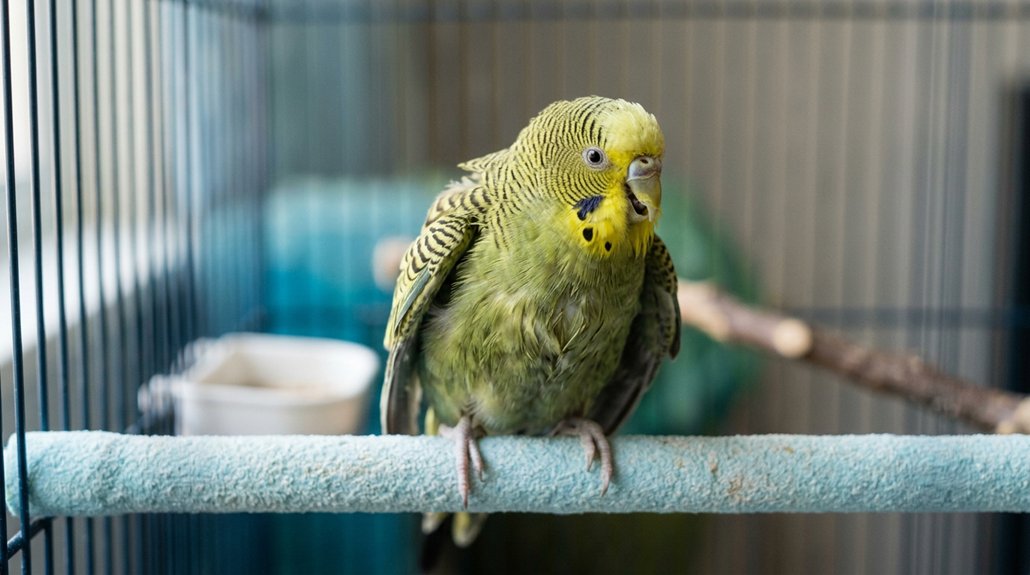
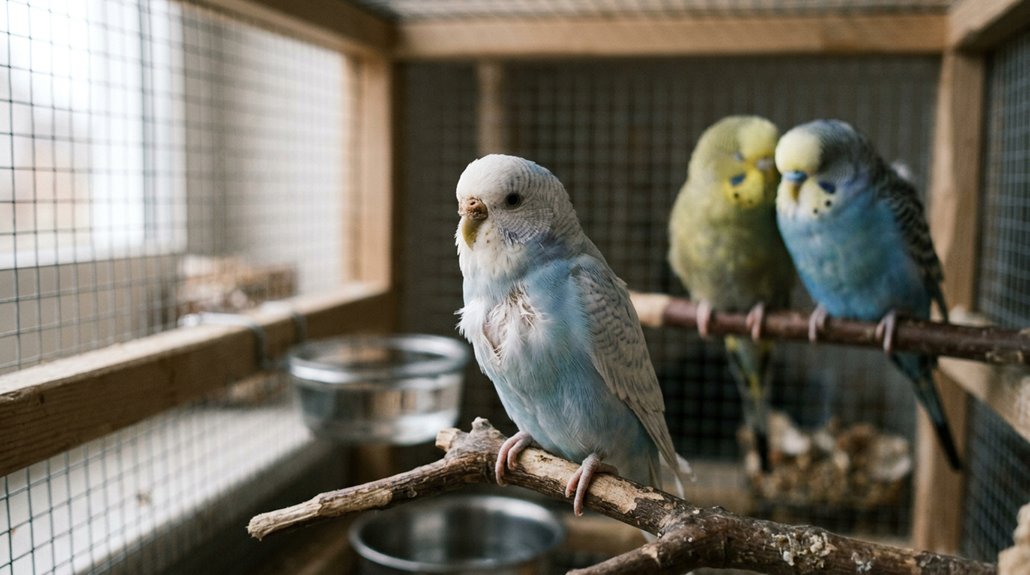
If your bird is sick, the early signs are often subtle but important: fluffed-up feathers, sitting on the cage floor, and sudden lethargy all warrant prompt veterinary evaluation. You should also watch for behavioral changes, such as reduced activity, hiding, or a sudden drop in vocalization. Abnormal droppings—watery diarrhoea, unusual colour, or undigested seed—can indicate gastrointestinal or systemic disease. Respiratory distress, including open-mouth breathing, tail-bobbing, sneezing, discharge, or altered calls, may signal infection. Sudden weight loss, refused food, or droopy wings are urgent signs. You can’t assume abnormal feathering, bleeding, broken beaks, or excessive preening are just a feather molt; they may reflect medical or behavioural disorders that need investigation. If you notice any of these signs, don’t wait—seek avian veterinary care promptly.
Bird Nutrition Problems That Cause Illness
Poor nutrition is a common cause of illness in pet birds, especially when the diet is based largely on seeds. A seed imbalance can drive obesity and hepatic lipidosis in parrots, with visible fat deposits, reduced stamina, and eventual organ failure. You should also watch for vitamin deficiency, especially of calcium, vitamin D, and vitamin A. These deficits can cause hypocalcemia, weakness, tremors, seizures, egg-binding, poor feathering, and lesions in the mouth or nostrils. Species such as eclectus parrots, African grays, budgerigars, finches, and canaries are particularly vulnerable. Long-term nutritional errors can also contribute to lipomas, xanthomas, atherosclerosis, and other obesity-related tumors. A formulated pellet diet with fresh produce is usually safer and more balanced.
Common Infectious Diseases in Pet Birds
| Disease | Key point |
|---|---|
| PBFD | Beak and feather damage, immune suppression |
| Aspergillosis | Fungal dyspnoea; needs aspergillus prevention |
| Avian gastric yeast | Chronic weight loss, undigested seed |
| Mites | Open-mouth breathing, requires acaricides |
PBFD has no cure and requires strict quarantine. Aspergillosis is favoured by warm, moist, poorly ventilated housing, so environmental control matters. Avian gastric yeast and mites also need prompt veterinary diagnosis and targeted treatment.
Other Common Bird Health Problems
Other common bird health problems include several conditions that can seriously affect health and behavior. You may see psittacine beak and feather disease, a viral illness that causes abnormal feather growth, beak damage, and immune suppression; it’s especially serious in cockatoos and lovebirds, and there’s no cure. Aspergillosis can cause open-mouth breathing, sneezing, and lethargy in African greys and other parrots. Avian papillomatosis produces wart-like cloacal or oral growths in older Amazons and macaws, sometimes bleeding or blocking eating and defecation. Gastric yeast, or Macrorhabdus ornithogaster, affects budgerigars and can lead to chronic weight loss and undigested seed in droppings. Feather-picking and feather destructive behavior are often linked to boredom, stress, or sexual frustration, so you’ll need a careful veterinary assessment plus environmental and dietary correction.
When to Call an Avian Vet
Knowing the signs of serious disease is only part of protecting your bird; you also need to know when home monitoring isn’t enough. Seek immediate avian care for emergency signs: open-mouth breathing, tail-bobbing, loud wheezing, sudden collapse, seizures, severe bleeding, egg-binding, cloacal prolapse, burns, bites, or entanglement. These can worsen within hours. Call promptly if you notice reduced appetite, treat refusal, sudden weight loss, fluffed posture, lethargy lasting over 24 hours, or marked behavioral changes, including altered vocalization. Abnormal droppings, blood, fluorescent green stool, vomiting, eye or nasal discharge, feather loss, beak deformity, or feather-destructive behavior also warrant evaluation. Early diagnosis matters because infections, nutritional deficits, and reproductive disorders can progress quickly, and small birds can decompensate fast.
Frequently Asked Questions
What Is the 3 3 3 Rule for Birds?
You’re using the 3-3-3 rule: 3 days to calm down, 3 weeks to test boundaries, and 3 months to settle into routine. It’s a guideline for introducing companionship, not a guarantee.
What Are the Common Health Problems in Pet Birds?
You’ll commonly see feather plucking, respiratory infections, obesity, liver disease, egg-binding, seizures, fungal aspergillosis, psittacosis, PBFD, polyomavirus, and hormonal aggression. You should monitor appetite, droppings, breathing, and feathers, and seek avian veterinary care promptly.
How Do You Say “I Love You to Your Bird”?
You say it with calm, affectionate talks, whispered songs, gentle preening, and short positive training. You’ll respect your bird’s boundaries, give consistent care, and build trust through daily attention, nutrition, and safe companionship.
What Colors Do Birds Not Like?
Birds often dislike bright red, orange, dark black, high-contrast patterns, and reflective surfaces. By coincidence, you might notice they’ll avoid shiny objects, especially when stressed. You should watch your bird, since responses vary by species.
Conclusion
You can protect your bird by watching for subtle changes, such as fluffed feathers, reduced appetite, or quieter behavior. For example, a cockatiel that stops singing and eats less may be developing a respiratory infection or nutritional deficiency. Because birds hide illness well, even mild symptoms deserve attention. If you notice vomiting, breathing changes, or abnormal droppings, don’t wait. Prompt evaluation by an avian vet can prevent serious complications and improve your bird’s outcome.