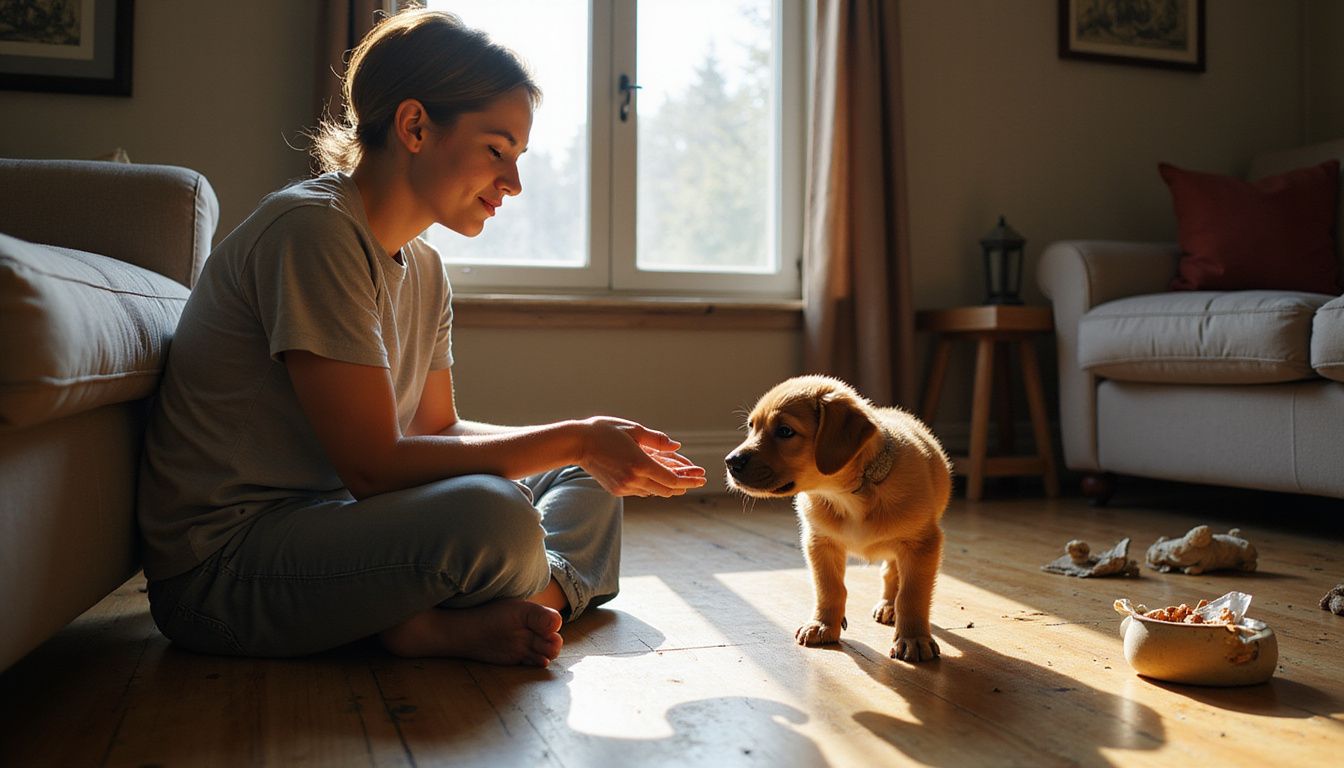
Did you just start your first month of dog ownership and already feel completely overwhelmed?
That feeling, sometimes called the puppy blues, is normal for just about every first-time dog owner.
Here’s the secret that helped me make sense of it all: the 3-3-3 guideline.
It breaks the adjustment period into three days of stress, three weeks of settling in, and three months of full acclimation to your new home. Knowing this timeline ahead of time helps you set realistic expectations from day one.
I’ll walk you through the exact schedule, training steps, and trust-building tricks that work during those first thirty days. Let’s get your new best friend settled in, one day at a time.
Key Takeaways
- Follow the 3-3-3 guideline: three days of stress, three weeks of settling in, and three months of full acclimation to your new home.
- Set up consistent feeding times, potty breaks, and exercise routines every day. This builds trust and helps your dog adjust fast.
- Use positive reinforcement with treats and praise during training. This builds trust and teaches commands like sit, stay, and come.
- Start crate training right away, since dogs naturally avoid soiling their sleeping area. This speeds up housebreaking during month one.
- Handle separation anxiety and stress behaviors with patience and calm interactions. Call a behavior professional if you need extra help.
Establishing a Routine for Your New Dog
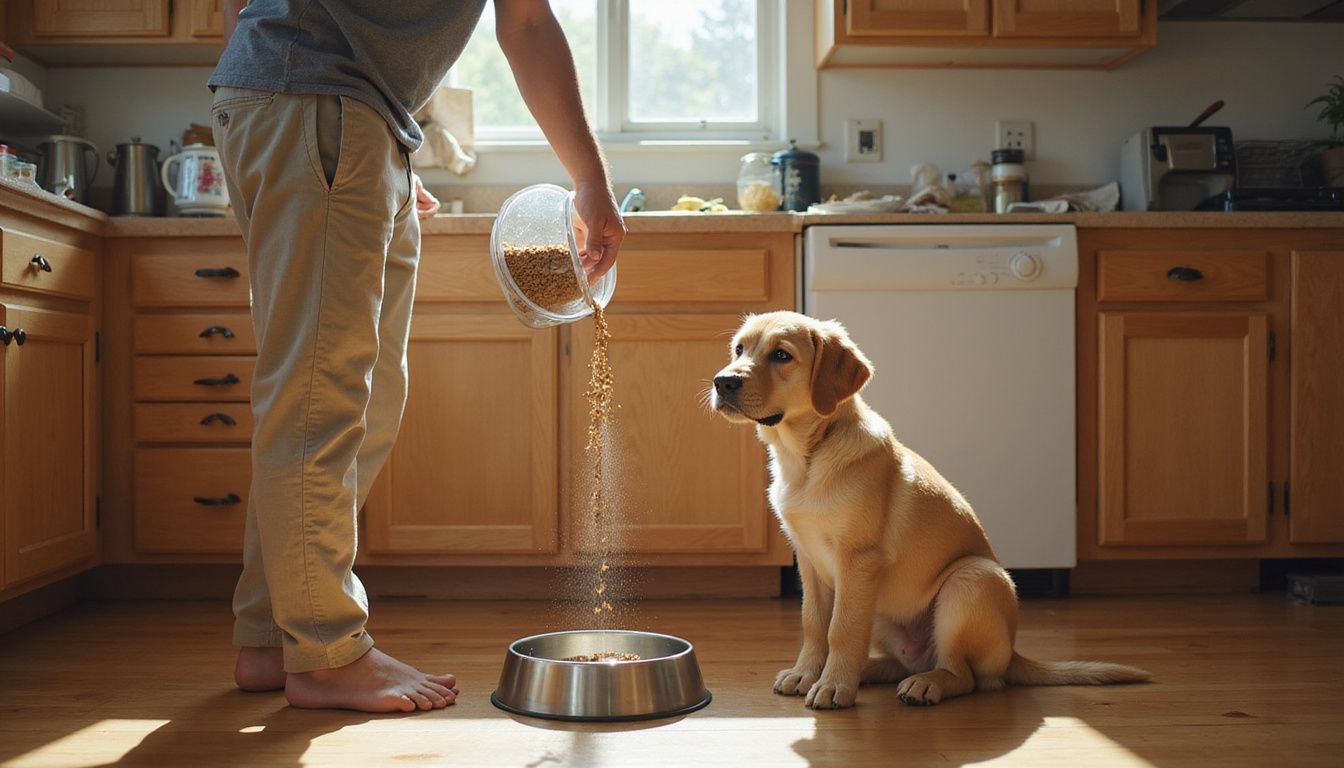
Your new dog thrives on structure, so set up a feeding schedule, potty breaks, and exercise times that stay the same every single day. A solid routine calms your pup’s nerves, helps with housebreaking, and builds the trust that makes everything else easier.
What is the best feeding and potty schedule for a new dog?
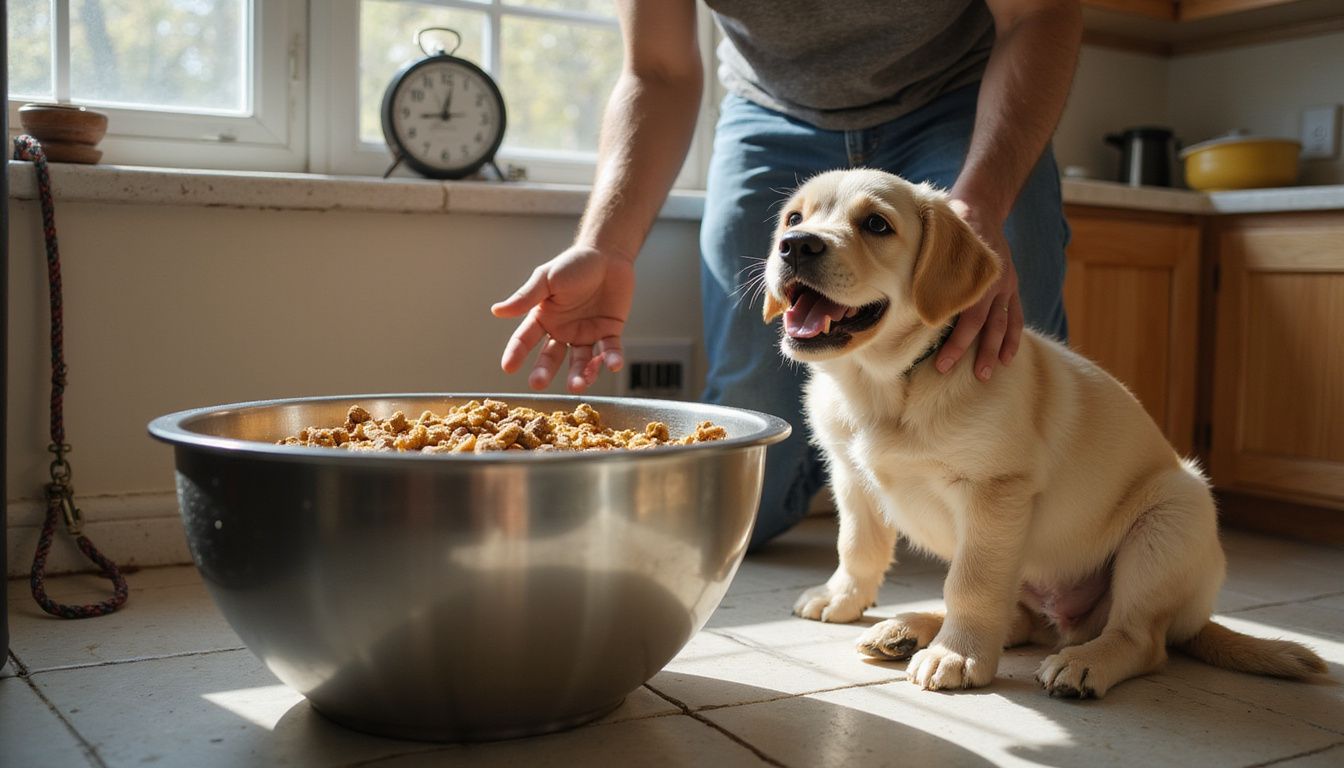
Getting a new dog means learning a whole new schedule of puppy care, but the payoff is worth every early morning and late night. Think of feeding and potty times as the foundation for everything else. Get these right, and the rest falls into place.
| Age Group | Feeding Frequency | Potty Schedule | Key Considerations |
|---|---|---|---|
| Puppies (Under 6 months) | Feed three to four times daily | Take outside after meals, naps, playtime, and before bedtime | Use growth-formulated food; expect frequent potty breaks; nighttime awakenings require calm, quiet interactions; housebreaking starts immediately |
| Adult Dogs (6+ months) | Feed twice a day | Take outside in morning, midday, evening, and before sleep | Include high-quality protein, fats, vitamins, and minerals in diet; treats should not exceed 10 percent of daily calories; maintain consistent timing |
| Treats and Training | Use as rewards during training sessions | Integrate into potty schedule to reinforce correct behavior | Reward correct behavior with praise and treats during house training; treats help build positive associations with outdoor potty areas |
| Crate Training Integration | Feed in crate to establish routine | Let dog out immediately after eating and waking; dogs naturally avoid soiling sleeping areas | Regular schedule accelerates housebreaking; crate training works because dogs instinctively keep dens clean |
After adopting a 12-week-old mixed-breed puppy, one first-time owner tracked progress while keeping feeding times locked in at 7am, noon, and 6pm, with supervised potty breaks 10 to 20 minutes after each meal and nap. Day 1 brought 8 indoor accidents. By day 10, that number dropped to 3. By day 21, only 1 accident happened in a 24-hour period, and the puppy signaled at the door reliably 5 of 7 days.
“Keeping the meals and potty trips on the same clock made accidents drop noticeably within two weeks. The puppy began nudging the door by day 14.”
This timeline shows what consistent scheduling can accomplish during your first three weeks.
Puppies under six months need feeding three to four times daily because their bodies grow fast and can’t handle large meals. Adult dogs do fine with twice-daily feedings once they hit six months. Timing matters a lot here: feed at the same hours every day so digestion stays predictable.
Potty breaks follow the feeding schedule closely. After meals, take your dog outside within fifteen to thirty minutes. Naps trigger the need to go too, so watch for waking moments.
Here’s a number that really helps: according to guidelines from the American Kennel Club (AKC) and veterinary professionals, a puppy can generally only hold its bladder for about one hour per month of age. A three-month-old puppy maxes out at three hours, even overnight. Knowing this stops you from expecting more than your pup’s body can actually handle.
One final trip outside before bed prevents nighttime accidents. Morning breaks should happen first thing, before anything else gets your attention.
A few more habits make this schedule work even better:
- Keep treats light. Stay under 10 percent of daily calories. Use treats to reward successful outdoor potty trips, since this builds a strong link between going outside and getting praised.
- Feed inside the crate. Dogs naturally avoid soiling their sleeping area, so feeding meals in the crate and taking your dog out right after builds a reliable rhythm fast.
- Stay calm at night. Nighttime awakenings happen. Keep interactions quiet so your pup learns to settle back down instead of expecting playtime.
- Stick to the same routes and times. Same feeding times, same potty spots, same path to the door. Within weeks, your dog will start signaling when nature calls.
Consistency wins the battle against accidents every time. The pattern becomes second nature for both of you.
When should I exercise my dog consistently each day?
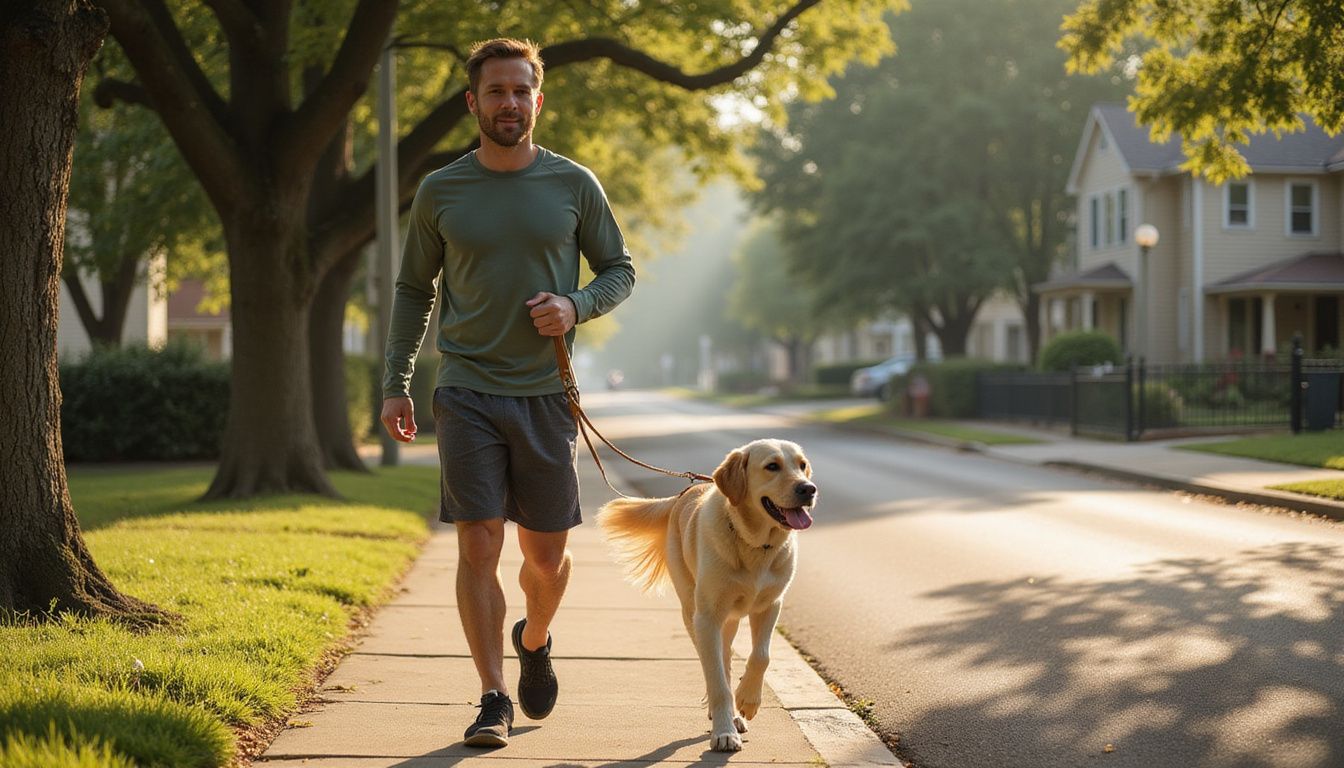
Your new dog thrives on a predictable schedule, so consistent daily exercise becomes your foundation for success. Setting fixed times for activity helps your pup burn energy, build trust, and settle into your home with confidence.
As recommended by veterinary experts and highlighted in AKC resources, growing puppies need a specific limit on structured exercise. Try 5 minutes of leash walking per month of your puppy’s age, up to twice a day. This protects growing joints from long-term damage like hip dysplasia, while still giving your pup a clear daily target. Adult dogs can handle more, generally 30 minutes to 2 hours total, depending on breed, age, and health.
Here’s how to build a daily rhythm that works:
- Schedule one to two walks each day to satisfy your dog’s curiosity and burn off built-up energy.
- Aim for morning exercise before work or school. This kickstarts your dog’s day and lowers stress levels.
- Plan afternoon or evening activity to tire out your pup before bedtime, which means fewer nighttime disruptions.
- Space sessions out through the day instead of cramming activity into one long block. This keeps your dog’s toilet rhythm steady too.
High-energy breeds need extra outlets beyond basic walks:
- Try fetch, tug-of-war, or agility training to match their intense energy levels.
- Add puzzle toys and interactive games between walks for mental stimulation.
- Consider dog sports like flyball or obedience competitions for structured outlets.
After any session, set up a safe space, like a crate or quiet room, where your dog can rest and recover. If you’ve got an older or less active dog, shorten those walks and go gentler on play to match their physical limits.
Building Trust with Your New Dog

Your new dog needs to know you’re safe and kind. Getting a handle on dog behavior early makes the rest of this month so much easier. You’ll build this foundation through daily interactions, treats, and calm moments together.
How can I use positive reinforcement to build trust?

Positive reinforcement works like magic when you want to build trust with your new dog. Treats and praise should become your best friends during those first three weeks after adoption.
Every time your dog potties in the right spot, reward them right away with a high-value treat and enthusiastic praise. This creates a positive association that sticks in their mind fast.
A few habits make this even more effective:
- Keep training sessions short. Five to ten minutes throughout the day keeps your dog engaged and happy.
- Reward calm, friendly behavior too. This shows your dog that good things happen when they relax around you.
- Pair treats with real excitement in your voice. Your enthusiasm makes the reward feel bigger.
- Use soft corrections, never harsh ones, to guide your dog toward better choices without creating fear.
Consistency is your secret weapon here. According to the official position statement from the American Veterinary Society of Animal Behavior (AVSAB), reward-based training is the only method that should be used with dogs. Aversive tools, like shock or prong collars, cause long-term stress and damage the bond you’re trying to build. That’s a strong reason to stick with treats and praise instead of anything that relies on fear.
A behavior professional or trainer from organizations like the American Kennel Club can teach you exactly how to time your rewards for maximum impact. Patience, consistency, and kindness matter most as your dog adjusts to their new environment.
This approach builds a foundation of trust that lasts far beyond that first month.
What are effective ways to spend quality time with my dog?
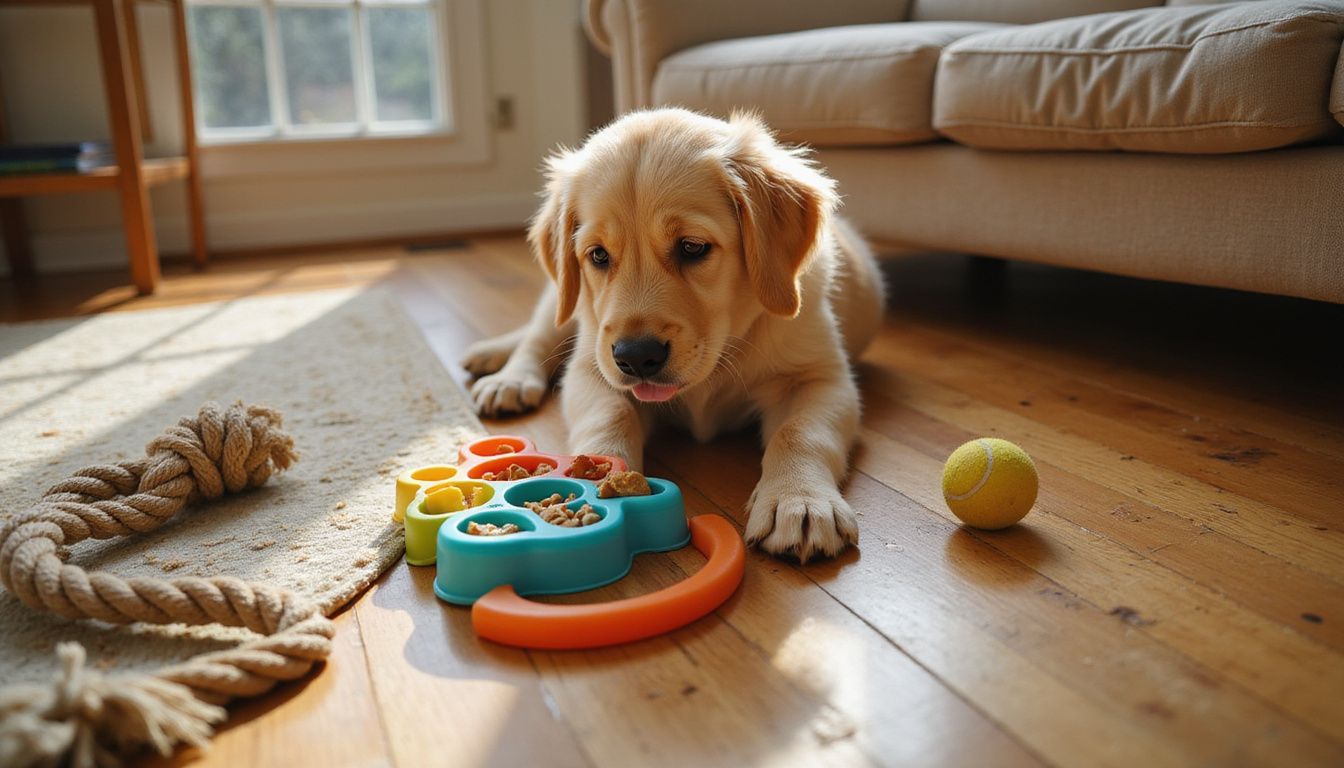
Your dog thrives on quality time with you, and these moments build the foundation for a strong relationship. Spending time together calmly and lovingly helps your puppy feel secure and confident in their new home.
Active bonding gets the energy out and builds skills:
- Play fetch or tug-of-war to provide physical and mental stimulation while strengthening your bond through shared fun.
- Use puzzle toys during quiet moments to engage your dog’s mind. Rotating toys keeps playtime fresh.
- Take daily walks on a lightweight leash to explore your neighborhood together. Rewarding calm walking teaches good leash training habits early on.
- Practice basic commands during short training sessions mixed with play, so your dog builds positive associations with learning.
Calm bonding builds trust in quieter ways:
- Sit quietly with your dog while petting them gently. These peaceful moments matter more than you’d think for building security.
- Introduce your dog to different people, environments, and gentle dogs gradually to boost confidence through socialization.
- Attend puppy preschool or puppy classes to learn training techniques together, with guidance from a behavior professional.
- Cuddle and relax together on the couch or floor without distractions, so your puppy learns quality time means both play and peace.
Training During the First Month of Dog Ownership
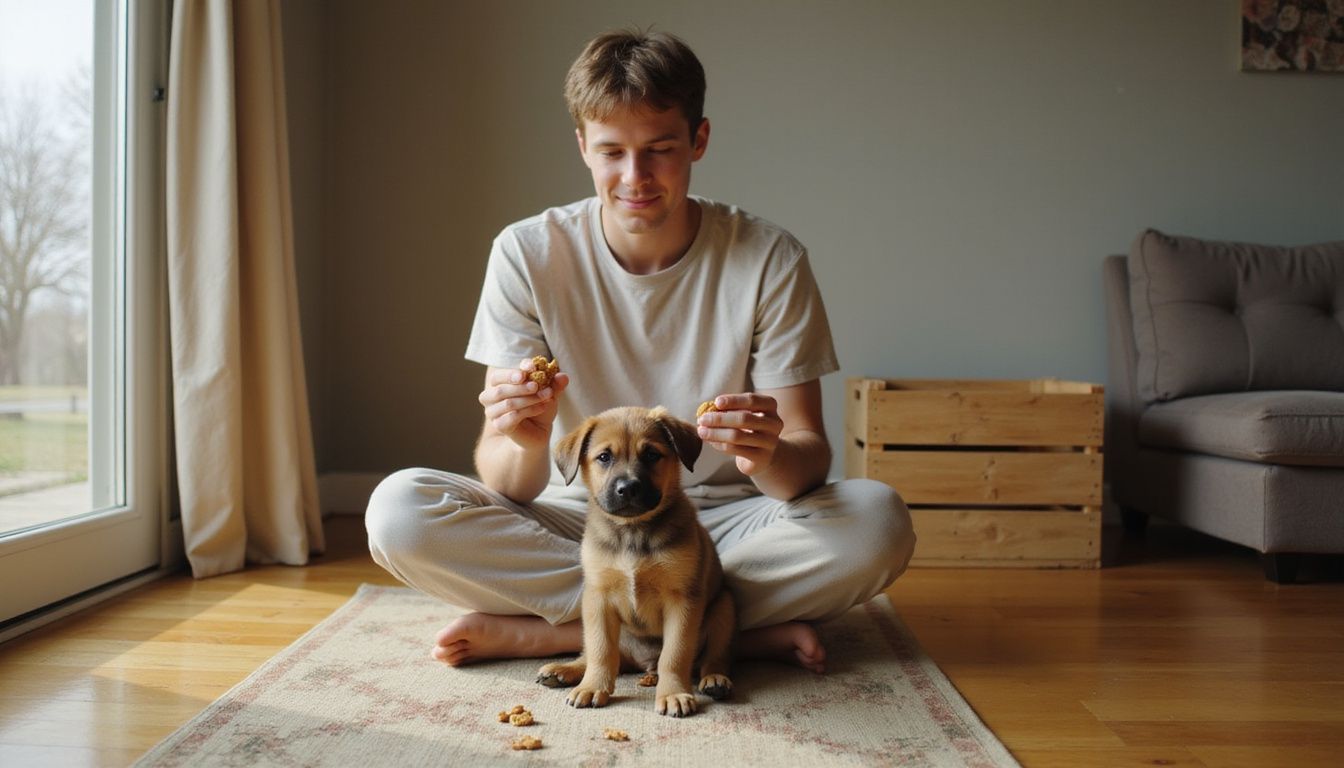
Your dog learns fast during month one, so start teaching basic commands right away. You’ll shape your pup’s behavior through positive reinforcement, crate training, and housebreaking. These are critical skills that set the stage for years of good behavior ahead.
How do I introduce basic commands to my new dog?
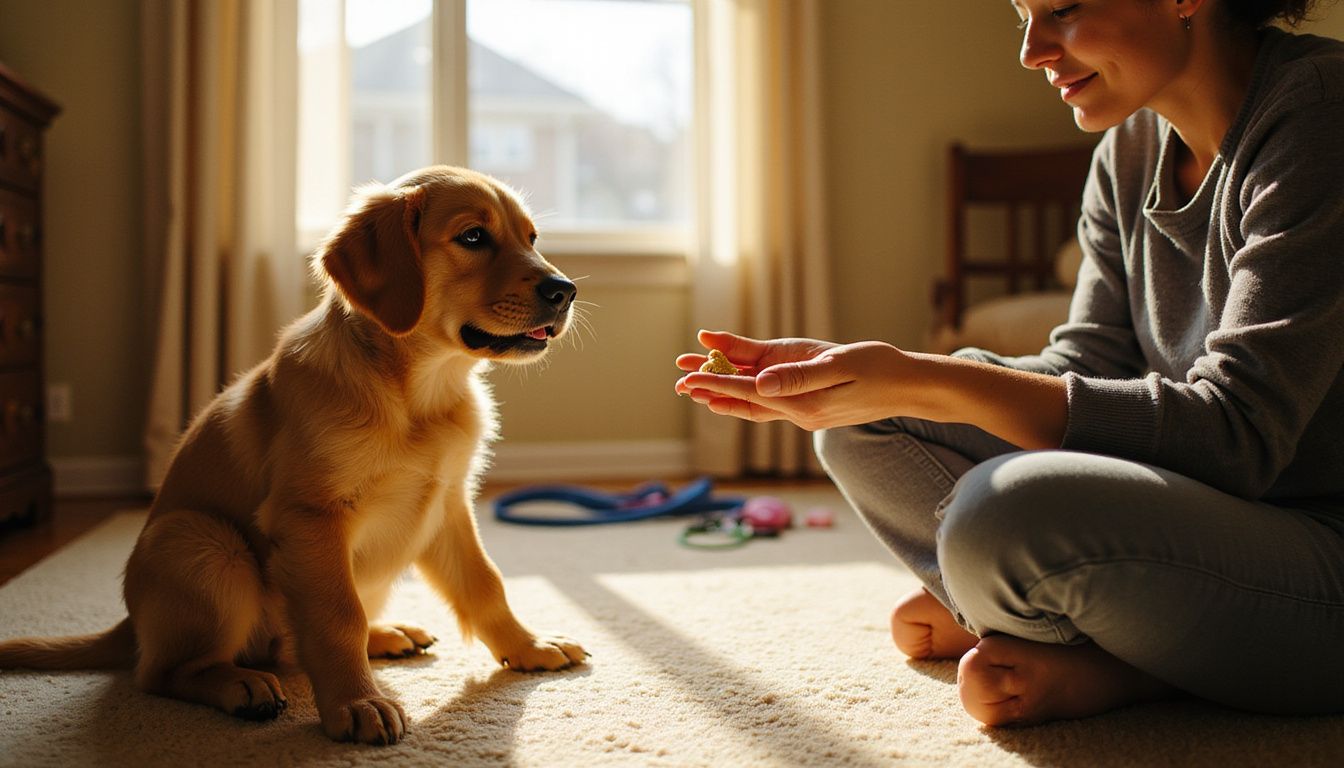
Teaching basic commands starts the moment your new dog arrives home. These foundational skills keep your dog safe and build strong communication between you both.
Week one priorities:
- Start with “sit” since it’s the easiest command for most dogs to learn quickly.
- Use treats and praise right away when your dog gets it right.
- Keep sessions short. Five to ten minutes works best for holding attention.
Weeks two and three:
- Teach “come” next, since this command can prevent dangerous situations outdoors.
- Add “stay” and “wait” to build on what your dog already knows.
- Practice “leave it” to keep your dog from eating anything harmful.
A few habits keep progress moving:
- Train every single day. Repetition builds muscle memory faster than long, occasional sessions.
- Hold sessions before meals, when your dog feels most motivated by food.
- Call a behavior professional if your dog still struggles with basics after two weeks.
- Skip punishment or yelling. Positive reinforcement builds trust and speeds up learning.
- Socialize your dog alongside training by exposing them to new people, animals, and places regularly.
What are the steps for crate training and housebreaking?
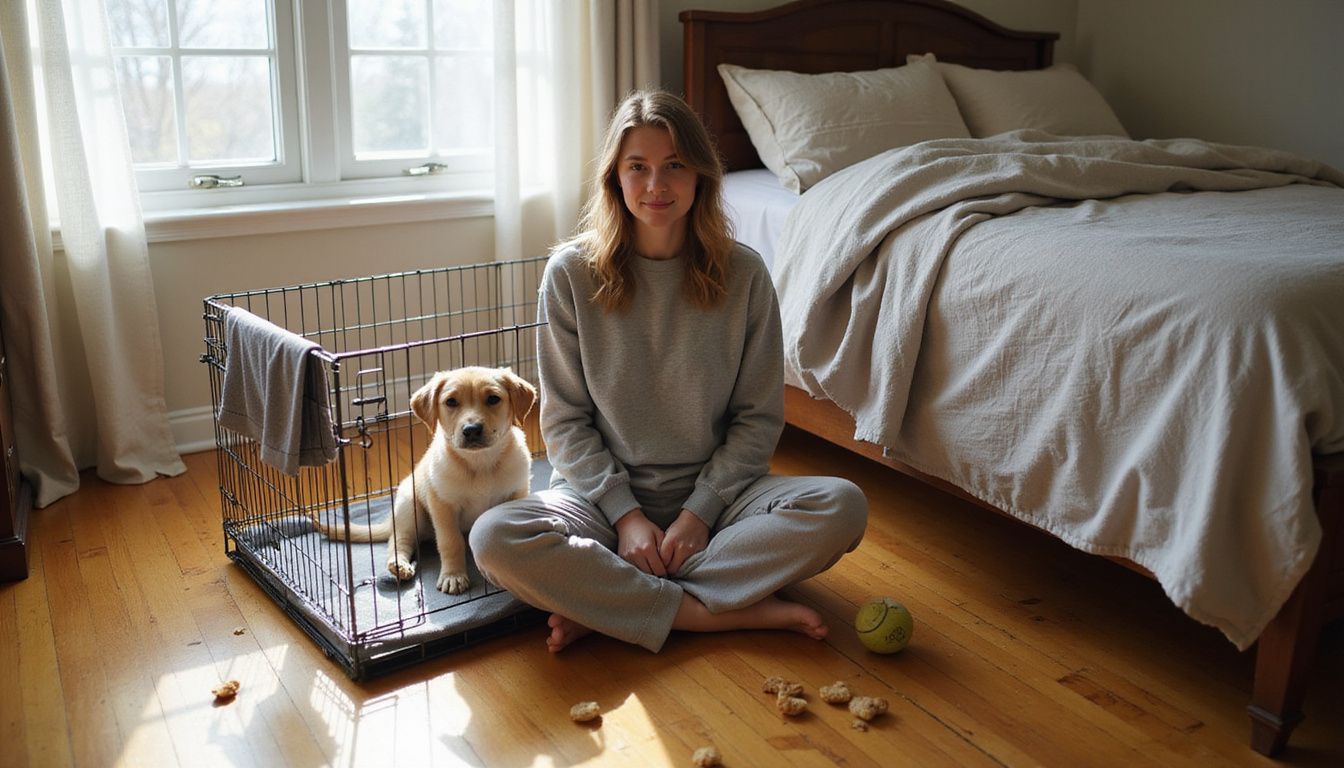
Crate training and housebreaking go hand in hand, making your first month of dog ownership smoother and less stressful. Your dog naturally avoids soiling their sleeping area, so a crate becomes your best tool for success.
Setting up the crate:
- Place the crate in your bedroom on the first night. This eases your puppy’s anxiety and helps them feel secure near you.
- Get the size right. As advised by animal welfare organizations like the ASPCA, a crate should be just large enough for your dog to stand up fully, turn around, and lie down comfortably. Too much extra space, and your puppy will use one end as a bathroom and the other as a bed, which defeats the whole point.
- Line the crate with a soft blanket and add something with your scent, like a worn shirt, for comfort and familiarity.
Building the potty routine:
- Take your puppy outside frequently, especially after meals, naps, and playtime, since these are peak potty times.
- Stick to a consistent feeding schedule (three to four times daily for puppies) so you can predict bathroom needs.
- Reward your puppy right away with praise and treats when they go outside. This reinforces that the behavior pleases you.
- Keep nighttime potty breaks calm and quiet, so your puppy settles back down instead of expecting playtime.
- Pair crate training with your daily routine. This combination speeds up housebreaking more than either one alone.
- Expect a few nighttime awakenings during the first weeks. That’s completely normal and temporary.
Handling setbacks:
- Redirect unwanted chewing or accidents with a chew toy instead of harsh punishment or yelling.
- Call a behavior professional or AVSAB certified trainer if your puppy shows persistent accidents or stress after several weeks.
Here’s a practical three-week crate introduction plan that worked for one young adult owner with a 10-week-old puppy. Night one: crate in the bedroom with a worn shirt inside. Nights one through seven: three nighttime potty trips with calm interactions only. Week two: three five-minute departures during the day, with rewards for calm behavior on return. Week three: departures stretched to 15 minutes, plus one 30-minute outing. By week three, the puppy stayed calmly in the crate for 30 minutes alone in 6 of 7 trials.
“We started with tiny departures and rewarded calm returns. By week three the crate felt like a safe spot rather than punishment.”
Copy this schedule and adjust the timing based on your own puppy’s responses.
Managing Common Challenges
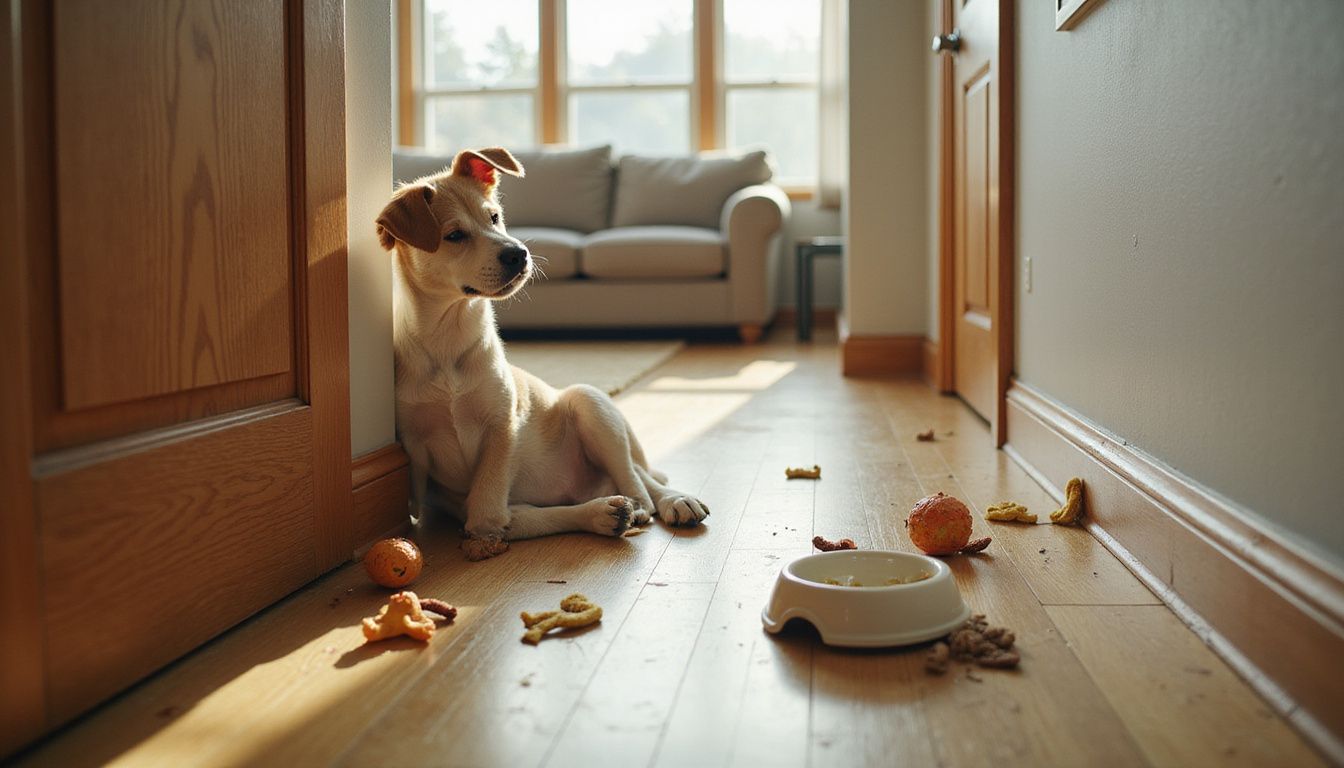
Your new dog might struggle with separation anxiety or show stress behaviors during this first month. Address these issues head-on with patience and, when needed, professional guidance from a behavior professional who can spot what’s really going on.
How can I help my dog with separation anxiety?

Separation anxiety hits hard when you leave your dog alone, but you can tackle it with smart planning and patience. Start by creating a safe space, like a crate or quiet room, that mimics a den-like environment and gives your pup a sense of security.
Place this safe zone in your bedroom during the first nights. This closeness eases anxiety and builds confidence early on. From there, gradually increase the time your dog spends alone, starting with just minutes and working up to longer stretches.
A few strategies make a real difference:
- Reward calm behavior with treats and praise when your dog settles down on their own.
- Introduce new experiences and periods of separation slowly, so your dog never feels overwhelmed.
- Keep departures and arrivals low-key. Skip the emotional goodbyes, since they can actually trigger more stress.
- Practice “fake departure cues.” According to behavioral experts at the ASPCA, picking up your keys or putting on your coat several times a day, without actually leaving, teaches your dog that these cues don’t always mean you’re gone. This removes the panic trigger before it even starts.
One owner tracked progress with a medium-sized rescue dog in an apartment over 28 days, using graduated alone-time exercises that started at 1 minute and built up to 30 minutes. Background radio noise played during 18 of the 28 sessions, and the owner kept exercise consistent before each departure.
“Slowly increasing alone time and keeping arrivals quiet cut the whining almost in half by week two and to near zero by week four.”
Observable whining dropped from 12 episodes in week one to just 2 episodes in week four. This realistic timeline shows that separation anxiety responds well to patient, incremental practice combined with calm energy.
Consistency and patience form the backbone of managing this well. When you get home, keep things quiet and calm instead of making a big fuss.
Crate training works as a powerful tool for behavior modification, since dogs naturally avoid soiling their sleeping area. Schedule short practice sessions where you leave and come back, gradually stretching your time away. Some dogs also benefit from background noise or calming activities to stay occupied.
Preventive care matters here too. Regular exercise, solid dog care routines, and veterinary check-ups all help address any underlying stress. Trust develops slowly, so don’t rush the process. Your dog will learn that you always come back, and that knowledge turns anxiety into confidence over time.
What should I do if my dog shows fear or stress behaviors?
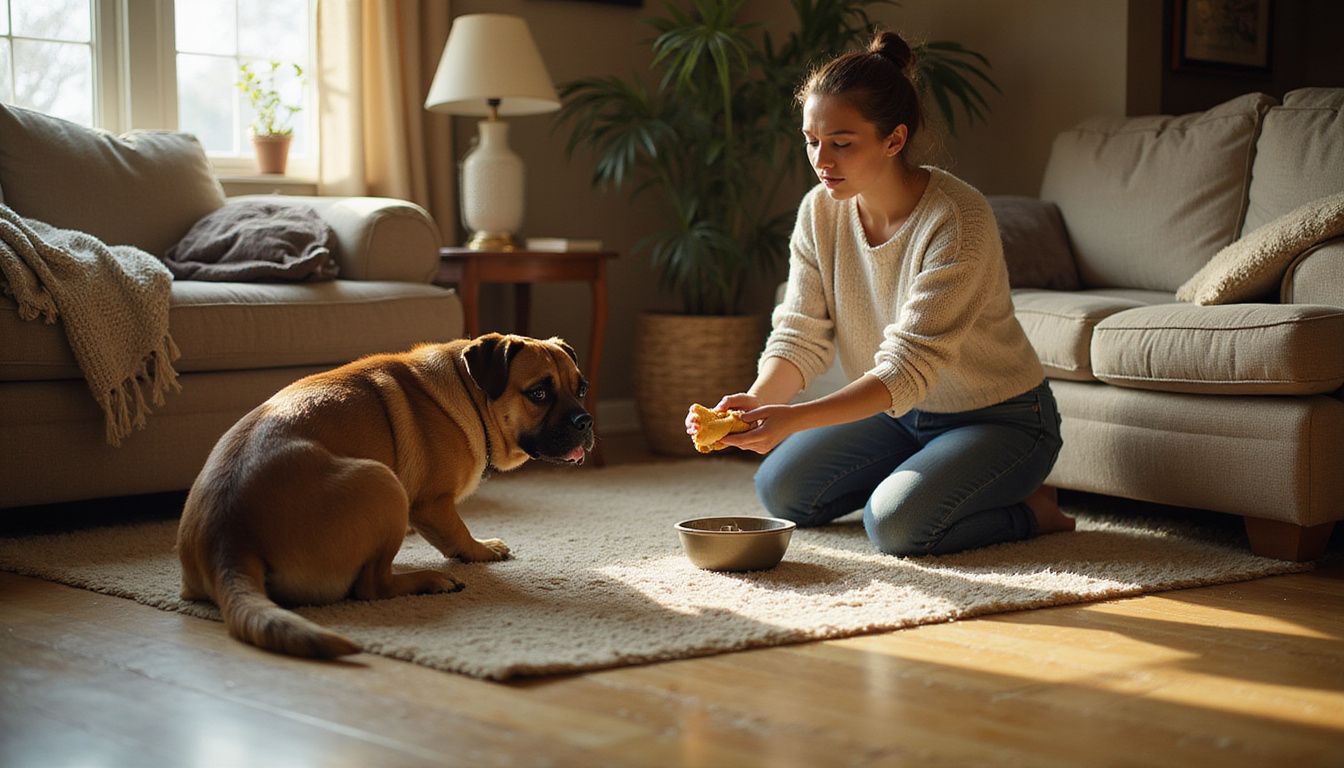
Your dog might shake, hide, or act out when stressed. Avoid punishment at all costs, since it only makes fear worse. Instead, redirect their attention with toys or treats to shift focus away from what scares them.
Stay calm yourself, since your pup picks up on your energy. A behavior professional can help if fear runs deep. During the first three days, your new companion deals with stress and anxiety in fresh surroundings, so patience becomes your greatest tool.
Stress can show up in a few common ways:
- Excessive barking or whining
- Loss of appetite
- Hiding or avoiding contact
- Trembling or pacing
Your vet can rule out medical issues first, since some of these signs overlap with physical problems. Some dogs take longer to adjust than others, and that’s completely normal.
The 3-3-3 guideline helps you understand this timeline: three days for shock, three weeks to learn your routine, and three months to truly settle in. While you wait it out, talk to your vet about core vaccines like DHPP, plus rabies, spaying or neutering, and flea and tick prevention to keep your dog’s health, and stress levels, in check.
Your dog’s health matters just as much as their emotional well-being during this adjustment period.
Conclusion
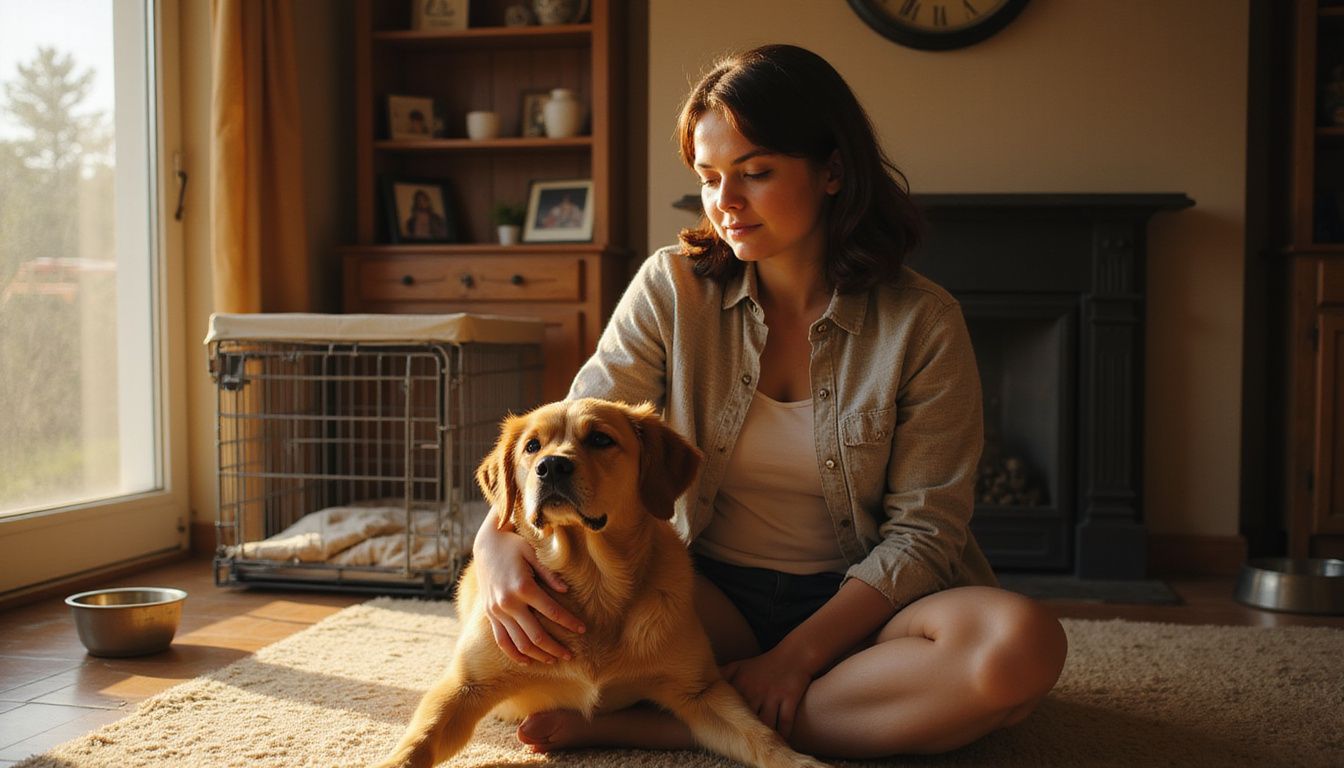
Your first month of dog ownership shapes everything that follows.
Setting up feeding schedules, potty breaks, and exercise routines gives your new companion the security they need during those critical early weeks. Building trust through positive reinforcement and quality time turns a nervous newcomer into a confident family member.
Training basics like sit, stay, and come, combined with crate training and housebreaking, sets the foundation for good behavior and clear communication between you two.
Managing separation anxiety and stress behaviors shows your dog that the world is safe and predictable. Resources like the RSPCA, PDSA, and services such as Kasten’s dog training offer guidance whenever questions come up.
Pet insurance is worth looking into as well, since it protects you against unexpected vet care costs for vaccinations, bordetella, rabies, and flea and tick prevention.
The 3-3-3 rule reminds you that three days bring stress, three weeks bring settling, and three months bring true acclimation. Patience during month one as a first-time dog owner pays off for years to come.
Dogs don’t ask for much. They ask for consistency, kindness, and someone willing to meet them where they are. Give them that, and they’ll give you a love that changes everything.
FAQs
1. What should I expect during the puppy blues?
The puppy blues hit many new owners hard, with feelings of overwhelm typically peaking around weeks two or three. This is completely normal and passes as you and your dog settle into a routine.
2. When should I start potty training and socialization?
Start both immediately. Potty training works best with consistency from day one, and socialization can begin after your vet approves, with facilities like Zoom Room offering safe early socialization classes.
3. What vet care does my new dog need in the first month?
Your dog needs a full check-up within the first week. This includes core vaccines like DHPP and rabies, plus bordetella and flea/tick prevention. Groups like the RSPCA and PDSA offer low-cost vet care if budget is a concern.
4. Should I get pet insurance right away?
Yes, enroll within the first 30 days. Getting coverage before any health issues arise prevents pre-existing condition exclusions, which can save you thousands later.
5. When should I schedule spaying or neutering?
Ask your vet at the first visit, as timing depends on your dog’s breed, size, and health. Most veterinarians recommend between five and nine months for standard breeds, though larger dogs may benefit from waiting longer.