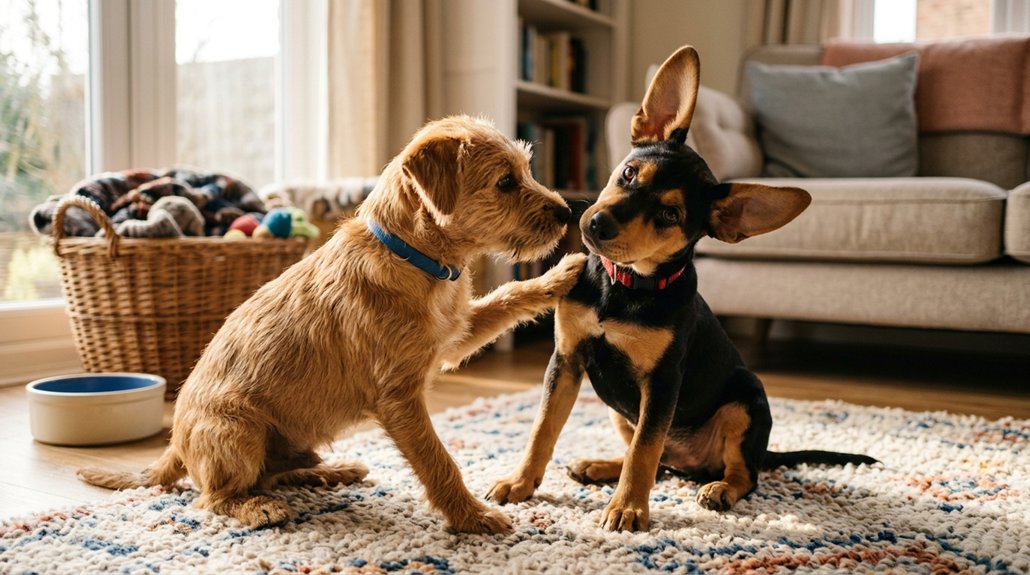
When adding a second dog to your home, expect a mix of excitement and challenges. You’ll need to understand your current dog’s feelings, carefully choose a compatible companion, and prepare for doubled expenses. Introduce them in neutral areas and watch for signs of stress, ensuring each dog gets individual attention. Consistent training, separate resources, and patience during the adjustment will promote harmony. By taking the right steps, you’ll create a happy, multi-dog household with deeper insights ahead.
Key Takeaways
- Prepare for increased expenses, including food, preventative care, and potential emergency costs for two dogs.
- Ensure gradual introductions in neutral spaces to avoid territorial issues and stress between the dogs.
- Maintain individual bonding time and provide reassurance to prevent jealousy and increase harmony.
- Choose a compatible second dog by matching size, energy levels, and temperament with the existing dog.
- Monitor interactions closely to prevent resource guarding and reinforce positive sharing behaviors.
Understanding Your Current Dog’s Feelings
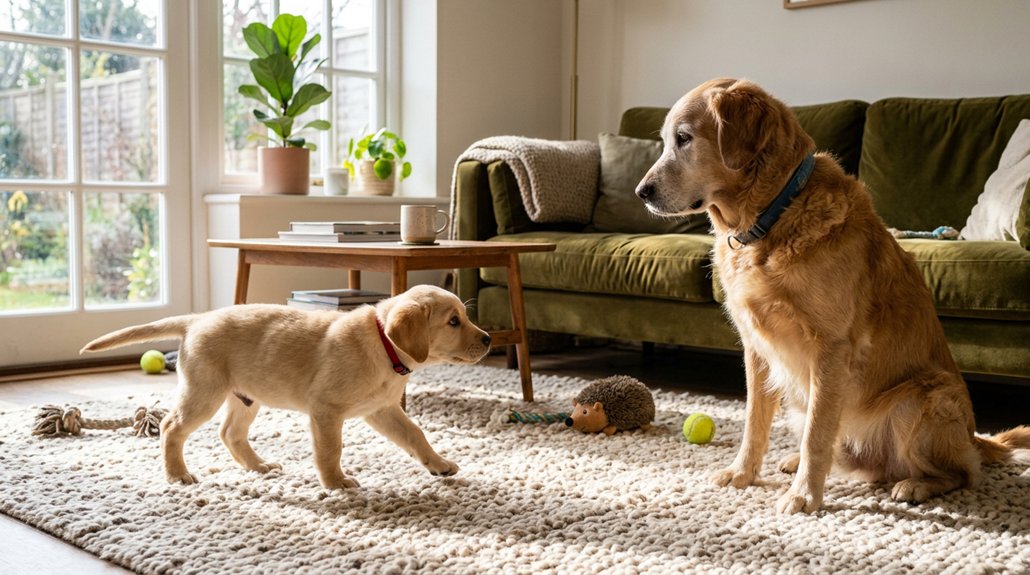
When planning to add a second dog to your household, understanding your current dog’s feelings is essential for a smooth shift. Dogs have complex emotions and may feel anxious, displaced, or territorial with a new companion. Recognizing anxiety signals like increased barking or withdrawal can help you address these issues early. Dogs are naturally social, but compatibility is important to avoid conflict. Pay attention to your dog’s personality to guarantee a harmonious match. Gradually introduce the new dog in neutral spaces to prevent overwhelming your existing pet. During this transition, provide extra attention and reassurance to mitigate any jealousy or resentment. Always monitor your dog’s behavior for distress signals or aggression, allowing you to make necessary adjustments promptly.
Selecting the Ideal Second Dog for Your Family
When you’re considering adding a second dog to your family, aligning the new pet’s size and energy levels with your current dog is vital for a harmonious household. Opting for a male-female pairing may help avoid the rivalry that often accompanies same-sex pairings, contributing to a smoother integration. Always keep in mind the personalities of both dogs, as a good temperament match will foster a congenial environment where both animals can thrive together.
Assess Dog Compatibility
Adding a second dog to your family is an exciting decision, but it requires careful assessment of compatibility to ascertain a harmonious environment for both pets. Start by evaluating each dog’s personality and behavioral assessment. Understanding interaction dynamics and recognizing stress signals is key. Consider breed characteristics and socialization strategies to guarantee both dogs can coexist peacefully. Matching play styles and energy recognition helps minimize conflicts and promotes healthy companionship. Additionally, gender dynamics influence compatibility, with male-female pairs generally facing fewer issues than same-sex pairings.
Here’s a helpful table for your consideration:
| Factor | Consideration | Tips |
|---|---|---|
| Personality | Complementary traits | Observe individual quirks |
| Behavior | Non-aggressive tendencies | Supervised introductions |
| Socialization | Positive interactions | Emphasize gradual exposure |
This approach supports a thriving, balanced dog family.
Consider Size and Energy
Selecting the perfect second dog for your family involves more than just a spontaneous decision; it’s crucial to thoughtfully consider both size and energy to guarantee a harmonious household. Dog breed compatibility is key to minimizing risks and promoting positive playtime dynamics. Here are a few things to think about:
- Size Similarity: Choose a breed similar in size to your current dog to reduce injury risks during interactions.
- Energy Levels: Pairing dogs with matching energy levels prevents frustration and unwanted behaviors.
- Living Environment: Verify your space supports the exercise and activity needs of both dogs, especially if you’re considering a larger breed.
Evaluate Gender Pairing
While the excitement of bringing a second dog into your family can be rewarding, considering gender pairing is essential in fostering a peaceful coexistence. Gender dynamics play a significant role in the harmony of your multi-dog household. Experts suggest that opting for a male-female pairing typically leads to fewer conflicts compared to same-sex pairings. Female-female pairs are often prone to rivalry over resources, whereas dogs of the opposite gender usually exhibit better compatibility, enriching play and interaction. Nonetheless, pairing preferences should focus on individual temperaments to guarantee compatibility.
| Gender Pairing | Potential Outcome |
|---|---|
| Male-Female | Fewer relationship issues |
| Female-Female | Increased chances of aggression |
| Male-Male | Possible rivalry |
| Opposite Sex | Enhanced play and interaction dynamics |
Budget Considerations for Adding a New Dog
Before welcoming a second dog into your home, it’s vital to carefully evaluate the financial implications of expanding your furry family. Expect to roughly double your monthly expenses, considering the food budget and preventative care such as regular vet visits and grooming supplies. Feeding logistics can also complicate matters as separate feeding areas help reduce competition. Prepare by budgeting for these costs and investing in toy variety and bedding options to minimize resource guarding.
Key Considerations:
- Training and Socialization: Crucial for smooth integration but can add substantially to training costs.
- Emergency Expenses: Unexpected vet visits might arise, so plan a financial buffer.
- Additional Supplies: Factor in grooming supplies, separate toys, and bedding to sustain harmony.
Best Practices for Introducing a New Dog at Home
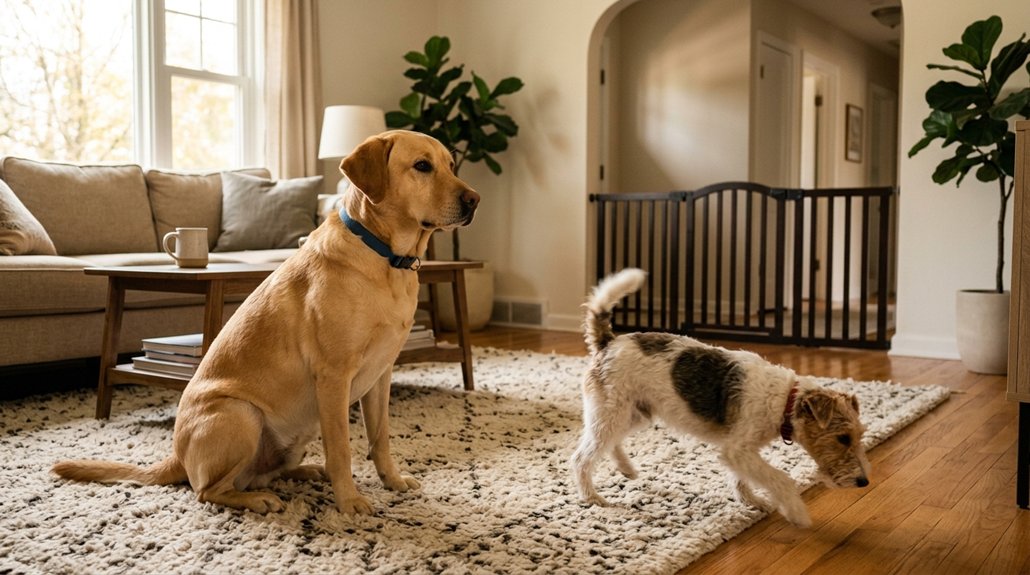
Adding a new dog to your home is a thrilling journey, but it demands thoughtful planning and execution to guarantee harmony. Start by introducing your new dog in a neutral area, like a park, to avoid territorial disputes. During this initial meeting, adhere to proper meeting etiquette by keeping both dogs leashed to maintain control. Watch their dog body language carefully for signs of stress or comfort; this will guide you in managing their interaction. Allow them to explore at their own pace. Foster familiarity by feeding them on opposite sides of a closed door before direct encounters. Supervision is essential for initial interactions. Limit unsupervised time until a bond forms, ensuring a peaceful home where both dogs feel secure and happy.
Organizing Your Home for Multiple Dogs
Bringing a second dog into your home is an exciting step that brings with it the need to thoughtfully organize your living space. Space optimization guarantees each furry family member feels comfortable. Adequate living space prevents territorial disputes:
Adding a second dog means organizing your home to ensure comfort and prevent territorial disputes.
- Resource Allocation: Each dog should have separate food and water bowls, alongside individual beds and resting areas, minimizing competition and encouraging relaxation.
- Preventing Conflict: Multiple toys ensure mental stimulation and reduce resource guarding behaviors.
- Established Routine: This routine should include individual feeding, training, and play sessions. Balance in daily activities maintains harmony and allocates attention fairly.
Being proactive in organizing your home sets the stage for a harmonious multi-dog household, allowing both dogs to feel secure and happy in their environment.
Building a Positive Relationship Between Dogs
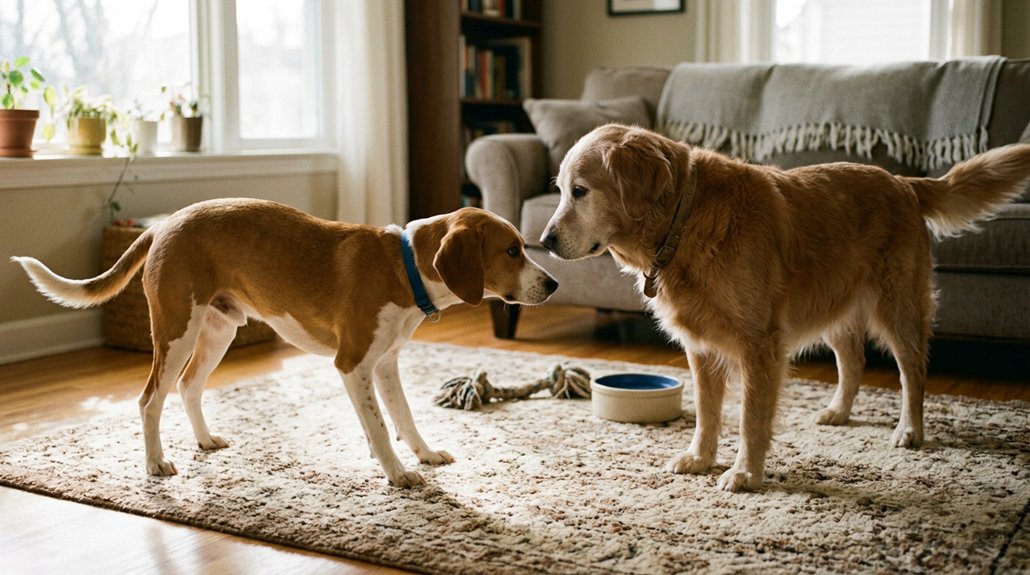
When you’re introducing a second dog to your family, patience and thoughtful planning are key to building a positive relationship between your dogs. Start with gradual introductions in neutral territory, letting them engage in interactive play to ease any territorial instincts. Scent exchanges, like swapping their bedding, can familiarize them with each other’s scent, reducing initial tension.
Provide separate food dishes and toys to minimize competition and potential conflicts. Monitor their interactions closely, ensuring both feel safe without the stress of one blocking access to resources. Encourage shared activities, using positive reinforcement to reward good behavior, which will help strengthen their bond over time. With regular supervision and understanding, your dogs can develop a harmonious and loving relationship.
Keeping Training Consistent Across Dogs
To guarantee a harmonious household dynamic, it’s essential to maintain consistency in training practices across both dogs. Consistent training methods ascertain they understand and follow the same rules, reducing confusion and strengthening your bond with them. Here’s how you can keep things steady:
- Separate Sessions: Begin with individual training to prevent competition and confusion, allowing each dog to learn without distractions.
- Equal Reinforcement: Apply behavior reinforcement uniformly. Reward both dogs consistently for desired actions, so they clearly identify which behaviors are encouraged.
- Positive Techniques: Use positive reinforcement to foster trust. Celebrate successful interactions to boost their learning motivation and guarantee a happy home environment.
Addressing and Managing Resource Guarding
Although introducing a second dog can enhance your household, it might also reveal the challenge of resource guarding. This behavior often emerges when dogs become possessive over food, toys, or space, signaled by growling or blocking access. High-value items are commonly at the core of these conflicts. Implementing prevention strategies, like separating your dogs during meals or playtime with prized possessions, can greatly mitigate tensions. It’s vital to observe your dogs for signs of resource guarding to maintain harmony in your home. Training that encourages sharing and rewards calmness around possessions is effective. Through awareness and proper management of resource guarding behaviors, you’ll foster a peaceful multi-dog environment and prevent potential aggression or stress-related issues between your furry companions.
Balancing Your Time and Affection Between Dogs
Balancing your time and affection between your dogs is essential to prevent jealousy and guarantee a harmonious relationship. Make certain you prioritize individual moments with each dog, whether through one-on-one play or training sessions, so they both feel valued. Observing their interactions and rotating special treats and toys can help you manage their attention needs and maintain peace.
Managing Attention Distribution
When introducing a second dog into your home, it’s essential to manage your attention distribution carefully to maintain harmony. Implement effective attention strategies by allocating equal affection to both pets, which can prevent jealousy and guarantee each dog feels valued. Here’s how to balance your time and love:
- Engage in bonding activities with each dog through one-on-one moments, reinforcing individual connections and unique relationships.
- Reassure the established dog with extra care initially, showing they’re not being replaced, easing any displacement anxiety.
- Schedule regular training sessions tailored to each pet’s needs, reinforcing positive behavior and creating a structured routine that meets both dogs’ physical and emotional needs.
Prioritizing Individual Dog Time
The heart of a harmonious multi-dog household lies in how you allocate your time and affection to each canine companion. It’s vital to engage in individual activities and emotional bonding with each dog to guarantee they feel loved and valued. Scheduling one-on-one walks, play sessions, or training times enhances each dog’s skills and reinforces emotional connections. This thoughtful approach keeps the established dog confident and reassured. Monitor interactions and balance affection to prevent potential behavioral issues from competition.
| Activity Type | Benefits to Dog |
|---|---|
| Individual Walks | Builds emotional bonding |
| Separate Play Sessions | Alleviates insecurity |
| Focused Training | Enhances skills |
| One-on-one Affection | Maintains confidence |
| Special Treats | Reinforces bonding |
Through focused, individual attention, you cultivate a peaceful, happy home.
Preventing Jealousy and Conflict
Though welcoming a second dog into your home can be a joyous occasion, it’s essential to manage your time and affection wisely to prevent jealousy and conflict. Balancing attention is key as your first dog might display jealousy signs if they feel neglected. Try these bonding strategies:
- Individual Time: Spend one-on-one time with each dog to reinforce their bond with you, alleviating feelings of neglect.
- Shared Activities: Engage both dogs in shared experiences like walks and play, fostering companionship while ensuring each has solo moments with you.
- Separate Resources: Use separate feeding areas and toys to minimize competition, focusing interactions on togetherness rather than rivalry.
Monitor for signs of jealousy, ensuring positive behavior is met with praise and affection to strengthen their relationship.
Navigating the Adjustment Period Patiently
Bringing a new dog into your home is an exciting journey, but it requires patience to navigate the adjustment period effectively. Patience techniques are essential as both dogs learn to coexist in their shared space. Initial interactions should be supervised using adjustment strategies to prevent conflicts and guarantee comfort. Creating separate spaces helps minimize stress and territorial disputes, particularly in the early days. Maintaining routines provides stability and comfort, easing dynamic changes within the household. It’s critical to offer emotional support and reassurance to your existing dog to guard against feelings of jealousy or displacement. Remember, the adjustment period’s length can vary, so patience and understanding are key as your furry friends work towards building a harmonious bond.
Frequently Asked Questions
Are Dogs Happier With a Second Dog?
Yes, dogs are usually happier with a second dog. Canine companionship enriches their lives, enhancing social dynamics. Aim for compatibility, considering personalities and energy levels to guarantee harmony and reduce potential behavioral issues. Choose wisely for happiness.
What Is the 3-3-3 Rule With Dogs?
The 3-3-3 rule helps you understand dog behavior as they adapt to new surroundings. Recognizing pack mentality, studies show 45% of dogs take three months to fully adjust, nurturing their comfort, confidence, and relationship with you.
What Not to Do When Introducing Two Dogs?
Avoid common mistakes like rushing introduction timing. Don’t introduce them in your dog’s territory or leave them unsupervised. Gradual, supervised meet-ups in neutral areas reduce stress, ensuring smoother integration. Give individual attention to prevent jealousy.
What Is the 7 Second Rule for Dogs?
Oh, because seven seconds isn’t long at all, until it’s with dogs sniffing each other! The 7 second rule helps assess dog personality and breed compatibility, ensuring peace before sniffing turns into a bark-off showdown.
Conclusion
Adding a second dog is like composing a symphony of wagging tails and shared moments. Embrace patience as you weave their harmonies, mindful of each dog’s feelings and needs. With the right preparation, your home becomes a haven of companionship. Balance your time, keep training melodies consistent, and manage resources wisely. It’s a journey of heart and paws, where love multiplies, turning the adjustment period into a dance of unity and joy.