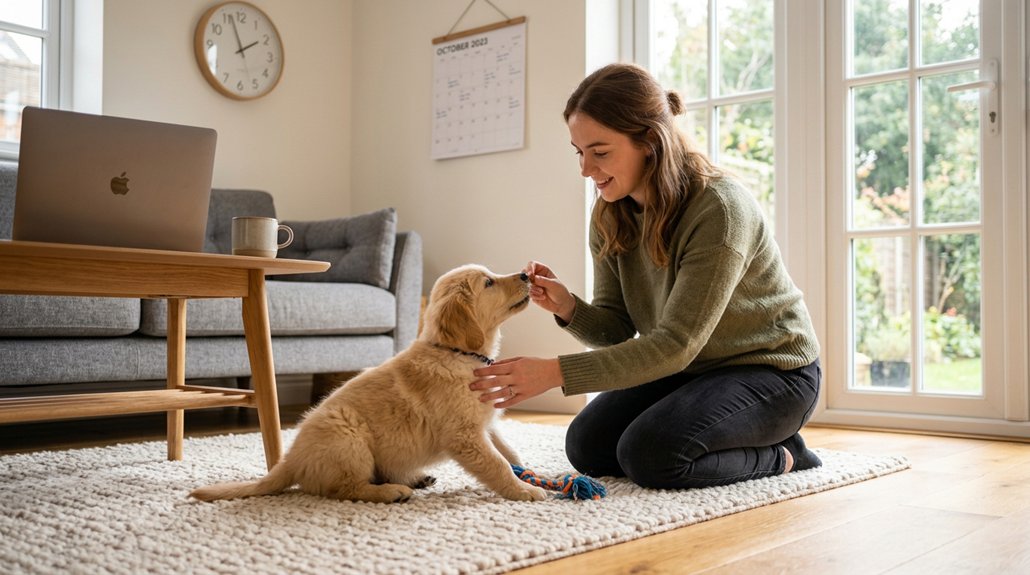
Balancing work and raising a puppy involves creating a solid routine to meet your puppy’s physical and mental needs. Establish consistent schedules for meals, potty breaks, and play to guarantee stability. Combat separation anxiety with gradual exposure and use dog walkers or daycare for exercise and socialization. Incorporate puzzle toys and brief training sessions for mental enrichment. Prioritize bonding time after work for a harmonious relationship. Dive deeper to discover more strategies for a happy puppy and owner.
Key Takeaways
- Establish a structured daily routine that aligns work hours with the puppy’s needs for consistency and security.
- Utilize pet care services like daycare or dog walkers to provide exercise and socialization during work hours.
- Incorporate crate training to manage separation anxiety and encourage the puppy’s independence.
- Implement mental enrichment activities that keep the puppy engaged and stimulated when left alone.
- Dedicate quality time after work for bonding, incorporating training and play to strengthen your relationship with the puppy.
Establish a Consistent Puppy Schedule
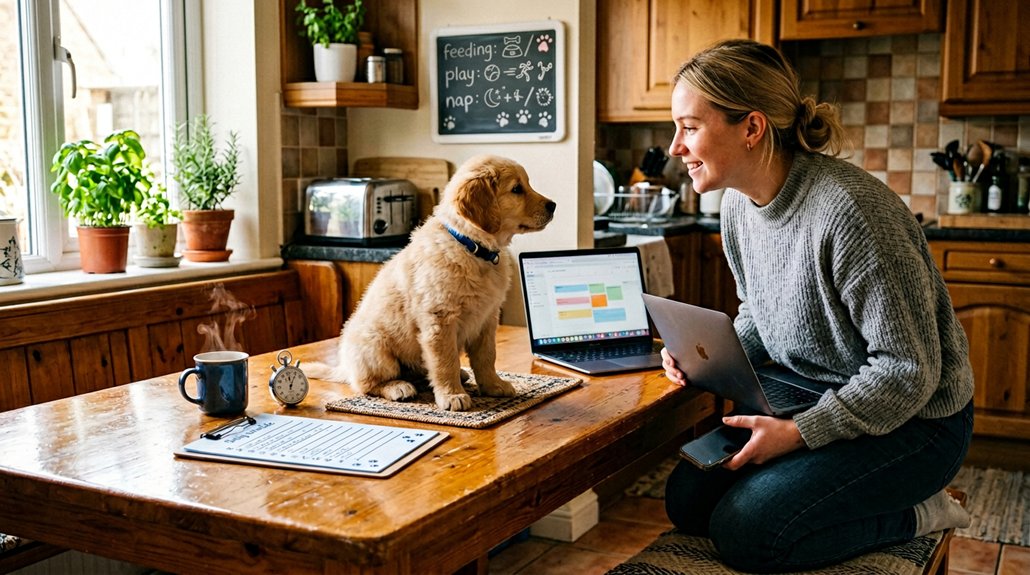
When it comes to raising a puppy, establishing a consistent schedule isn’t just helpful—it’s essential for your sanity and their development. Understanding potty timing is important. Puppies usually need a bathroom break immediately upon waking, as that builds a routine of when to expect bathroom cues. Knowing a puppy’s age helps determine how long they can hold their bladder, using the formula of their age in months plus one. This means a 3-month-old puppy requires a break every four hours. Serve meals at scheduled times followed by a potty break to help them make connections between eating and eliminating. Supervised playtime and structured crate confinement are also significant parts of their day, ensuring proper exercise and rest.
Master Potty Training While You’re at Work
After establishing a consistent schedule for your puppy, it’s time to navigate the challenges of potty training while you’re at work. Understanding potty signals and precise reward timing is vital to success. By setting a firm foundation, you can guarantee minimal accidents even in your absence. Remember:
Setting a solid schedule and understanding signals ensures fewer accidents when away at work.
- Crate training: Choose the right-sized crate to encourage den instincts, bolstering your puppy’s natural desire to keep their area clean.
- Immediate potty breaks: Always allow for potty time immediately upon waking and at regular intervals based on your puppy’s age.
- Routine reinforcement: Take them outside after meals and play to create dependable bathroom habits.
- Indoor option: If necessary, designate a small indoor potty area, but be aware it may complicate outdoor training later.
Balance patience with consistency, your puppy will thrive.
Use Dog Walkers and Daycare
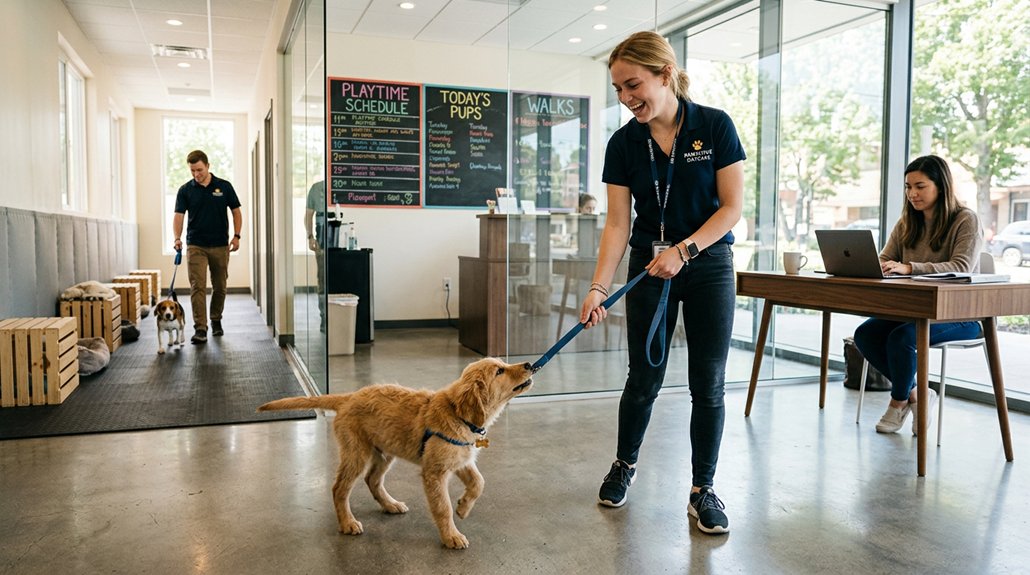
Managing work responsibilities while caring for your puppy can be challenging, but enlisting the help of dog walkers and daycare centers can make all the difference. These services provide vital breaks for exercise and socialization, reducing potty accidents and separation anxiety. By coordinating a care routine with professionals, you guarantee your puppy’s needs are met without compromising your busy schedule.
Benefits of Dog Walkers
Although balancing work commitments with raising a puppy can be challenging, leveraging the services of dog walkers and daycare can substantially ease this burden. Employing a dog walker guarantees your puppy engages in regular exercise, essential for dog wellness, and gets necessary potty breaks throughout the day.
Utilizing professional help can minimize anxiety and prevent accidents due to excessive energy, as well as promote structured puppy exercise. By investing in these services, your puppy has the chance to socialize and learn positive behaviors even while you’re busy. Furthermore, you might find:
- Reduced risk of separation anxiety.
- Enhanced training reinforcement for better habits.
- Opportunities for socialization, curbing loneliness.
- Extra time for concentrated bonding and training at home.
These services provide invaluable support, helping manage work-life balance effortlessly.
Choosing a Daycare Option
When selecting a daycare option for your puppy, it’s important to evaluate both its environment and the supportive role it can play in your busy schedule. Prioritizing daycare safety guarantees peace of mind knowing your puppy plays in a well-supervised and clean setting, minimizing illness risks. Make sure all dogs are current on vaccinations—it’s essential for maintaining a healthy group play environment. The socialization benefits are remarkable; being around other dogs enhances your puppy’s interaction skills, reducing anxiety and fostering confidence. Additionally, dog walkers offer those necessary potty breaks and socialization during work hours, seamlessly fitting into your routine with flexible scheduling. These solutions reduce the guilt of leaving your pet behind, while promoting their development and happiness.
Coordinating Puppy Care Routine
After you’ve chosen the perfect daycare environment for your puppy, coordinating its care routine becomes essential. A structured daily routine supports your puppy’s needs, guaranteeing a healthy balance between work and raising your furry friend. Utilizing trusted resources is vital:
- Dog Walkers: Consider hiring a walker. Regular exercise and bathroom breaks prevent accidents and behavioral issues.
- Dog Daycare: Offers valuable socialization, mental stimulation, and physical playtime.
- Time Alone: Remember the rule: puppy’s age in months plus one. Arrange care accordingly to guarantee they’re never alone for too long.
- Apps: Use platforms like Rover or Wag to find reputable carers who’ll maintain a consistent care schedule.
Strategically combining these aspects supports effective puppy care, easing your work-day stress.
Combat Separation Anxiety Early On
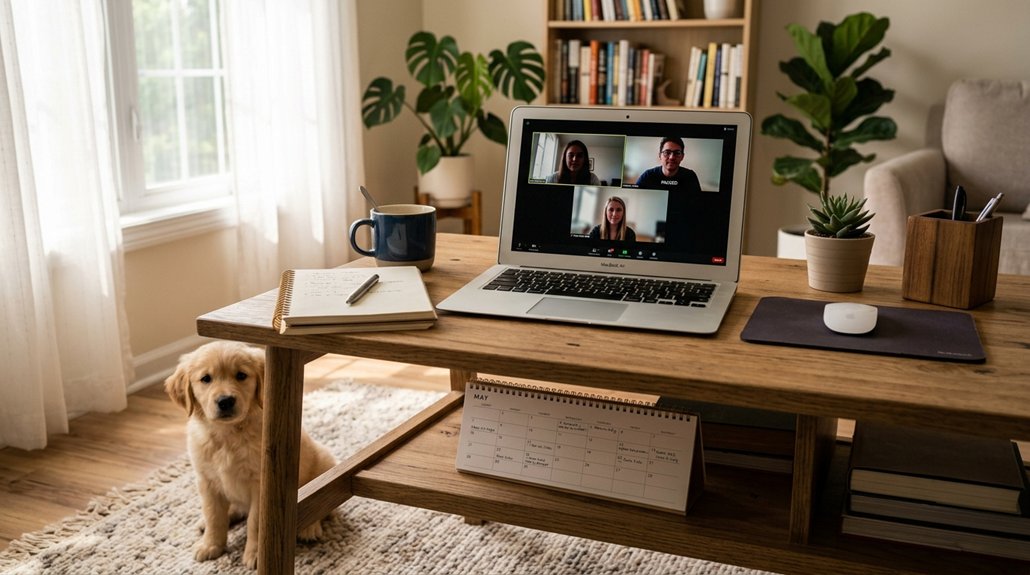
Puppies, like humans, can feel anxious when separated from their loved ones, but addressing this early can make a world of difference. Cultivating puppy independence by understanding anxiety triggers is essential. Start with gradual exposure; short departures build confidence. Use crates as calming spaces, reinforcing them as safe havens rather than confinement. Positive reinforcement when your puppy remains calm is invaluable. Additionally, tethering can ease puppies into independence by teaching them to relax when you’re busy.
Here’s a quick reference:
| Technique | Purpose | Description |
|---|---|---|
| Crate Training | Creating a safe haven | Guarantees crate is a comforting space |
| Gradual Exposure | Building independence | Begin with brief separations |
| Positive Reinforcement | Encouragement of calm behavior | Praise and reward calmness |
| Tethering | Relaxation training | Helps puppies settle in designated areas |
| Recognition of Triggers | Identifying anxiety sources | Observe and reduce specific stress factors |
Addressing each step thoughtfully guarantees a happier, balanced puppy.
Introduce Mental Stimulation for Your Puppy
Incorporating mental stimulation into your puppy’s routine is a game-changer that’ll keep them engaged and happy, even when you’re busy. Use interactive toys and creative feeding strategies like puzzle feeders to challenge their minds and mitigate boredom. Remember, positive reinforcement techniques during these activities will not only reinforce desirable behaviors but also strengthen your bond with them.
Engaging Interactive Toys
There’s undeniable joy in watching a puppy engage with interactive toys, and these tools are essential for fostering mental stimulation. You provide puzzle enrichment through toys like treat dispensers or Kongs, enhancing your puppy’s problem-solving skills and combating boredom. To maximize their benefits, consider regularly implementing toy rotation to keep experiences fresh and enthralling.
Key advantages of interactive toys include:
- Encouraging problem-solving skills and mental engagement.
- Allowing puppies to work for treats, thereby reinforcing positive behavior through rewards.
- Engaging the senses through physical interaction, promoting overall well-being.
- Helping in time management for owners, as occupied puppies require less direct supervision.
Prioritize this approach to nurture a happy, intellectually stimulated puppy, even when you’re juggling work.
Creative Feeding Strategies
An innovative approach to feeding can greatly enhance your puppy’s mental stimulation. Integrate meal enrichment by dividing their meals into smaller portions; this provides frequent mental engagement. Puzzle feeding with toys that challenge your puppy to solve problems in exchange for treats can be a game-changer. Using items like a KONG stuffed with treats can prevent boredom and encourage active participation during feeding times. Keep your puppy’s mind vibrant by rotating different feeding strategies and toys regularly, ensuring their environment remains stimulating and engaging. You can also combine training with feeding by having them perform commands for food portions, which not only strengthens obedience but also promotes cognitive growth. This holistic approach keeps them well-nourished and intellectually stimulated.
Positive Reinforcement Techniques
As you explore creative feeding strategies to keep your puppy mentally engaged, the same principle can apply to their overall behavior development through positive reinforcement techniques. By focusing on the correct reward timing, you can effectively shape behaviors. Here’s how:
- Introduce puzzle toys that challenge your puppy’s problem-solving skills, promoting mental stimulation and reducing boredom.
- Break meals into smaller portions, turning feeding into an enriching, rewarding activity.
- Utilize Kongs and lick mats filled with treats during crate time to keep them calm, fostering positive behavior.
- Engage in structured play sessions that not only enhance cognitive development but also reinforce the behaviors you want to see.
Consistently rewarding desirable actions cultivates a sense of achievement, encouraging your puppy to repeat these behaviors.
Prepare for Successful Obedience Training
To kickstart successful obedience training, it’s crucial to begin when your puppy is as young as eight weeks. At this age, they’re like little sponges, enthusiastically absorbing new information. Obedience classes provide a structured setting that can help shape good habits early on. Remember, consistency is key. Establish a routine where your puppy feels secure and can learn commands effectively.
Here’s a quick guide:
| Training Tips | Benefits | Requirements |
|---|---|---|
| Start at 8 weeks | Strong foundation | Vaccinations up-to-date |
| Regular Classes | Socialization opportunities | Guarantee safety for all puppies |
| Positive Reinforcement | Strengthens bond | Consistent schedule |
Monthly refresher lessons are essential. They adapt to your dog’s maturity, reinforcing their skills and keeping them engaged. Be patient; your dedication now pays off later.
Teach Your Puppy to Relax Independently
While you’re establishing obedience as a key part of your puppy’s early life, it’s equally beneficial to help them learn the art of relaxation on their own. Encouraging independent relaxation aids in preventing separation anxiety and fosters a secure feeling when they’re alone.
Start with a crate introduction, making it a cozy haven where they can unwind. Incorporate:
- Structured training sessions alternated with playtime to reinforce self-soothing during quiet moments.
- Gradual increases in alone time to build their confidence in relaxing independently.
- Engaging toys like puzzles or chew toys to promote mental stimulation while you multitask.
- Consistent practice, which turns crate time into a routine calming space.
Your empathy and patience will empower your puppy to find tranquility even in your absence.
Prioritize Quality Bonding Time After Work
After a long day at work, it’s essential to dedicate meaningful time to your puppy, as even a brief 30-minute session of quality playtime can strengthen your bond and foster security. Engaging in bonding activities like these doesn’t just enhance your connection but also meets your puppy’s need for physical and mental stimulation. Consider incorporating regular training sessions, where five to ten minutes of structured commands guarantee they learn obedience and respect. Balance this with fun and relaxation—perhaps a walk followed by some cuddle time. Interactive games and puzzle toys are excellent for keeping their mind sharp. Reinforce positive behaviors during each interaction, using treats and praise. Such daily dedication nurtures a loving, secure environment for your growing puppy.
Frequently Asked Questions
What Is the 7 7 7 Rule for Puppies?
The 7 7 7 rule helps schedule potty breaks, allowing hourly bladder control per each month old. It’s essential for training techniques, ensuring fewer accidents, and supports socialization tips by gradually extending their time alone.
How to Raise a Puppy While Working a Full-Time Job?
Raising a puppy while working full-time requires strategic puppy training and time management. Prioritize creating structured routines, use resources like doggy daycare for socialization, and engage your puppy in activities to manage their energy and promote good behavior.
What Is the 3-3-3 Rule With Puppies?
Imagine your new puppy, curious eyes adjusting to a bustling home. The 3-3-3 rule guides you through socialization with patience, blending crate training basics to nurture confidence and create a secure, loving environment for your pup.
What Is the Hardest Age to Raise a Puppy?
You’re facing the hardest age between 8 to 12 months. During this time, puppy socialization challenges and adolescent behavior issues like independence and energy surges can test your patience, requiring consistent training and structure to manage effectively.
Conclusion
You’ve now transformed into a superhero—juggling work and a puppy! Who knew making a schedule could make you a logistical genius? And let’s not forget how you’ve become a canine psychologist, tackling separation anxiety and mastering the art of puppy mental stimulation. Of course, dedicating your after-work hours to your pup’s happiness makes you a certified socialite too. So, embrace your new job title: Professional Puppy Manager—because, clearly, you’re nailing it!