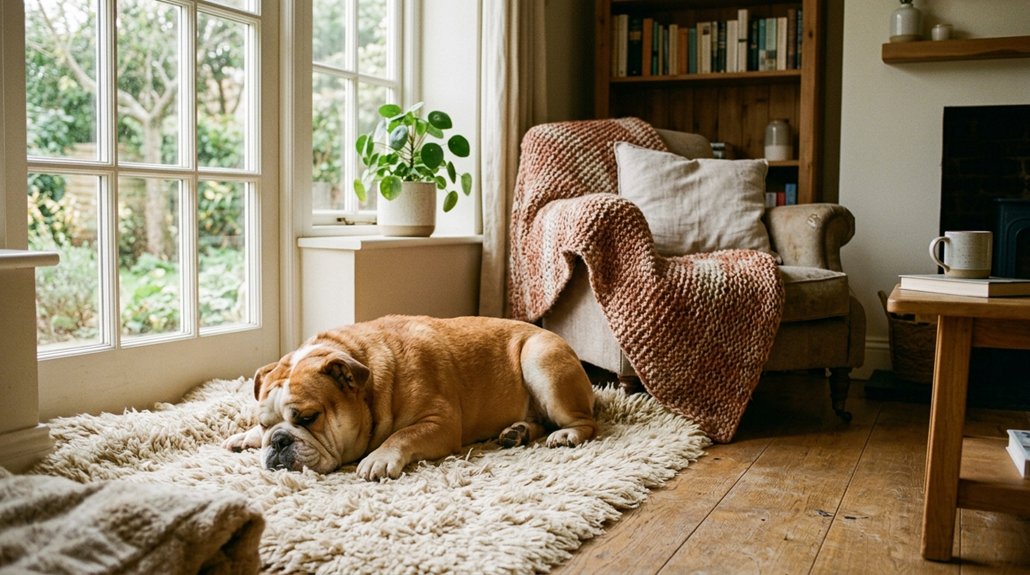
For low-energy households, consider breeds like Shih Tzu, French Bulldog, and Basset Hound, which embody calm and adaptable traits with minimal exercise needs, ranging from 15 to 45 minutes daily. Their gentle demeanor makes them suitable for families with elderly members or those with health constraints. Be mindful of grooming and dietary needs to maintain their health. Adopting an older or rescue dog can also provide pre-trained, relaxed companionship. Discover more by exploring the nuances of each breed.
Key Takeaways
- Shih Tzus and French Bulldogs need only 15-30 minutes of light daily activity.
- Basset Hounds and Saint Bernards are ideal for gentle, low-energy homes.
- Older or rescue dogs often have established temperaments and low-energy needs.
- Chinese Crested dogs thrive indoors with minimal outdoor exercise.
- Short walks and interactive play keep low-energy breeds engaged and healthy.
Meet the Top Low-Energy Dog Breeds: Your Easygoing Companions
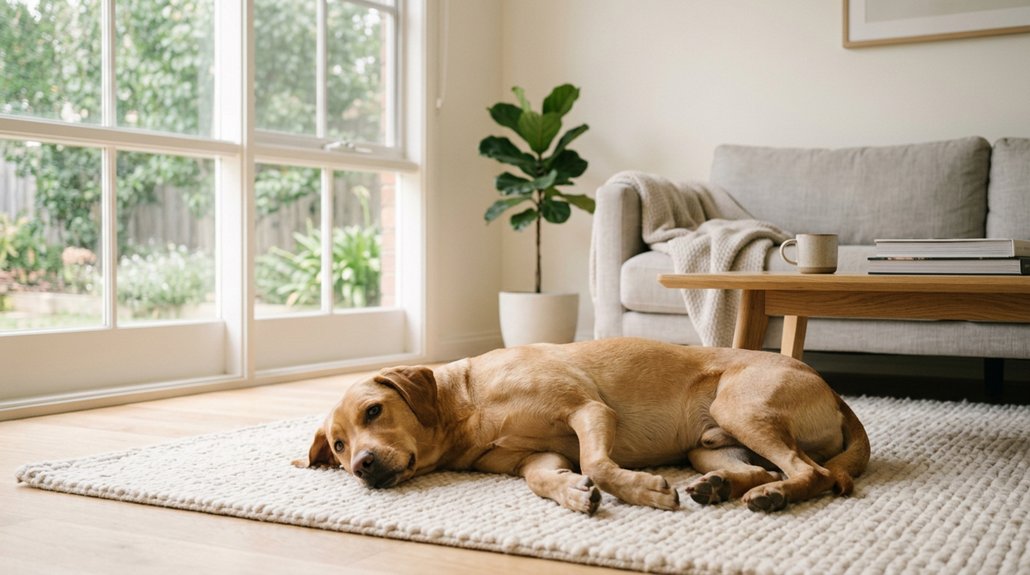
When it comes to choosing a canine companion for a low-energy household, several breeds excel due to their naturally calm demeanor and minimal exercise requirements. Breeds like the Shih Tzu and French Bulldog are quintessential examples, requiring only 15 to 30 minutes of light activity daily, aligning well with sedentary lifestyles. Affectionate playmates such as the Basset Hound and Saint Bernard are noted for their gentle companions’ disposition, making them idyllic additions to less active homes.
Moreover, Newfoundland and Great Pyrenees present as gentle giants, thriving in family settings where affection is abundant. Their grooming needs are often uncomplicated, further enhancing their appeal as low-maintenance pets. Opting for older or rescue dogs is particularly advantageous, as they are often pre-trained and acclimated, offering seamless integration into your household.
The Traits of a Perfect Low-Energy Pet
When selecting a low-energy pet, you’ll benefit from considering breeds with calm, compliant temperaments that align with tranquil household environments. These pets typically require minimal exercise, often needing just 20 to 40 minutes of physical activity daily, making them suitable for smaller living spaces. Evidence suggests that breeds like the Shih Tzu and Basset Hound, along with older dogs, fit this profile by providing companionship with less demand for constant activity.
Ideal Temperament Traits
How do you determine the ideal temperament traits for a low-energy pet? Look for a calm demeanor and adaptable nature—these characteristics guarantee the animal thrives in tranquil, low-energy households. Dogs like Shih Tzus and Bulldogs, known for their easygoing nature, exemplify these traits, offering companionship without excessive activity demands. Evaluating a dog’s temperament is essential to match them with your environment.
Here’s a comparison of traits in suitable breeds:
| Breed | Calm Demeanor | Adaptable Nature |
|---|---|---|
| Shih Tzu | High | High |
| Bulldog | High | High |
| Basset Hound | Moderate | Moderate |
Such breeds are perfect companions for families with elderly individuals or those with health constraints, as they effortlessly adapt to a more sedentary lifestyle.
Minimal Exercise Needs
Choosing the perfect low-energy pet involves understanding their minimal exercise requirements, ensuring they fit seamlessly into your lifestyle. Breeds like Bulldogs and Basset Hounds often require just short walks or brief play sessions lasting 15-30 minutes daily. These low impact activities cater to their calm demeanor and relaxed personality, making them ideal for those desiring companionship without heavy exertion. Many low-energy breeds, including the Chinese Crested and Shih Tzu, thrive in apartment settings, where indoor playtime suffices over demanding outdoor exercises.
For those seeking an even more relaxed pet, consider adopting a senior dog. Older dogs usually possess a calmer temperament and settled routine, fitting well with less active lifestyles while providing rewarding companionship without extensive physical demands.
Ideal Small Breeds for Apartment Living
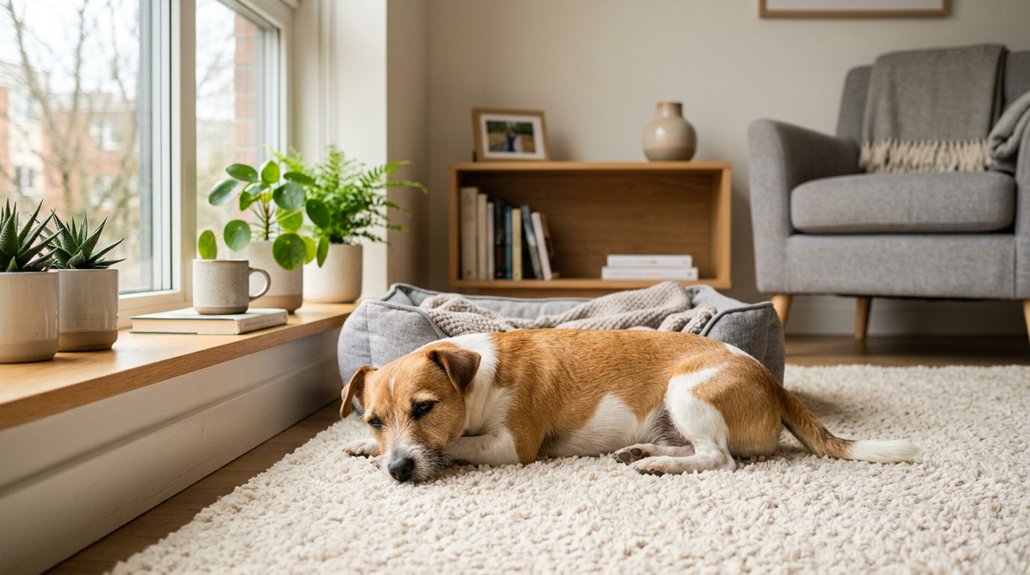
For urban dwellers in compact apartments, selecting a small dog breed can enhance your quality of life without demanding excessive outdoor space or exercise. Small breed characteristics, such as their diminutive stature and low activity requirements, make them perfectly suited to apartment adaptability. Breeds like the Shih Tzu and Chihuahua need only 15-30 minutes of exercise per day, effortlessly fitting into your lifestyle. The Maltese and Pekingese are excellent choices for confined spaces due to their manageable size and limited exercise needs. Furthermore, the Chinese Crested’s low grooming needs and calm demeanor guarantee they thrive in smaller homes. French Bulldogs, known for friendliness and minimal exercise requirements, are particularly ideal companions in low-energy urban settings.
Balanced Energy in Medium Breeds
When you consider medium-energy dog breeds for low-energy households, you’re looking at dogs that require balanced exercise and mental challenges. Breeds like the Cocker Spaniel and Shetland Sheepdog excel in environments where structured physical activity, such as regular walks or interactive play, is paired with opportunities for rest. By providing consistent daily routines, you’ll satisfy their need for moderate exertion while accommodating their affinity for relaxation, ensuring a harmonious home environment.
Medium Energy Dog Traits
Although some households may prioritize low energy levels in their canine companions, medium energy dog breeds can offer a harmonious blend of engagement and relaxation for diverse lifestyles. Medium energy characteristics enable breeds such as Cocker Spaniels and Staffordshire Bull Terriers to seamlessly integrate into varied living arrangements. These adaptable dog breeds thrive with daily exercise, enjoying activities like regular walks and structured playtime that balance active and calm intervals. Australian Shepherds exemplify this adaptability through consistent training, which promotes a stable energy rhythm. Similarly, Portuguese Water Dogs and Boston Terriers engage energetically in short activity bursts, relishing downtime afterwards. Generally easier to manage, these dogs adapt well to busy households, providing companionship without overwhelming their owners.
Managing Daily Exercise Needs
Integrating medium energy dog breeds into a low-energy household necessitates an understanding of their specific exercise requirements. Breeds like Cocker Spaniels and Boston Terriers need about 30-60 minutes of activity daily, encompassing walks and interactive play sessions. These exercise routines are crucial for their well-being, encouraging both physical fitness and mental acuity. Incorporating interactive games, such as problem-solving activities, is essential for breeds like the Shetland Sheepdog and American Staffordshire Terrier, promoting mental stimulation alongside physical exertion. You’ll find that a consistent structure, combining training and social interactions, helps them thrive without demanding excessive energy from you. Building a moderate, balanced exercise regimen accommodates their nature, preventing boredom and supporting a harmonious household environment.
Large Breeds With Relaxed Personalities
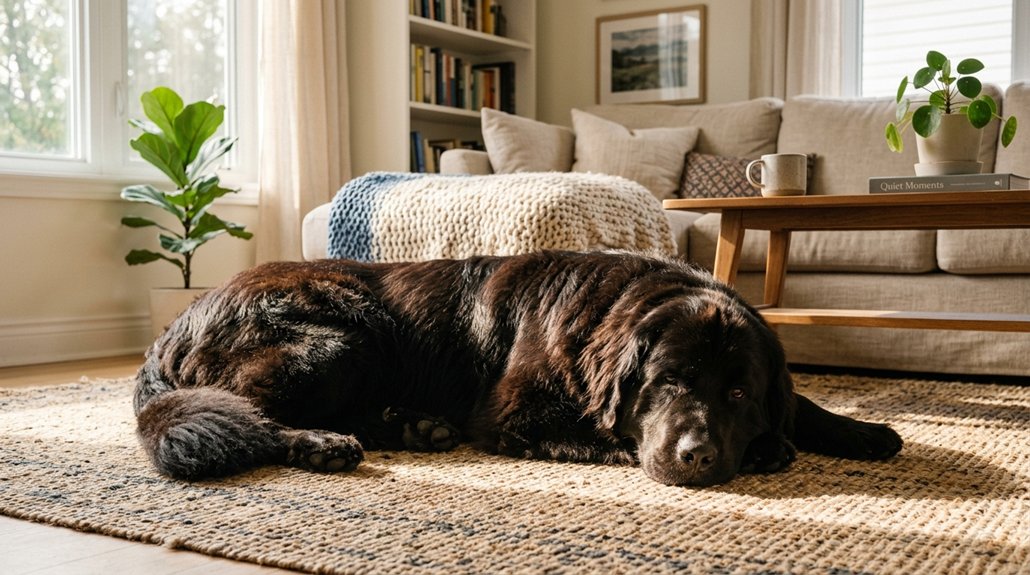
For large households seeking a relaxed canine companion, certain dog breeds stand out for their combination of size and gentle demeanor. The Newfoundland’s characteristics include a calm disposition and a requirement for only 45-60 minutes of moderate exercise daily. This makes them ideal for low-energy environments. Similarly, the Saint Bernard’s temperament is laid-back despite their impressive 150-pound size, content with moderate walks and family bonding.
| Breed | Characteristics |
|---|---|
| Newfoundland | Calm, moderate exercise needs |
| Saint Bernard | Laid-back, enjoys family companionship |
| Irish Wolfhound | Tall, adaptable energy to environment |
| Great Pyrenees | Gentle, moderate activity despite large size |
For families desiring reliable large breeds, these relaxed giants offer companionship without demanding intense activity.
Caring for Your Low-Energy Dog
When caring for low-energy dogs, prioritizing their specific physical and mental needs guarantees they lead a healthy and fulfilling life. Begin by addressing grooming essentials unique to each breed. Regular grooming, including brushing and nail trimming, is essential for maintaining coat health, particularly for breeds like Shih Tzus with long hair. Nutritional needs must be meticulously managed to prevent obesity, as low-energy breeds may have tendencies to gain weight easily. Opt for a balanced diet that aligns with their caloric requirements.
Engage these dogs in short walks or indoor play sessions—45 minutes of exercise daily is adequate. For mental engagement, utilize interactive toys to prevent boredom. Confirm routine veterinary visits to monitor their health, focusing on vaccinations and dental check-ups, which are crucial.
Choosing Your Ideal Low-Energy Canine Companion
Although selecting the perfect low-energy canine companion may seem challenging, understanding your household’s specific needs can streamline the process. Low-energy breeds like Shih Tzus and Maltese require short walks, while larger breeds such as Saint Bernards need slightly more activity. Consider size, grooming, and adaptability to guarantee a suitable match for your environment. Socialization strategies are crucial for their mental well-being, fostering positive interactions and confidence. Feeding guidelines should align with their activity level and nutritional requirements to maintain peak health. For chronically ill or elderly household members, choosing gentle and affectionate breeds can provide important companionship. Ultimately, integrate these evidence-based approaches to select a low-energy dog that harmonizes with your lifestyle and demands minimal physical exertion.
Thinking of an Older Companion? Here’s Why!
Considering an older dog as your next pet can offer distinct advantages, particularly for those seeking a tranquil and stable addition to their home. Senior dog benefits include established temperaments, ensuring compatibility for families desiring a calm and reliable companion. Many breeds, including Basset Hounds and Shih Tzus, have low-energy needs, suiting households favoring shorter walks or minimal playtime. By adopting older pets from shelters, you’re not only providing them a second chance at life but also gaining a well-trained, previously socialized companion. This reduces adjustment time and effort compared to younger dogs. In addition, these mature canines often form profound bonds with their owners, offering joy and companionship while aligning perfectly with the lifestyle of a low-energy household.
Frequently Asked Questions
What Is the Best Dog for a Low-Energy Person?
For a low-energy person, Shih Tzus and Maltese are ideal. These small dog breeds require minimal exercise, making them low maintenance pets. Empirical studies confirm their affectionate natures provide psychological benefits, without demanding intense physical exertion.
What Annoys Dogs the Most?
Oh, sure, dogs adore loud noises and inconsistent routines! They’re thrilled by dog anxiety triggers like fireworks and irregular feeding times. Trust research: triggering such stressors leads to distressed behaviors, shattered trust, and disrupted behavioral equilibrium.
Where to Rub a Dog?
Rub a dog on favorite petting spots, such as behind their ears, under the chin, and near the tail’s base. Utilize calming massage techniques to soothe anxiety, observing their body language as you discover their preferred areas.
What Is the Calmest Low-Energy Dog?
Imagine a serene sunset—English Bulldogs embody such tranquility. They’re renowned calm dog breeds, perfect for employing relaxation techniques like lounging or gentle play. Evidence shows their easygoing nature benefits low-energy households seeking peace and companionship.
Conclusion
Choosing the right low-energy dog is like finding the perfect puzzle piece for your lifestyle. Whether you opt for a small breed suited for cozy apartment living or a gentle giant with a relaxed disposition, these easygoing companions require minimal exertion and adapt seamlessly to slower-paced routines. By considering factors such as breed traits and care requirements, you’ll make an informed decision that guarantees both you and your new furry friend enjoy harmonious, languid days together.