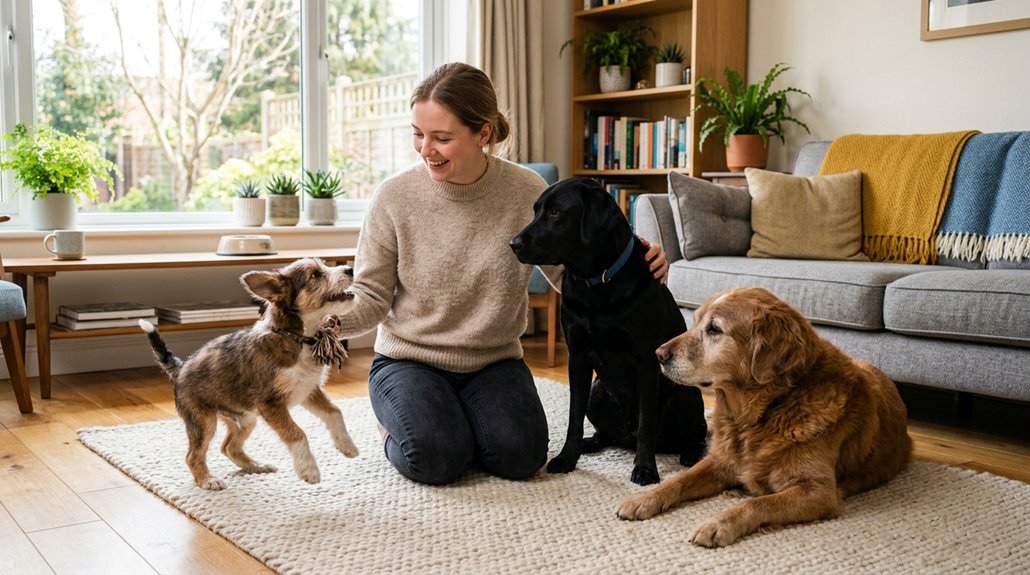
As a first-time dog owner, align your lifestyle with potential canine companions. Consider your activity level, living space, and grooming commitment. For families, breeds like Golden Retrievers or Poodles offer compatibility and ease. Decide whether a lively puppy or a calmer adult dog suits your time availability. Dog-proof your home to guarantee safety and comfort, and employ effective training techniques like consistent routines. By doing so, you’ll uncover essential insights into choosing your ideal furry friend.
Key Takeaways
- Evaluate your daily activity level and living space to choose a compatible dog breed.
- Opt for family-friendly breeds like Golden Retrievers, Labradors, Poodles, or Cavalier King Charles Spaniels.
- Consider an adult dog for a more predictable temperament and easier transition for first-time owners.
- Ensure you have the time commitment required for training, exercising, and socialization.
- Dog-proof your home to create a safe and welcoming environment for your new pet.
Evaluate Your Lifestyle for Dog Ownership
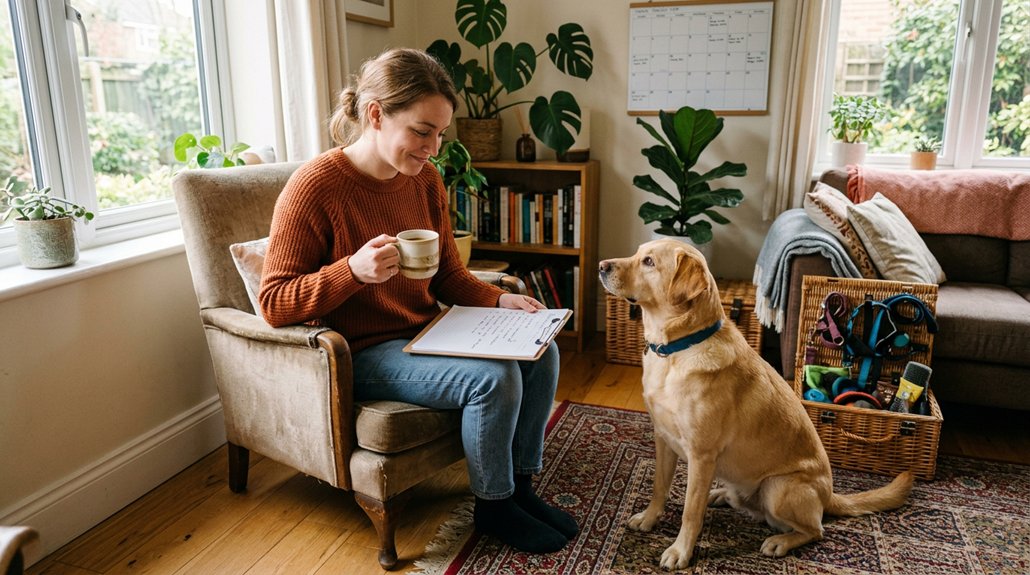
When considering dog ownership for the first time, it’s vital to evaluate your lifestyle to guarantee a symbiotic match with your future pet. Analyzing your daily activity level is vital. High-energy breeds will demand more exercise and engagement, while low-energy breeds align better with a laid-back lifestyle. Evaluating your living space is equally important; smaller breeds thrive in apartment settings, whereas larger dogs need the expansiveness of homes with yards. Don’t overlook grooming requirements. Some dogs have high grooming needs, necessitating regular upkeep, while others are more low-maintenance, fitting a busy schedule. By understanding these factors, you can assure your new companion’s needs align with your own, fostering a harmonious relationship that benefits both you and your dog.
Family-Friendly Dog Breeds for Beginners
Understanding your lifestyle is foundational before selecting a dog that complements your family dynamics. When choosing a family-friendly dog, it’s essential to evaluate breeds that are adaptable and easygoing. Here are four beginner-friendly options:
Choosing a dog? Ensure the breed matches your lifestyle and family needs for a harmonious fit.
- Golden Retriever: Their friendly nature and gentle temperament make them great with children and other pets. Golden Retriever traits include adaptability, loyalty, and ease of training.
- Labrador Retriever: Known for their sociability and trainability, Labradors thrive in active homes. Labrador energy will keep up with outdoor activities, perfect for running and hiking enthusiasts.
- Poodle: With intelligence and low-shedding coats, Poodles are ideal for allergy-conscious families, easy to train in any size.
- Cavalier King Charles Spaniel: These gentle, adaptable lapdogs require moderate exercise and minimal grooming, making them perfect for first-time owners.
Choosing Between a Puppy or Adult Dog
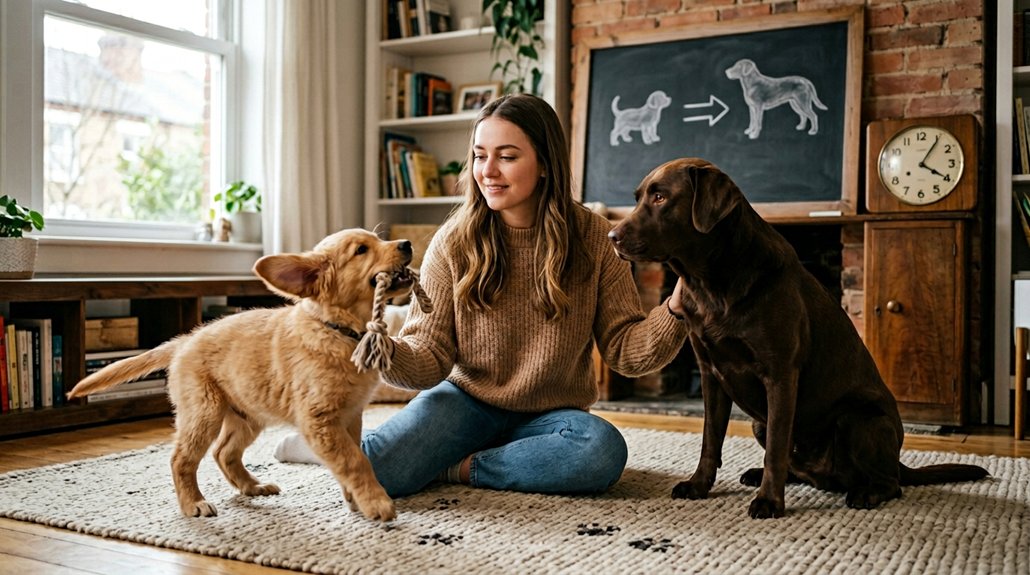
Considering a new addition to your home, should you opt for a playful puppy or a more settled adult dog? A decision hinges on your willingness to invest in puppy training, as they demand time for house-training, socialization, and mastering basic commands. Puppies bring energy and joy, but will test your patience with teething and mischievous behavior. Alternatively, an adult dog often presents with an established adult temperament, offering a calmer presence and lessening the training burden. Adult dogs can be a perfect fit for first-time owners, providing predictability and potentially being house-trained, while offering a second chance for a loving home. Reflect on your available time and commitment to make a choice that suits your lifestyle and expectations.
Dog-Proofing Your Home: Essential Tips
Dog-proofing your home is an essential step in guaranteeing your new furry friend’s safety and well-being. By addressing key home safety measures, you can minimize risks and create a welcoming environment. Consider these dog proofing essentials:
- Remove Hazards: Guarantee toxic plants, small objects, and electrical cords are out of reach to prevent choking or poisoning.
- Secure Exits: Lock doors, gates, and windows to prevent escapes, establishing a safe perimeter for your curious pup.
- Safe Space: Designate a cozy area with a bed, toys, and fresh water to help your dog feel at home.
- Essential Supplies: Stock food and water bowls, a crate, and grooming tools to meet your dog’s foundational needs.
With these steps, you’ll promote a safer, happier living space.
Effective Training Techniques for First-Time Dog Owners
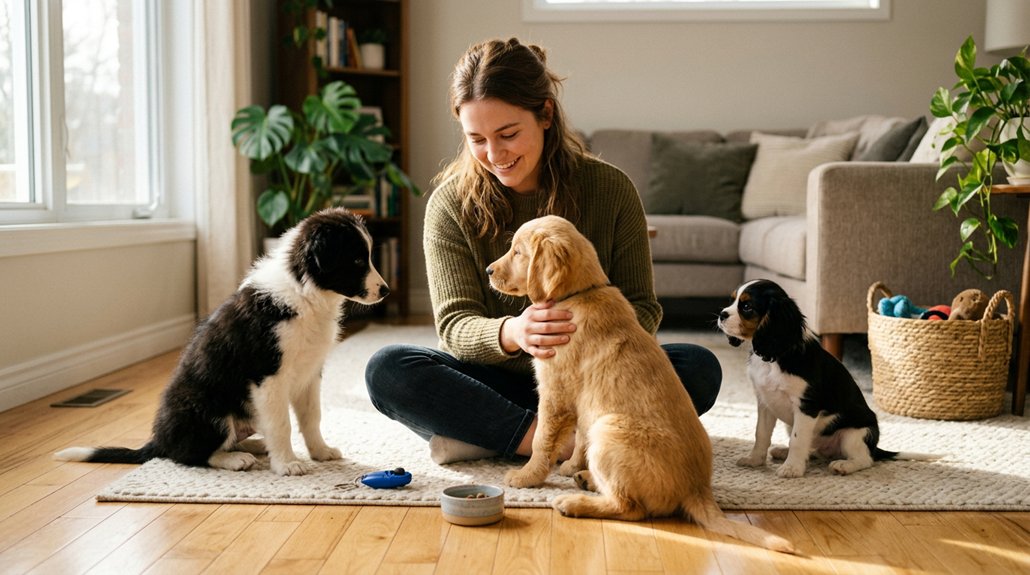
Before you plunge into the joyful journey of dog ownership, mastering effective training techniques is paramount to fostering a harmonious relationship with your new pet. Start with immediate training, focusing on basic commands like “sit,” “stay,” and “come.” This establishes clear communication. Crate training is invaluable for creating a safe environment and aids in house training through positive reinforcement. Consistent routines build trust and structural understanding, making your dog feel secure. Engage in socialization with various people, animals, and environments to mitigate fear-based behaviors. If challenges arise, don’t hesitate to seek professional training support.
| Technique | Purpose | Benefit |
|---|---|---|
| Basic Commands | Clear Communication | Builds foundation |
| Crate Training | House/Safety Training | Encourages stability |
| Positive Reinforcement | Behavior Encouragement | Strengthens learning |
| Socialization | Confidence Building | Reduces anxiety |
Guide to Dog Healthcare
Once you’ve established a training routine with your new pet, your focus should expand to include their overall health care. Understanding common health issues is paramount, particularly in areas like dental care and dealing with limping. Regular veterinary visits guarantee timely vaccinations, shielding your dog from serious diseases like rabies and distemper. Here’s a concise guide to essential dog healthcare:
- Nutrition: Feed puppies three to four times daily, shifting to twice daily for adults. Consult a veterinarian for diet advice.
- Preventative Care: Utilize medications to protect against fleas, ticks, and other parasites.
- Dental Care: Regularly check and clean your dog’s teeth to prevent issues.
- Vaccinations: Keep up with a vaccination schedule during veterinary visits to maintain health.
Implementing these health guidelines can secure your dog’s long-term well-being.
Frequently Asked Questions
How Do I Handle Allergies With a New Dog?
To handle allergies with a new dog, consider allergy management by selecting hypoallergenic breeds like Poodles or Bichon Frises. Use air purifiers, regularly groom your dog, and consult a vet for specific allergy mitigation strategies.
What Are the Costs of Owning a Dog Long-Term?
Owning a dog long-term is like managing a small business—costly yet rewarding. You’ll invest in dog food, regular veterinary care, grooming, and unexpected expenses, ensuring your furry companion remains happy and healthy throughout their life.
How Much Time Should I Dedicate to a Dog Daily?
You should dedicate at least 1-2 hours daily to your dog. This time includes daily activities like walks and play, and training routines for mental stimulation. Consistency fosters a well-adjusted, happy companion, enhancing your bond together.
Can I Have a Dog in an Apartment Setting?
Yes, you can have a dog in an apartment setting. Notably, 58% of apartment dwellers own a small breed. Their exercise needs are lower, requiring walks twice daily to maintain health and happiness in limited space.
What Are Legal Requirements for Dog Ownership in My Area?
You’ll need to check local licensing requirements and any breed restrictions specific to your area. Research these laws through local government websites or contact animal control to guarantee compliance with regulations as a responsible pet owner.
Conclusion
Choosing the right dog is like finding the perfect puzzle piece that fits seamlessly into your lifestyle. As a first-time owner, you’ve got vast options, from selecting family-friendly breeds to weighing the benefits of a puppy versus an adult dog. Factor in making your home safe and mastering effective training techniques. Don’t forget the cornerstone of responsible ownership: proper healthcare. With thoughtful decisions and careful consideration, you’ll enjoy a rewarding companionship that enriches your life.