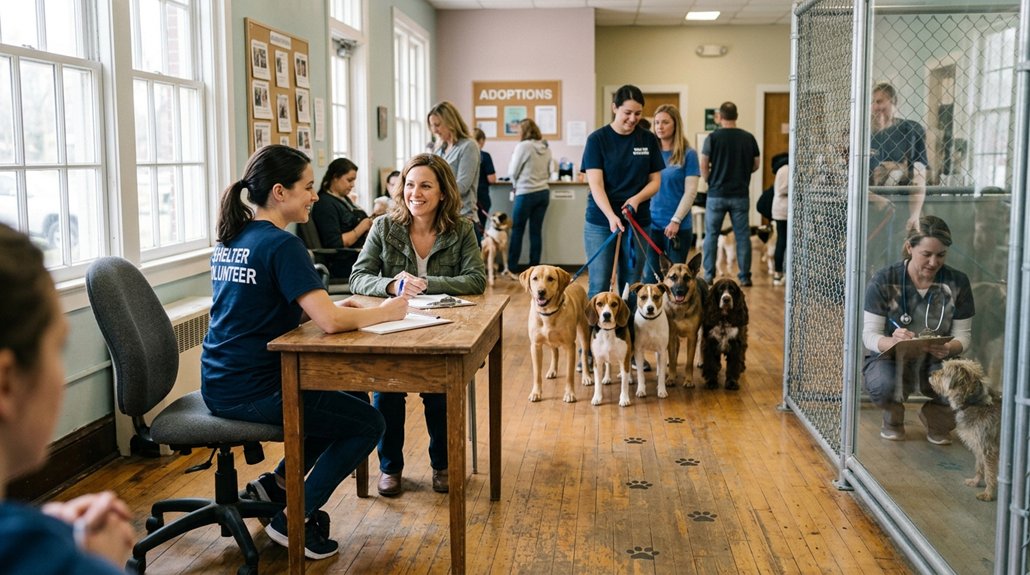
Animal shelters seek dog owners ready for a lifelong commitment to a safe, loving, and financially stable home. You’ll need to pass evaluations and interviews to guarantee a great match and demonstrate readiness for ongoing care, including financial planning for routine and emergency expenses. Showing understanding of your dog’s energy needs, commitment to training, and creating a safe space is crucial. If you’ve owned pets before, sharing your experiences will help. There’s much more to guaranteeing a successful adoption journey.
Key Takeaways
- Animal shelters look for compatibility between the dog’s energy level and the potential owner’s lifestyle.
- They evaluate living conditions through home visits to ensure a safe, pet-proof environment.
- Financial preparedness for both routine and emergency pet care expenses is assessed.
- Shelters confirm commitment to regular veterinary care and ongoing support from owners.
- Potential owners are evaluated based on previous pet ownership experiences and readiness for long-term responsibility.
Understanding Animal Shelters’ Role in Dog Adoption
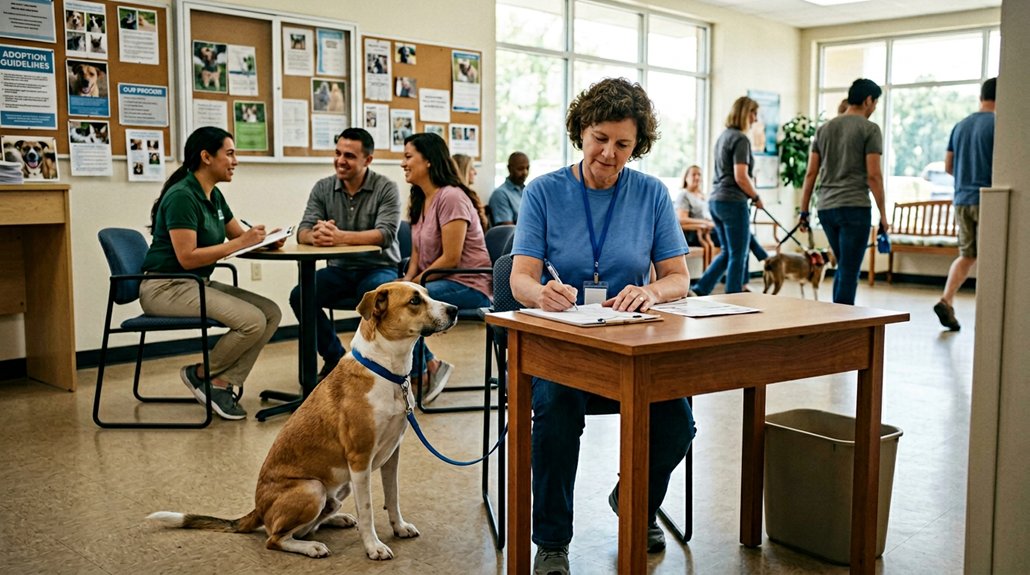
When it comes to adopting a dog, understanding the essential role animal shelters play is indispensable. These organizations are dedicated to the careful rehoming of dogs through a thorough adoption process. You’ll experience meticulous shelter evaluations including detailed applications and in-person interviews tailored to gauge your compatibility and readiness for a specific dog. This guarantees the relationship between you and your new furry friend is harmonious and enduring.
Shelters aren’t just concerned with matching, but also with evaluating your living environment through required home visits, making sure it meets safety standards. Furthermore, shelters focus on lifestyle compatibility, aiming to reduce returns and enhance long-term placements. They offer continued support and guidance, helping you and your dog adjust smoothly into this wonderful journey.
Creating a Safe and Loving Home for Your Dog
To create a safe and loving home for your dog, you must first guarantee your space is pet-proofed by securing hazardous items like cleaning supplies and electric cords. Establish a cozy, designated area for them with essentials like a comfortable bed, food and water bowls, and toys, providing them a sense of security in their new environment. Additionally, consider a consistent routine for feeding and exercise to foster stability and promote a smooth shift as they adjust to their new surroundings.
Essential Home Considerations
As you prepare to welcome a new dog into your home, creating a safe and loving environment is paramount. Start by dog proofing your garden to prevent any escape routes or hazards. Shelters emphasize having a secure, fenced yard space where your dog can explore safely. Assess living conditions, verifying there’s a comfy spot for sleeping and rooms where play and relaxation are stress-free. Communicate with all household members and confirm they’re ready to embrace the newcomer, fostering harmony. If you’re renting, get approval from your landlord to avoid potential issues. Develop a consistent dog care schedule, incorporating exercise, feeding, and training routines. This structured yet loving approach guarantees a stable, happy home for your canine companion.
Safe Environment Elements
After considering the essentials for integrating a new dog into your home, it’s essential to confirm that your living space is both safe and welcoming for your furry friend. A securely fenced yard is vital; it lets your dog enjoy outdoor play without the risk of escape or dangers like traffic. Inside, dog-proofing your home is non-negotiable. Secure loose electrical cords, remove toxic plants, and store harmful substances out of reach to prevent accidents. Create a designated quiet space with comfy bedding and familiar items to help your dog feel secure and adjust smoothly. Always verify access to a veterinarian for health needs. Whether you’re home or away, prioritize supervision and care to keep your pet safe and content.
Dog Comfort Essentials
Creating a welcoming environment for your dog involves more than just love—it’s about guaranteeing comfort and safety every step of the way. Start by dog-proofing your home: secure cords, remove hazards, and provide a designated safe space. Essential items include sturdy food and water bowls, cozy bedding, and enriching dog toys for mental stimulation. A crate offers a retreat, especially during stressful times or when you can’t supervise. Maintaining cleanliness is vital; fresh bedding and a hazard-free area contribute to your dog’s health. Consider secure fencing for outdoor spaces to safely extend your dog’s environment for exploration while preventing escapes. With these essentials, you’ll create a comforting sanctuary that guarantees your dog’s well-being and happiness.
Evaluating Your Financial Readiness for Pet Care
Before welcoming a dog into your home, it’s essential to understand the financial landscape of pet ownership, which can average $1,500 to $3,000 annually. You’ll need to prepare for both routine expenses and unexpected medical care, with emergencies potentially costing up to $3,000. Establishing a budget, considering pet insurance, and maintaining an emergency fund will guarantee you can provide the stable and loving environment your future furry companion deserves.
Budgeting for Pet Expenses
As you consider becoming a dog owner, evaluating your financial readiness is essential to ensuring you can provide for your new pet’s needs. Begin by implementing budgeting tips and effective expense tracking to balance initial and ongoing costs. Adoption fees often exceed $200, so it’s vital to forecast these expenses. Factor in yearly costs averaging $1,000 for necessities like food, grooming, and supplies. To stay on top of it:
- Adoption Fees: Assess varying fees from different shelters.
- Annual Expenses: Budget for $1,000+ annually on regular needs.
- Insurance: Weigh the benefits of pet insurance costing $30-$70 monthly.
- Training and Boarding: Allocate funds for training and unforeseen boarding.
Commit to a budget ensuring your furry friend receives quality care throughout its life.
Anticipating Medical Care Costs
When initiating the journey of becoming a dog owner, it’s imperative to thoroughly anticipate the medical care costs associated with this lifelong commitment. Start with extensive veterinary budgeting by factoring in routine preventive care and vaccinations, which typically range from $200 to $500 annually. To effectively manage cost and health considerations, evaluate pet insurance options; they can minimize unexpected expenses with monthly premiums from $20 to $60. Prepare for emergency preparedness as some treatments can surpass $1,000, especially with chronic illnesses or necessary surgeries. In your long-term commitments, remember that groomings, dental care, and behavioral training add to the financial load. Thorough cost management guarantees you’re equipped to offer your furry companion the best care without financial stress.
Emergency Fund Necessities
Though bringing home a dog can be one of life’s most heartwarming experiences, it demands a significant level of financial readiness, particularly when it comes to unexpected vet bills. An emergency fund is essential—aim for at least $1,000 to cover unforeseen veterinary expenses like surgeries or urgent care. It’s smart to evaluate your financial situation thoroughly before adopting, as veterinary visits can range from $300 to over $3,000 depending on your dog’s needs. Consider these necessities:
- Emergency fund of $1,000: Important for sudden expenses.
- Ongoing annual costs: Expect $1,000–$2,000 for food and routine care.
- Stable income: Guarantees you can meet long-term commitments.
- Understanding costs: Dogs live 10-15 years, requiring sustained financial attention.
Shelters seek adopters prepared for these realities.
Match Your Lifestyle and Activity With the Right Dog
How can you guarantee that your new furry friend is the perfect match for your lifestyle? Start by focusing on energy matching and lifestyle compatibility. Animal shelters assess your daily routine, ensuring you adopt a dog whose energy levels align with yours. If you’re active, a high-energy breed might fit right in. If you prefer a quieter life, a calm, low-energy dog could be your ideal companion.
Shelters provide detailed bios on available dogs, highlighting their behavior and exercise needs. Consider how much time you can devote to walking, playing, and socialization. Discuss these factors openly with adoption counselors—they’re experts at finding a tail-wagging match. By considering your lifestyle, you’re paving the way for a joyful, long-term relationship.
Learning From Previous Pet Experiences
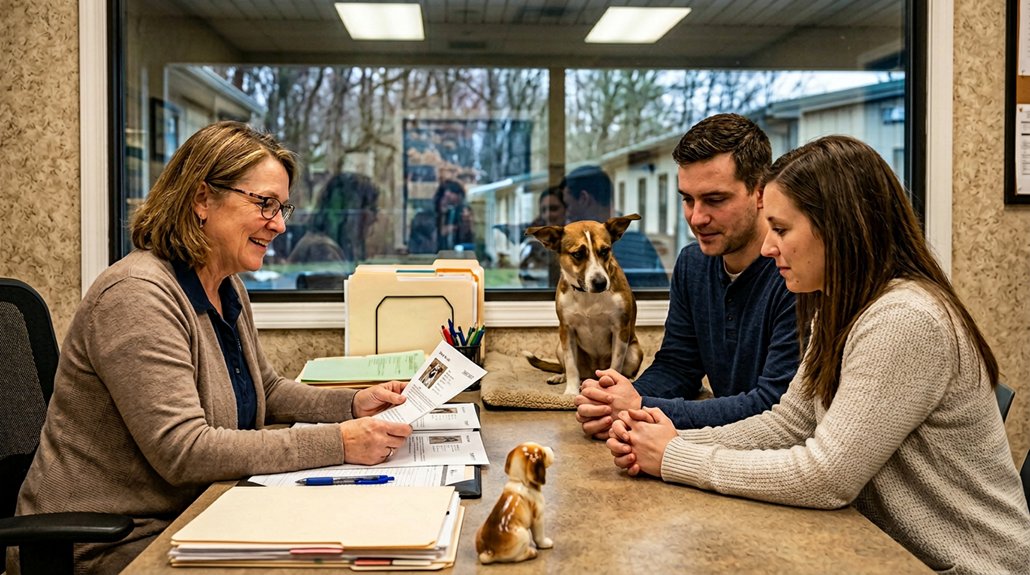
Reflecting on your past pet experiences can provide invaluable insights into what makes a successful adoption. Animal shelters value your history with pets, as it reveals your understanding of pet care responsibilities. Discussing previous challenges, like rehoming reasons and behavior issues, helps evaluate your readiness for a long-term commitment. Acknowledging positive outcomes showcases your ability to navigate difficulties and improve pet welfare.
Sharing your journey can highlight:
- Resilience: Tackling behavior issues with patience and dedication.
- Commitment: Making sure pets remain in their forever homes despite hurdles.
- Learning: Adapting from past mistakes to enhance future pet interactions.
- Matching: Effectively choosing pets that fit your lifestyle and expectations.
Open conversations about these experiences help guarantee the right match.
Prepared for Dog Training and Socialization?
Building on your past pet experiences, being ready for dog training and socialization becomes an integral aspect of adopting a new companion. Demonstrating a strong training commitment guarantees your dog grows into a well-adjusted, happy family member. Shelters favor adopters who leverage positive reinforcement techniques, nurturing good behavior gently and effectively. You’ll need to develop socialization strategies, helping your dog interact with other pets and people to avert potential behavioral issues. Investing time in basic obedience training isn’t just about teaching commands—it’s about building trust and strengthening your bond. Be prepared for challenges, understand common behavioral hurdles, and when necessary, seek professional help. This dedication reassures shelters you’re prepared for the rewarding responsibility of dog ownership.
Questions You’ll Face When Adopting
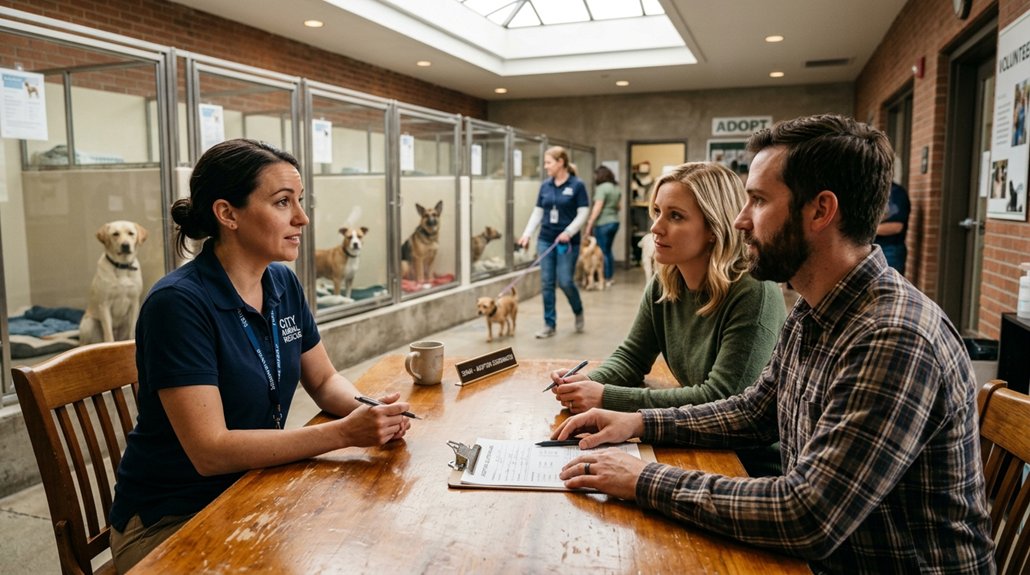
Maneuvering the adoption process at animal shelters involves more than just emotional readiness; it’s about proving your suitability as a responsible pet owner. During the dog adoption process, you’ll encounter potential adopter questions aimed at evaluating your preparedness. Shelters will inquire about several aspects of your life:
- Pet Ownership Experience: Have you had pets before? This helps gauge your ability to care for a dog.
- Living Situation: Do you own or rent, and is your yard adequately fenced?
- Lifestyle Considerations: How many hours will the dog be alone daily?
- Veterinary Commitment: Who is your current vet, and how will you guarantee the dog’s care during travel?
Succeeding as a Responsible Dog Adopter
Steering through the questions you’ll face when adopting is just the beginning of your journey to becoming a responsible dog adopter. A successful adoption lies in matching your lifestyle with the dog’s needs. Anticipate thorough interviews; they’re meant to confirm your readiness for the ongoing responsibilities of pet ownership. Your home should be a safe haven, equipped with essentials like a secure yard and plans for care during your travels. Experience with pets and knowledge of veterinary care further demonstrate your commitment to responsible ownership. Maintain open communication with the shelter, especially during the adjustment period. Regular follow-ups not only strengthen your bond with your new companion but also guarantee you’re providing the best care possible for a happy, thriving dog.
Frequently Asked Questions
What Is the 3-3-3 Rule for Dogs?
The 3-3-3 rule for dog adoption covers behavioral adjustment timelines: three days for initial stress, three weeks for trust-building, and three months for full comfort. Be patient and understanding to guarantee successful integration into their new home.
What Is the 7 7 7 Rule for Dogs?
The 7-7-7 rule symbolizes a journey of adaptation. After shelter adoption, expect decompression within days, trust-building weeks, and lifestyle integration by months for effective dog training. It requires patience, empathy, and commitment to success.
What Are the Biggest Needs of Pet Owners?
Your biggest needs as a pet owner include understanding financial responsibilities and guaranteeing lifestyle compatibility. Make sure you can afford veterinary care and allocate time for exercise, training, and socialization to provide a loving, stable home environment.
What’s the 90/10 Rule for Dogs?
The 90/10 rule for dogs means 90% of behavior arises from your interaction and training commitment, while 10% is genetic. Focus on adoption preparedness by understanding this to shape your dog’s temperament and address any issues effectively.
Conclusion
Adopting a dog is no small feat, but with thoughtful preparation, you can provide a loving home and gain a loyal friend. Remember, “An ounce of prevention is worth a pound of cure,” especially when it comes to reflecting on your lifestyle, finances, and readiness for training. Animal shelters aim to match dogs with owners who can meet their needs, so approach this commitment with care. As you commence on this journey, know that your compassion and preparation make all the difference.