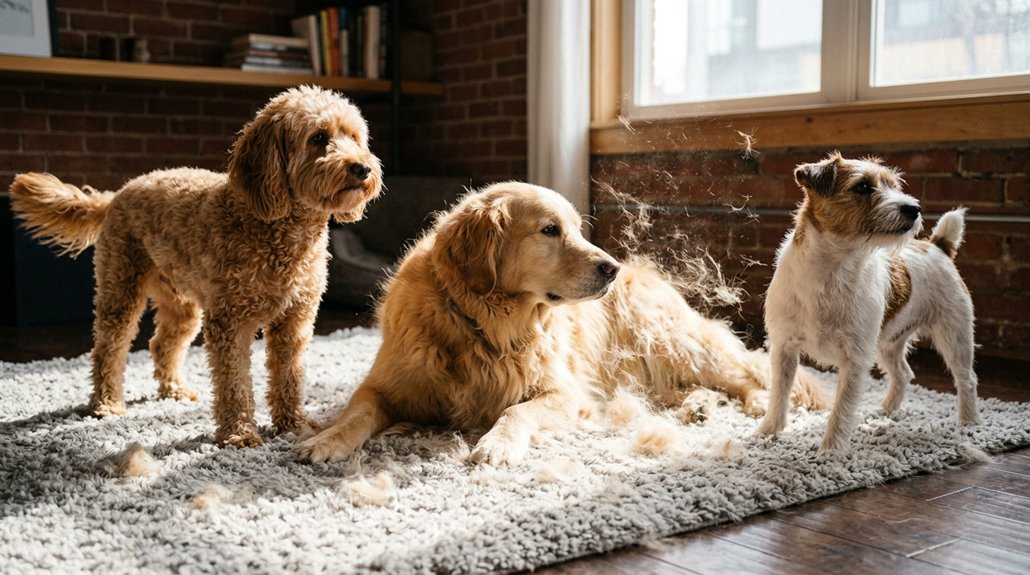
Dogs like Siberian Huskies, Labrador Retrievers, and Golden Retrievers are notorious for heavy shedding due to their dense double coats and seasonal changes. To manage the fur frenzy, establish a consistent grooming routine, use de-shedding tools tailored for their coats, and guarantee a diet rich in omega fatty acids for healthy fur. Regular vacuuming and designated dog areas help maintain a clean home. Dive deeper into specific strategies tailored to your pet’s needs for effective shedding management.
Key Takeaways
- Siberian Huskies are known for heavy shedding, especially during seasonal changes, requiring regular grooming.
- Labrador Retrievers shed consistently due to their dense double coat; frequent brushing is essential.
- Golden Retrievers have peak shed times in spring and fall; maintain with proper brushing routines.
- German Shepherds shed continuously and need regular grooming to manage fur volume.
- Use de-shedding tools and omega-rich diets to control heavy shedding in dogs.
Why Do Dogs Shed?
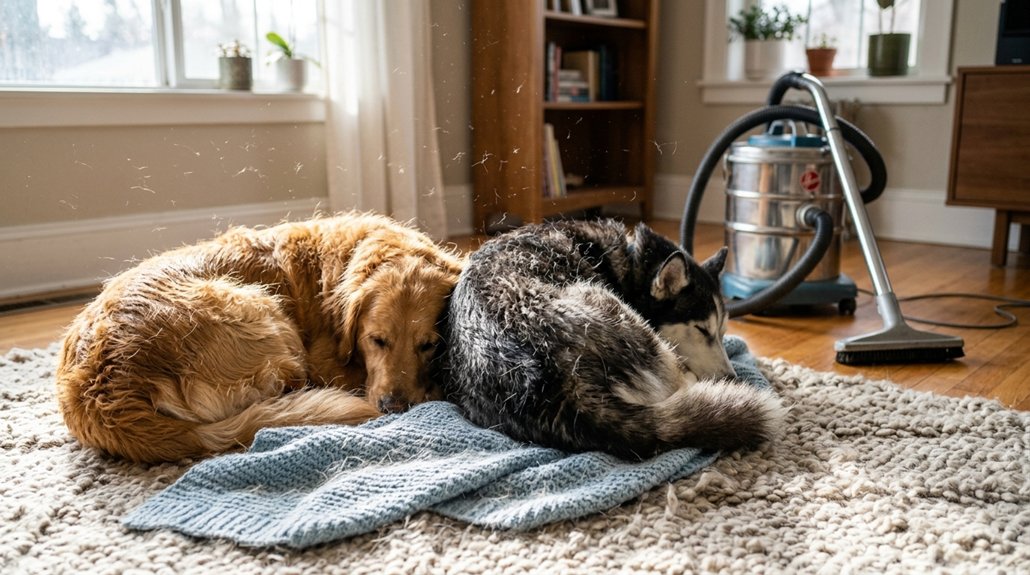
Why exactly do dogs shed? Shedding is an essential process for dogs to renew their hair and guarantee proper coat maintenance. It occurs in specific shedding cycles, including growth, shift, rest, and shedding phases. These cycles help maintain your dog’s coat health by allowing old, dead hair to fall out. Seasonal changes heavily influence shedding, with many breeds losing more fur during spring and fall to adjust to varying temperatures. This cyclical shedding is also dictated by a dog’s genetics, determining coat type, length, and texture, which directly affects shedding patterns. Factors such as skin conditions or hormonal imbalances can disrupt these normal cycles, causing abnormal shedding. Breeds known for high shedding, like the Siberian Husky, require attentive grooming.
Manage Shedding: Effective Strategies
To manage the shedding of breeds like Labrador Retrievers, implementing regular brushing techniques can markedly help, as consistent brushing can capture loose fur before it becomes a household nuisance. Consider enriching your dog’s diet with nutritional supplements, particularly those containing omega fatty acids, which play an essential role in promoting a healthy coat and skin. Additionally, using essential cleaning tools like specialized vacuum attachments for pet hair can guarantee your environment remains fur-free and manageable.
Regular Brushing Techniques
Managing shedding in heavy-shedding breeds involves incorporating key brushing techniques into your routine. To effectively manage loose fur in breeds like Siberian Huskies, practice brushing frequency of 3-5 times weekly, increasing to daily during shedding seasons. Optimize results by selecting grooming tools designed for your dog’s coat, such as high-quality de-shedding brushes. Double-coated breeds like the German Shepherd require specific attention to their undercoat during “blowing coat” phases.
| Technique | Detail |
|---|---|
| Brushing Frequency | 3-5 times/week, daily in shed seasons |
| Grooming Tools | De-shedding tools for coat type |
| Seasonal Shedding | Focus on undercoat removal |
| Gentle Techniques | Avoid tugging/pulling |
Monthly baths with coat-safe shampoos assist in reducing loose fur. Employ gentle brushing techniques to guarantee a positive grooming experience.
Nutritional Supplements Benefits
While brushing techniques are vital for controlling shedding in heavy-coated breeds, enhancing your dog’s diet with nutritional supplements further fortifies their coat health. By incorporating the right supplement types, you can greatly impact their shedding patterns. Consider these key factors:
- Omega Fatty Acids: These are important for improving coat health and reducing excessive shedding, leading to a shiny, healthy appearance. They’re often found in fish oil supplements.
- High-Quality Protein: Supports hair growth and strengthens hair follicles. More protein can mean less hair loss.
- Vitamins: Biotin and Vitamin E contribute to strong hair structure and skin health. They’re vital for managing shedding effectively.
Always aim for nutritional balance. Combined with grooming, these strategies can help control shedding in prone breeds.
Cleaning Tools Essentials
Several well-chosen cleaning tools can transform your approach to managing pet hair. Start with a high-quality vacuum cleaner featuring pet hair attachments. These are designed to efficiently capture loose fur from carpets, upholstery, and hard floors. Consider vacuum cleaner features like advanced filtration systems to trap dander. For quick touch-ups, don’t overlook lint rollers; they effectively remove hair from clothing and surfaces.
Incorporate grooming tool recommendations into your routine by using de-shedding tools such as rubber brushes or shedding blades tailored to your dog’s coat. This reduces loose fur during grooming sessions. An air purifier with a HEPA filter can help minimize airborne dander. Maintain a consistent cleaning schedule with weekly deep cleaning sessions to effectively keep shedding at bay.
Top Breeds Known for Heavy Shedding
Understanding which dog breeds shed the most helps in managing expectations and preparations for potential pet owners. Here’s a closer look at the top breeds known for heavy shedding:
Managing expectations for pet owners starts with knowing which dog breeds shed the most.
- Siberian Husky: Expect twice-a-year heavy shedding, often during seasonal changes. Effective Husky grooming is essential by using suitable tools to control the fur loss.
- Labrador Retriever: With a dense double coat, they shed consistently year-round. Labrador care involves regular brushing to handle their loose hair effectively.
- Golden Retriever: Experience year-round shedding with peaks in spring and fall. Proper Retriever brushing helps maintain their lovely coat.
Meanwhile, German Shepherds require attention to continuous Shepherd shedding, and Alaskan Malamutes need diligent Malamute maintenance, shedding large clumps twice annually. Keep these breeds well-groomed to manage shedding efficiently.
Debunking Shedding Myths
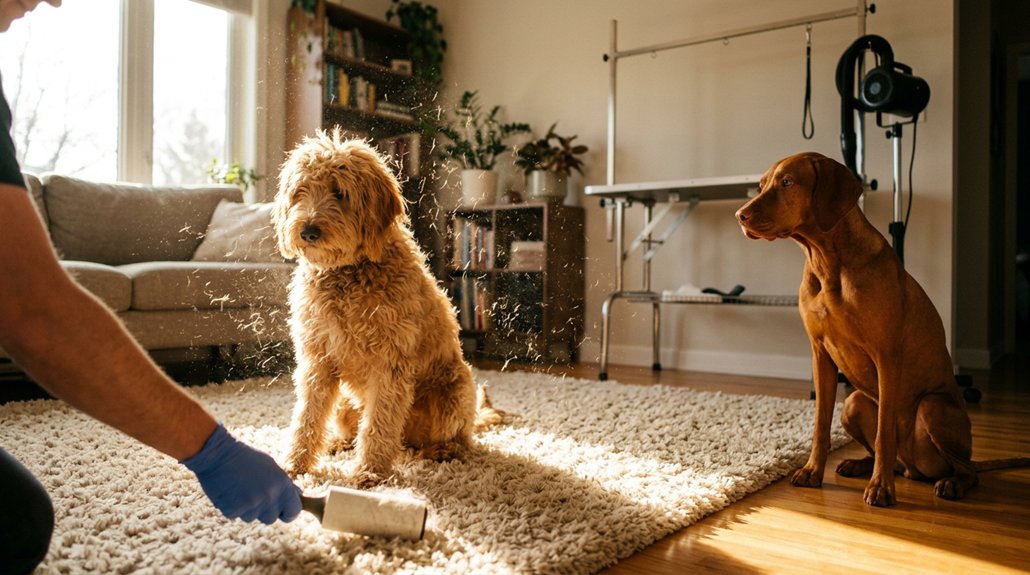
You might think longer-haired dogs naturally shed more, but shedding is primarily driven by genetics and coat type, not just hair length. Breeds with diverse genetic backgrounds may exhibit significant shedding due to their genes rather than their coat’s appearance. Seasonal shedding cycles also play a role, where dogs often shed more in spring and autumn to adjust for temperature changes.
Longer Coats Misconception
While it’s a common belief that longer-coated breeds shed notably more than their short-coated counterparts, this misconception overlooks the essential role of genetics and coat type in determining shedding patterns. Coat maintenance plays a pivotal role in shedding variability, frequently more than fur length. Consider these points:
- Short-haired breeds like Labrador Retrievers shed notably, illustrating that less fur doesn’t always mean less shedding.
- Double-coated breeds, such as Huskies, undergo dramatic seasonal shedding known as “blowing coat,” resulting in conspicuous fur loss regardless of length.
- Mixed-breed dogs inherit shedding traits variably from their parents, making coat length an unreliable indicator of shedding.
Regular grooming can effectively manage visible shedding, highlighting the importance of maintenance over mere length in understanding fur dynamics.
Impact of Genetics
Though coat length often garners attention when discussing shedding levels, genetics is the more decisive factor. Genetic influences dictate coat type, texture, and inherent shedding tendencies. Breeds like Labrador Retrievers and Siberian Huskies, known for significant shedding, owe this trait to their thick double coats and undercoats. These genetically driven breed traits can mean heavier shedding, independent of coat length.
For mixed-breed dogs, shedding can be unpredictable, as they may inherit traits from various ancestral lines, which are better understood through DNA testing than visual assessment alone. This knowledge assists you in choosing a breed that matches your grooming tolerance and cleanliness standards. Understanding these genetic nuances is essential in managing expectations and care routines tailored to your dog’s specific shedding profile.
Seasonal Shedding Patterns
Although often misunderstood, seasonal shedding patterns are a natural process influenced by environmental changes and a dog’s biology. Shedding cycles ramp up in spring and fall as dogs shift between coats, known as “blowing coat.” This process varies with climate effects, impacting indoor dogs in warmer areas with more consistent shedding year-round. Let’s debunk shedding myths by understanding:
- Shedding Peaks in Shift Seasons: Breeds like Siberian Huskies experience heavy shedding to adapt to temperature changes, losing large clumps of fur.
- Climate Influence: Dogs in warm or consistently warm climates may shed continuously due to indoor temperature regulation.
- Grooming Management: Regular grooming with de-shedding tools during peak shedding seasons helps manage and minimize fur dispersion in your home.
How Genetics Affect Shedding
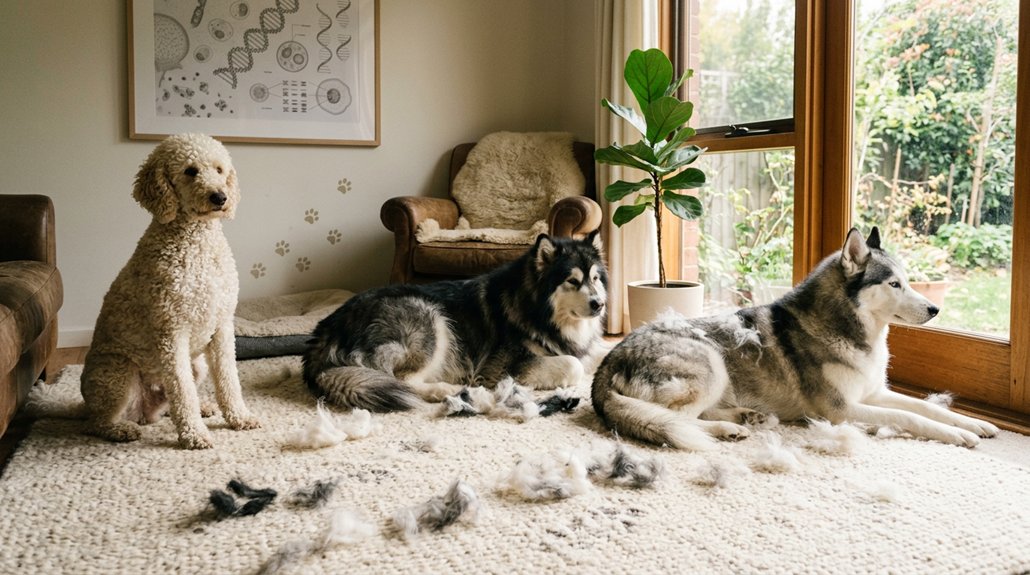
Genetic makeup greatly influences a dog’s shedding intensity. Gene expression determines coat types, considerably affecting how much hair your dog loses. Dogs with double coats, like Siberian Huskies, have a dense undercoat and a tougher outer coat, resulting in heavier shedding. Over time, seasonal changes cause the undercoat to “blow out,” intensifying this process.
Genetic factors influence coat texture and length, impacting shedding volume. Breeds like Golden Retrievers have softer fur that easily disperses around the home. Additionally, genes dictating coat length and density mean breeds such as Akitas naturally shed more. Even mixed-breeds exhibit inherited traits, leading to unpredictable patterns. Understanding your dog’s genetic predisposition helps you better anticipate and manage shedding effectively, ensuring a cleaner living environment.
Looking for Low-Shedding Dog Breeds?
Curious about which dog breeds shed the least? You’re in luck! Opting for low-shedding breeds not only means less cleanup but also health benefits for those with allergies. Here are some standout breed characteristics to take into account:
Low-shedding dog breeds offer allergy relief and minimal cleanup, perfect for tidy homes and sensitive owners.
- Poodles and Bichon Frises: Require diligent grooming to maintain their coats and decrease fur loss. Their hypoallergenic potential helps reduce reactions.
- Italian Greyhounds and Basenjis: These sleek coat breeds demand less grooming but still offer minimal shed. Their lower maintenance might appeal to busy schedules.
- Schnauzers: Known for their wiry coats, Schnauzers shed minimally. They’re often suitable around allergy-prone individuals.
How to Live Comfortably With Shedding Dogs
Living with shedding dogs can be manageable with the right strategies. Start with a robust grooming routine, brushing your furry friend 3-5 times weekly, or daily during peak shedding seasons. Invest in de-shedding tools and pet-specific vacuum attachments to keep your home hair-free. Offering a diet rich in omega fatty acids and protein will enhance skin and coat health, reducing excessive shedding, especially for breeds like German Shepherds and Labrador Retrievers. Establish designated dog areas, like a simple-to-clean bed, to contain fur. Regular baths with coat-safe shampoos are another essential grooming tip, helping to eliminate dander and loose fur while maintaining a healthy coat. These shedding solutions guarantee your living space remains tidy and your dog stays comfortable.
Tailoring Shedding Solutions for Your Environment
A harmonious living space with shedding dogs begins by adapting your environment to handle the fur phenomena. To combat this, focusing on shedding prevention and utilizing effective grooming tools is vital. Regular grooming is essential for heavily shedding breeds, ensuring less fur ends up in your home. Here’s how you can manage it:
- Invest in grooming tools: Use slicker brushes and de-shedding combs, especially during seasonal peaks in spring and fall.
- Vacuum frequently: A consistent vacuuming routine with pet-specific attachments helps manage the fur avalanche from breeds like Labradors and German Shepherds.
- Prioritize diet: Incorporate omega-rich foods to enhance coat health, potentially reducing overall shedding.
Understanding specific breed shedding cycles allows for timely cleaning and grooming, maintaining a comfortable, allergen-minimized environment.
Frequently Asked Questions
What Breed Dog Sheds the Most?
You’ll find Siberian Huskies, with their biannual shedding season, among the top. Grooming tips include using an undercoat rake and deshedding tools frequently. Regular brushing manages loose fur and keeps their thick coat in excellent condition.
How to Handle a Dog That Sheds a Lot?
Tackle your furry friend’s hair confetti by embracing grooming techniques. Use high-quality shedding tools designed for their coat. Regular brushing, a balanced diet, and professional grooming sessions work wonders in keeping your home delightfully fur-free.
What Breed of Dogs Don’t Shed Too Much?
You’d want to contemplate hypoallergenic breeds like Poodles or low shedding pets like Bichon Frise and Basenjis. They require regular grooming but generally produce fewer allergens and help maintain a cleaner living environment for allergy sufferers.
What Is the Calmest Dog Breed That Doesn’t Shed?
Looking for the calmest dog breed that doesn’t shed? Isn’t a non-shedding Bichon Frise perfect with its calm demeanor? Poodles and Maltese also boast hypoallergenic coats. These breeds are ideal for those prioritizing calmness and minimal shedding.
Conclusion
Maneuvering the world of dog shedding can feel like wrestling a whirlwind, but with the right strategies, you’ll manage the fur storm effectively. Understanding genetics and breed tendencies is key, while debunking myths guarantees you’re on the right track. Whether you’re seeking a low-shedding breed or managing heavy shedders, tailor solutions to your environment for harmonious living. With knowledge and tools at hand, you can comfortably coexist with your furry companion—fur and all.