
Hypoallergenic dogs aren’t entirely free from allergens. They produce fewer allergens due to traits like reduced shedding. Breeds such as Poodles and Bichon Frises trap dander and allergens in their hair, minimizing dispersion. Despite their marketing, all dogs can trigger allergies. Managing allergens involves regular grooming and using HEPA filters. You’ll still experience allergies if sensitive, influenced by individual immune responses and environmental factors. Discover methods to coexist with these breeds efficiently.
Key Takeaways
- Hypoallergenic dogs are not completely free of allergens; they just produce fewer allergens compared to other breeds.
- All dogs, regardless of breed, produce some allergens that can trigger reactions in sensitive individuals.
- Studies show no significant allergen level difference between hypoallergenic and non-hypoallergenic breeds.
- Proper allergen management, rather than just selecting a specific breed, is crucial for minimizing allergic reactions.
- Individual sensitivities and environmental factors significantly influence allergic responses, even with hypoallergenic breeds.
What Makes a Dog Hypoallergenic?

Hypoallergenic properties in dogs stem from the reduced production of allergens, particularly specific proteins present in their saliva, skin cells, and urine. These proteins are the primary culprits for allergic reactions in susceptible individuals. Allergen reduction in hypoallergenic breeds is linked to distinct breed characteristics. Breeds such as Poodles and Bichon Frises possess hair rather than fur, which tends to trap dander and other allergens. This entrapment limits environmental allergen dispersion, thereby lowering exposure levels within a shared living space. It’s essential to understand that “hypoallergenic” doesn’t equate to zero allergens. It signifies a decreased propensity to incite allergic responses. Individual sensitivities vary, indicating personalized responses to each breed. Consistent grooming and bathing are vital in maintaining minimal allergen presence.
Common Misconceptions Versus Realities About Hypoallergenic Dogs
How often do you find yourself intrigued by the allure of hypoallergenic dogs, thinking they could be the answer to allergy woes? It’s a common misconception. The term “hypoallergenic” can mislead prospective pet owners into assuming certain breeds are devoid of allergens. In reality, all dogs, regardless of breed, produce allergens found in saliva, dander, and urine.
Myth busting here shows that even breeds like Poodles and Schnauzers, often touted as hypoallergenic, still provoke allergic reactions in susceptible individuals. Scientifically, studies indicate no discernible difference in allergen levels between hypoallergenic and non-hypoallergenic breeds. Breed awareness is vital: understand that allergenicity is not inherently absent but reliant on grooming and environmental factors. Effective management, not breed, is key to mitigating allergic responses.
Tips to Keep Your Puppy Love Allergy-Free
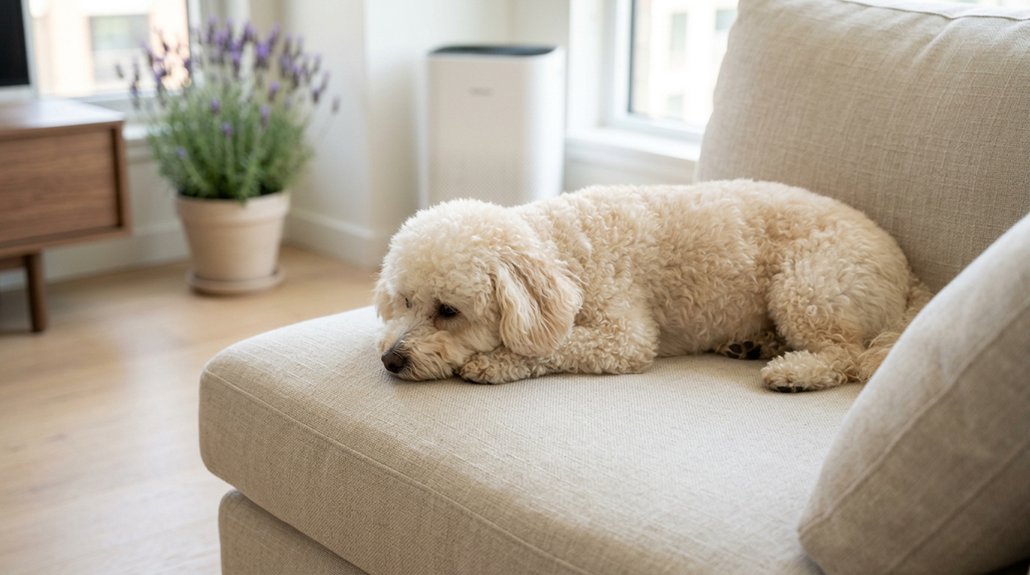
While understanding the realities of hypoallergenic dogs debunks common myths, it’s time to focus on effective strategies to create an allergy-friendly environment with your canine companion. Initiating regular grooming techniques is critical; this includes systematic bathing and frequent brushing to mitigate allergen dispersion from saliva and skin cells. A controlled environment also relies heavily on sophisticated air filtration systems. Installing HEPA filters within your home’s ventilation network efficiently captures airborne dander, reducing allergenic particles. Consciously excluding your pet from sleeping quarters further reduces allergen exposure. Implement a rigorous hygiene routine encompassing weekly carpet vacuuming and linen cleansing to maintain a minimal allergen threshold. Finally, pre-emptively spending time with a potential dog breed assesses your allergic reactions before making a lifelong commitment.
Why Might You Still Experience Allergies?
Curiously, why might you still experience allergies despite your best efforts to choose a hypoallergenic dog? Scientifically, no dog is entirely devoid of dog allergens. Even breeds labeled hypoallergenic excrete allergens through saliva, skin cells, and urine. Individual sensitivity plays a notable role; varying reactions occur due to differing immune responses. Environmental factors, such as dust mites or pollen, can compound allergic reactions, obscuring the source of your symptoms. Hypoallergenic dogs’ allergen production can differ markedly even within the same breed. For instance, low-shedding breeds like Poodles might still produce substantial allergens. Cumulatively, previous exposure to particular breeds might influence your tolerance, altering susceptibility levels. Understanding these complexities helps decipher why hypoallergenic labels don’t guarantee an allergy-free experience.
Choosing the Right Dog Breed for Your Allergies: A Guide
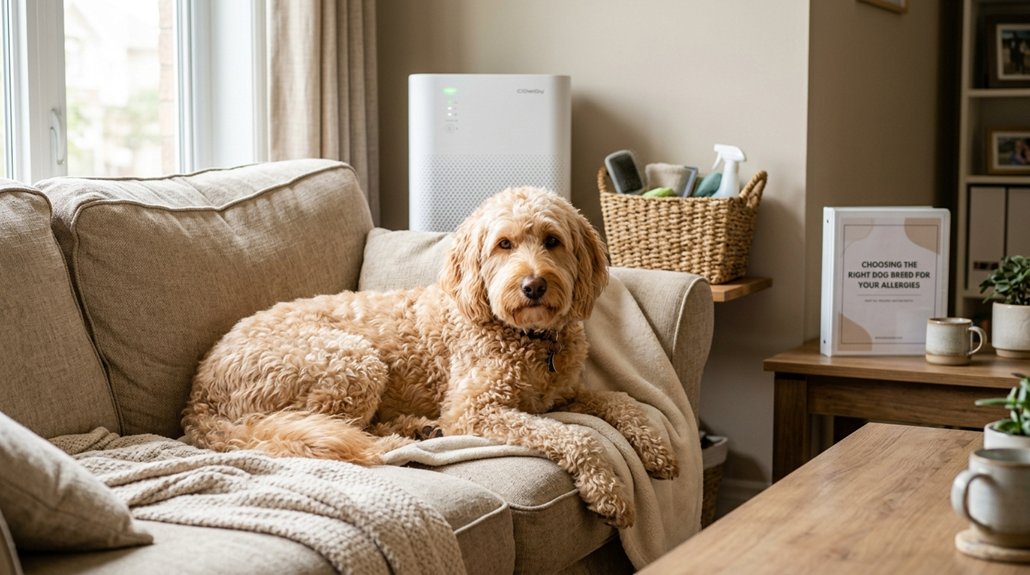
Although no dog breed is completely free from allergens, a strategic approach to selecting a hypoallergenic breed can substantially reduce allergy symptoms. Understanding the breeds overview, such as Poodles and Bichon Frises, known to shed minimally, is pivotal. Here’s a guide:
- Interaction Study: Before adopting, spend time with the breed. Your physiological response to allergens might vary considerably, necessitating a personalized examination.
- Hygiene Protocol: Implement a stringent grooming regime—bathing and brushing to mitigate dander accumulation and loose hair proliferation.
- Environmental Adjustments: Enhanced home allergen management through HEPA filtration, routine vacuuming, and designated pet-free zones, which optimizes air purity.
Assessing lifestyle compatibility, including spatial and kinetic needs, guarantees that both your family and canine companion thrive symbiotically.
Frequently Asked Questions
Are There Any Truly Zero-Shedding Dogs?
No breed is truly zero-shedding. Even Poodles, with regular grooming, produce some fur and dander. Focus on dander reduction techniques to minimize allergens, but perfect elimination’s not possible. Each individual’s sensitivity to allergens varies considerably.
Why Do I Still Sneeze Around Hypoallergenic Dogs?
Sneezing around hypoallergenic dogs is like finding dust on a seemingly clean shelf. Allergy triggers, including proteins from saliva and dander, exist in all dog breeds, affecting your immune system’s sensitivity and triggering allergic reactions.
Do Hypoallergenic Pets Still Shed?
Yes, hypoallergenic pets still shed, albeit minimally. Implementing regular grooming techniques can help manage allergy triggers like dander. Frequent brushing and bathing reduce allergen accumulation, thereby mitigating potential allergic reactions within the home environment.
What Dog Breed Is Worst for Allergies?
You’ll find breeds like Labrador Retrievers and German Shepherds worst for allergies due to high dander, saliva, and skin cell release. Avoid these if dog allergy symptoms include sneezing, itching, or respiratory issues.
Conclusion
So, you’re exploring the fascinating world of hypoallergenic dogs. It’s like chasing unicorns—you’ve got to sift through myths and truths. While no dog is truly “allergy-free,” understanding proteins and dander gives you some control. With smart choices and strategies, you can minimize sneezes and itchy eyes. Remember, selecting the right breed is essential. Use scientific allergy tests to guide your decision. Your path to canine companionship can be both science-based and heartwarming.