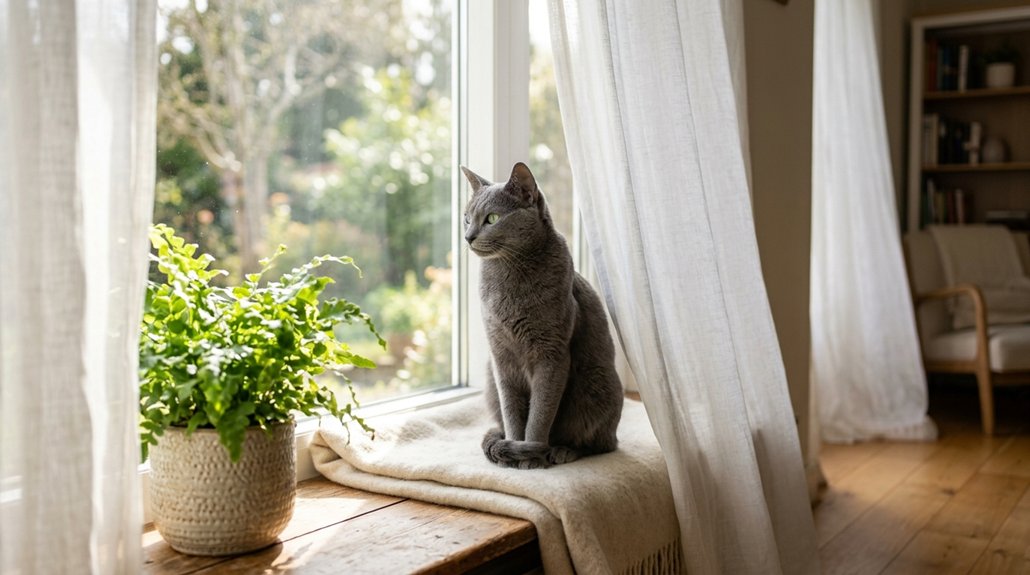
While no cat is completely hypoallergenic, breeds like Siberian, Balinese, Bengal, Russian Blue, and Sphynx are known for producing lower levels of the allergenic protein Fel d 1. These breeds can help reduce allergic reactions due to their specific coat characteristics and grooming needs. Considerations include coat length, grooming frequency, and allergen management strategies. Each breed offers unique companionship qualities, which you’ll find particularly engaging once you explore interactions and care requirements further.
Key Takeaways
- Siberian cats reduce allergens significantly, with up to 75% of allergy sufferers showing no symptoms.
- Balinese cats produce less Fel d 1, have a single soft coat, and are known for their affectionate nature.
- Bengal cats have short fur and produce lower allergen levels, making them suitable for allergy sufferers.
- Russian Blue cats have a dense coat that limits shedding and allergen production while being gentle companions.
- Sphynx cats are nearly hairless, dramatically reducing allergen spread but require regular skin care.
Are There Truly Hypoallergenic Cats?
Wondering if truly hypoallergenic cats exist? It’s vital to clear up cat allergy myths first. No cat is completely hypoallergenic because all felines produce allergens, chiefly the Fel d 1 protein in their saliva, skin, and dander. Feline hypoallergenic misconceptions often suggest the nonexistence of allergenic cats, but reality offers nuance. Some cat breeds, like Siberians and Balinese, produce lower levels of Fel d 1, potentially reducing allergic reactions in sensitive individuals. However, immune responses vary widely, so someone could react differently, even to these breeds. Remember, proper care, including regular grooming and cleaning, plays a significant role in managing allergens at home, regardless of the cat’s breed, thereby mitigating potential allergic reactions.
Understanding How Cat Allergies Work
Although many attribute cat allergies to fur, it’s the Fel d 1 protein, found in cat saliva, skin oils, and dander, that’s the primary allergen culprit. When cats groom themselves, their saliva spreads this protein onto their fur. As the saliva dries, the Fel d 1 becomes airborne, acting as allergy triggers for susceptible individuals. Your cat immune response recognizes this protein as a threat, resulting in symptoms like sneezing, runny noses, and respiratory issues. Male cats produce more Fel d 1, with unneutered males being the highest contributors. Approximately 10% of people are affected, making cat allergies fairly common. However, certain breeds, such as Siberians and Balinese, generate lower allergenic levels, potentially easing symptoms for allergy sufferers.
Why Hypoallergenic Cats Are Ideal for Allergy Sufferers
For those who suffer from cat allergies, opting for hypoallergenic breeds can make feline companionship more manageable. These breeds produce lower levels of the Fel d 1 protein, the primary allergen responsible for adverse reactions in sensitive individuals. Choosing hypoallergenic species like Siberian and Balinese offers significant benefits by minimizing allergenic protein exposure. Additionally, shorter-haired breeds such as Bengal and Devon Rex shed less, reducing airborne allergens in your living space. Hairless varieties like the Sphynx further limit allergen spread through the absence of fur, though they necessitate regular grooming routines, including bathing, to regulate skin oils. Moreover, hypoallergenic breeds, like the affectionate Russian Blue, provide not only an allergen-friendly environment but also enriching companionship for allergy sufferers.
Siberian Cats: Popular Low-Allergen Pets
Siberian cats represent one of the most popular choices among low-allergen pets, primarily due to their reduced production of the Fel d 1 protein, a chief irritant for cat allergy sufferers. Up to 75% of those with cat allergies don’t experience symptoms around Siberians, making them a remarkable option. Despite their luxurious, thick coats, Siberians surprisingly shed less, curbing allergen spread. Their notable Siberian temperament, characterized by affection and friendliness, guarantees they bond excellently with families and children. Implementing effective grooming techniques on a weekly basis is vital for managing their coat’s health and minimizing allergens. These grooming sessions not only maintain appearance but also mitigate allergen exposure, maximizing your comfort while enjoying the company of this remarkable breed.
Discovering the Low-Allergen Balinese
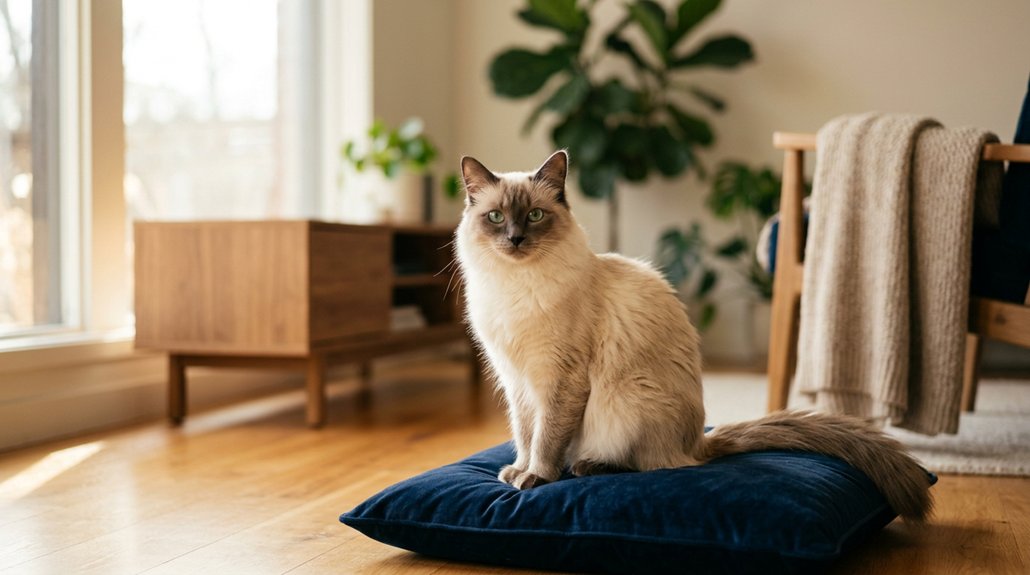
When exploring hypoallergenic options, the Balinese cat stands out for its reduced production of the Fel d 1 protein, making it an excellent choice for those sensitive to cat allergens. Despite its longer coat, it has a single, soft layer that sheds less, minimizing allergen spread. Known for its affectionate nature and social tendencies, this breed often forms strong bonds within its family. The Balinese characteristics include a highly vocal personality which thrives on interaction.
The Balinese cat: hypoallergenic, affectionate, and highly interactive, with a single soft coat that minimizes shedding.
Regular grooming habits are vital, as they maintain the coat’s quality and further reduce allergens in your home. Here are key insights:
- Lower Fel d 1 protein levels
- Single soft coat minimizing shedding
- Affectionate and social demeanor
- Highly vocal and interactive
- Essential regular grooming practices
Energetic Bengal Cats: Allergy-Friendly Option
Switching focus from the vocal and affectionate Balinese, the Bengal cat is another promising choice for those with cat allergies. Bengals have a unique spotted coat and short fur, which minimizes shedding and allergen spread. Not only are they visually striking, but Bengal behavior is also energetic, demanding mental and physical stimulation. This makes them ideal for active households that can provide engaging environments.
Bengals’ intelligence allows them to learn training techniques such as performing tricks or walking on a leash. In addition, they typically produce lower levels of the allergenic protein Fel d 1, possibly reducing allergy symptoms. However, individual allergies can vary, so spend time with Bengals to assess your personal reaction before considering adoption. They’re an active, allergy-conscious option.
Why the Russian Blue Could Be Your Perfect Match
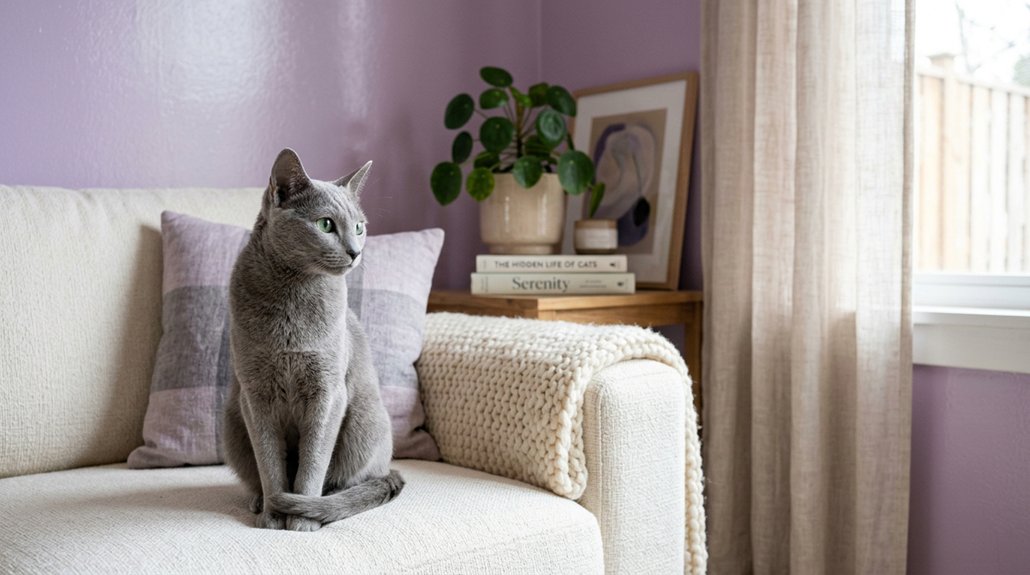
The Russian Blue cat stands out as an ideal match for allergy sufferers due to its lower production of the allergenic protein Fel d 1. This breed’s dense double coat offers a practical advantage, shedding less fur and reducing allergen spread. Russian Blue grooming plays a crucial role in maintaining their coat and controlling dander, fostering a healthier environment. The Russian Blue personality is warm yet reserved, characterized by a calm and gentle demeanor, ensuring harmony within a household. You’ll find them affectionate and social, forming bonds with family and pets delicately.
The Russian Blue, with its low allergenic protein levels and gentle demeanor, is perfect for allergy sufferers seeking a calm companion.
- Lower allergenic protein production helps reduce reactions.
- Dense coat minimizes shedding, curbing allergen distribution.
- Regular grooming is essential for controlling dander.
- Calm and quiet personality suits various households.
- Social nature, they bond well with family and pets.
Sphynx Cats: Embracing the Hairless Charm
Although Sphynx cats may be nearly hairless, they still present a unique hypoallergenic option for allergy-sensitive individuals due to the absence of fur, which reduces the trapping and spread of allergens. These cats, however, require consistent Sphynx grooming, as they produce allergens through their saliva and skin. Regular baths are essential to minimize allergen buildup. Their remarkable Sphynx personality shines through their affectionate and social nature—loving, playful, and interactive, making them great companions. Caring for a Sphynx involves maintaining skin health with pet-safe sunscreen and cleaning their prominent ears to prevent oil accumulation. Their distinctive appearance and friendly disposition have cemented their status among hypoallergenic breeds.
| Feature | Description | Care Focus |
|---|---|---|
| Appearance | Near hairless | Regular grooming |
| Personality | Affectionate, social | Interactive play |
| Allergen Control | Regular bathing | Minimize allergen buildup |
| Skin Care | Pet-safe sunscreen | Protect from sun exposure |
| Ear Care | Prominent ears | Prevent oil accumulation |
Exploring Rex Breeds: Devon and Cornish
When considering hypoallergenic cat breeds, the Devon and Cornish Rex stand out due to their unique coat characteristics. Both breeds feature short, curly coats, which lead to minimal shedding and less allergen distribution. Regular Rex grooming is essential, yet their reduced shedding makes them excellent choices for allergy sufferers. Their engaging and affectionate Rex personalities contribute to their desirability for those seeking interactive pets. Although no feline is entirely hypoallergenic, many people report fewer allergic reactions with these breeds.
- Minimal shedding: Curly coats limit hair and dander spread.
- Lower allergen levels: Less shedding often means fewer allergens.
- Rex grooming necessary: Guarantees coat health while maintaining minimal dander.
- Affectionate nature: Known for seeking human interaction.
- Social companions: Ideal for households wanting interactive cats.
Daily Tips for Living With Allergies and Cats
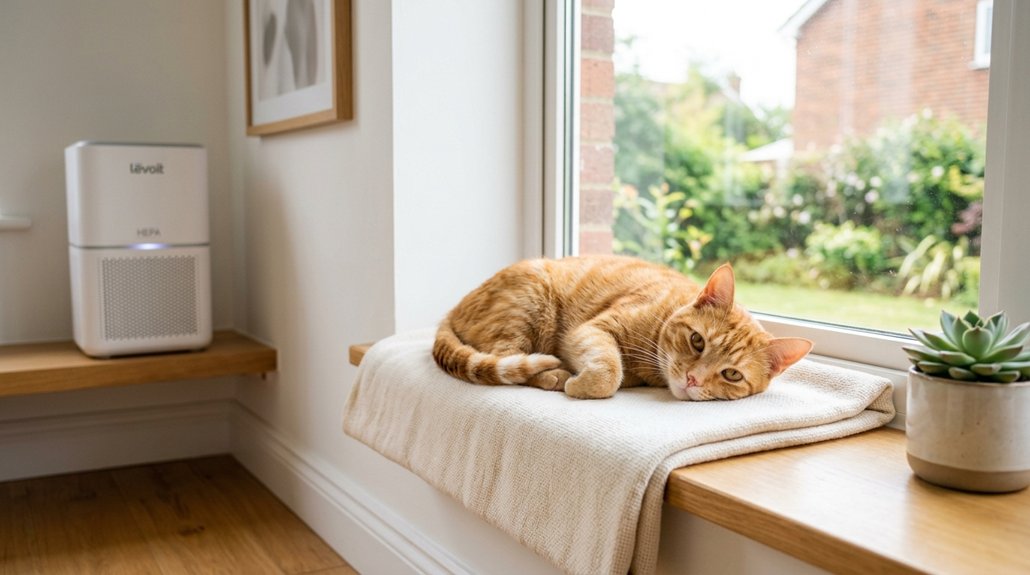
If you’re living with allergies and cats, implementing effective strategies is imperative to maintain your well-being. Begin with regular grooming techniques for your hypoallergenic cat to reduce dander and saliva allergens; these practices can decrease allergy symptoms considerably. Employ allergen management by integrating HEPA air filters and vacuuming routines to capture airborne particles. Creating clean zones, such as pet-free bedrooms, provides a sanctuary when allergy levels spike. For hairless breeds like Sphynx, routine bathing manages skin oil buildup, thereby limiting allergen dissemination. Hypoallergenic cat food, like Purina Pro Plan LIVECLEAR, may further diminish allergen production. By adhering to these scientifically backed methods, you enhance air quality and establish a more comfortable living environment, vital for enduring allergic reactions.
Frequently Asked Questions
What Is the #1 Most Hypoallergenic Cat?
The #1 most hypoallergenic cat is the Siberian. You’ll benefit from their hypoallergenic traits, producing less Fel d 1, important for cat allergy prevention. Regular grooming is essential for ideal hypoallergenic cat care, reducing allergens and dander.
What Cat Breed Is Best for Allergy Sufferers?
Like selecting silk over wool, go for the Siberian cat. It combines sensitive coatings with reduced dander production. Wrapped in a scientific marvel, it minimizes allergen exposure, offering a haven for allergy sufferers. Precision in feline elegance!
What Cat Breed Is Very Clingy?
Several cat breeds exhibit clingy cat personalities. You’ll find Siamese, Burmese, Sphynx, Ragdoll, and Devon Rex to be exceptionally affectionate feline breeds, offering constant companionship through their strong desire for interaction and human touch.
What Cats Don’t Meow?
Imagine a silent feline, whose quiet companionship enchants without words. Cats like the serene Russian Blue or the subtle Devon Rex favor muted expressions, communicating through soft gestures instead of meows. Discover their profound, non-verbal communication style.
Conclusion
In exploring the intriguing world of hypoallergenic cats, you’ve discovered a landscape brimming with fascinating options. But which breed holds the key to your allergen-free existence? Is it the majestic Siberian, the elegant Balinese, or perhaps the enigmatic Russian Blue? The solution is tantalizingly within reach. As you weigh these options, remember, each breed carries its unique allure, but only one might transform your space into a harmonious haven for both you and your feline friend.