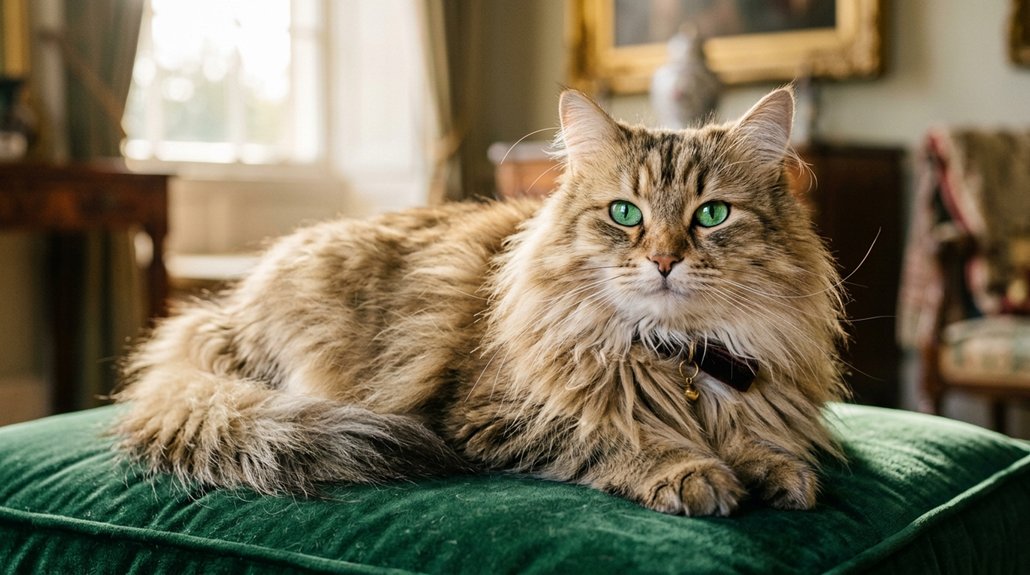
When considering long-haired cat breeds for both appearance and personality, focus on Persians, Ragdolls, and Maine Coons. Persians offer elegant coats but demand high grooming care. Ragdolls are affectionate and easygoing, with minimal grooming needs. Maine Coons stand out as friendly giants with their regal coats and playful nature. Each breed offers unique features and temperaments suited to different lifestyles. Stay with us to uncover more about maintaining these majestic creatures.
Key Takeaways
- Persians boast luxurious fur and a gentle demeanor, making them ideal for those seeking opulence and calm companionship.
- Ragdolls are affectionate and docile, featuring beautiful fluffy coats and a love for human interaction.
- Maine Coons combine striking bushy tails and substantial size with playful and intelligent personalities.
- Norwegian Forest Cats have a water-repellent double coat and thrive on human interaction, perfect for colder climates.
- Siberians offer hypoallergenic properties and strong bonds, making them suitable for allergy-sensitive families.
Understanding the Appeal of Long-Haired Cat Breeds
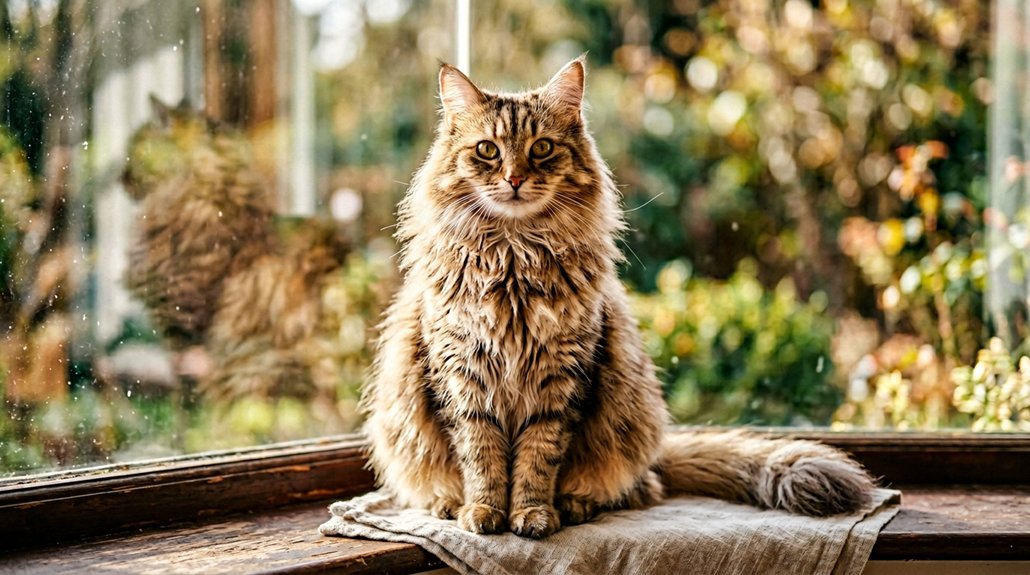
Long-haired cat breeds, with their opulent and striking coats, captivate enthusiasts who prioritize aesthetic appeal. These breeds are recognized for their long haired allure, offering unparalleled beauty in the feline world. While the Persian and Ragdoll are iconic examples, other breeds such as the Maine Coon and Norwegian Forest Cat also combine stunning fur with sociable traits. You might find their personality compatibility with humans particularly appealing, as these cats are known for being friendly and interactive. The Himalayans stand out with striking blue eyes and a unique color-point pattern, further enhancing their visual charm. Additionally, Siberians bring a playful nature alongside a majestic triple-layer coat, highlighting an ideal blend of attractiveness and affectionate demeanor.
Persians: Elegant and High-Maintenance Beauties
When considering a Persian cat, you’ll be managing daily grooming tasks to maintain their luxurious coats and prevent skin complications. Their gentle demeanor suits them to quiet, affectionate households, thriving on regular interaction with their families. These elegant cats offer various aesthetic options, yet require careful attention to their grooming and health needs, particularly due to their brachycephalic features.
Grooming Essentials for Persians
As a Persian cat owner, understanding grooming essentials is crucial due to their luxurious coats and facial structure. Regular grooming frequency is critical, with daily brushing necessary to prevent matting across various fur types. Weekly baths are advised to further deter tangles and maintain their coat’s pristine condition. Persians are susceptible to shedding, making these practices fundamental in minimizing hairballs. Their eye area requires consistent cleaning to manage tear staining effectively, owing to their unique facial anatomy.
Nutritional support plays a key role in maintaining skin and coat health. A moisture-rich diet, facilitated by high-quality cat food, aids in this endeavor. Adhering to these grooming essentials guarantees your Persian cat remains an elegant example of the breed’s beauty.
Personality Traits of Persians
Despite their reputation for being high-maintenance, Persian cats exhibit a calm and gentle temperament, making them ideal companions for those seeking a serene household presence. Their affectionate nature guarantees they form strong bonds with family members, displaying loyalty and devotion. While typically reserved around strangers, Persians thrive in familiar environments. They benefit from daily social interaction, which encourages their playful disposition, essential for their mental stimulation.
Renowned for their luxurious fur, Persians demand consistent grooming to prevent matting, underscoring their need for daily attention. Their brachycephalic facial structure raises potential health concerns; regular veterinary check-ups are critical for their well-being. Consequently, owning a Persian requires a commitment to their all-encompassing care, guaranteeing both their physical health and emotional satisfaction.
Himalayans: Playful With Striking Patterns
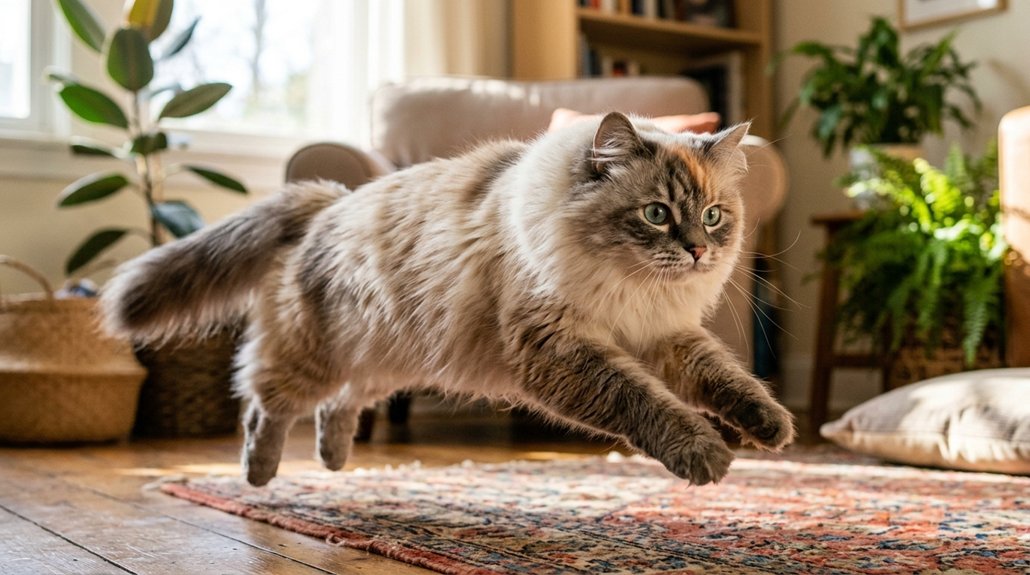
Himalayans present a distinct appearance characterized by a cream-colored base coat juxtaposed with darker points on the ears, nose, tail, and feet, creating a visually arresting contrast. The Himalayan temperament combines playful engagement with moderate energy levels, ideal for families seeking interaction balanced with relaxation. A crossbreed between Persians and Siamese, these cats display affectionate and sociable behavior, making them well-suited for companionship.
Due to their varied coat texture, Himalayan grooming demands daily brushing to prevent matting and maintain fur quality. Their striking blue eyes and unique patterns contribute to their appeal among enthusiasts. With proper grooming care and attention, the Himalayan cat not only thrives in its striking beauty but also in its interactive and endearing personality.
Maine Coon: Friendly Giants With Regal Coats
Recognized as one of the largest domestic cats, the Maine Coon frequently weighs up to 25 pounds, characterized by a bushy tail and tufted ears. Known for their affectionate and sociable demeanor, Maine Coon personality traits include intelligence and playfulness akin to canine behaviors. They thrive in familial environments due to their gentle giant nature.
| Maine Coon Traits | Description |
|---|---|
| Weight Range | Up to 25 pounds |
| Coat Type | Long, water-resistant |
| Key Behavior | Sociable, intelligent |
| Grooming Needs | Weekly maintenance |
Maine Coon grooming consists of weekly care to preserve their luxurious coat’s health and shine. Exhibiting a liking for water, they engage well with interactive activities, making them adaptable companions. This breed’s strong familial bond enhances their appeal, combining regal appearance with approachable demeanor.
Ragdoll Cats: Affectionate and Easygoing
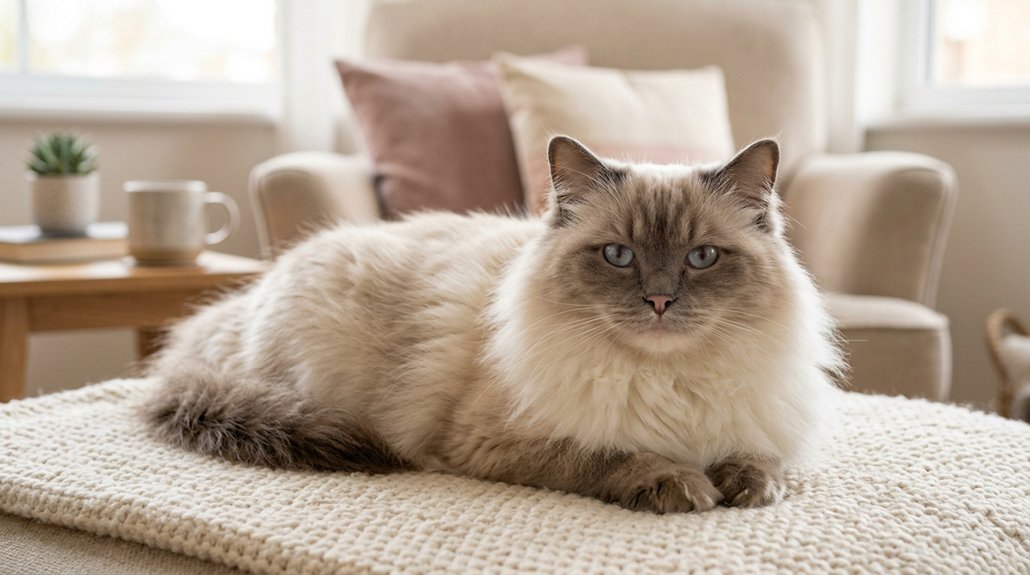
Ragdoll cats, with their distinctively limpid nature, quickly become beloved companions due to their affectionate demeanor and relaxed disposition. Ragdoll behavior is characterized by their docility; they often go limp when picked up, enhancing their appeal as cuddly partners. With striking blue eyes and semi-long, soft coats, they require minimal grooming—only weekly brushing to maintain health. Thriving in active environments, Ragdolls display gentle temperaments and integrate well with children and other pets. They are known for forming strong familial bonds, often shadowing household members, actively seeking attention. While they enjoy interactive play, their low-maintenance nature means they’re equally content to cuddle. This combination of Ragdoll companionship and ease makes them ideal for diverse home settings.
Norwegian Forest Cats: Adventurous and Thick-Coated
Norwegian Forest Cats feature a thick, water-resistant double coat that necessitates weekly grooming to manage tangles and promote coat health, particularly important during shedding seasons. With their friendly and sociable nature, they thrive on human interaction, enhancing their roles as family companions. Their robust build and water-resistant fur make them exceptionally suited to cold climates, showcasing remarkable adaptability and resilience.
Thick Fur Maintenance
When you consider the needs of Norwegian Forest Cats, understanding their thick fur maintenance is essential. These cats boast a water-repellent double coat that necessitates diligent shedding management and coat care. Grooming should occur several times a week to mitigate matting and tangling, especially during peak shedding seasons when fur loss intensifies. Employing a combination of a wide-toothed comb and a slicker brush can be effective in preserving coat integrity. Their robust, adventurous nature, while beneficial for activity, can exacerbate coat issues if not properly managed. Regular grooming maintains the coat’s protective function and keeps the cat comfortable in outdoor climates. Neglecting these grooming routines could lead to discomfort and potential health complications due to tangled or matted fur.
Sociable Nature Benefits
Renowned for their sociable nature, Norwegian Forest Cats exhibit exceptional adaptability and affinity for family settings. They thrive on social bonding and demonstrate a friendly disposition, making them ideal companions for both families and individuals. Their ability to easily adjust to various environments enhances their role as a family member, while playful interactions keep them engaged and healthy. Known for their adventurous spirit, these cats maintain a thick, protective coat suited for exploration. Derived from their historical connection to Viking life, Norwegian Forest Cats show both resilience and sociability.
| Trait | Description |
|---|---|
| Social Bonding | Strong affinity for family members |
| Adaptability | Easily acclimates to new environments |
| Playful Interactions | Enjoys engaging playtimes |
| Coat | Thick, water-repellent, adventure-ready |
| Historical Connection | Viking life influenced sociability |
Winter Adaptability Traits
Despite the allure of their long-haired elegance, the Norwegian Forest Cat’s practicality shines in its winter adaptability traits. These cats are expertly equipped for winter survival, combining both beauty and functionality. Key cold climate adaptation features include:
- Double Coat: A thick, water-repellent double coat shields them from harsh winter environments, ensuring their survival in cold climates.
- Physical Build: Their strong, sturdy limbs facilitate easy navigation through snow and ability to climb, reflecting their naturally adventurous spirit.
- Insulating Features: Tufted ears and a bushy tail enhance their protection, providing essential insulation against the chilling elements.
With a friendly nature, they thrive in various settings, indoors or out, making them ideal companions for families who embrace outdoor adventures.
LaPerms: Unique Curls and Active Personalities
LaPerms, with their distinctive curly coats, result from a natural gene mutation that gives them unique textures varying from loose waves to tighter curls. The LaPerm lineage offers both longhaired and shorthaired variants, but it’s the longhair version that’s particularly esteemed for its distinctive fur attributes. Their unique coats require moderate grooming, necessitating regular brushing to sustain texture integrity and prevent matting.
LaPerm characteristics extend beyond physical traits. They’re noted for their affectionate and active nature, thriving on human interaction, which makes them ideal for families. Their intelligence and playful demeanor lead them to engage in social activities, demonstrating a curious and interactive spirit. These attributes make LaPerms a distinctive choice for those seeking a dynamic and engaging feline companion.
Siberians: Allergy-Friendly and Energetic
Shifting focus from LaPerm’s notable curls and active spirit, Siberian cats present another fascinating long-haired breed. Renowned for their hypoallergenic properties, due to reduced Fel d 1 protein, they’re excellent for allergy sufferers. Their Siberian characteristics include a unique triple-layer coat offering cold climate adaptability. Regular Siberian grooming, such as weekly shedding management, is essential to preserve their health and coat’s opulence.
Siberian playfulness is marked by affectionate, strong bonds with humans, often described as lap cats. Their interactive nature is mirrored by their Siberian intelligence, making them highly trainable and lovers of trick-learning and play.
Key points:
- Allergy-friendly: Lower Fel d 1 protein levels.
- Triple-layer coat: Provides insulation and requires grooming.
- Energetic nature: Strong bonds, playfulness, high intelligence.
Turkish Angora: Graceful and Playful
Renowned for their elegance, Turkish Angoras possess a smooth, silky coat that usually comes in an array of colors, prominently featuring traditional white. This breed’s stunning appearance correlates with its lively personality. Turkish Angoras are known for being friendly and affectionate, thriving on human companionship. They often form strong bonds with families, making them ideal for homes seeking interactive relationships. Historically, the Turkish Angora hails from Turkey, specifically descending from the cats of Ankara, celebrated for their grace and agility. The Turkish Angora’s playful disposition guarantees they frequently engage in various activities, showcasing their energetic nature. Despite its long hair, the coat requires minimal maintenance due to the absence of an undercoat, defining it as relatively low maintenance.
Grooming Long-Haired Cats: Tips and Techniques
To maintain the health and appearance of long-haired cats, it’s essential to use specific grooming tools, such as a slicker brush and deshedding tool, that cater to their unique coat needs. Employ effective brushing techniques by focusing on areas prone to matting, ensuring you prevent discomfort and reduce shedding efficiently. Additionally, adjust your grooming practices to account for shedding seasons, which may require increased frequency and thoroughness.
Essential Grooming Tools
When caring for long-haired cats, you need essential grooming tools to effectively manage their luxurious coats. Tool selection and grooming frequency are vital. The following tools are recommended:
- Safari Self-Cleaning Slicker Brush: Perfect for removing loose hair, rated 4.7 stars, it assists in preventing mats with efficient grooming.
- Andis Steel Pet Comb: Ideal for targeting tangles, this 4.7-star comb guarantees well-maintained fur by reaching deeper into your cat’s coat.
- FURminator Long Hair Cat Deshedding Tool: Rated 4.6 stars, it reduces shedding and maintains a healthy coat when used regularly.
Regular grooming helps in mat prevention and shedding control. Establish a consistent schedule ranging from daily to weekly brushing depending on the cat’s specific breed needs.
Effective Brushing Techniques
Start by embracing an organized method for grooming to manage a long-haired cat’s coat effectively. Begin brushing from the head, progressing systematically down to cover all areas, focusing especially on mat-prone regions like behind the ears and under the chin. Begin with a wide-toothed comb to gently tackle knots, followed by a slicker brush for a polished finish. Be mindful of brushing frequency; routine care varies outside shedding seasons. Avoid pulling or yanking matted hair, as this can cause discomfort. Use detangling products, such as sprays, for persistent mats. Ascertain grooming sessions remain positive by incorporating treats and praise, helping your cat connect brushing with a rewarding experience. This methodical approach keeps your cat’s coat pristine and manageable.
Managing Shedding Seasons
- Daily Brushing: Utilize a slicker brush or deshedding tool to remove loose fur and prevent mat formation, focusing on high-risk areas like the neck, hindquarters, and underbelly.
- Quality Tools: Investing in superior grooming tools guarantees efficient maintenance of your cat’s coat.
- Consistency: Establishing a routine grooming schedule minimizes shedding indoors, keeping your cat’s coat in peak condition, especially during times of heavy shedding in spring and fall.
Monitor shedding patterns and adjust grooming frequency accordingly.
Frequently Asked Questions
What Are the Friendliest Long Haired Cat Breeds?
Ragdoll and Maine Coon cats are among the friendliest long-haired breeds. You’re likely to find their affectionate behavior and sociable nature appealing, as they’re well-known for their gentle temperaments, making them excellent family companions.
What Annoys Cats the Most?
What annoys cats the most? They’ve got sensitive hearing and hate loud noises like thunder. Changes to their environment or handling methods can also irk them. Respect their space: impatience and interruptions disrupt feline behavior, triggering cat annoyances.
What Do Cats Do When They Go Out at Night?
When your cat goes out at night, they engage in nighttime behavior driven by nocturnal instincts. They’re likely exploring, marking territory, hunting small prey, climbing for vantage points, or socializing to establish hierarchies or mating opportunities.
How Do Cats Say I Love You With Their Eyes?
You might think it’s just a cat blinking, but through the cat gaze, they demonstrate feline affection by slowly blinking at you, an action akin to a smile, reinforcing the trust and emotional bond between you both.
Conclusion
Congratulations, you’ve commenced on the ultimate quest for a long-haired cat—a companion that’s as likely to disdain your existence as it is to snuggle on your lap. In steering through this furry maze, you’ll encounter exquisite creatures requiring Herculean grooming efforts. Yet, your patience will be rewarded with a loyal but aloof monarch in your home. Let’s face it: you didn’t choose the pampered life; it chose you. Remember, it’s never just hair; it’s an identity statement.