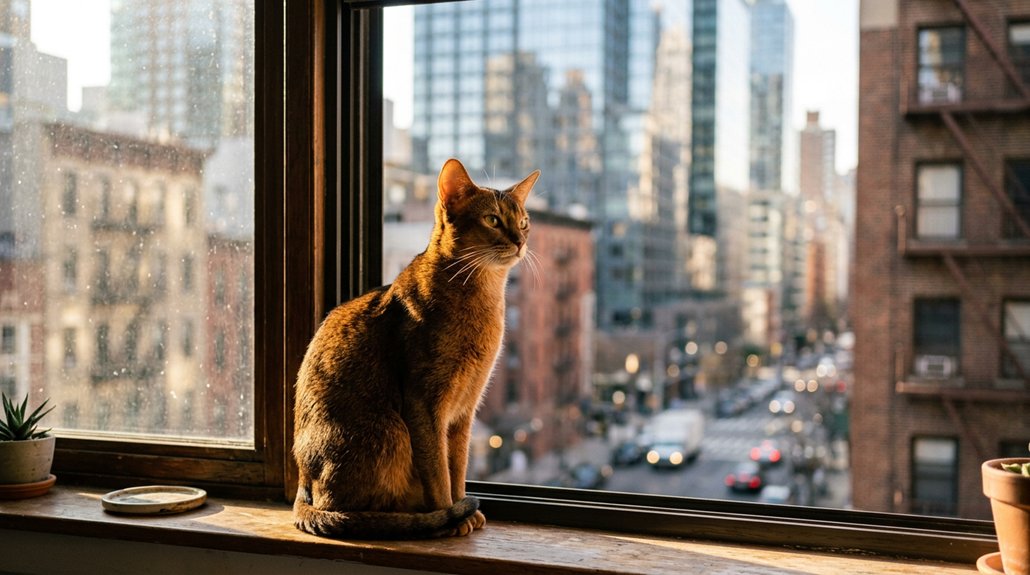
For urban environments, choose cat breeds adaptable to smaller spaces and lower in activity, like British Shorthairs, Ragdolls, and Scottish Folds. These breeds maintain calm temperaments and form strong bonds, making them perfect for apartment living. Russian Blues provide a low-shedding alternative with their independent nature, while Persian cats appreciate cozy, indoor settings. Mixed-breed cats can also thrive in city spaces with the right care. Discover how to tailor your home into a feline sanctuary with further insights.
Key Takeaways
- British Shorthair and Ragdoll are perfect for urban living due to their low activity levels.
- Scottish Fold cats thrive in apartments with their affectionate and interactive nature.
- Russian Blue offers an independent personality and low-shedding coat, ideal for city dwellers.
- Persian cats are well-suited to apartments, preferring napping and low activity.
- Consider mixed-breed shelter cats, which often possess traits conducive to urban living.
Best Cat Breeds for Apartment Living
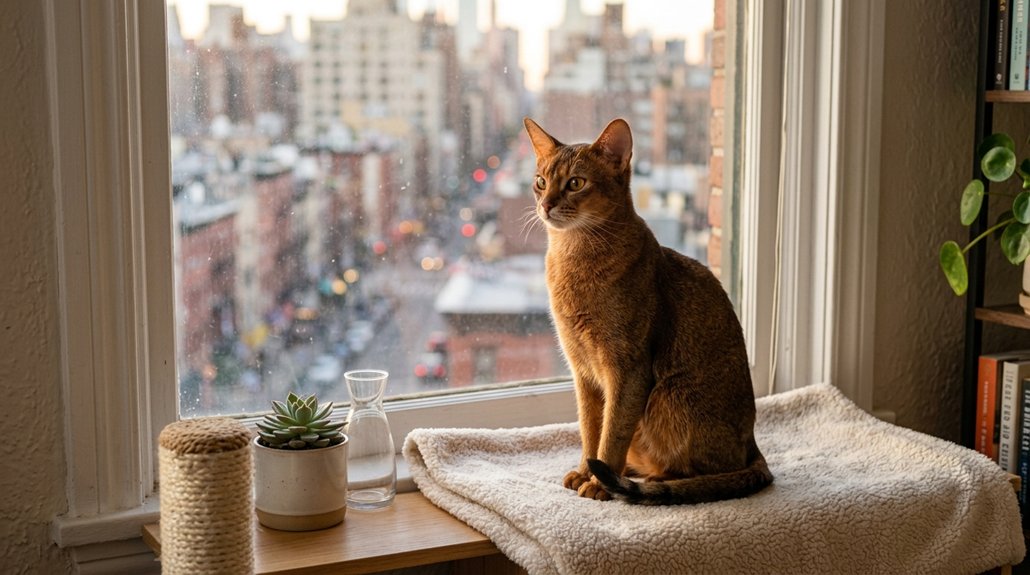
When considering the best cat breeds for apartment living, it’s important to focus on their adaptability to smaller spaces and calm disposition. The British Shorthair, Ragdoll, and Scottish Fold are notable for their lifestyle compatibility, demonstrating minimal space requirements and low activity levels. These breeds excel in urban environments, providing companionship without overwhelming you with need for large play areas. The Russian Blue merits attention, offering a low-shedding coat and independent nature, thriving in confined settings without excessive grooming. Persian cats prefer napping, suiting their affinity for limited activity. Additionally, mixed-breed cats can fit apartments; shelter staff can help align their temperament with your lifestyle needs. Functional adaptability guarantees a peaceful existence for both you and your feline companion.
Understanding Temperament for Urban Apartment Cats
Understanding a cat’s temperament is essential when selecting a breed for urban apartment living. Cats like the British Shorthair and Ragdoll are exemplary choices because of their calm demeanor and low activity levels. Their cat behavior aligns well with urban adaptation, thriving in smaller living spaces without requiring much outdoor stimulation. The Scottish Fold’s gentle and affectionate nature further highlights its adaptability to confined environments, as it delights in human interaction. Similarly, Russian Blues maintain quiet personalities, forming strong bonds with their owners, which is ideal for city life. Persian cats, despite their grooming requirements, adapt effortlessly indoors. Selecting such indoor-friendly breeds eases the stress of urban environments, ensuring a harmonious coexistence between you and your feline companion.
Essential Care Tips for Apartment Cats
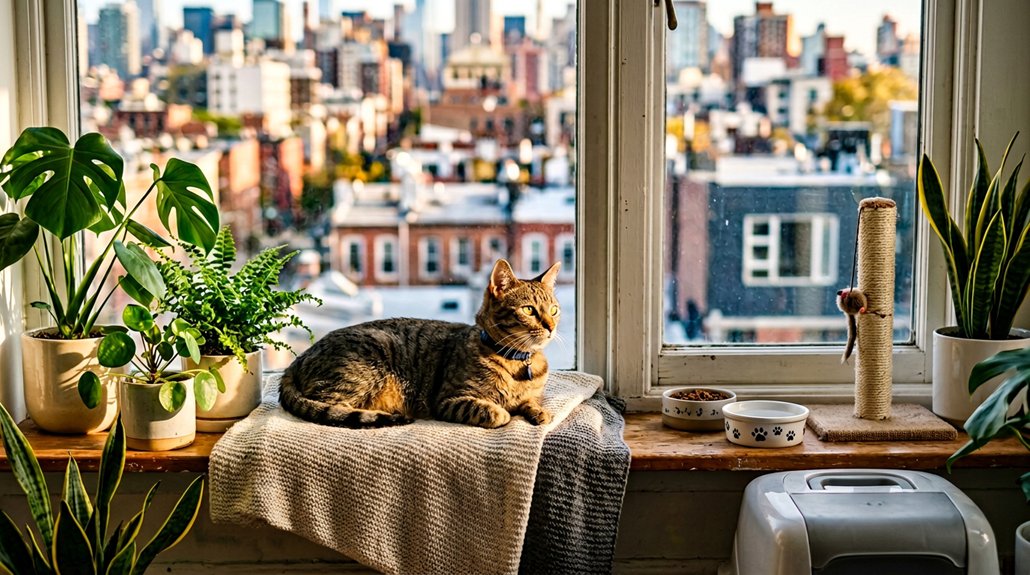
Creating an enriching environment in your apartment is fundamental for your cat’s well-being. Prioritize health considerations by incorporating vertical spaces like cat trees or shelves, which cater to their climbing instincts and provide essential exercise. Routine is important—establish consistent times for feeding and interactive play to support their mental and physical health. Address socialization needs through interactive games and guarantee they have varied stimuli, such as rotating toys and puzzle feeders, to keep their minds sharp.
Scratching posts are important for claw health and furniture preservation. Designate quiet spaces for unwinding, pivotal for their psychological comfort. Cats in limited spaces thrive on structure and variety; these steps can help maintain contentment and reduce stress, fostering a balanced indoor life.
Making Your Apartment a Cat Haven
Transforming your apartment into a cat haven isn’t just beneficial but essential for your feline’s health and happiness. Utilize vertical space by installing cat trees and shelves, creating a climbing and exploration network without cluttering your limited square footage. Vertical space utilization enhances muscle strength and mental stimulation, significant for indoor cats in urban environments.
Next, maximize window view options. Position perches or window seats to provide your cat with a picturesque view of the bustling world outside, ensuring sensory enrichment and satisfying their natural curiosity.
Establish quiet zones for resting, important for reducing stress and promoting restorative sleep. Engage with them using varied toys and interactive games to boost mental agility and prevent behavioral issues. Finally, incorporate scratching posts to maintain ideal claw health and protect furnishings.
Deciding Your Ideal Cat Type for Urban Living
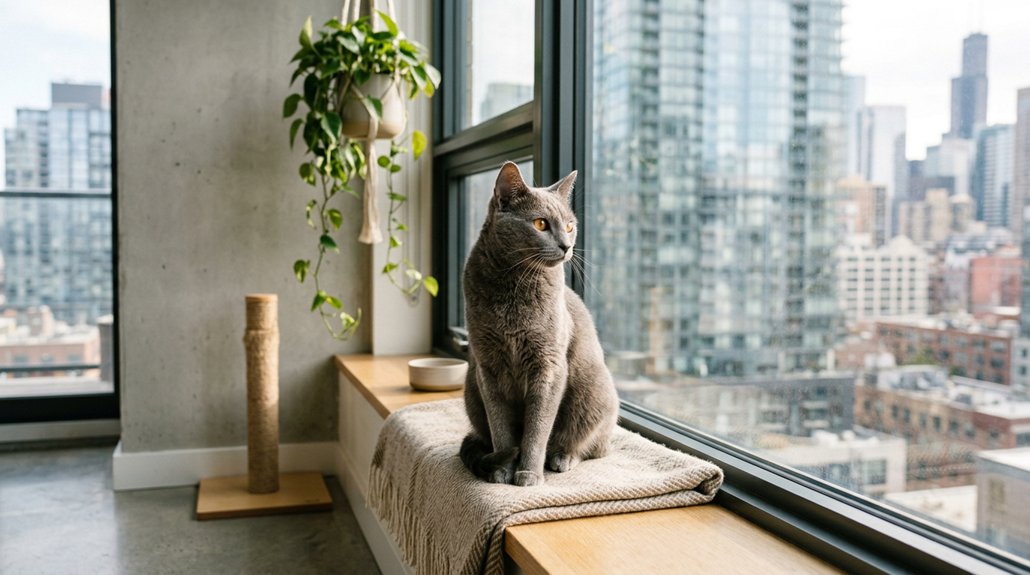
Selecting the right cat breed for urban living requires understanding the specific needs and characteristics that make certain breeds more adaptable to small spaces. Consider these care considerations and breed characteristics:
- Low energy levels: Opt for calm breeds like British Shorthairs and Ragdolls, known for gentle dispositions and adaptability to confined spaces.
- Affectionate nature: Scottish Folds and Russian Blues are excellent choices due to their sociable demeanor and ability to thrive indoors quietly.
- Human bonding: Ragdolls and Burmese bond closely with their owners and acclimate to indoor living, making them perfect for busy city dwellers.
Mixed-breed cats from shelters often exhibit desired traits for urban environments too. Whatever breed you choose, guarantee adequate enrichment to support both their physical and mental well-being.
Frequently Asked Questions
What Is the 3-3-3 Rule With Cats?
The 3-3-3 rule describes cat behavior adjustment, essential in urban living. Expect your cat to settle through three stages: acclimate in three days, start feeling comfortable in three weeks, and fully adapt within three months. Patience is key.
How Do Cats Say Goodbye?
Cats say goodbye through feline communication, using cat body language like rubbing, headbutts, or gentle purring. Sometimes, they sit apart, signaling solitude needs. Understanding these signs requires recognizing subtle behaviors rooted in their natural bonding instincts.
What Annoys Cats the Most?
You’ll find that loud noises and sudden movements often annoy cats the most. Their sensitive hearing and need for a secure environment mean these disruptions can cause significant stress, leading them to behave anxiously or hide away.
What Is the Most Low Maintenance Cat Breed?
You’ll find the British Shorthair a champion of ease, boasting a delightful combination of playful companionship and independent nature. Their upkeep is as breezy as a Sunday stroll—monthly grooming suffices. It’s purrfection for urban living.
Conclusion
In the hustle and bustle of urban living, choosing the right cat breed for your apartment can be as essential as finding the perfect playlist for your Walkman. By understanding a cat’s temperament and catering to their unique needs, you guarantee a happy and healthy environment. With a bit of care and creativity, you can transform your living space into a feline-friendly haven. Prioritize what’s best for both you and your future furry roommate, securing harmony in your city life.