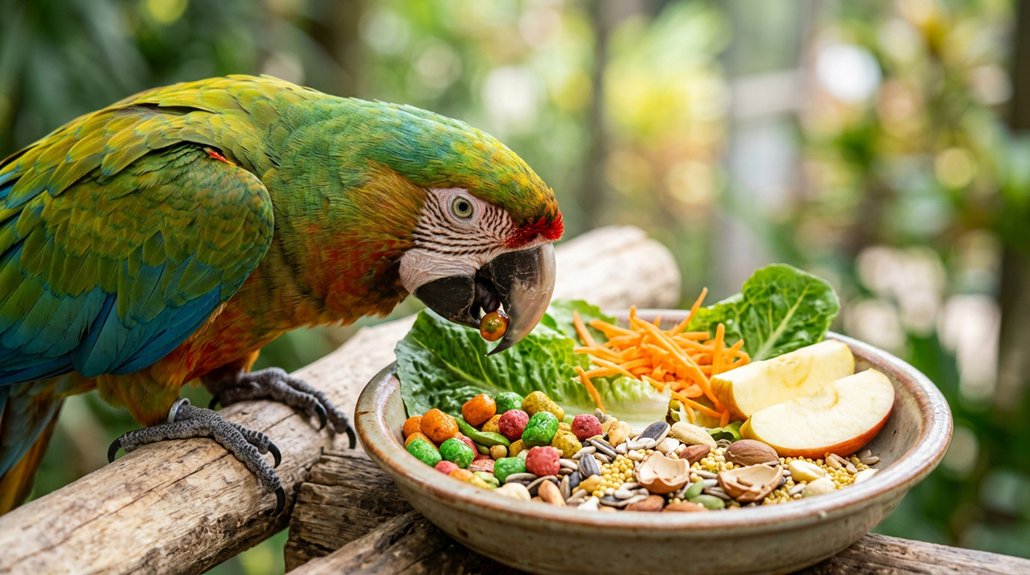
You should feed pellets as the main diet, about 50–70% daily, because they provide consistent vitamins and minerals. Keep seed mixes small, mainly for foraging and behavior, since seed-heavy diets are high in fat and low in key nutrients. Offer fresh dark leafy greens and vegetables for 20–30%, fruit in limited amounts, and treats under 10%. Remove wet foods after a few hours, and a structured schedule can help you optimize balance.
Key Takeaways
- Pellets should make up about 50–70% of a bird’s daily diet for balanced vitamins, minerals, and consistent nutrition.
- Seeds are best limited to small amounts for foraging or treats, because seed-heavy diets are fat-rich and nutritionally incomplete.
- Fresh vegetables and leafy greens should provide about 20–30% of intake, with fruit kept to about 5–10%.
- Offer pellets in the morning, vegetables at midday, and measured seed mixes or Nutri-Berries later for enrichment.
- Remove wet foods after a few hours, provide clean water daily, and consult an avian veterinarian before major diet changes.
Bird Diet Basics: What to Feed Daily
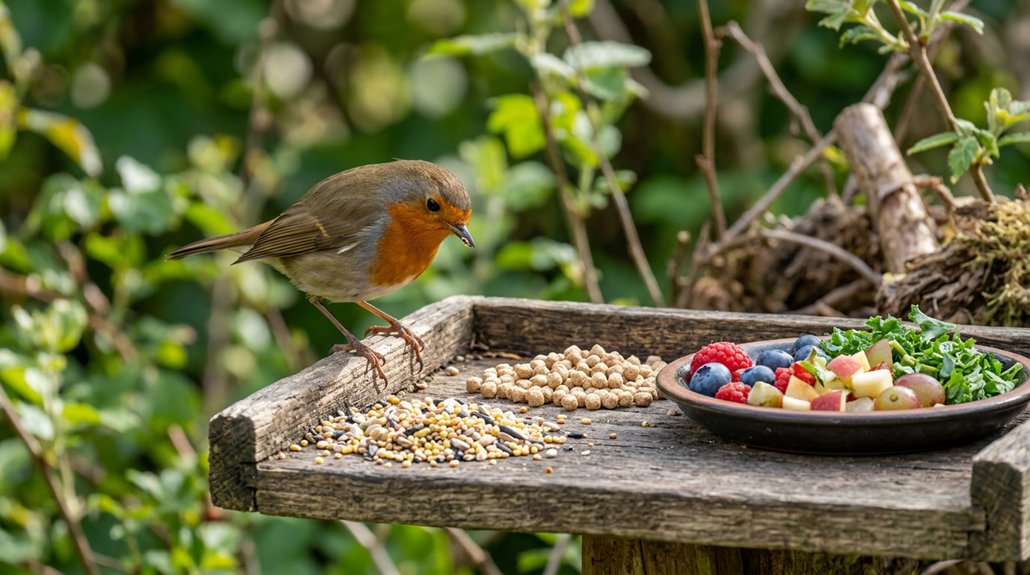
A healthy daily bird diet should start with a formulated pellet, which can make up about 50–70% of intake because it provides a consistent source of vitamins and minerals, especially A, D3, E, and K, that seed-based diets often lack. You should pair this with 20–30% fresh vegetables and leafy greens, especially kale, broccoli, carrots, and sweet potato, to improve nutrient variety. Limit fruit to 5–10% of the diet, and rinse produce before serving. Remove uneaten fresh food after a few hours to reduce spoilage. Adjust Feeding frequency to match Caloric needs, species, and life stage. Keep clean water available daily, and replace any supplements at least twice daily. Consult an avian veterinarian to fine-tune proportions for health conditions.
Seeds vs. Pellets for Pet Birds
If you feed seeds as the main diet, you’re likely exposing your bird to excess fat and inadequate vitamins and minerals, which raises the risk of chronic metabolic disease. Pellets are formulated to provide consistent, complete nutrition and are usually recommended as the dietary base because they prevent selective feeding. You can support both health and behavior by using pellets for most of the diet, then adding small amounts of seed for foraging plus daily fresh vegetables and greens.
Seed Diet Limits
Although seed mixes are palatable and can provide enrichment, they shouldn’t be used as the sole diet for pet birds because they’re typically energy-dense and nutrient-poor. If you rely on seeds alone, you’re exposing your bird to seed deficiencies in vitamins A, D3, E, K, calcium, and essential amino acids. Many common seeds, including sunflower seed at about 49% fat, can promote obesity and fatty liver over time. Because birds often select preferred seeds, even fortified blends don’t prevent nutritional gaps. Chronic seed-only feeding is a major cause of weak bones, poor feather quality, and reduced lifespan. A gradual shift to a pelleted base is usually advised, with roughly 50–70% pellets and the rest from seeds and fresh foods, under veterinary guidance, to improve nutritional adequacy.
Pellet Diet Benefits
Pellets provide a reliable nutritional foundation for pet birds because each bite is formulated to deliver consistent levels of vitamins A, D3, E, K, calcium, and balanced amino acids that seed-based diets often lack. You’ll improve nutrient bioavailability and reduce selective feeding, which can limit vitamin A, feather quality, and bone integrity. Pellet manufacturing and palatability testing help standardize intake, while seeds should remain limited for behavioral enrichment.
| Feature | Pellets | Seeds |
|---|---|---|
| Nutrition | Complete | Variable |
| Fat | Moderate | Often high |
| Deficiency risk | Lower | Higher |
| Feeding behavior | Less selective | Selective |
| Role | Main diet | Enrichment |
Most avian veterinarians suggest pellets comprise 50–70% of intake. Shift gradually over 3–6 months, monitoring weight, droppings, and appetite.
What Fresh Foods Birds Should Eat
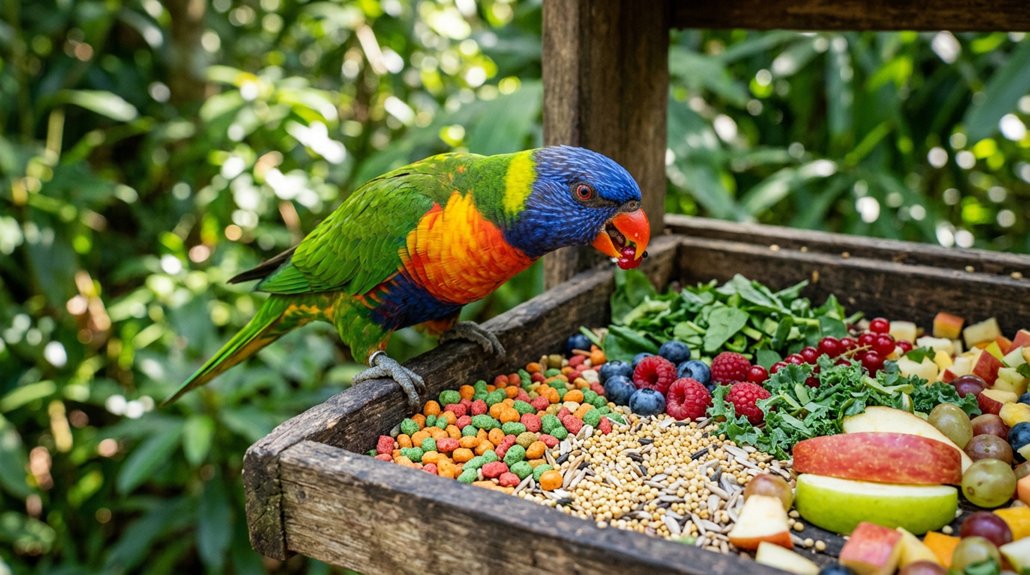
Fresh foods should include daily dark green and orange vegetables such as kale, spinach, broccoli, carrots, and sweet potato, since these provide high levels of vitamin A and beta-carotene that support skin, feather quality, and immune function. You should also offer small portions of fruit, such as blueberries, mango, plum, and seedless apple, keeping fruit near 10% of the non-pellet diet because of sugar. Perform thorough produce washing, then chop or grate items for easier intake. Remove uneaten food within a few hours to limit spoilage. Cook beans, squash, and sweet potato before serving. Rotate raw, steamed, mashed, grated, and whole preparations. Microgreen benefits include higher nutrient density and improved acceptance; sprouts can help diversify intake.
Bird Foods to Avoid Completely
Alongside offering safe produce, you also need to exclude foods that are toxic or nutritionally harmful to birds. Avocado dangers are severe: persin can trigger respiratory distress, cardiac failure, or sudden death, even at low exposure. Chocolate toxicity is also critical; chocolate and caffeine contain methylxanthines that may cause hyperactivity, seizures, arrhythmias, and cardiac collapse. You shouldn’t feed onion or garlic, because they can induce hemolytic anemia, with weakness and pale mucous membranes. Avoid salty, sugary, and high-fat snacks, including chips and table scraps, since they promote obesity, fatty liver disease, and cardiovascular strain. Remove apple seeds and all stone fruit pits before offering fruit, as they contain cyanogenic compounds. If you’re unsure about a food, don’t offer it to birds.
How to Switch Your Bird to Pellets
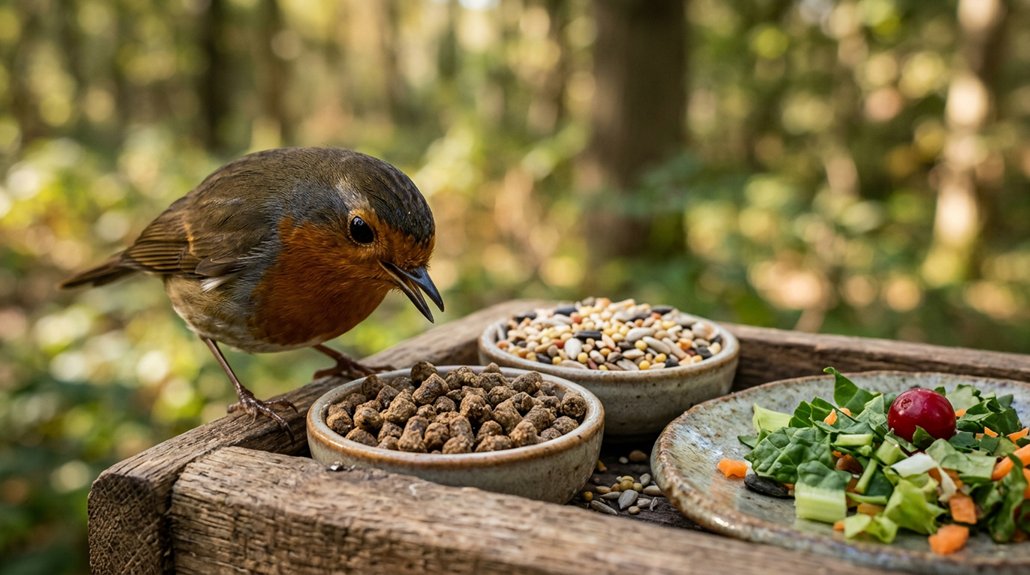
You’ll switch your bird to pellets gradually over 3–6 months, increasing the pellet fraction while reducing seed until pellets make up about 50–70% of the diet. To improve acceptance, offer pellets when your bird’s appetite is highest, place them in visible or foraging sites, and use social learning or food puzzles with favorite foods embedded in pellet-based items. You should monitor body weight and droppings throughout the shift, and if your bird loses weight, appears ill, or still resists pellets, consult an avian veterinarian immediately.
Gradual Pellet Introduction
A gradual pellet conversion is safest when you ease your bird into the change over 3–6 months, steadily mixing pellets into the usual seed diet until pellets make up about 50–70% of intake. Use high-quality, dye-free pellets sized for your species, starting with a teaspoon to a tablespoon based on body size. Monitor weight and droppings daily to confirm tolerance. Offer pellets when your bird’s appetite is highest, typically in the morning, and place them in visible spots or foraging toys as behavioral enrichment. If possible, let a companion bird eat pellets nearby. Owner patience is essential; you shouldn’t force-feed or withhold food. If refusal continues, you can blend pellets with favorite seeds, warmed vegetables, or bird bread while increasing pellet proportion slowly. Consult your avian veterinarian if weight loss or illness appears.
Encouraging Pellet Acceptance
To improve pellet acceptance, shift gradually over 3–6 months by mixing a small amount of pellets into your bird’s familiar seed blend and increasing the pellet proportion slowly until pellets provide about 50–70% of the diet. Offer pellets when your bird’s appetite is highest, usually in the morning, and place them in visible dishes or foraging toys. Use species-appropriate, dye-free pellets, and pair them with favorite foods to reduce neophobia and taste aversion. Add environmental enrichment by moving pellet dishes, providing daily greens and vegetables, and limiting seed to foraging rewards. If possible, let a confident companion bird model consumption. Monitor weight, droppings, and behavior closely; if your bird loses weight, refuses food, or seems ill, slow the adjustment and consult an avian veterinarian promptly.
Healthy Bird Treats Under 10
Healthy treats should remain a minor component of the diet, limited to no more than 10% of a bird’s weekly intake, and used primarily for training and enrichment rather than as a food base. You should apply strict portion control when offering homemade treatables, selecting unsalted nuts, whole-grain rice cakes, small whole-wheat bread pieces, or bird-formulated Nutri-Berries. Fresh produce can also work: dark leafy greens, carrots, bell pepper, and blueberries provide useful variety. Rinse all produce before serving, and discard any fresh food after a few hours to reduce spoilage risk. Limit sunflower seeds and seed-heavy mixes, since excess fat can promote obesity and fatty liver. Avoid avocado, chocolate, caffeine, onion, and garlic. Consult your avian veterinarian before introducing supplements or novel treats.
Sample Bird Feeding Schedule
With treats kept to a minor share of intake, a structured feeding schedule helps maintain balance and appetite regulation. In the morning, you should offer pellets as the main breakfast, providing 50–70% of the daily ration when appetite’s highest, plus a small seed portion, up to 10%, to support acceptance. Midday, give leafy greens and chopped vegetables, totaling 20–30% of the diet, for a few hours, then discard leftovers. Late afternoon, add measured seed mix or Lafeber Nutri-Berries for morning enrichment and foraging behavior. In the evening, remove wet foods several hours before sleep, refill clean water, and leave a measured pellet portion so pellets dominate overnight feeding. Weekly, keep snacks under 10% of calories and consult an avian vet for species-specific adjustments.
Frequently Asked Questions
How Much Water Should My Bird Drink Daily?
Your bird should drink fresh water daily, typically about 5–10% of its body weight, though needs vary. Watch hydration cues and use water enrichment to encourage intake; consult an avian vet if drinking changes.
Can Birds Eat Cooked Grains and Legumes?
Yes, you can offer cooked grains and cooked legumes in moderation; they’re usually safe and support grain digestion. Make sure they’re plain, fully cooked, cooled, and free of salt, oil, seasoning, or additives.
Are Nuts Safe for Everyday Bird Feeding?
Nuts can be safe for everyday bird feeding if you use portion control and avoid salted or flavored types; however, you shouldn’t offer them if your bird has a nut allergy or digestive sensitivity.
How Often Should Bird Food Dishes Be Cleaned?
You should clean bird food dishes daily; this cleaning frequency minimizes contamination risks from bacteria, mold, and feces. If food’s left wet or soiled, you’ll need immediate sanitation and thorough drying.
Do Different Bird Species Need Different Diets?
Yes, different bird species need different diets because species specific nutrition and beak morphology determine nutrient requirements and food handling. You should tailor protein, fat, vitamin, and mineral intake to each species’ physiology and metabolism.
Conclusion
You need a diet that is balanced, not merely varied: pellets as the nutritional base, seeds in restraint, and fresh foods for essential micronutrients. Avoid toxic items completely, and introduce pellet shifts gradually to minimize stress and refusal. Treats should remain infrequent, not routine. When you feed with consistency, you’re supporting more than appetite—you’re protecting metabolism, plumage, and longevity. After all, what good is a full bowl if it doesn’t truly nourish?