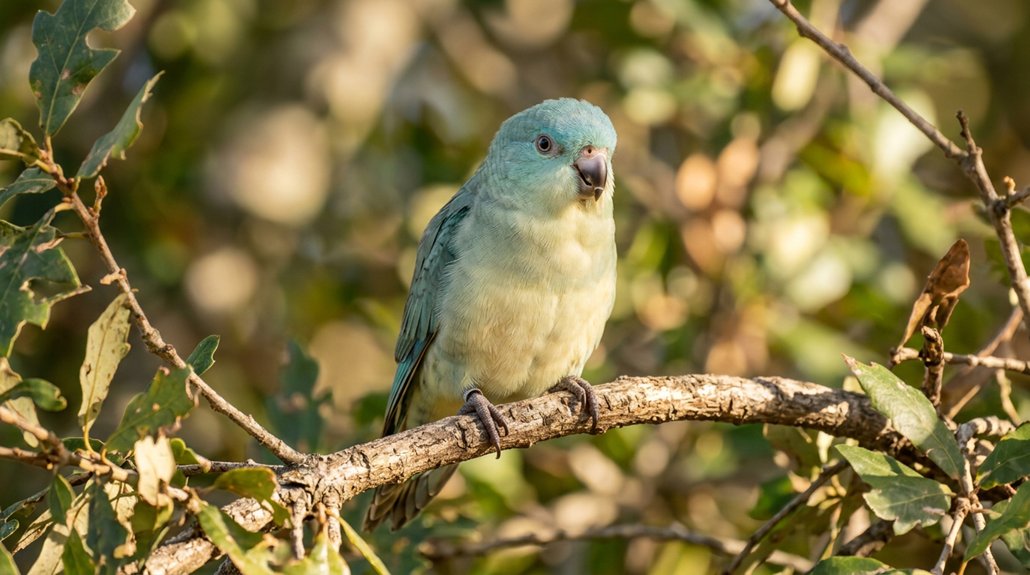
For beginners, budgies and cockatiels are usually the best pet bird species because they are small, social, and trainable. Budgies need about an hour of daily out-of-cage interaction or a companion, while cockatiels need several hours of daily time and enrichment. If you want a quieter bird, canaries or doves need less handling. You’ll also need a proper cage, a pellet-based diet, and avian veterinary care. There’s more to compare before you choose.
Key Takeaways
- Budgerigars are a top beginner choice: social, trainable, and manageable with about 1 hour of daily out-of-cage interaction.
- Cockatiels are beginner-friendly, affectionate birds that need several hours of daily out-of-cage time and enrichment.
- Canaries and doves suit owners wanting quieter birds with less handling and more simple companionship.
- Parrotlets and lovebirds can be good, but they need consistent training and handling to prevent nipping or territorial behavior.
- Choose a species only if you can provide proper cage space, a pellet-based diet, and long-term avian veterinary care.
What Makes the Best Pet Birds for Beginners?
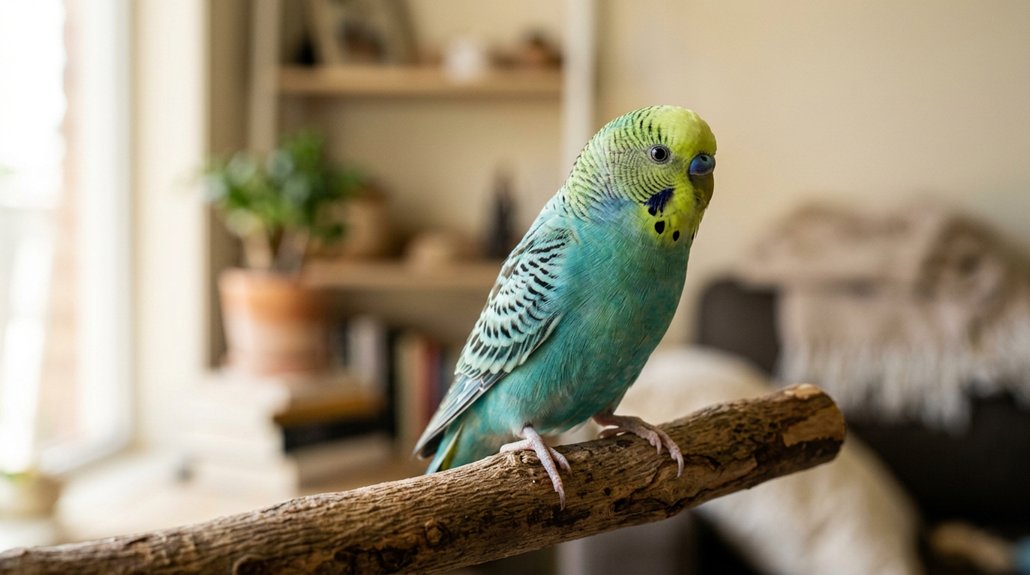
The best pet birds for beginners are usually small, hardy species such as budgerigars, cockatiels, canaries, and doves, because they tend to need less space, tolerate lower-intensity handling, and have manageable care requirements. You should prioritize birds with predictable diets, social temperaments, and noise levels that fit your home. Choose the largest cage you can afford, with proper bar spacing and secure perches. Flighted birds need daily out-of-cage exercise or a flight cage to stay healthy. You’ll also need to evaluate lifespan, which can range from about 5 to 20+ years, and plan for long-term veterinary care. Basic training techniques can improve handling, while noise management matters if you live near others. Buy only from a reputable breeder or store, and verify health, socialization, and species-specific needs before you decide.
Best Pet Birds for Beginners: Budgies and Cockatiels
If you’re choosing a first bird, budgies are small, low-cost parrots that need daily interaction or a companion and respond well to training, words, and tricks. Cockatiels are larger, more social birds with strong affectionate behavior, but they need more space, several hours of daily out-of-cage time, and extra enrichment. Both species do best with a balanced pellet-based diet, fresh vegetables, varied perches, and mental stimulation, so your choice should match the time and care you can provide.
Budgie Care Basics
Budgies are small, social parrots that weigh about 1 ounce and measure 6–8 inches long, and they typically live 7–15 years, so they’re best suited to homes that can provide about an hour of daily out-of-cage interaction or a compatible companion budgie. You can expect blue, green, white, or yellow plumage with black speckling. Their lower purchase cost and manageable size make them practical starter birds. Provide a balanced pelleted diet with fresh vegetables, varied perches, and toys for stimulation. Schedule a first avian veterinary exam after acquisition, then monitor weight and droppings routinely. Budgies often learn step-up behavior, simple words, and training tricks quickly. Keep seasonal care consistent by adjusting heating, lighting, and humidity to avoid drafts and stress.
Cockatiel Personality Traits
Cockatiels are highly social, affectionate parrots that typically weigh about 3 ounces and measure 12–13 inches long, with a distinctive crest that often reflects mood and orange cheek patches on many color varieties. You’ll often notice crest signaling during alertness, relaxation, or agitation, making body language easy to read. Their cheek patches are a common visual identifier, but temperament is equally notable: you can expect strong social bonding, frequent handling tolerance, and a tendency to engage with several people, not just one. They need daily out-of-cage time, a spacious cage, and consistent interaction to reduce boredom and loneliness. With a 15–20 year lifespan, you’re making a long-term commitment. Males more often mimic sounds, but both sexes usually learn tricks with calm, regular training.
Beginner-Friendly Bird Comparison
For beginners choosing between popular companion parrots, budgerigars and cockatiels are the two species most often compared. If you want a smaller, quieter bird with lower space demands, a budgie may fit your home better. | Species | Size/Needs | Typical fit |
| — | — | — |
|---|---|---|
| Budgie | 6–8 in; 1 hour daily interaction | Small homes |
| Cockatiel | 12–13 in; several hours out-of-cage | Active owners |
| Both | Pellets, vegetables, checkups | Long-term care |
Cockatiels are more affectionate and can live 15–20 years, but you’ll need a larger cage, durable toys, and more training to prevent boredom and feather-plucking. Budgies often learn words or tunes and can do well with a same-species companion. Your decision should also account for veterinary costs and legal considerations, plus your ability to provide consistent enrichment, social contact, and routine health monitoring.
Parrotlets and Lovebirds: Social Starter Birds
Parrotlets are tiny, playful, and curious birds that can live 15–20+ years with proper care, so you’ll need to plan for long-term commitment and regular socialization. Lovebirds often form strong bonds, and a single bird may bond intensely with you while also showing territorial or nippy behavior, so you’ll need to manage handling and social needs carefully. Both species need a spacious cage, multiple perches, chewable toys, foraging enrichment, and several hours of daily out-of-cage time to stay healthy and prevent boredom.
Parrotlet Personality Traits
Tiny but unmistakably assertive, parrotlets are spunky, curious parrots with a “big bird” attitude packed into a 4–5 inch, 1–2 ounce body. You’ll often notice territorial behavior, especially if you handle them inconsistently.
- Strong one-person bonding can occur.
- Nipping may increase without gentle training.
- Daily enrichment supports play and problem-solving.
If you provide several hours out of the cage, varied toys, and foraging opportunities, you’ll usually see active exploration and clear vocalizations patterns. Their needs are moderate but long-term: many live 15–20+ years, so you should plan for ongoing mental stimulation and veterinary care. In pairs or groups, they may need less direct human interaction, yet pair bonds can become very strong. Consistent, calm handling and enrichment strategies help you manage feistiness and maintain a predictable, well-adjusted companion.
Lovebird Bonding Needs
Lovebirds are highly social birds and need daily interaction or a same-species companion to avoid loneliness, stress, and territorial aggression. If you keep one, you’ll need consistent handling, because a hand-fed bird can bond strongly with you but may nip when training is irregular. A daily training schedule with short positive-reinforcement sessions, step-up work, and target practice helps reduce stress and build trust. When kept as solo companions, both parrotlets and lovebirds need several hours out of the cage each day for exercise and social enrichment. If you can’t provide that level of contact, pair housing with a bonded mate is usually the better choice. In either setup, frequent interaction is essential to maintain stable behavior and prevent isolation-related problems.
Cage Space And Toys
Because these social starter birds need frequent interaction and daily activity, their cage setup should support both movement and enrichment. You should provide at least an 18 x 18 x 18 inch cage for one bird, but a larger rectangular model, 24 x 18 x 18 inches or more, is better for short flights and wing stretching.
- Use varied perches: natural branch, rope, and concrete.
- Add chew toys, a foraging puzzle, and action toys.
- Rotate toys weekly to maintain foraging complexity.
For cage placement, keep food and water cups opposite perches, and include a shallow bath or misting area for hygiene. A safe play-top or gym extends enrichment, and several supervised out-of-cage sessions daily, totaling multiple hours, are necessary. Choose perch diameters near the foot wrap guideline to reduce sores and support foot health.
Canaries and Doves: Quieter Beginner Pets
Canaries and doves are often better fits if you want a quieter beginner bird with modest handling demands. You can expect quiet companionship from both species. Male canaries are prized for song, with over 200 breeds and color varieties, but they usually prefer minimal handling and work best as observational birds. Their flight requirements are significant despite their small size, so a large flight cage matters. Doves, such as ringneck doves, are calm, soft-voiced, and typically do best in pairs for social balance. They accept gentle interaction, but they don’t like excessive handling. Canaries often live about 9–10 years, while doves may live 8–15 years, depending on species and husbandry.
What First-Time Bird Owners Need to Know
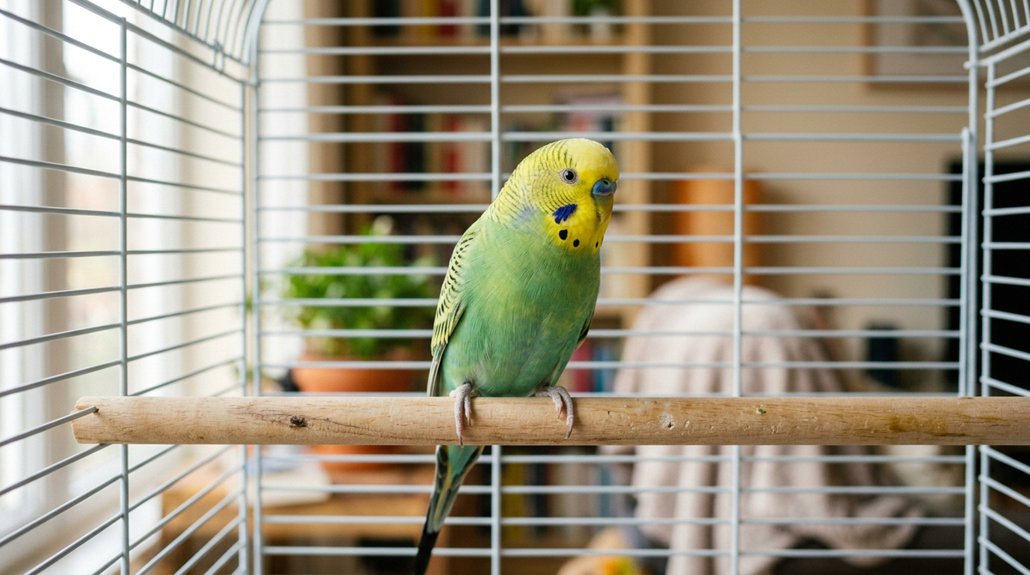
If you’re choosing a first bird, start with a small species such as a budgerigar or cockatiel, since both need less space and lower upfront cost than larger parrots. You should set clear behavior expectations: these birds need daily interaction, enrichment, and handling to avoid boredom and destructive behavior.
Start with a budgerigar or cockatiel: they’re smaller, less costly, and still need daily interaction and enrichment.
- Provide the largest affordable rectangular cage, with room for wing extension and short flights.
- Plan daily out-of-cage time: about 1 hour for budgies and several hours for cockatiels.
- Use a pelleted diet, fresh vegetables, stainless-steel cups, and an avian vet visit soon after acquisition.
For noise management, expect intermittent calls rather than silence. Monitor droppings, appetite, and activity each day; changes can indicate illness.
How to Choose the Right Bird for Your Home
Choosing the right bird for your home starts with matching the species to your available space, time, and long-term commitment. You should assess size, lifespan, and housing before purchase. Budgerigars and cockatiels fit smaller homes; parrots such as Amazons need decades of care and larger enclosures. Complete space planning for cage dimensions and daily flight access, since canaries, doves, and cockatiels need room to move. You also need noise management: budgies require daily interaction or a companion, while canaries and finches usually need less handling but may prefer same-species company. Parrotlets and conures need several hours of enrichment and toys. Confirm you can provide pelleted food, fresh produce, supplements, and access to an avian veterinarian before you choose.
Frequently Asked Questions
What Is the 3 3 3 Rule for Birds?
It’s an avian adjustment guide: 3 days for shock recovery, 3 weeks for settling and observation, and 3 months for bonding and training. You’ll follow a trust timeline, but individual birds can vary.
What Is the Friendliest Pet Bird to Have?
Budgies are usually your friendliest choice, a small bright key to companionship. With hand taming techniques and consistent bonding with bird, you can expect social behavior, learning, and daily interaction in an affordable, manageable pet.
What Is the Most Low Maintenance Pet Bird?
You’d usually find canaries or finches the most low-maintenance; they’re quiet, need minimal handling, and do well in a flight cage. A quiet finch isn’t a seed only parakeet, so you’ll still need proper diet and cleaning.
What Is the Best Beginner Bird That Can Talk?
You’d usually do best with a budgie: a tiny, lively parrot basics choice that can learn words with daily vocal training. Cockatiels and Indian ringnecks also talk well; African greys excel, but they’re demanding.
Conclusion
In choosing your first bird, you should match the species to your space, your schedule, and your comfort level. You should choose budgies or cockatiels for sociable interaction, parrotlets or lovebirds for compact companionship, or canaries and doves for quieter care. You should also plan for routine feeding, cleaning, and socialization. When you select carefully, prepare consistently, and care responsibly, you’ll give your bird a stable home and yourself a manageable beginning.