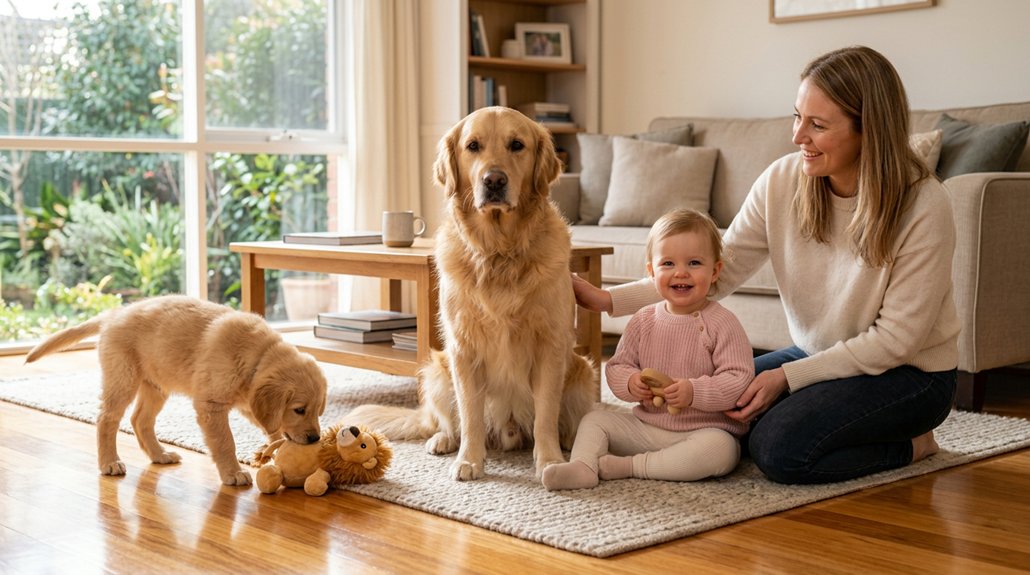
For first-time families, consider friendly, patient dog breeds like Golden Retrievers and Labrador Retrievers. These breeds are known for their gentle nature, trainability, and adaptability in family settings. Medium-sized breeds like Beagles and Cavalier King Charles Spaniels fit smaller spaces, providing companionship without overwhelming energy. Assess living conditions and size preferences when choosing between adoption and buying—each offers unique benefits. Make certain your home is ready for a new canine member to foster a smooth change. Explore more to find your perfect furry match.
Key Takeaways
- Labrador Retrievers are adaptable, intelligent, and thrive in family settings, making them ideal for first-time dog owners.
- Golden Retrievers offer gentle and patient temperaments, facilitating bonding with children and ensuring family harmony.
- Cavalier King Charles Spaniels suit smaller living spaces and enjoy loving interactions, perfect for new families.
- Standard Poodles are highly trainable and hypoallergenic, accommodating families with allergies and simplifying training.
- Adopting provides affordable options with diverse breeds suitable for matching family energy levels and lifestyles.
What Makes a Dog Ideal for New Families?
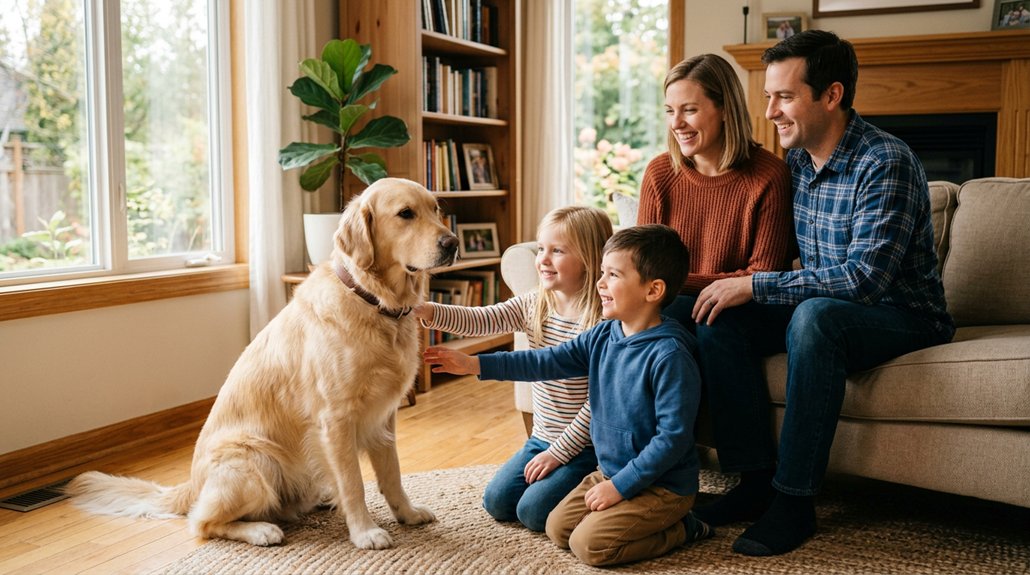
When it comes to finding the perfect dog for a new family, understanding what makes certain breeds ideal can guarantee lifelong harmony in your household. Prioritizing dog temperament traits is essential; friendly and gentle dogs like Labradors and Golden Retrievers excel in family bonding activities. Their patience guarantees they bond with children effectively. Breeds with moderate energy levels are key, such as Cavalier King Charles Spaniels and Basset Hounds, which can play joyfully without overwhelming your home. Focus on breeds that have good trainability, like Standard Poodles, which simplifies training. Consider breeds with low grooming needs, like French Bulldogs, beneficial for your busy family schedule. Finally, make sure the breed tolerates rough play, which enhances interactions with children and solidifies family harmony.
Top Family-Friendly Dog Breeds for Beginners
In your pursuit of the perfect family dog, focusing on breeds renowned for their compatibility with first-time families will set your household up for success. Prioritize breed temperament and look for dogs like Golden Retrievers, who are gentle to children, or Labrador Retrievers, whose intelligence makes them adaptable. Beagles’ joyful nature suits many households, with training tips highlighting the importance of socialization. Poodles, ideal for families with allergies, adapt easily due to their intelligence. If you’re after a smaller dog, Cavalier King Charles Spaniels thrive with loving interaction. Consider exercise needs when choosing your new pet.
| Breed | Temperament | Training Tips |
|---|---|---|
| Golden Retriever | Gentle | Requires patience |
| Labrador Retriever | Intelligent | Regular exercise essential |
| Cavalier King Charles Spaniel | Affectionate | Moderate interaction needed |
| Beagle | Joyful | Socialization is key |
Choosing the Best Dog Size for Beginners
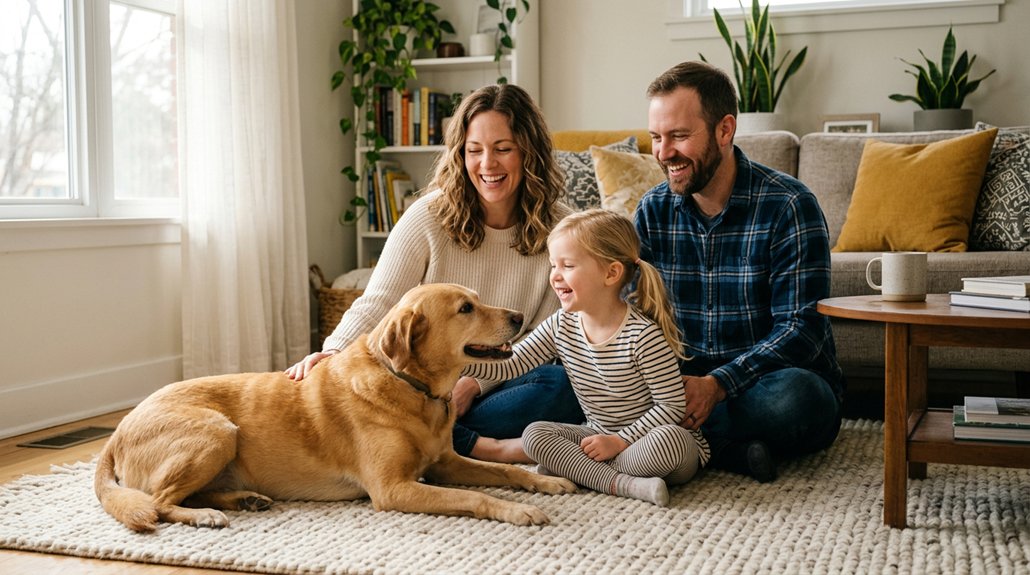
Selecting the right dog size for your family is essential for ensuring a harmonious household, especially as beginners. Size impacts everything from space needs to compatibility with children. Small breed considerations include their adaptability to smaller living environments and less exercise requirements, but they may require more grooming. Their susceptibility to rough play from younger children should be considered. Medium-sized breeds like Golden Retrievers balance companionship and energy. They suit families seeking moderate exercise. Large breed challenges involve greater space needs and exercise, like Labradors thriving in homes with yards. Grooming varies; for instance, Greyhounds have minimal coat maintenance. Considerations should include:
- Space requirements for different sizes.
- Exercise needs, varying with breed size.
- Child compatibility, especially with smaller dogs.
- Grooming maintenance demands.
Adoption vs. Buying: A Beginner’s Guide
Adopting a dog or buying from a breeder is a significant decision for any family, especially beginners. Adoption benefits are plentiful—it’s usually more affordable, with lower fees and support for initial health expenses. You’ll find diverse breed options at shelters, allowing you to match your family’s lifestyle and energy levels. Plus, adopting contributes to reducing the pet overpopulation crisis, offering a home to dogs in need. However, adopted dogs might require more patience for adjustment and training due to potential behavioral issues. On the other hand, breeder considerations include access to a clear health history and a predictable temperament. This allows you to choose specific breeds suited to your family’s needs, supporting reliable expectations around size and behavior.
Preparing Your Home for a Dog’s Arrival
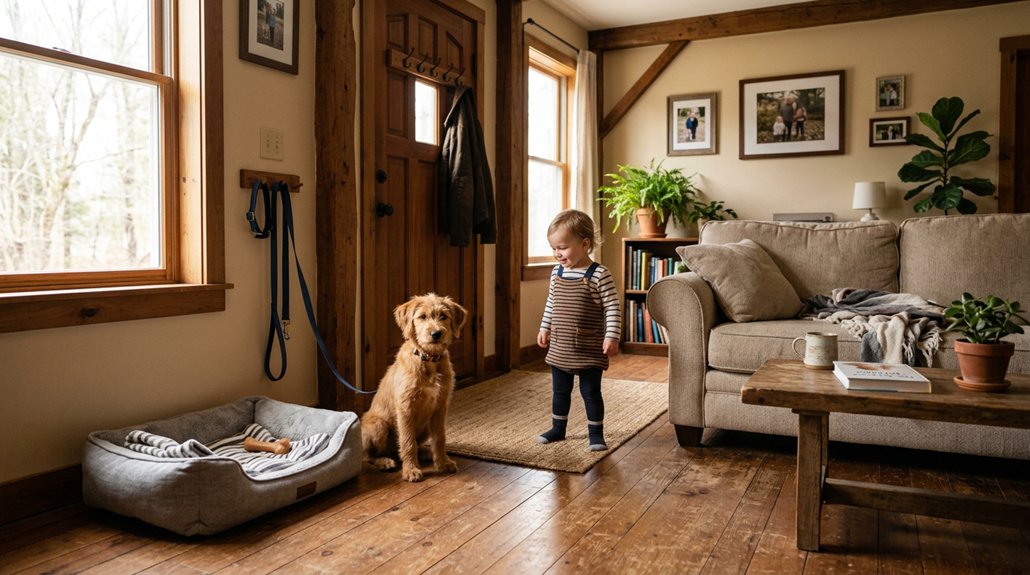
Preparing your home before your dog’s arrival is essential to guarantee a smooth changeover. Start by setting up a designated area with a comfortable bed and food and water bowls to help them feel secure. Don’t forget to puppy-proof your home by removing hazards and confirm you have all the necessary supplies to make them feel right at home from day one.
Essential Preparations Checklist
Welcoming a new dog into your home is an exciting adventure, yet with it comes the responsibility of ensuring a safe and welcoming environment. Start by creating a designated area with a comfy bed and crate. Essential supplies like leashes, toys, and quality dog food should be purchased beforehand—consider budget considerations to avoid overspending. Puppy-proof by removing hazards like loose wires, toxic plants, and small objects. Establish a consistent routine to ease your dog into their new life while applying training tips to reinforce good behavior. Schedule a vet visit early for health checks and vaccinations. Here’s your checklist:
- Acquire essential supplies: bowls, grooming tools, etc.
- Designate a safe area with bed and crate.
- Puppy-proof your home.
- Establish a daily routine.
Creating a Safe Space
When you bring home a new dog, creating a safe space is essential for a smooth change. Start by designating a specific area with a comfortable bed, toys, and familiar items, helping your dog feel secure and ease into a routine. Employ key dog proofing tips: secure hazardous items like cleaning supplies and electrical cords to prevent accidents. Baby gates are excellent for creating a secure environment by limiting access to risky areas, such as stairs, until sufficient training occurs. Remove or secure small items like coins and keys that may be accidentally ingested. Additionally, verify outdoor spaces are safely fenced and free from toxic plants. With these strategies, you’ll provide a secure space that encourages healthy exploration and play.
Overcoming New Dog Owner Hurdles
For many, stepping into the world of dog ownership reveals a mix of excitement and unforeseen challenges. Training challenges often arise, emphasizing the need for parental involvement. To successfully navigate these hurdles:
- Choose the Right Breed: Opt for breeds like Golden Retrievers or Cavalier King Charles Spaniels, known for their gentle temperaments, to fit family dynamics.
- Create a Routine: Consistently scheduled feeding, exercise, and training sessions provide security and ease adjustments.
- Plan Financially: Be prepared for initial setup costs of about $1,000 and yearly expenses ranging from $500 to $1,500 for essentials.
- Invest in Early Socialization and Training: Participate in puppy classes to prevent behavioral issues and strengthen family-pet bonds.
Frequently Asked Questions
What Is the Best Family Dog for First-Time Owners?
You’d find Golden Retrievers to be ideal for first-time owners due to their gentle breed characteristics. Focus on training tips emphasizing consistency and positive reinforcement to leverage their high trainability and guarantee they’re a perfect family companion.
What Is the 3-3-3 Rule With Dogs?
The 3-3-3 rule with dogs outlines the bonding period and adjustment phases. Expect stress in the first three days, settling in during three weeks, and personality emergence by three months. Patience and support are essential.
What Is the Best Dog for First-Time Parents?
For first-time parents, gentle breeds like Golden Retrievers are ideal. They’re easy to train and bond well with kids. Focus on basic training tips: consistent commands, positive reinforcement, and socialization to nurture a harmonious relationship.
How Do You Say “I Love You” in Dog Speak?
To say “I love you” in dog speak, use dog body language and canine vocalizations. Maintain soft eye contact, offer gentle petting, and imitate their happy sounds. Respond to their behaviors like wagging tails or affectionate nudges.
Conclusion
Bringing a dog into your family is like adding a vibrant new thread to the tapestry of your life. Make thoughtful choices: consider adopting, weigh the pros and cons of size, and prepare your home like a fortress of love and safety. A well-chosen breed will be your steadfast ally, facing every hurdle with wagging enthusiasm. Remember, patience and love will be your guiding stars on this joyful journey of companionship and happiness.