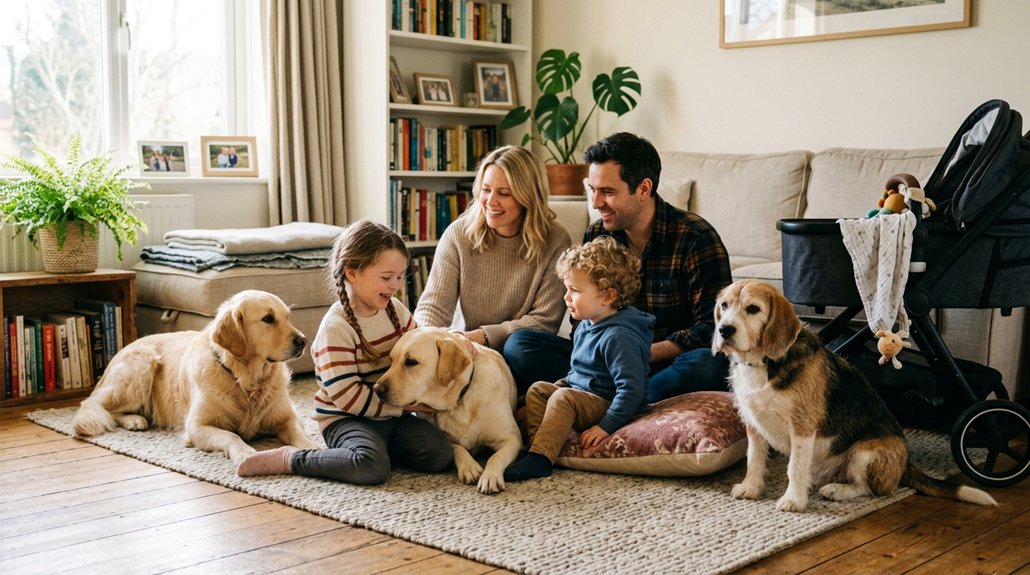
When selecting the safest dog breeds for families, consider those with gentle temperaments and stability. Labrador and Golden Retrievers, Beagles, Cavalier King Charles Spaniels, and Bulldogs are known for their predictability and adaptability, promoting tranquil home environments. Their cooperative history results in enhanced emotional stability, fostering secure family attachments. By correctly evaluating lifestyle compatibility and prioritizing training, these breeds guarantee harmonious integration. Discover further insights into nurturing family-friendly environments with these expert recommendations.
Key Takeaways
- Labrador Retrievers are known for their gentle and friendly nature, making them ideal for families with children.
- Golden Retrievers have a patient and affectionate demeanor, which, combined with high trainability, suits family life.
- Beagles offer playful energy and thrive on social engagement, enhancing family interactions.
- Cavalier King Charles Spaniels provide affectionate companionship and adapt well to apartment living.
- Bulldogs have a calm and tolerant temperament, making them suitable for homes with young kids.
Top Safe Dog Breeds for Families
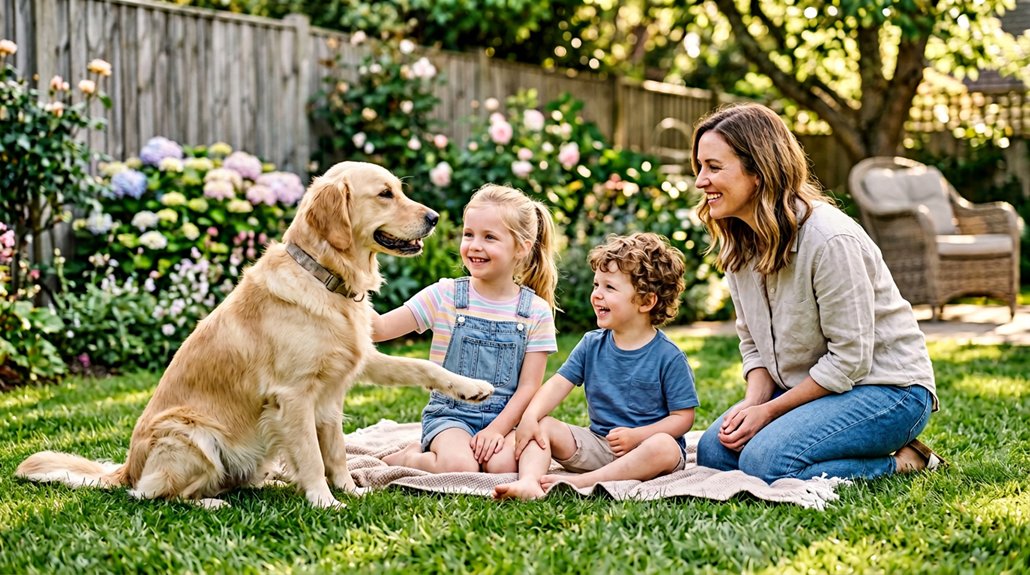
When considering dog breeds safe for families, several standout options show evidence-based advantages. Labrador Retrievers are renowned for their dog breed characteristics, such as a gentle, friendly nature that supports child friendly traits, ensuring harmonious interaction with children of all ages. Golden Retrievers equally excel with their patient, affectionate demeanor and high trainability, facilitating seamless adaptation to diverse family environments.
For families valuing playful energy, Beagles offer delightful companionship, being gentle and thriving on social engagement. Their curious, engaging personalities make them well-suited for children. Additionally, Cavalier King Charles Spaniels provide affectionate companionship with their diminutive stature, perfect for apartment living. Ultimately, Bulldogs exhibit a calm, tolerant temperament, ideal for homes with younger kids, as they rarely present aggressive behavior.
Key Traits of Family-Friendly Breeds
When considering the safest dog breeds for families, you’ll want to prioritize those with stable and predictable temperaments to mitigate behavioral risks. Breeds with a history of working well alongside humans can enhance trust and form harmonious family dynamics. Additionally, selecting a dog with balanced energy levels is essential to guarantee they integrate seamlessly into your family’s everyday activities without causing stress or fatigue.
Stable and Predictable Temperaments
While choosing a family dog, prioritizing breeds with stable and predictable temperaments is essential, as these traits directly influence how well a dog can integrate into a dynamic household. Predictable behavior and emotional stability in dogs provide a soothing presence and facilitate positive interactions with children. This consistency aids in nurturing secure attachments and fostering a tranquil home environment. Consider these heartwarming aspects when selecting your new furry friend:
- Emotional Stability: Breeds like the Cavalier King Charles Spaniel naturally exhibit calmness, promoting reassurance and comfort.
- Child-friendly Behavior: Tolerance of children’s unpredictable antics, seen in Beagles, encourages harmonious relationships.
- Adaptability: Labrador Retrievers and Golden Retrievers adjust seamlessly to varied family dynamics, enhancing overall compatibility.
Ensuring these temperament traits can safeguard a joyous and peaceful family experience.
Human Cooperation History
Throughout history, certain dog breeds have developed a remarkable capacity for human cooperation, a trait pivotal in nurturing positive family dynamics. Breeds like the Labrador Retriever and Golden Retriever demonstrate historical cooperation bred into their lineage, enhancing breed compatibility with family environments. This inherent ability to work alongside humans not only bolsters their social behaviors but also contributes to their role as trustworthy family members. Similarly, the Cavalier King Charles Spaniel and Beagle exhibit behaviors rooted in their companionship and hunting history, making them exceptional partners in family activities. The Boxer’s cooperative instincts, honed over generations, create a foundation for robust familial partnerships. Meanwhile, the intelligence and obedience of the Border Collie reflect their long-standing historical cooperation in agricultural settings.
Balanced Energy Levels
The cooperative nature of dogs secures their fundamental role in family settings, yet energy levels are just as significant in determining breed suitability for households. Managing a dog’s activity through precise training schedules allows for balanced energy management, guaranteeing harmonious interaction with family dynamics. Labrador and Golden Retrievers epitomize this equilibrium, thriving in high-energy play and serene downtime. In contrast, breeds like Cavalier King Charles Spaniels display adaptive moderate energy aptitudes, accommodating varying household demands. Consider these impacts:
- Structured training schedules enhance adaptability, reducing behavioral issues.
- Effective energy management promotes effective psychological health, preventing anxiety.
- Balanced activity levels assure safety, accommodating diverse family members’ needs.
Through informed breed selection, energy becomes the cornerstone of a well-functioning family environment.
Top 5 Breeds for Young Kids
When considering a canine companion for young children, it’s essential to focus on breeds that exhibit gentle temperaments and appropriate energy levels for pediatric interaction. Labrador Retrievers and Golden Retrievers, for example, are lauded for their patient and trainable nature, making them excellent choices for a family setting. Furthermore, breeds like the Cavalier King Charles Spaniel and Basset Hound require moderate exercise and adapt well to various household dynamics, offering a safe environment for children to grow and learn.
Gentle and Patient Breeds
If you’re looking for a canine companion that’s both gentle and patient, certain breeds excel in these traits, making them ideal for families with young children. A Labrador Retriever is renowned for its gentle temperament, offering a patient nature that harmonizes perfectly with kids’ playful antics. The calming demeanor of a Basset Hound guarantees it thrives in a family setting, tolerating and adapting to rough play. Meanwhile, a Cavalier King Charles Spaniel’s affectionate and gentle disposition can provide warmth to your home, making it a comfortable choice for indoor interactions. Each breed demonstrates resilience and affection, essential for nurturing a healthy bond with young ones. Here’s why these breeds stand out:
- Gentle companions for children
- Patient tolerance to exuberant play
- Nurturing family connections
Ideal Energy Levels
While selecting a dog breed with ideal energy levels for young children, it’s essential to take into account both exercise requirements and natural temperament. The Labrador Retriever stands out with a friendly demeanor and moderate energy, perfect for diverse exercise routines that balance play and rest. Cavalier King Charles Spaniels thrive in family dynamics due to their affectionate nature and adaptability to children’s energy levels, requiring modest exercise commensurate with managing playtime. Beagles, with their playful curiosity, enjoy manageable activities, making them great for dynamic interaction with kids. Bulldogs excel with low to moderate energy, favoring short walks and providing affection. Finally, Pugs present a low-maintenance option with their charming personalities and minimal exercise needs, fitting seamlessly into young family life.
Ideal Breeds for Families With Older Kids
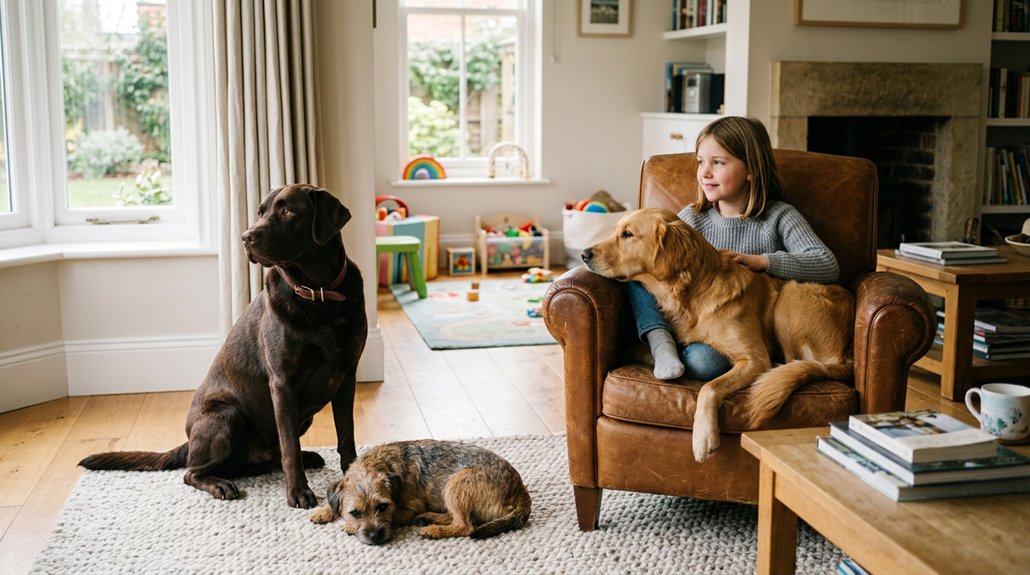
Finding the perfect canine companion for families with older kids can greatly enrich your household dynamics. Comparing breeds reveals numerous benefits, like Labrador Retrievers and Golden Retrievers, whose friendly disposition aligns with positive reinforcement training techniques. Their amicable nature fosters empathy in children and enhances family bonding. Boxers’ energetic behavior, suitable for training programs relying on physical play, keeps teenagers engaged and active. Beagles charm with their inquisitive spirit, perfect for fostering problem-solving skills through interactive games.
Consider these emotional benefits:
- Unwavering Companionship: Mixed-breed dogs offer a rich blend of characteristics, suiting diverse family dynamics.
- Endless Adventure: Active breeds like Border Collies turn outdoor activities into lasting memories.
- Shared Responsibility: Managing a dog encourages responsibility and teamwork among older children.
Important Factors for Picking a Family Dog
When selecting a family dog, it’s crucial to evaluate several key factors that ensure a harmonious fit for your household. First, assess breed compatibility by analyzing temperament. Stable, predictable dogs are typically more adaptable to family dynamics. Confirm the energy level matches your family lifestyle; active families thrive with high-energy dogs, while quieter homes might prefer a more laid-back breed. Size matters, too—larger breeds might unintentionally harm young children, whereas smaller dogs may lack resilience. Grooming requirements should align with your schedule; low-maintenance breeds suit busy families. Finally, investigate each breed’s protective instincts. Dogs providing natural alertness without aggression can enhance familial security, promoting strong interspecies bonds. Consider these factors holistically for a successful long-term match.
How to Train and Socialize Safe Family Dogs

Establishing a safe and well-adjusted family dog hinges on effective training and socialization techniques. Begin puppy training early with basic commands like “sit,” “stay,” and “come” to lay a foundation for obedience. Use positive reinforcement—treats, praise—to nurture trust and encourage desirable behaviors.
Socialization is essential for a dog’s psychological health. Expose your puppy to diverse environments and individuals to minimize anxiety and promote stability. This exposure fosters calm, predictable interactions and boosts confidence.
Introducing puppies to varied settings and people reduces anxiety, promoting stable and confident behavior.
Remember these key steps to cultivate companionship:
- Enrich Relationships: Create a trusting bond with consistent, short training sessions.
- Alleviate Fear: Regular exposure to different scenarios enhances adaptability.
- Secure Environment: Provide early social experiences to reduce anxiety and foster emotional well-being.
Keeping Your Family Dog Healthy With Regular Vet Visits
Regular veterinary visits are essential in safeguarding your family’s dog against breed-specific health issues, ensuring a longer and healthier life. These visits facilitate early detection and intervention, which are vital for effective management of potential health problems. Preventive care includes vaccination schedules tailored to your dog’s needs, protecting them from infections. Additionally, regular check-ups provide the opportunity to monitor variables such as weight, dental health, and diet, adapting care as necessary.
Engage actively with your veterinarian; this relationship is pivotal in receiving tailored advice for your dog’s health as they age. Also, routine preventive measures like parasite control and professional dental cleanings enhance wellbeing. Remember, a proactive approach in veterinary relationships contributes considerably to improving your pet’s quality of life and longevity.
Frequently Asked Questions
How Do You Say “I Love You” in Dog Speak?
To say “I love you” in dog speak, recognize canine affection through dog body language: wagging tail, relaxed ears, nuzzling, or prolonged eye contact that releases oxytocin. Your dog’s behavior is evidence-based communication of their emotional connection.
What Words Do Dogs Hear Best?
Dogs prickle their ears to short, sharp commands like “sit” or “stay,” facilitated by their acute canine hearing. They excel in dog communication when commands are delivered at frequencies humans might label as groovy, 1,000-8,000 Hz.
What Is the Most Low Maintenance Dog for Families?
You’re looking for low energy breeds and easy care dogs. Consider French Bulldogs and Pugs. They’re low-maintenance, require minimal exercise, and offer companionship without demanding much time, aligning with evidence-based recommendations for family-friendly, easy-to-care-for breeds.
What Are the Top 3 Most Loyal Dogs?
Imagine a steadfast sentinel by your side: Labrador Retrievers, German Shepherds, and Golden Retrievers are prime examples. They’re loyalty indicators include unwavering eye contact, following you everywhere, and always being your first line of emotional defense.
Conclusion
Choosing the right family dog is like setting out on a well-charted voyage. Just as a seasoned sailor navigates the seas with knowledge of the winds and tides, you must consider traits, age dynamics, and health protocols. Opt for breeds that harmonize with your family, ensuring that both young adventurers and seasoned explorers feel safe. Train and socialize your canine companion diligently, as this secures a bond as strong as any sailor’s knot. Regular vet visits anchor their well-being.