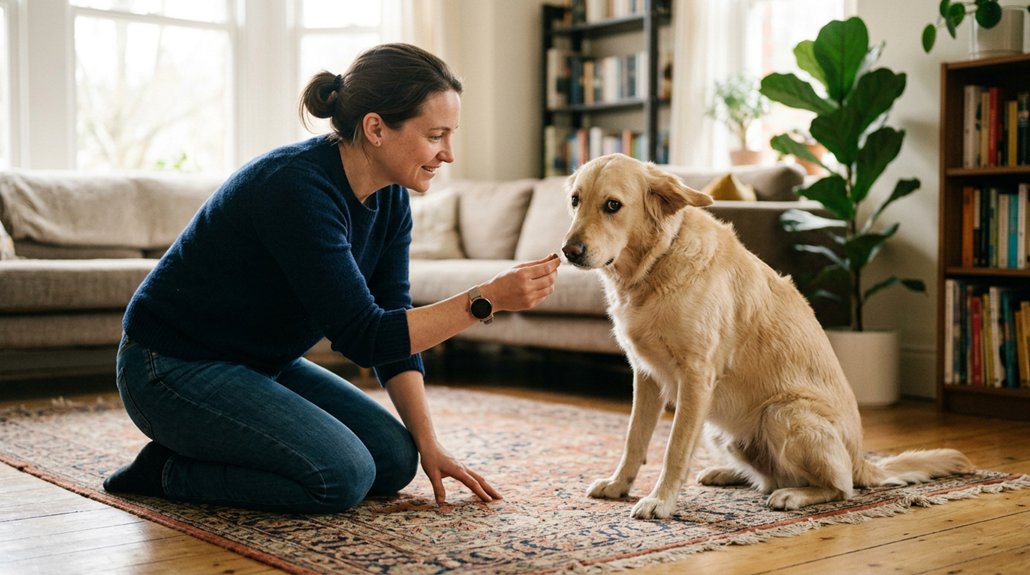
Changing your dog’s behavior requires patience and consistency, and you may notice improvements within a few weeks. Initially, focus on building trust and communication while choosing the right training method for your dog’s breed and age. Use consistent, positive reinforcement in short, daily training sessions. It’s essential to involve everyone in the household for coherent messaging. Early improvements, like reduced reactivity, build the foundation for lasting changes. Explore further to guide your dog’s journey effectively.
Key Takeaways
- Initial behavioral changes can often be observed within the first two weeks of consistent training efforts.
- More ingrained behavioral issues may take 3 to 6 months to fully resolve with regular training.
- Early puppies respond quickly to brief training sessions, showing progress within days.
- For older dogs, longer periods are required due to established habits, but progress is achievable with persistence.
- Consistent daily routines and positive reinforcement accelerate the behavior change process.
What Happens When You Begin Changing Dog Behavior?
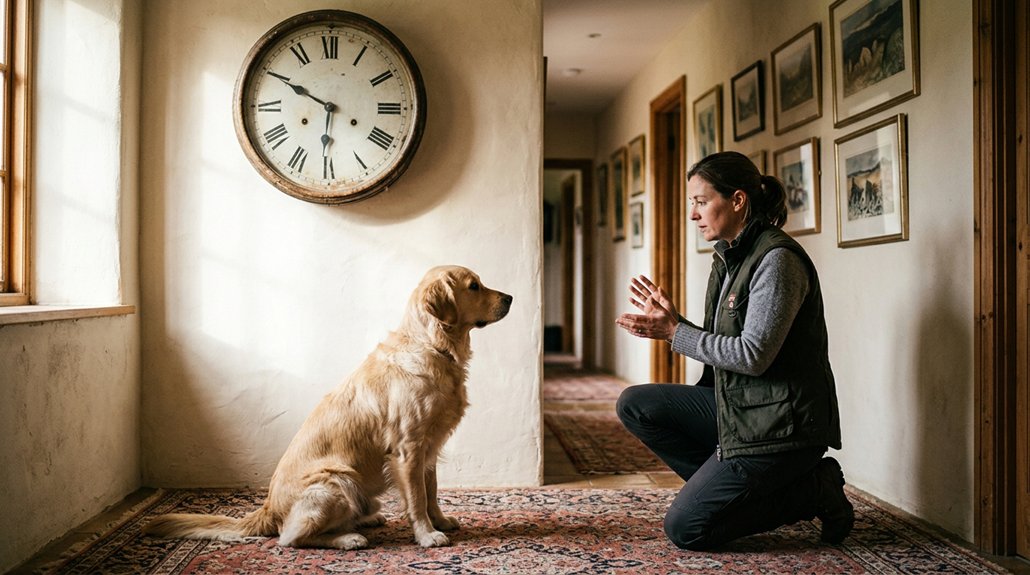
Starting on the journey of changing your dog’s behavior involves more than just teaching commands—it’s about building trust and fostering communication. In the first week, focus on trust establishment; this sets the stage for your dog’s comfort and willingness to learn. You’ll notice small strides as basic communication begins to strengthen your bond. As this foundation solidifies, command reinforcement becomes key, guiding gradual adaptation to your new training routine. During the second week, anticipate initial responsiveness as your dog starts reacting to basic commands, marking the beginnings of behavioral improvement. Progressively, you’ll observe consistency in the third week, where learned skills are applied to various scenarios. With patience and dedication, these early steps set the groundwork for more reliable and consistent responses.
Choosing the Right Training for Behavior Change
Selecting the appropriate training method can greatly impact your dog’s behavioral change journey. You’ll want to contemplate the specific needs of your dog’s breed. Understanding breed differences is essential; while Border Collies and German Shepherds typically excel with structured routines due to their quick learning capabilities, breeds like Basset Hounds and Beagles may require more patience and adaptable methods. Puppies, starting training around 8 weeks, benefit from early, brief sessions given their shorter attention spans. Conversely, older dogs, with more ingrained habits, may take longer but can still learn effectively with the right approach. Whether you choose obedience or behavioral training, consistency is key. Engage all household members in the process and consistently use positive reinforcement for best results.
What Makes Dog Behavior Change Faster?
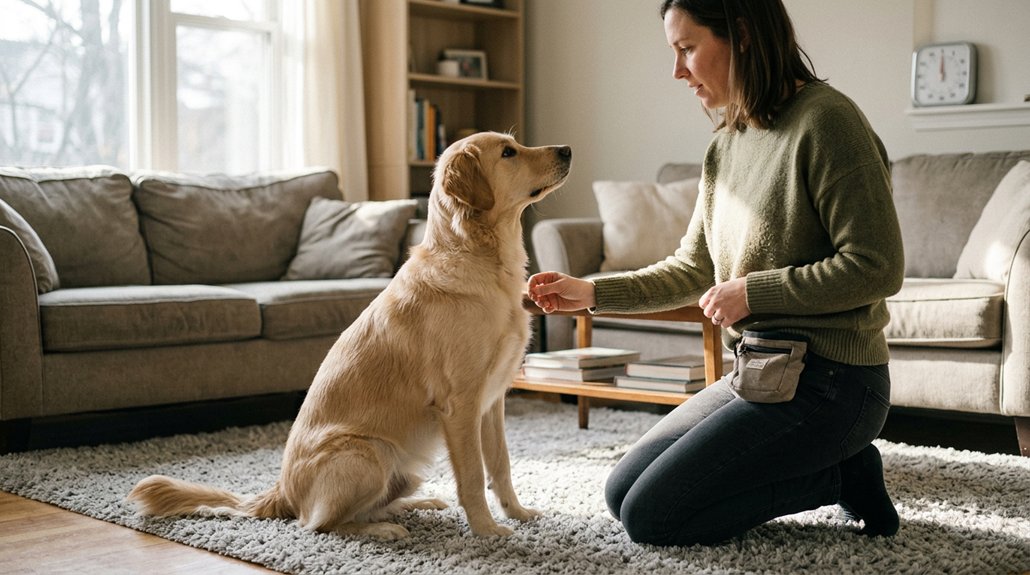
While altering a dog’s behavior can be a challenging task, there are key strategies you can implement to accelerate the process. Consistent daily training sessions are essential. By maintaining a high training frequency, dogs learn more efficiently compared to infrequent, longer sessions. It’s important to leverage positive reinforcement—treats and praise can greatly quicken the adoption of desired behaviors. Addressing your dog’s emotional motivation is equally important. Understanding and alleviating fears or anxiety through gradual exposure and rewards can lead to swifter behavioral change. Additionally, involving all household members guarantees consistent messaging, which fosters faster progress. Finally, early exposure to diverse environments helps your dog generalize new behaviors, reducing stress and fostering adaptability. Implement these strategies for effective and quicker behavior change.
Speed Up Your Dog’s Behavior Change Process
Building on those key strategies, let’s explore how you can further speed up your dog’s behavior change process effectively. Employ consistency techniques by involving all household members in training, ensuring uniform commands and responses. This coherence boosts learning efficiency. Use reinforcement strategies like positive reinforcement—treats, praise—to elevate your dog’s motivation and reinforce desirable behaviors. Keep sessions short, between 5 to 10 minutes, to sustain engagement and prevent fatigue. Daily, frequent training, rather than sporadic marathons, reinforces behaviors faster. Consider the training environment: minimize distractions and reduce stressors to aid in focus and adaptation. With patience and these expert approaches, your dog’s progress can happen more smoothly and swiftly, transforming desired behaviors into lasting habits.
Tracking Progress: Signs That Your Dog’s Behavior Is Changing
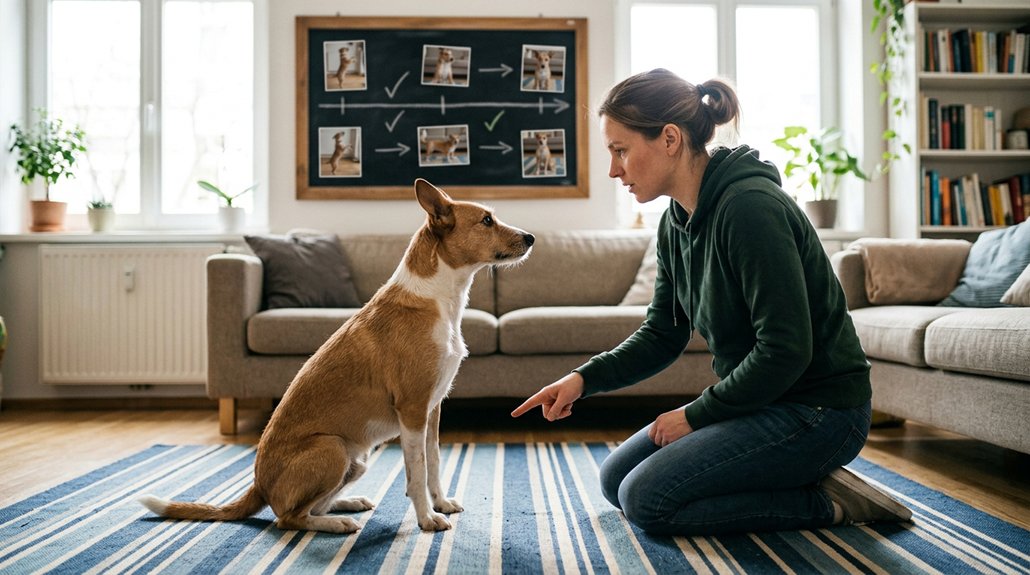
How can you tell your dog’s behavior is on the right track? Start by observing initial signs like reduced reactivity and improved emotional stability. Within the first two weeks of training, you may notice quicker recovery from distractions, indicating your dog’s adaptive behaviors are kicking in. By the third week, look for consistent responses to commands in different home environments; this showcases your dog’s ability to generalize learned behaviors. Pay attention to subtle shifts in body language—a relaxed posture and an increased enthusiasm to engage are promising indicators. While significant issues may take 3-6 months to fully resolve, these early changes reflect positive progress and a solid foundation for deeper learning and adaptation. Stay patient and celebrate small victories.
Frequently Asked Questions
How Long Does It Take to Change Dog Behavior?
To change dog behavior, you’ll need a time commitment of 4-8 weeks for noticeable improvements, applying behavior modification techniques with consistency. Serious issues may take 3-6 months, requiring patience and perseverance for lasting change.
What Is the 3-3-3 Rule With Dogs?
When the dog’s first on board, the 3-3-3 rule helps guide the adjustment period. During this canine behavior modification, expect the first 3 days to be stressful, 3 weeks for settling, and 3 months for bonding.
Do Dogs Forgive You for Yelling at Them?
Dogs don’t truly “forgive” in human terms. Their emotional response to yelling focuses on the tone, which impacts trust. To mend it, consistently offer positive experiences, reinforcing good behavior to balance out any negative interactions.
What Are the 4 Signs Your Dog Thinks of You as a Parent?
Your dog sees you as a parent if they follow you around, depend on your cues during social interactions, lean on you for comfort, and display canine affection through parenting styles, similar to a child-parent bond.
Conclusion
Picture yourself standing on a sunlit path with your dog by your side, their enthusiastic eyes reflecting trust and newfound understanding. As you work through each training session, you’re not just teaching commands—you’re crafting a bond filled with patience and love. Remember, progress is like tending to a garden; it unfolds quietly, with consistent care. Celebrate every wag and step forward, knowing you’re guiding your dog to a brighter, more harmonious journey together.