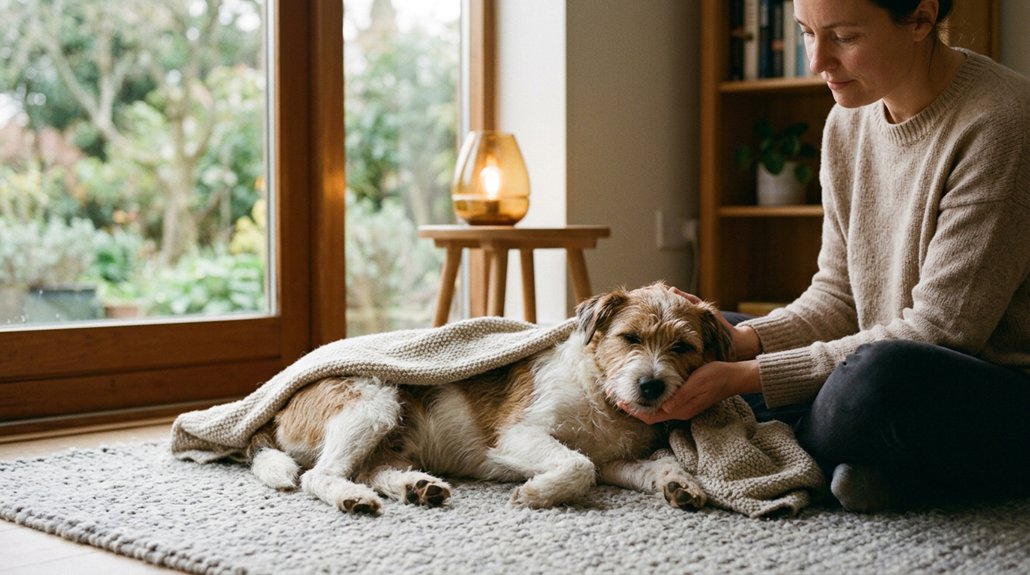
To calm an overstimulated dog, recognize their stress signals like restless pacing or excessive barking. Use gentle massages and soothing sounds to help alleviate tension. Create a peaceful home environment with designated quiet zones and soft bedding. Calm your dog with activities like sniffing walks or enrichment feeding to redirect focus. Consistent routines and training build predictability, reducing anxiety. Discover more strategies to help your dog manage overstimulation effectively and efficiently.
Key Takeaways
- Use gentle massages and deep pressure along the back to reduce tension and calm the dog.
- Play soothing sounds like tranquil music to help settle the dog’s nervous system.
- Redirect focus with treats or simple commands to divert attention from stressors.
- Create a calm environment by designating quiet areas and using noise reduction techniques.
- Engage in scent games or calming toys to diminish overstimulation and channel energy.
Quick Calming Techniques for Dogs
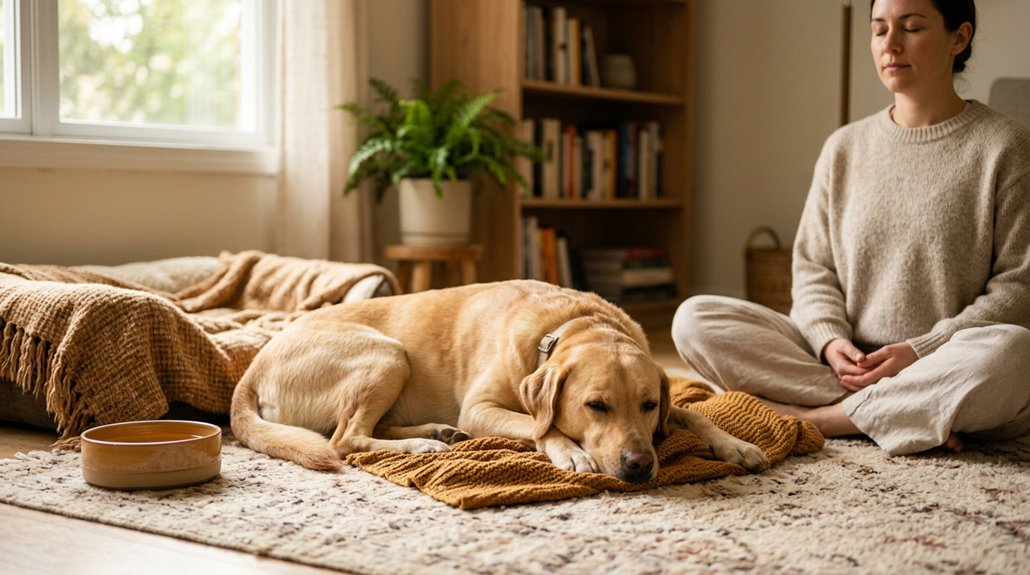
Calming an overstimulated dog quickly requires targeted techniques that address their heightened sensitivity. Begin with gentle massages, applying deep pressure along their back to ease tension. This can be paired with a snug-fitting anxiety wrap that delivers continuous comforting pressure. Play soothing sounds, such as tranquil music or nature sounds, to distract and calm your dog’s nervous system. Encourage controlled breathing by slowly inhaling and exhaling while your dog watches, fostering a calmer rhythm. Redirecting your dog’s focus with a treat or a simple command can further shift attention from stressors. Create a quiet retreat space equipped with soft bedding and minimal distractions to promote a sense of safety. Utilize calming scents like lavender to complete the calming environment effectively.
Identify Signs of Dog Overstimulation
Identifying signs of dog overstimulation requires keen observation and understanding of subtle behavioral cues. Look for body language cues like restless pacing or dilated pupils; these may signal heightened arousal. Behavioral triggers such as excessive energy can manifest as running in circles or constant jumping, indicating difficulty in relaxation. Pay attention to the dog’s inability to focus; easily distracted behavior hampers their ability to respond to commands.
Excessive barking without a clear cause often stems from pent-up energy seeking an outlet. Watch for signs of unease such as a tucked tail or flattened ears, promptly recognizing your dog’s discomfort. Increased panting, unrelated to exertion or heat, could also signal overstimulation. A timely intervention will help promote calmness and comfort.
Make Your Home a Calming Space for Dogs
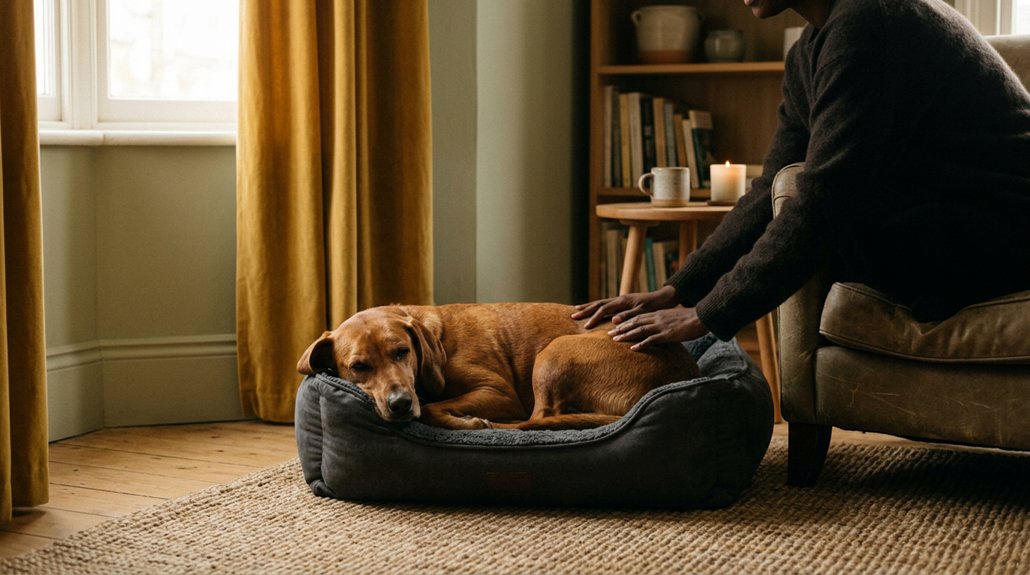
When creating a calming space for your dog, it’s essential to prioritize factors that promote relaxation and reduce anxiety. Start by designating quiet areas in your home where your dog can retreat, away from high-traffic zones. Use soft bedding to increase comfort and reduce distractions. Achieve noise reduction by playing ambient sounds or soft music to mask sudden loud noises that might trigger anxiety. Establish consistency with routines for feeding, walks, and playtime to foster a sense of security. Limit visual stimuli by closing curtains or setting up barriers in busy areas, minimizing distractions. Providing calming toys, like stuffed KONGs, can help redirect your dog’s focus during high-energy periods, encouraging self-soothing and relaxation more effectively.
Practical Calming Activities and Mental Stimulation for Your Dog
Creating a serene atmosphere at home is a solid foundation for easing your dog’s anxiety, but it’s equally important to engage them in practical calming activities and mental stimulation. Engage your dog in structured play or relaxation techniques to enhance brain activity and improve sleep quality. Utilize enrichment feeding, prolonging mealtimes and promoting concentration. Scent games foster curiosity and diminish overstimulation, allowing your dog to use their natural instincts. Introduce calming toys, like stuffed Kongs, to redirect energy during high-energy situations. Sniffing walks are invaluable, letting your dog explore and find calm. Consistent routines and quiet downtime build self-regulation and emotional health.
| Activity Type | Key Benefit |
|---|---|
| Enrichment Feeding | Promotes focus |
| Scent Games | Reduces overstimulation |
| Sniffing Walks | Fosters calm and satisfaction |
Long-Term Strategies to Prevent Overstimulation
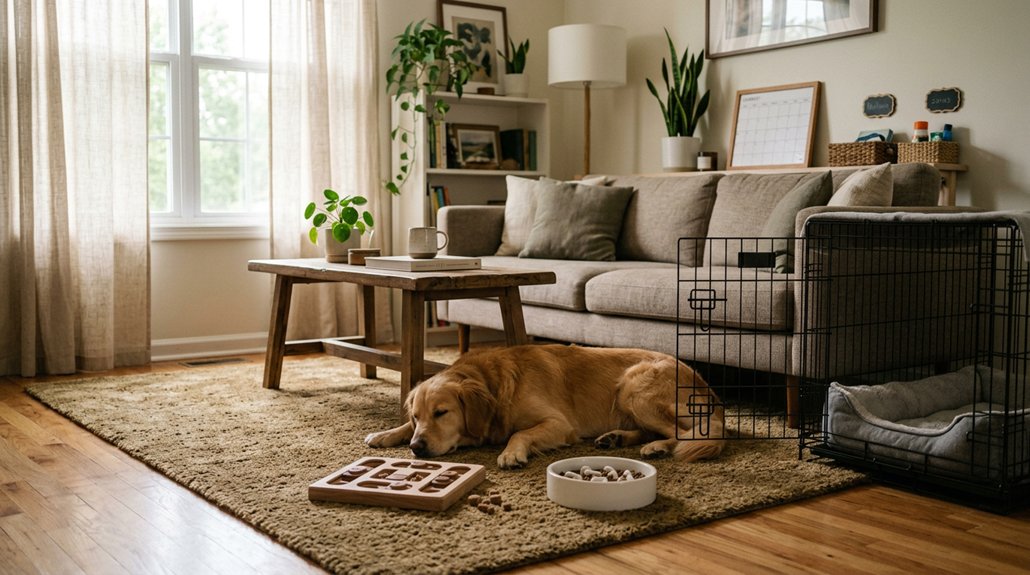
One of the most effective methods to prevent your dog from becoming overstimulated is by establishing a reliable routine. Consistent daily schedules provide predictability, reducing anxiety and hyperarousal. Incorporate regular physical exercise and mental enrichment, using interactive toys and puzzle games to channel your dog’s energy effectively. Implement training techniques focusing on impulse control, rewarding calm behavior to reinforce their ability to manage excitement. Socialization strategies gradually expose your dog to new experiences in a controlled manner, enhancing their confidence and resilience against unfamiliar stimuli. Additionally, designate quiet spaces in your home where your dog can retreat during overwhelming situations. By maintaining these long-term strategies, you’ll create an environment conducive to your dog’s calm and balanced behavior.
Frequently Asked Questions
What Is the 3-3-3 Rule for Dog Anxiety?
The 3-3-3 rule helps you manage dog anxiety by understanding adjustment phases: 3 days to settle triggers, 3 weeks for personality emergence, and 3 months for full adaptation. Use relaxation techniques for smoother changes and reduced stress.
Is It Ever Too Late to Train a Reactive Dog?
It’s never too late to train a reactive dog. You might worry about ingrained behaviors, but effective training techniques and consistent practice can reshape reactive behavior, fostering emotional maturity and improving impulse control, regardless of age.
How to Calm an Over Excitable Dog?
Start by introducing relaxation techniques like “sit” and “stay” commands. Use calming products, such as pheromone sprays or calming collars, to aid relaxation. Be consistent with structured play, rest, and positive reinforcement, encouraging settled behavior in your dog.
How Do Overstimulated Dogs Act?
Did you know about 70% of dogs show overstimulation signs weekly? You’ll notice behavioral cues like rapid panting, restlessness, and distraction. Keep an eye on these signs to better understand and manage your dog’s needs effectively.
Conclusion
Calming an overstimulated dog may seem challenging at first, but by understanding their needs and creating a calming environment, you can make a significant difference. You might think these steps are too time-consuming, but they build a harmonious bond and a stress-free space for both you and your dog. With patience and consistency, you’ll witness a happier, well-adjusted pet, knowing that your efforts have created a safer, more supportive haven for your furry friend.