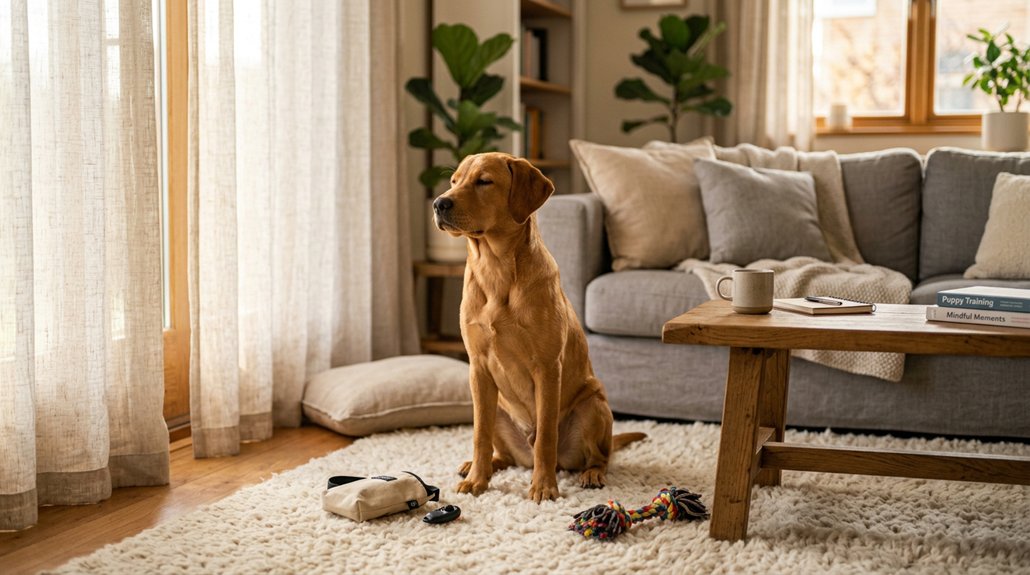
To train your dog to be calm at home, designate a peaceful space with dim lighting and calming music. Incorporate mental enrichment activities, like food puzzles, and reward natural calm behaviors with treats or praise. Establish a consistent routine of play, rest, and quiet time to reduce anxiety. Gradually introduce distractions to build composure. Be patient and monitor progress, adjusting methods as needed. With dedication, you’ll master the art of creating tranquility together.
Key Takeaways
- Designate a peaceful, dog-proof area with calming music and dim lighting for a serene home environment.
- Utilize food puzzles and snuffle mats to provide mental stimulation while promoting relaxation and self-regulation.
- Reward and reinforce calm behaviors using treats and positive reinforcement techniques to encourage tranquility.
- Establish a consistent routine with regular quiet periods and low-energy activities to reduce anxiety and enhance calmness.
- Gradually introduce distractions with patience and positive reinforcement to build composure and desensitize the dog to excitable stimuli.
Quick Start to a Calm Home Environment
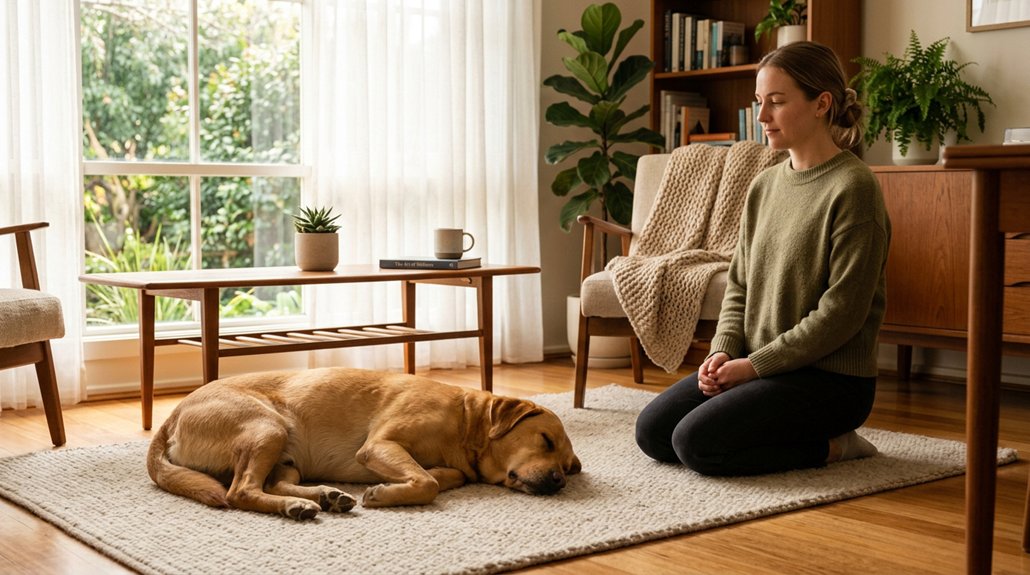
Establishing a calm home environment is pivotal in nurturing a well-adjusted dog, and it starts with designating a peaceful space. Choose a quiet area in your home, ensuring it’s dog-proof, to serve as a haven for relaxation. Incorporate relaxation techniques like offering food puzzles, which engage your dog mentally and promote tranquility. Complement this with environmental cues—dim lighting and gentle music can greatly enhance the serene atmosphere.
Introduce calming activities such as snuffle mats or chew toys to encourage self-regulation. These activities not only occupy their time but help them develop skills to settle calmly. Remember to reward moments of calm behavior with treats subtly. This will reinforce relaxation and help them identify these behaviors with positive reinforcement.
Building Calm: Practical Routines and Environments
As you optimize your dog’s home environment for calmness, practical routines and thoughtfully designed spaces become the cornerstone of promoting well-being. Begin with a playpen setup in a quiet, dog-proof area where your pet can safely unwind. Limit toys and chews to avoid overstimulation, ensuring a peaceful retreat. Enhance this space using relaxation techniques like closed blinds, dim lighting, and soothing music, crafting a serene environment that promotes security and ease. Incorporate mental enrichment activities, such as food puzzles or treat-dispensing toys, fostering mental stimulation while maintaining calmness. Build a routine featuring regular periods of quiet time and low-energy activities. This association between calmness and positive experiences will naturally encourage your dog’s tranquility and reinforce desired behaviors.
Teaching Calmness Through Effective Exercises
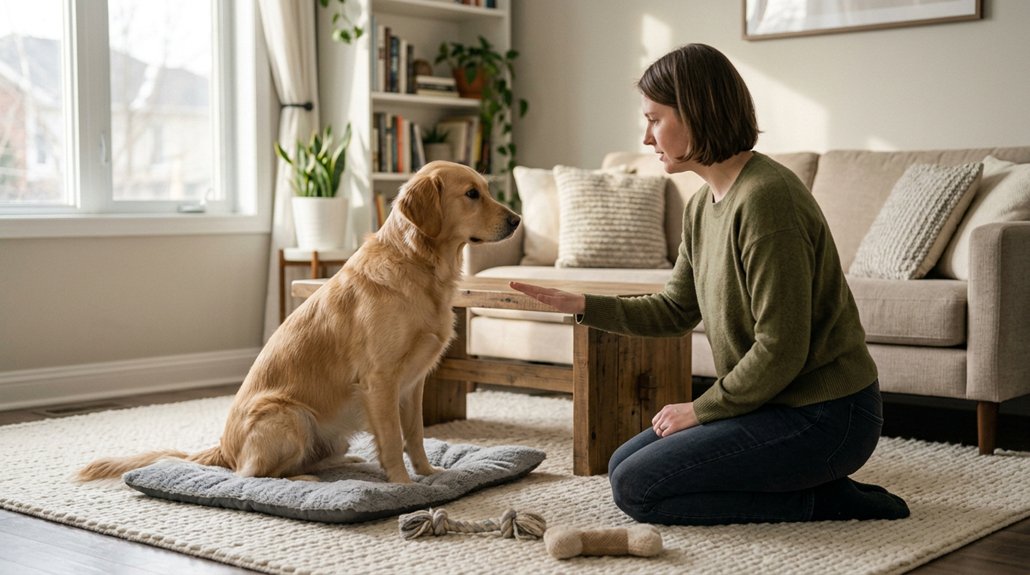
Incorporating exercises that reward natural calm behaviors is key to teaching your dog lasting tranquility. By using low-value treats and gradually increasing the intervals between rewards, you can reinforce calmness effectively. Additionally, engaging your dog’s mind with puzzles helps to channel their energy constructively, promoting relaxation even during challenging situations.
Reward Natural Calm Behaviors
When you focus on rewarding your dog’s natural calm behaviors, you’re laying the groundwork for a more serene home environment. Recognize calm signals, like lying down quietly, and reward these relaxation cues with low-value treats. Gradually increasing intervals between rewards will reinforce understanding that tranquility outweighs excitement. Here’s how to implement a structured plan:
| Action | Purpose |
|---|---|
| Recognize relaxation cues | Identify signs of calm and readiness |
| Use low-value treats | Encourage calm without over-excitement |
| Increase interval rewards | Develop patience and extended calm periods |
| Schedule calming routines | Combine exercise with calm-focused tasks |
| Praise verbally | Reinforce calm behaviors genuinely |
Establishing a routine that includes physical exercise and relaxation creates balance, helping your dog expend energy and return to peace.
Engage Minds With Puzzles
Mental stimulation is key to fostering a calm and content dog, and puzzle toys are an excellent way to achieve this. By offering a puzzle variety, such as Kong toys and snuffle mats, you can markedly enhance your dog’s problem-solving skills. These activities not only keep your pup engaged but also alleviate boredom, helping maintain calmness at home. To start, integrate these puzzles into daily routines by hiding treats. This encourages relaxed behavior after completion and reduces hyperactivity. Gradually increase the difficulty of the puzzles to keep your dog’s interest piqued and challenge their mind continuously. Regular use of these mental exercises helps develop impulse control and self-regulation, essential traits in nurturing a peaceful household for both you and your furry friend.
Reinforcing Calmness With Positive Rewards
To effectively train your dog to be calm, you’ll want to recognize and reward natural calming behaviors like lying down or relaxing. Use high-value treats to reinforce these actions, gradually increasing the time between rewards to build a strong association between calmness and positive outcomes. Incorporating a clicker or specific marker word can further signal desired behaviors, making your training clear and encouraging your dog to naturally settle.
Recognize and Reward Calm
Recognizing and rewarding calm behavior in your dog is an essential step in fostering a serene home environment. Start by observing your dog for calm signals and relaxation cues, like lying down quietly or simply being still. As soon as you notice these behaviors, offer subtle treats to reinforce them. This positive reinforcement makes it clear to your dog that calmness leads to rewards, nurturing a peaceful atmosphere.
Gradual Reward Timing
As you get into the rhythm of recognizing and rewarding your dog’s calm behavior, you can begin to focus on gradual reward timing to enhance their patience and self-control. Start by immediately rewarding moments of tranquility with low-value treats, ensuring no overstimulation. Gradually increase the intervals between rewards, subtly shifting from instant gratification to delayed acknowledgment. This approach promotes reward variability and helps your dog learn to relax naturally. It’s important to maintain timing consistency—clearly marking desired calm behaviors, like lying down or a relaxed posture, before offering rewards. This consistency creates expectation and understanding. Remember, by fostering a calm demeanor yourself and consistently extending reward intervals, you’ll cultivate your dog’s ability to settle peacefully in various situations.
Encourage Natural Behaviors
When training your dog, reinforcing natural calming behaviors with positive rewards is key to developing a serene and well-adjusted companion. By rewarding actions like lying down or relaxing, you teach your dog that calmness is desirable. To effectively promote natural relaxation, use high-value treats, but gradually extend the time between rewards. This approach encourages sustained calmness. Observe your dog for signs of self-regulation, like settling after excitement, to identify ideal times for reinforcement. Incorporate low-energy activities as calming strategies to help your dog unwind.
- Offer chew toys or food puzzles to keep them engaged and relaxed.
- Maintain your composure during training as your calmness can influence theirs.
- Acknowledge and reward your dog’s efforts towards self-regulation regularly.
Tackling Common Training Challenges
Train dogs to remain calm by understanding and tackling common training challenges head-on. Start in a distraction-free environment to help your dog focus. Identify behavioral triggers and environmental cues that incite excitement or anxiety. Gradually introduce household distractions to teach composure in various scenarios. Create consistent exercise, play, and rest routines to build predictability, easing anxiety and promoting relaxation. Reinforce calm behavior with low-value treats to encourage focus on relaxation. If persistent challenges arise, underlying physical or emotional issues could be at play and may require professional attention.
Here’s a quick guide:
| Challenge | Solution |
|---|---|
| Behavioral triggers | Distraction-free training base |
| Environmental cues | Gradually increasing household distractions |
| Persistent challenges | Consult professional for tailored strategies |
Stay patient and committed; your dedication will lead to a calmer home.
Getting Expert Help for Your Dog’s Calm
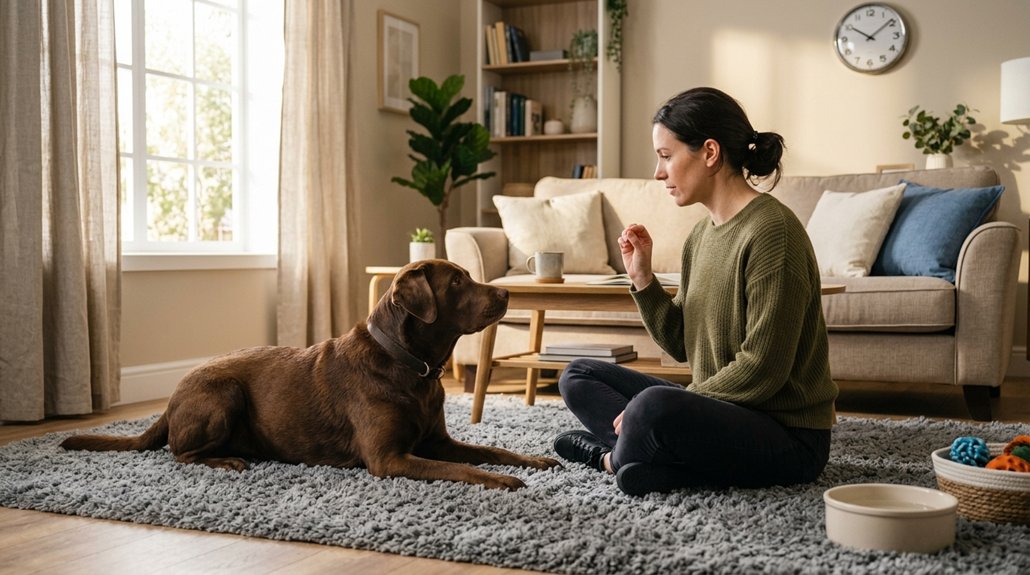
While tackling training challenges is essential, expert help can greatly enhance your dog’s journey to calmness. Seeking a trainer consultation provides tailored methods to address your dog’s specific needs. A professional can perform a thorough behavior assessment to identify underlying issues affecting calmness. Consider engaging in these expert resources:
- Free Post Adoption Consultation: Offered by organizations like the San Diego Humane Society, these sessions can address newly adopted pets’ behavior challenges.
- Online Classes: Options like Reactive Rover focus on teaching dogs to remain calm in exciting situations, helping you practice effective strategies.
- Private Lessons: Positive reinforcement trainers customize advice, ensuring exercises suit your home environment.
Investing in expert advice empowers you to maintain your dog’s calm demeanor.
Frequently Asked Questions
What Is the 3-3-3 Rule With Dogs?
The 3-3-3 rule helps you understand your puppy’s adjustment process. Expect initial anxiety triggers in the first three days, gradual settling in three weeks, and by three months, a well-adjusted dog. Patience and support are essential.
How to Teach a Dog to Self-Calm?
Imagine a peaceful garden. Teach your dog self-soothing techniques as you’d nurture plants: with relaxation exercises like “Go to Mat.” Use cues like “settle,” creating consistent comfort. You’ll cultivate calmness with patience and gentle guidance.
What Is a Red Flag Puppy’s Behavior?
You’ll notice red flag behaviors like excessive barking or puppy anxiety signals. These include destructive chewing, impulsive jumping, or submissive urination. Address these early on with proper training to help your puppy grow into a well-adjusted dog.
What Dog Breeds Are Naturally Calmer?
You might think all dogs are energetic, but some breeds stand out for their calm behavior. Breeds like the Basset Hound, Shih Tzu, and Great Dane naturally exhibit relaxed characteristics, promoting peaceful home environments.
Conclusion
Creating a calm home environment for your dog isn’t just a possibility—it’s a rewarding journey. You may worry that calming exercises take too much time, but integrating simple routines and rewarding calm behavior can seamlessly fit into your schedule. Consistency is key, and with practice, you’ll notice remarkable changes. If challenges persist, don’t hesitate to seek expert guidance. Remember, patience and persistence create a harmonious home where both you and your furry friend thrive.