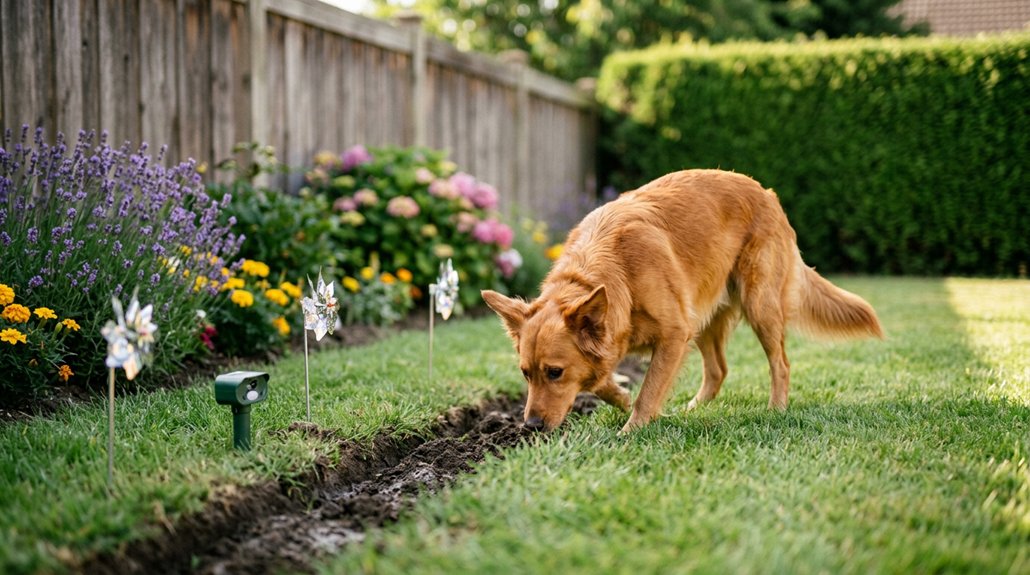
To stop your dog from digging in the yard, understand their natural instincts and provide appropriate outlets. Designate a specific digging zone with enticing toys and loose soil. Use positive reinforcement to encourage digging there, and employ training techniques like redirecting and rewarding proper behavior. Stay engaged with your dog through regular exercise and mental stimulation to curb unwanted digging. Explore community resources and yard modifications for long-term solutions. Discover more strategies to foster harmony in your outdoor space.
Key Takeaways
- Designate a digging zone with loose soil and toys to focus natural instincts.
- Engage in daily physical activities and mental stimulation to reduce energy-driven digging.
- Use verbal commands and positive reinforcement to discourage unwanted digging behavior.
- Install physical barriers to isolate and protect non-digging areas in the yard.
- Participate in dog training classes and online forums for support and behavior modification strategies.
Challenges With Dog Digging in Your Yard
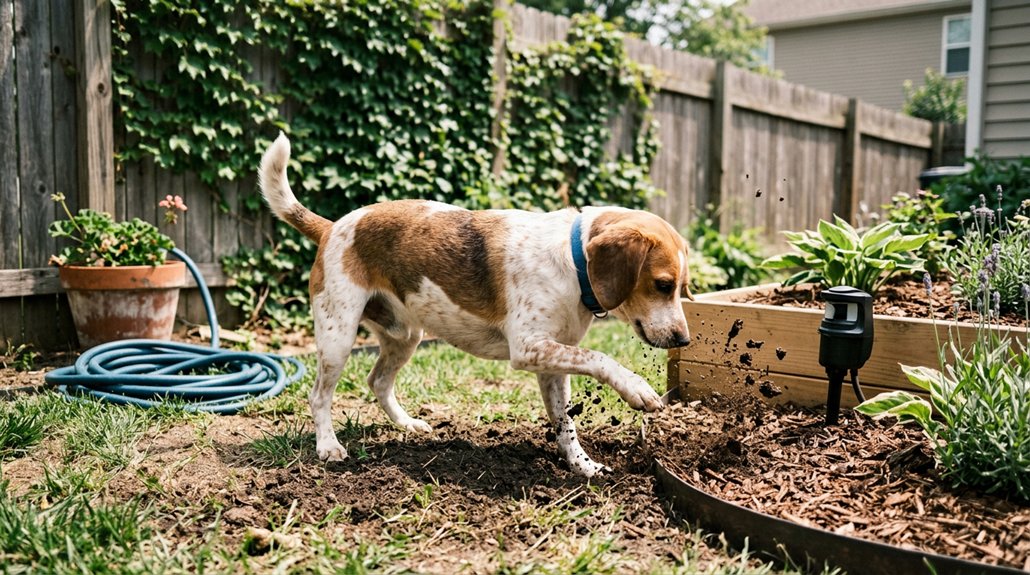
When dealing with the challenges of dog digging in your yard, it’s important to understand that this behavior isn’t simply a nuisance, but rather a manifestation of natural instincts and unmet needs. Considering the financial impact, with potential damage costs exceeding $1,000, recognizing the digging dangers is vital. A thorough behavioral assessment can offer insights into the specific triggers for your dog. Whether it’s due to insufficient exercise, boredom, or attention-seeking, identifying these factors is essential. Implement strategies like designated digging zones and using barriers to safeguard valuable landscaping. By empathetically addressing both physical and emotional needs, and understanding what’s prompting your dog’s actions, you can develop a more effective and compassionate approach to manage this behavior.
Understanding the Instinct Behind Digging
To effectively address your dog’s digging habits, it’s essential to understand that this behavior is often rooted in natural instincts like scent detection, temperature regulation, and the urge to bury. Dogs, especially active breeds, might dig to alleviate boredom or respond to environmental triggers such as extreme temperatures or the presence of burrowing animals. By recognizing these instinctual and environmental motivations, you can implement targeted strategies like providing dedicated digging zones or enhancing mental and physical activities to positively channel their energy.
Natural Canine Instincts
Even though digging can be a frustrating habit for pet owners, it’s important to understand that this behavior is deeply rooted in a dog’s natural instincts. The behavioral triggers for digging often stem from instinctual urges to hunt or create shelter. Dogs explore scents in the ground driven by their acute sense of smell, enthusiastic to unearth hidden odors or small creatures. Additionally, they’re compelled to dig to regulate temperature, uncovering cool soil during heat or warmer dirt when it’s cold.
Certain breeds, like terriers, have stronger inclinations to dig due to their historical roles. This behavior isn’t just instinctual; it’s also a response to inadequate stimulation. When dogs lack physical and mental activities, digging provides them an outlet for boredom or stress. Understanding these factors can help you manage and redirect their digging habits effectively.
Reasons for Yard Digging
Although it might seem frustrating, understanding the reasons behind your dog’s yard digging is essential in addressing this behavior effectively. Dogs dig due to factors like boredom, excess energy, or environmental triggers. The behavior is often tied to instinctual drives, particularly in breeds like terriers. Identifying the cause can help you provide digging alternatives and tailor strategies that meet your dog’s needs.
Common Causes | Dog Behavior | Digging Alternatives
— | — | —
Boredom | Excess Energy | More Playtime
Breed Instincts | Natural Digging Urge | Sandboxes
Weather | Temperature Regulation | Shaded Areas
Neglect | Attention-Seeking | Interactive Toys
Loneliness | Lack of Socialization | More Walks
Address these triggers with exercise, play, or socialization, offering both understanding and solutions tailored to your dog’s natural urges.
Effective Training Techniques for Redirecting Digging
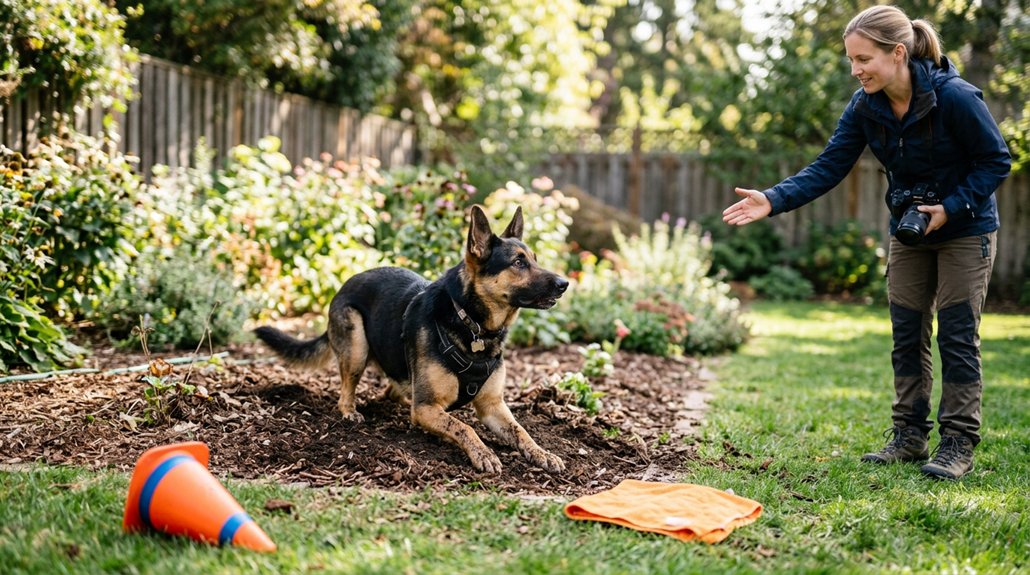
To effectively redirect your dog’s digging habits, it’s essential to consistently apply positive reinforcement, ensuring they associate the right behaviors with rewards. When outdoors, supervise your dog closely so you can promptly intervene with a firm “No!” and guide them to their designated digging area. By structuring your training sessions with patience and encouragement, you’ll create a more enjoyable and constructive outdoor experience for both of you.
Consistent Positive Reinforcement
Consistent positive reinforcement is key in redirecting your dog’s digging behavior effectively. Implementing behavior modification through reward systems requires timely and strategic actions. When your dog digs in an approved area, immediately provide praise or a treat to reinforce this choice, ensuring they associate the behavior with positive outcomes. Use a clicker to precisely mark desirable digging; it aids your dog’s understanding substantially. Supervision during outdoor time is essential—you’ll be ready to redirect them to appropriate spots if needed. Promptly guide them from undesired places to designated digging zones and reward accordingly. Also, regularly encourage interaction with toys and engaging activities in these areas. By maintaining this level of attention and encouragement, you’ll successfully modify your dog’s digging behavior.
Redirected Digging Habits
Anyone who’s ever dealt with a digging dog knows how frustrating it can be, yet these behaviors can often be redirected with the right techniques. One effective approach is to provide digging alternatives, like a designated digging area. A sandbox or dirt box, at least 12 inches deep, encourages natural instincts. Hide toys or treats to make it appealing, offering a constructive behavior modification. Consistent supervision is essential. When your dog starts to dig improperly, use a firm “No!” or a gentle water spray to deter them, immediately guiding them to the approved spot. Reinforce positive behavior with praise and rewards when they dig in the right place. Diversify their activities with regular walks and play to manage excess energy contributing to unwanted digging.
Supervised Outdoor Time
Guiding your dog through supervised outdoor time is a key strategy for managing and redirecting unwanted digging behaviors. Supervised exploration allows immediate intervention, redirecting your dog to dig in designated areas with consistent verbal commands and positive reinforcement like treats. Focus on engaging your pup with toys or structured activities to keep the digging boredom at bay. This outdoor engagement should include interactive play and mental stimulation, such as puzzle toys, which cleverly divert their attention from disruptive digging. Through regular supervision, you’re equipped to identify the root cause behind your dog’s digging—whether it’s a desire for cooler ground or seeking attention—and respond with tailored corrective measures. Ultimately, supervision transforms outdoor time into a constructive and rewarding experience for both you and your furry friend.
Managing Your Dog’s Energy With Engaging Activities
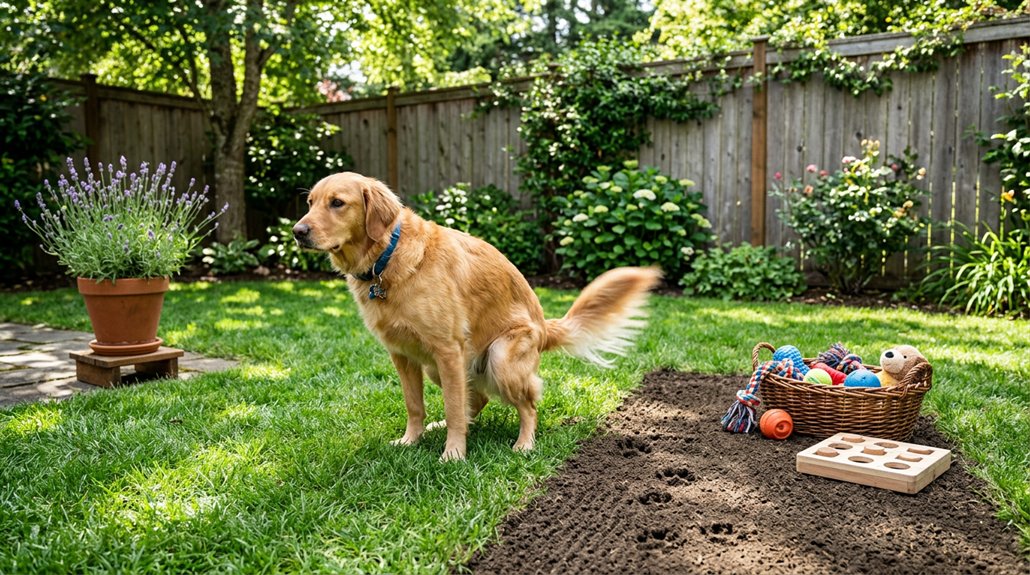
Many dogs, despite their varied breeds and temperaments, have a deep-seated need to expend their energy through engaging activities, which can greatly curb undesirable behaviors like digging. Maintaining ideal energy levels is essential; daily walks covering 3-5 miles are excellent for burning excess energy. Incorporating engaging activities like dog puzzles stimulates your dog’s mind, helping reduce boredom-related digging. Interactive games such as fetch and tug-of-war not only provide physical exercise but also strengthen your bond. Mental stimulation through these activities diverts attention from unwanted digging. Regular playdates offer social interaction that many dogs crave, channeling their energy positively. By thoughtfully managing your dog’s energy, you create a more harmonious environment, reducing destructive tendencies in your yard.
Establishing a Dig-Friendly Zone for Your Pet
Creating a dig-friendly zone for your pet can be an effective strategy to channel their natural digging instincts into a controlled and acceptable area. Designate a specific area in your yard, at least 15’ x 20’, as a focused dog digging zone, ensuring it offers a safe space where your pup can indulge this behavior. Fill the spot with loose, moistened soil and hide toys or treats to motivate them. A dirt box or sandbox can provide a more controlled environment. Supervise your dog and reinforce appropriate behavior with rewards when they dig in the designated area. If they start digging elsewhere, gently redirect them back, consistently reinforcing this positive behavior until the habit takes hold.
Yard Modifications to Prevent Unwanted Digging
To effectively prevent unwanted digging in your yard, it’s crucial to implement strategic modifications that cater to both your dog’s instincts and your desire for a well-maintained space. Start by designating a specific 15’ x 20’ digging area tailored to their natural digging habits. Isolating this area with a fence can keep the dog focused there and reduce disruption elsewhere. Enhance your dog’s outdoor enrichment by burying toys or bones, turning the area into an engaging treasure hunt. In problem areas, patio blocks act as barriers to physically limit your dog’s access to unapproved zones. Meanwhile, maintaining robust grass health guarantees the yard stays attractive and safe. These adjustments provide a balanced environment for all.
Utilizing Tools and Community Resources for Long-Term Solutions
While it might seem challenging to curb your dog’s digging tendencies, utilizing the right tools and tapping into community resources can offer effective, long-term solutions. Start by using products like the Zone Protects No Holes Digging Dog Prevention Spray for targeted area deterrence. Prevention strategies can be further supported by engaging in local community workshops, where pet training experts provide personalized behavioral advice. Leverage online platforms to exchange experiences and insights with fellow dog owners. Designing a designated digging zone is another viable solution. Community workshops often share successful designs and preferred materials, enhancing your setup.
Here’s a helpful overview:
| Tools & Resources | Benefits |
|---|---|
| Digging Prevention Spray | Covers large areas for distraction-free landscapes |
| Dog Training Classes | Offers tailored behavioral modification techniques |
| Online Forums | Provides shared experiences and support |
| Dog Meet-ups | Facilitates exchange of tips and resources |
Frequently Asked Questions
What Stops Dogs From Digging Holes in the Yard?
To stop your dog from digging holes, effective dog training is essential. Introduce designated digging areas, provide yard barriers like wire or rocks along fences, and use commands consistently. Make certain they get enough exercise and mental stimulation daily.
What Dog Breeds Are Prone to Digging?
So, you’re wondering which breeds are born with a natural flair for excavation. Terriers and Dachshunds have strong digging instincts. They’re searching for anxiety relief or outdoor enrichment. Proper training techniques can manage these breed tendencies effectively.
Does White Vinegar Stop Dogs From Digging?
White vinegar’s effectiveness as a deterrent varies. Some dogs find its scent unpleasant, discouraging digging. However, if it doesn’t work, explore alternative methods like providing designated digging areas or using commercial deterrents with varying success.
What Smells Deter Dogs From Digging?
When life gives you lemons, use their citrus scents to keep dogs from digging! Essential oils like citronella or eucalyptus act as scent barriers, deterring the behavior. Just remember, they’re most effective with regular application and monitoring.
Conclusion
Think of your yard as a canvas, where your dog’s digging is an unfinished masterpiece. By understanding their instincts, you can guide them to create a harmonious garden, rather than a chaotic one. Redirect their energy with tailored training and enriching activities. Build a sanctuary with a dedicated digging zone, and make subtle yard modifications to prevent unwanted escapades. By embracing community resources, you become the conductor of this symphony, transforming chaos into a well-orchestrated rhythm.