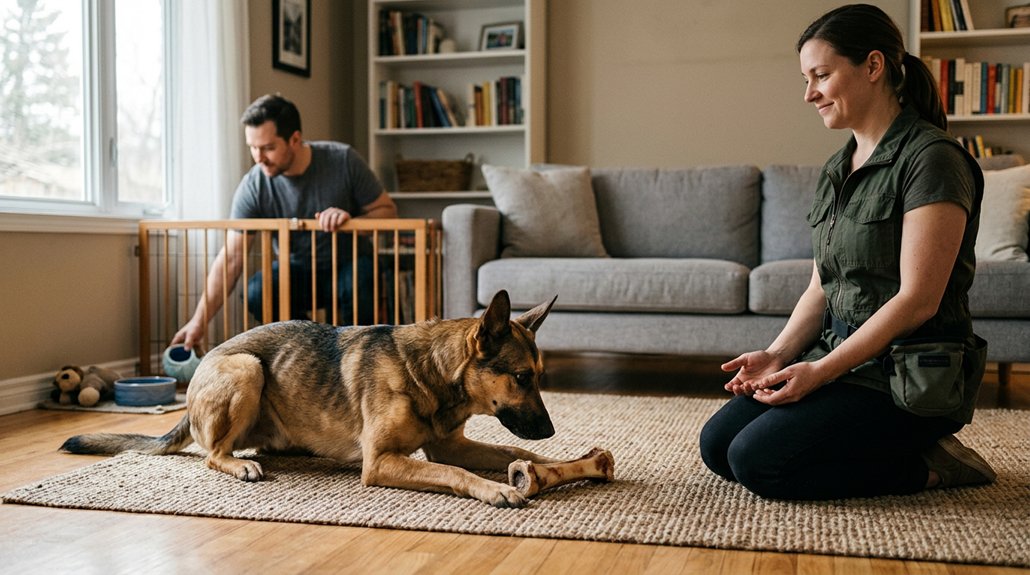
To manage resource guarding in dogs, start by identifying triggers and monitoring guarding behaviors. Use positive reinforcement, beginning with low-value items, to encourage relinquishing guarded items and desensitize aggression. Create a guarding-safe environment by removing high-value items from accessible areas and establishing structured feeding zones. Consider consulting a professional trainer for severe cases, as expert guidance is essential in addressing aggressive behaviors effectively. By continuing, you’ll find extensive strategies for managing and preventing guarding behaviors.
Key Takeaways
- Identify and eliminate triggers by observing and understanding the dog’s guarding behaviors and common stressors.
- Use positive reinforcement training, teaching commands like “drop it” and rewarding relaxed behavior near guarded items.
- Create a guarding-safe environment with designated feeding areas and secure spaces to reduce competition and stress.
- Consult a professional trainer or veterinarian for severe aggression or sudden behavioral changes.
- Socialize puppies early and manage resources consistently to prevent the development of guarding behaviors.
What Is Resource Guarding in Dogs?
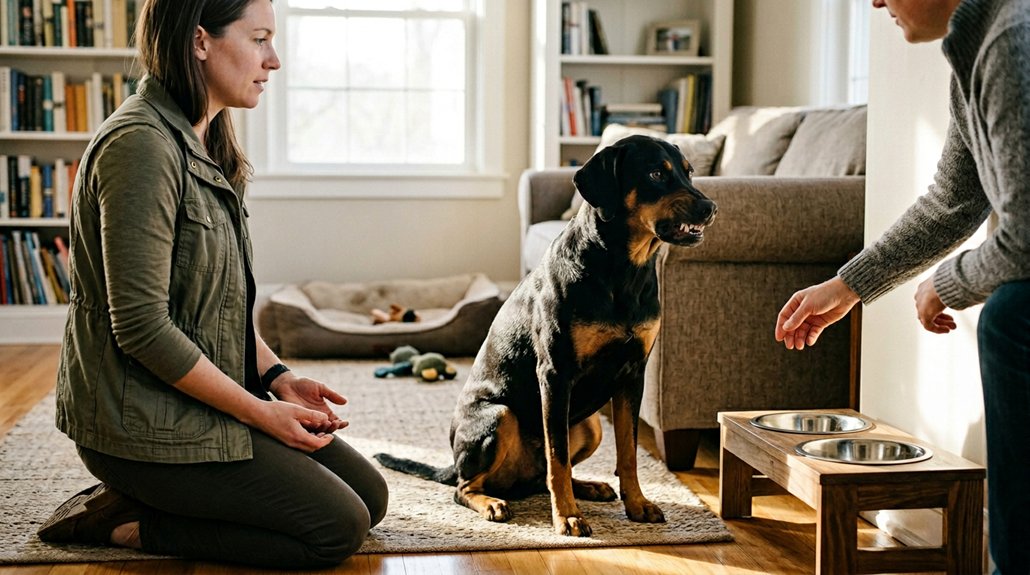
Resource guarding in dogs, also known as possessive aggression, is a behavioral issue where dogs exhibit protective aggression over valuable items like food, toys, resting areas, or even certain people. Approximately 15.3% of dogs display these behaviors, underlining its prevalence. Dogs may growl, snap, or adopt a stiff posture, signaling defensiveness. This behavior isn’t breed-specific; any dog, regardless of background, might exhibit resource guarding if not addressed appropriately.
Early recognition of subtle signals, like side-eyeing or braced posture, is essential in preventing negative consequences, such as escalating aggression or unsafe interactions. Intervention techniques focus on desensitization and counter-conditioning, teaching dogs to associate positive experiences with the presence of a perceived threat. Proper intervention can markedly reduce guarding behaviors and improve safety.
Why Do Dogs Guard Valuable Resources?
Understanding the reasons behind a dog’s instinct to guard valuable resources involves examining both evolutionary and environmental influences. Evolutionary instincts stem from a dog’s ancestral need to secure food, territory, and companions from threats. Genetic predisposition plays a role, with some breeds more prone to guarding due to protective traits. Dogs’ past experiences notably impact their behavior; scarcity or negative interactions during possession can heighten guarding tendencies. Additionally, inadequate socialization during early developmental stages fosters competitive and defensive behaviors over resources. Emotional responses like fear and anxiety about losing cherished items frequently trigger aggressive guarding. Recognizing these causes is essential for developing effective strategies to manage resource guarding in dogs, enhancing their interaction with humans and other animals while ensuring safety and harmony.
How to Identify Guarding Triggers in Dogs
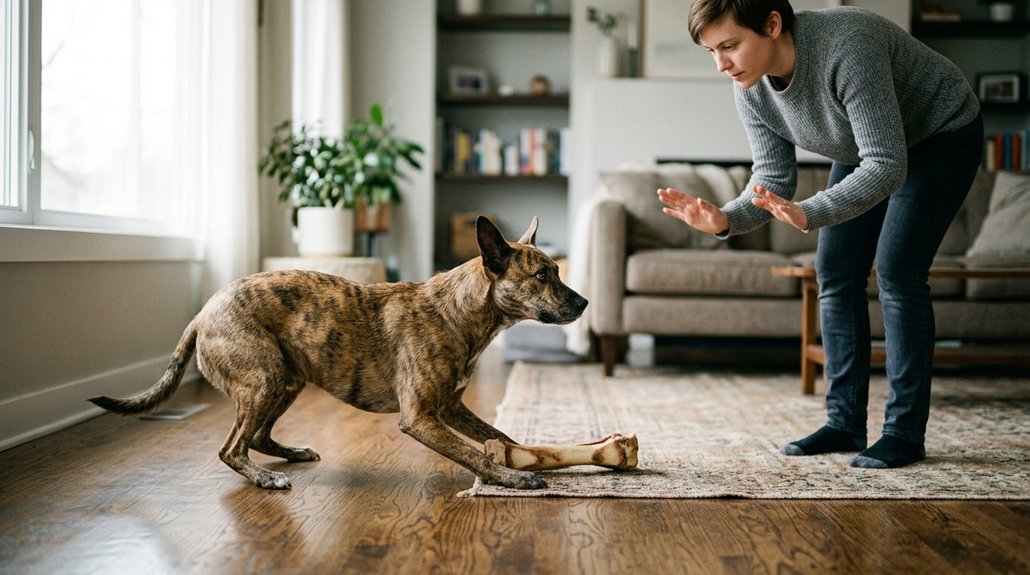
To effectively manage resource guarding in dogs, it’s critical to identify common triggers such as food, toys, or new household additions that might heighten a dog’s sense of competition. Be vigilant for subtle warning signs like stiff body posture or growling, as these behaviors can indicate a dog’s discomfort or defensiveness. Understanding these triggers and signs allows you to address issues early, reducing the likelihood of escalated guarding behaviors.
Common Triggers Overview
When attempting to identify resource guarding triggers in dogs, it’s crucial to observe specific behaviors and environmental factors that influence their defensive responses. Commonly, food sources such as bowls, treats, and bones act as significant triggers. Similarly, toy competition can arise, especially when multiple pets vie for the same plaything. Space issues are evident as dogs often guard familiar territories, which might extend to their interactions with humans. Your dog’s past experiences can also shape resource guarding tendencies—scarcity in their history can amplify their protective instincts. Introducing new pets or even changes in household dynamics can increase perceived threats. Observing situational cues like a dog’s reaction to approaching humans or pets during meals or play can reveal these triggers.
Subtle Warning Signs
How can you recognize the subtle warning signs of resource guarding in dogs before behaviors escalate? It’s essential to identify these early warning signs to manage potential conflicts effectively. Observe for body language cues—these precursors often point to impending guarding behaviors.
- Stiff body posture: An unwavering stance can indicate tension over a perceived threat to a valued item.
- Whale eye (hard staring): Dogs may show the whites of their eyes in a hard stare, signaling discomfort and readiness to defend.
- Defensive movements: Watch for actions like backing away or placing a paw over the item, indicating protective intent.
- Weight shifting and bracing: Subtle postural changes suggest the dog is preparing for confrontation.
Identifying these signals can help pinpoint triggers like competition, anxiety, or past negative experiences.
Spotting Guarding Signs: What to Look For
Identifying resource guarding signs in dogs is essential for early intervention and management. It’s a common guarding myth that only overt aggression marks resource guarding. In reality, subtle cues like freezing, stiff posture, or a hard stare can indicate a dog’s defensiveness. Reinforcement techniques for managing these behaviors begin with recognizing such signs. Dogs may eat quickly, reposition items, or block access, showing a perceived threat to their possessions. A braced body and “whale eye”—where the eye whites are visible—signal heightened alertness. These signs aren’t breed-specific; influences stem from a dog’s upbringing and experiences. Carefully monitoring interactions with high-value resources, be it food, toys, or even people, is vital in identifying these underlying behavioral concerns.
Using Positive Reinforcement to Curb Guarding
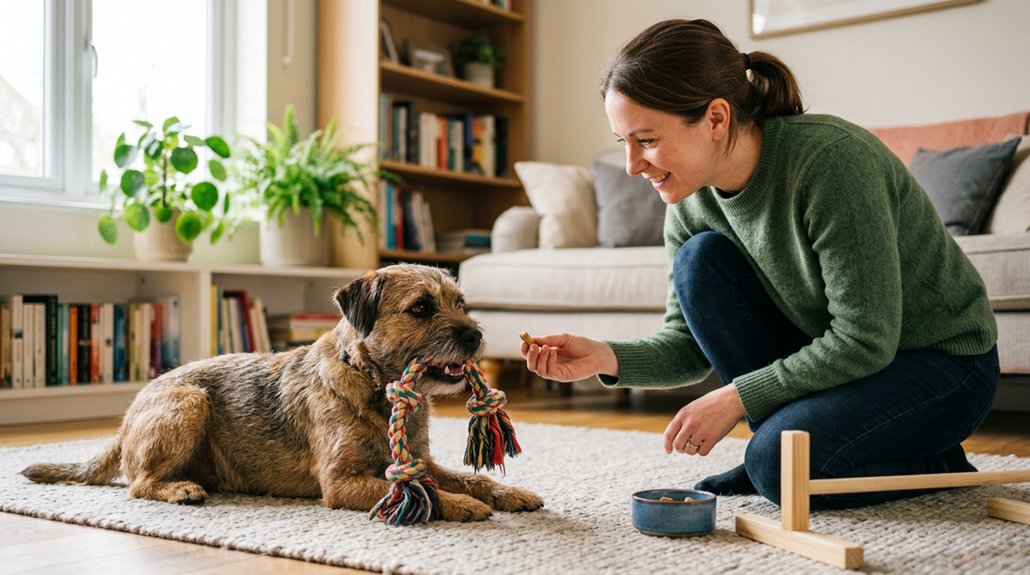
Recognizing subtle signs of resource guarding provides a foundation for altering these challenging behaviors. Positive reinforcement is vital for curbing guarding by associating non-guarding behaviors with rewards. When your dog remains calm as you approach their possessions, reward them. Here’s how to start:
Recognizing resource guarding signs is crucial for improvement; reward calmness to encourage positive behavior.
- Use low-value items: Initiating training with items of less worth can diminish guarding intensity.
- Teach commands: Utilize commands like “drop it” and “leave it” to encourage relinquishing items.
- Apply gradual desensitization: Reward your dog for tolerating people near their guarded items.
- Ensure training consistency: Regular sessions cement desired behaviors, steadily building mutual trust.
Consistent reinforcement of rewarded behaviors is fundamental, progressively overcoming guarding tendencies through a therapeutic, structured technique.
Creating a Guarding-Safe Environment at Home
Establishing a guarding-safe environment at home is essential for managing your dog’s resource guarding behavior. First, identify high-value items your dog guards and remove these from accessible areas. Designate structured feeding stations where each dog can eat without competition, reducing stress and guarding triggers. Incorporate safe zones by using gates or closed doors—these spaces should be free from potential threats to your dog’s resources, allowing them to feel secure. Additionally, maintain a schedule for training sessions employing positive reinforcement to encourage desirable behaviors. Keep low-value treats or toys nearby to facilitate quick exchanges, helping divert your dog’s focus from guarded resources. These strategies collectively contribute to a safe, controlled environment, minimizing guarding behaviors effectively.
When to Call a Professional Trainer
If you notice sudden changes in your dog’s behavior or if resource guarding escalates to aggression, it is crucial to call a professional trainer. They use evidence-based strategies, such as desensitization and counterconditioning, to address aggression safely and effectively. Consulting a trainer can also help identify underlying medical issues and improve household dynamics, particularly around children or other pets.
Recognizing Behavior Changes
Identifying behavior changes in your dog can be essential for their well-being and safety. Behavioral signals like increased aggression or defensive posturing often serve as red flags, indicating possible underlying issues. Watch for:
- Sudden guarding behavior: Could point to stress or medical concerns.
- Emotional changes: Signs of anxiety or fear need attention.
- Altered interactions with family members: Particularly in homes with children, maintaining safety is critical.
- Avoidance or clinginess: Shifts in your dog’s social behavior merit investigation.
Consult a professional trainer when these behaviors emerge. They’ll guide you with desensitization and counterconditioning techniques to manage resource guarding effectively. Avoid punishment methods, as they can worsen the situation and lead to compliance issues. Early intervention guarantees a harmonious and safe environment for everyone.
Addressing Aggression Safely
When addressing aggression linked to resource guarding in dogs, it’s imperative to engage a professional trainer to guarantee safe and effective management. Aggressive actions like growling, lunging, or snapping indicate the need for expert intervention. Professional trainers specialize in trigger management, identifying specific stimuli that provoke your dog’s response. They craft intervention techniques tailored to your dog’s unique behavioral history, maximizing successful modification. Trainers use positive reinforcement methods, avoiding punishment which can inadvertently heighten aggression. Additionally, consistency across household members is essential. Trainers educate families in safe handling techniques to maintain uniformity in managing such behaviors. It’s also advisable to consult a vet about sudden behavioral changes, ensuring no medical issues are contributing to aggressive resource guarding.
Strategies to Prevent Resource Guarding in Puppies
To effectively prevent resource guarding in puppies, it is vital to implement a range of strategies that are evidence-based and clinically informed. Early puppy socialization is important; exposing them to various environments helps reduce possessive behaviors towards resources. Implement structured resource management by guaranteeing consistent availability of necessities like food and toys, minimizing competition-induced guarding tendencies. Gradual desensitization, introducing low-value items, and rewarding positive interactions fosters willingness to relinquish objects. Strengthening obedience skills through regular practice of “drop it” and “leave it” commands further promotes stress-free item sharing. Also, plan:
- Structured feeding routines to minimize competition.
- Separate spaces for play to encourage healthy sharing habits.
- Consistent availability of resources to prevent possessive tendencies.
- Desensitization techniques to create positive associations with sharing.
Frequently Asked Questions
How Do You Break Resource Guarding in Dogs?
To break resource guarding in dogs, use positive reinforcement and training techniques. Implement behavior modification with gradual exposure to triggers. Encourage calm behavior around valued items, reinforcing commands like “drop it” through consistent practice and rewards.
What Is the 7 Second Rule for Dogs?
The 7 Second Rule involves observing a dog’s behavior for at least seven seconds to gauge comfort levels. Evidence shows over 75% of owners notice reduced guarding incidents, enhancing training techniques and minimizing aggression in resource-heavy situations.
Do Dogs Ever Get Over Resource Guarding?
Your dog can improve resource guarding with behavior modification and training techniques. While dogs might not completely eliminate guarding tendencies, consistent, evidence-based methods can make their behavior more manageable, enhancing their interactions from a clinical perspective.
What Is the Best Approach for Resource Guarding?
The best approach combines preventive training and environmental management. You’ll identify triggers, use positive reinforcement, and desensitize your dog. Employ evidence-based strategies, ensuring access to ample resources. Consult a professional for a personalized behavior modification plan.
Conclusion
You’re not alone in facing the Herculean challenge of managing resource guarding in dogs. By identifying triggers with surgical precision, using evidence-based positive reinforcement, and crafting an environment as safe as a fortress, you can transform a tense situation into one where peace reigns supreme. But remember, if the behavior spirals into a never-ending saga, don’t hesitate to call in the cavalry—those experienced trainers can be your secret weapon in securing harmony.