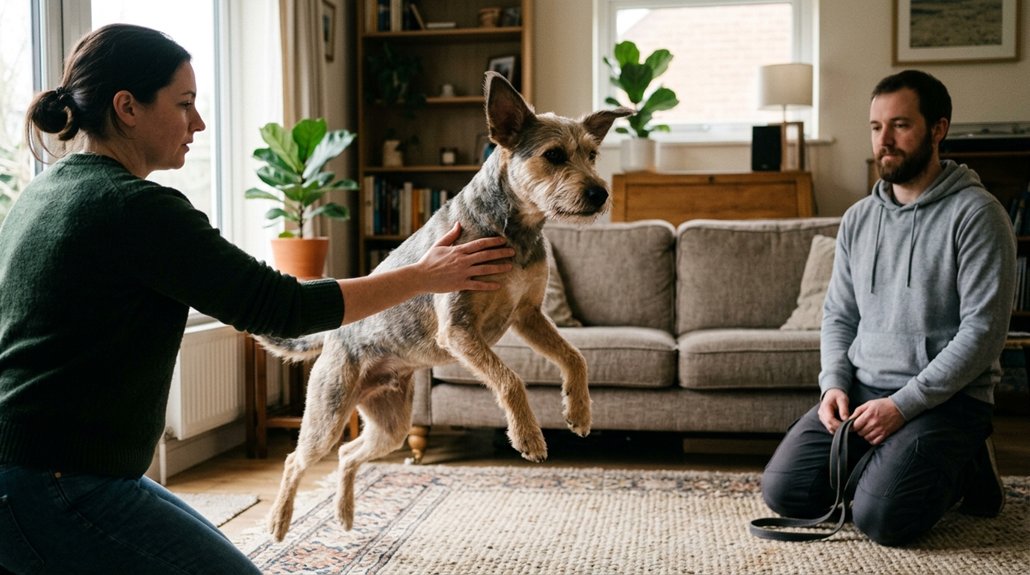
To stop your dog from jumping on people, recognize the triggers and prepare to ignore the behavior by avoiding eye contact or interaction. Employ a consistent management plan, using tools like crates or practicing polite greetings with a sit command. Reward calm actions with treats and guarantee the whole family applies these techniques. If needed, seek guidance from professional trainers. Keep learning to uncover more about effective strategies for managing this behavior.
Key Takeaways
- Ignore your dog by avoiding eye contact and touch when it jumps on you.
- Use a leash and the sit command to manage greetings with guests.
- Reward calm, non-jumping behavior with treats and praise consistently.
- Recognize and manage jumping triggers like visitor arrivals to reduce incidents.
- Seek professional trainer advice for personalized behavior modification strategies.
Immediate Steps to Stop Jumping
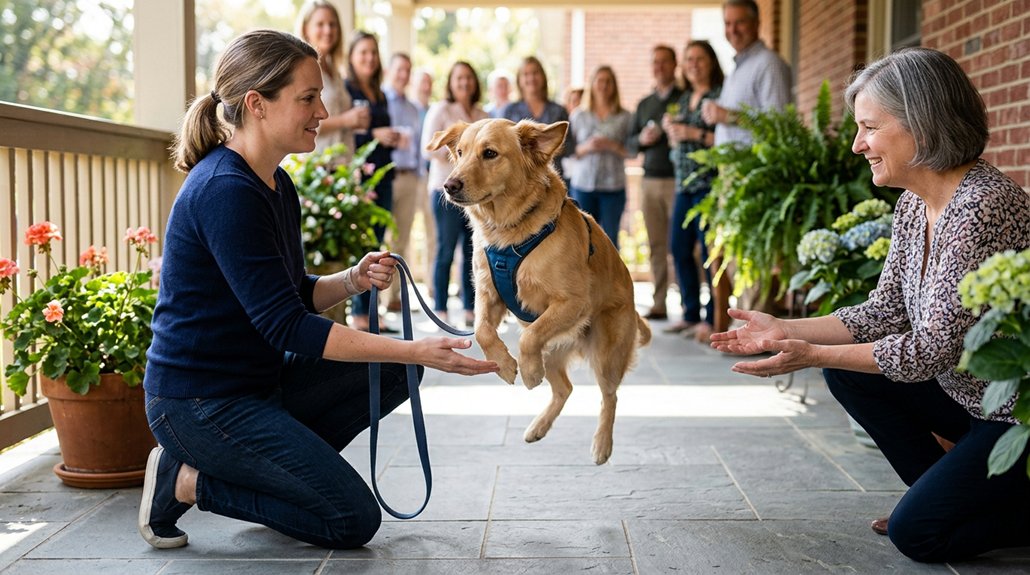
When your enthusiastic pup springs up to greet guests, act decisively to curb this excitable behavior. Recognize jumping triggers—such as arriving home or a visitor’s entrance—and prepare to ignore such behaviors from the start. Consistency is key. When your dog leaps, refrain from eye contact, touching, or speaking. This withdrawal of attention removes the reinforcement that encourages jumping. It may seem challenging, but ignoring is vital for effective behavior modification. Anticipate an initial increase in jumping, known as an extinction burst. Stay firm; significant improvements often surface within a week. Engage all family members in this strategy to guarantee uniform training. Success lies in your collective commitment to these immediate steps, decisively addressing unwanted behaviors swiftly.
Build a Management Plan for Consistent Results
After addressing immediate strategies to halt jumping, it’s time to establish a solid management plan to guarantee these results last. Start with crates management; use crates or separate rooms to confine your dog when guests arrive, preventing unwanted behavior. Implement socialization strategies by using a leash and teaching your dog to sit calmly when greeting visitors. Reward this behavior with treats, reinforcing positive habits. Consistency is key—ensure all family members apply the same management techniques. When jumping occurs, ignore it by turning away, helping to extinguish the behavior. Enlist a willing assistant to practice polite greetings, insisting your dog remains seated. With these methods, you’ll create an environment conducive to learning and reinforce proper social interactions.
Effective Training Techniques to Reduce Jumping
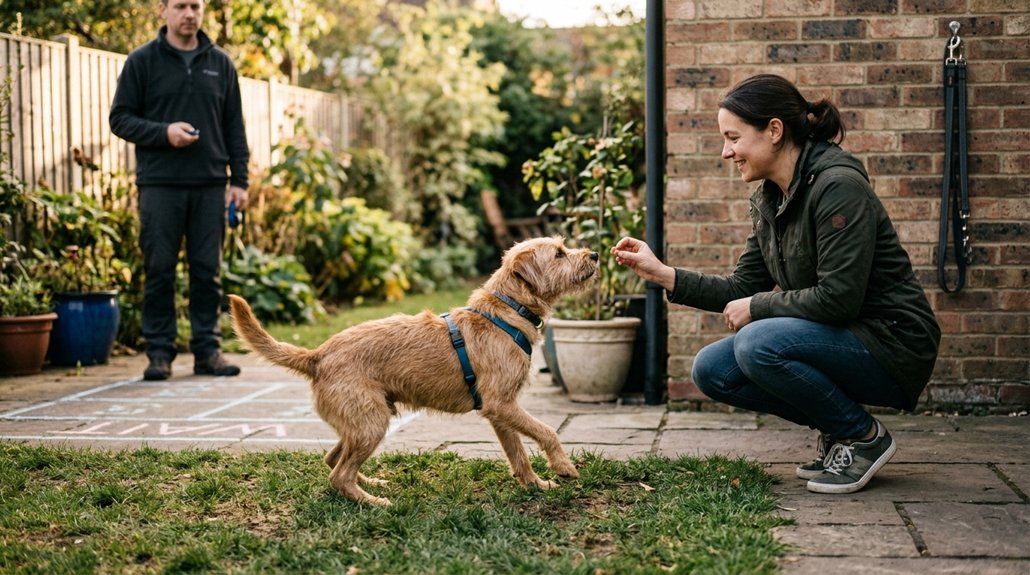
To effectively reduce your dog’s jumping behavior, focus your training efforts on consistent application of proven techniques. Recognize jumping triggers such as excitement and arrival of guests, and establish clear greeting etiquette. Consistency is key—ensure everyone in the household adheres to the same standards. Utilize the “No Touch, No Talk, No Eye Contact” rule to teach that jumping does not gain attention. Reinforce positive behavior when all paws remain on the ground by rewarding with treats and praise. Introduce the sit command to replace jumping, fostering calm interactions.
Consistency is key—use the “No Touch, No Talk, No Eye Contact” rule to reduce jumping behavior effectively.
- Use gradual desensitization by staging low-key greetings with friends.
- Establish a calming routine with the sit command when new people arrive.
- Regularly review and enforce consistent rules across all family members.
Offer Positive Rewards Post-Training
Consistency is the north star of effective dog training, especially when it comes to curbing jumping habits. By offering positive rewards, like treats, praise, or toys immediately after your dog refrains from jumping, you reinforce desired behavior. Different reward types are essential—mix verbal praise with physical affection to keep motivation strategies engaging and varied. Always reward your dog when all four paws remain on the ground, clearly connecting calm behavior with the benefit they’ll receive.
Involve all household members in the process to guarantee uniformity. This collective effort enhances your dog’s learning and reinforces behavior in various scenarios. As your dog learns jumping doesn’t equal attention, their focus shifts—over time only exhibiting behaviors that earn them these rewarding moments.
Get Expert Help for Jumping Concerns
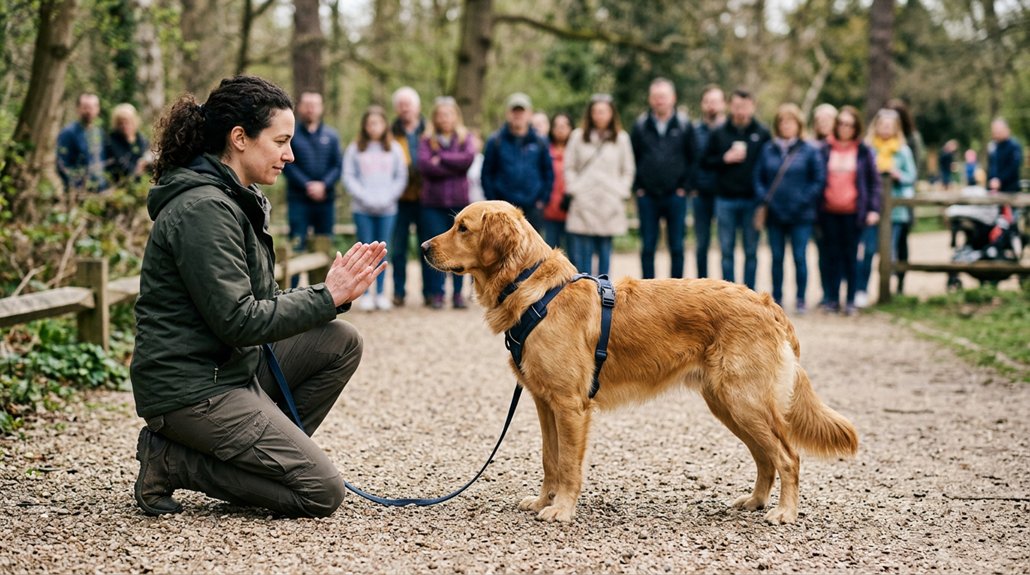
If you’re facing persistent challenges with your dog’s jumping behavior, enlisting expert help can be a game-changer. A trainer consultation offers personalized strategies tailored to your dog’s unique needs. A detailed behavior assessment can uncover underlying issues that contribute to the jumping, allowing for targeted training.
Collaborating with a professional streamlines the learning process by ensuring effective techniques are consistently applied. In addition, consider:
- Seeking group training classes: These provide supervised socialization, teaching your dog proper greeting manners.
- Understanding canine behavior: Expert guidance deepens your grasp of dog communication, enhancing training success.
- Identifying core issues: Professionals spot hidden problems, offering resolutions specific to your dog’s jumping concerns.
Gaining insight from professionals accelerates progress, making the journey smoother for both you and your dog.
Frequently Asked Questions
How Do I Train My Dog Not to Jump on Visitors?
Start by implementing consistent greeting protocols. Teach your dog to sit using positive reinforcement when visitors arrive. Instruct guests to ignore any jumping, rewarding calm behavior only. Consistency among all household members is essential for success.
What Is the 3-3-3 Rule With Dogs?
The 3-3-3 rule outlines how a dog adjusts: three days for settling, three weeks for behavior adjustment, and three months for full acclimation. Use training techniques throughout to effectively manage dog behavior during these phases.
What Are the Signs of ADHD in a Dog?
You might notice signs of ADHD in your dog through hyperactive behaviors, dog anxiety, and constant attention seeking. They don’t settle easily, struggle with training techniques, and seem unable to focus, showing impulsivity in various situations.
How to Stop Your Dog From Jumping up on People?
Utilize positive reinforcement combined with leash training. Consistently reward your dog when all paws remain grounded. Instruct them to sit as an alternative action. Implement uniform rules with everyone, ensuring you don’t inadvertently encourage jumping.
Conclusion
You’ve started the journey to transform your dog’s jumping antics into polite greetings, but what’s next? Imagine the day when unexpected guests arrive, and your dog remains calm, their tail wagging like an orchestrated symphony, earning admiration and treats. You’re closer to that day than you think. Stick with this plan, and with dedication, those chaotic leaps will become a thing of the past. Stay vigilant, stay committed—because the calm, well-mannered dog of your dreams awaits.