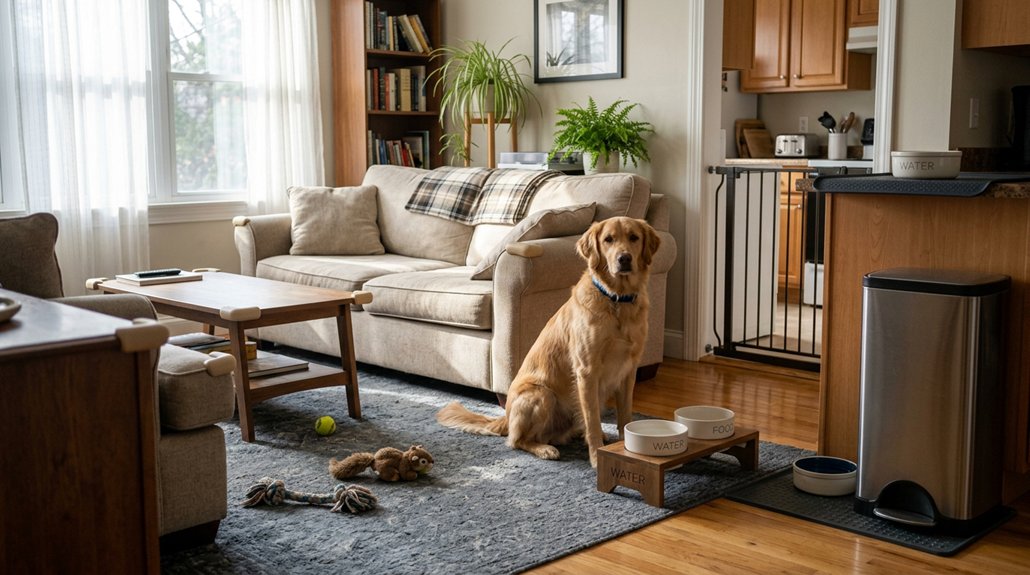
To create a dog-friendly home, prioritize safety by storing hazardous materials out of reach and hiding electrical cords. Choose durable, pet-friendly flooring and designate cozy pet zones with calming colors and soft lighting. Incorporate built-in pet features like elevated feeding stations and discreet litter box enclosures. Maintain tidy spaces with efficient cleaning tools and organize for quick access. Implement secure outdoor areas with shaded spots and fresh water. There’s more to discover for optimizing your space.
Key Takeaways
- Store hazardous materials and cleaning supplies out of reach to ensure a safe environment for dogs.
- Choose durable, pet-friendly flooring like tile or laminate for easy maintenance and accident resistance.
- Designate cozy pet zones with essentials like raised beds and calming colors for comfort and relaxation.
- Install secure fencing and shaded areas outdoors to ensure dog safety and comfort during playtime.
- Utilize organization solutions and cleaning tools like the Dyson cordless vacuum to maintain a tidy home.
Choose Durable, Pet-Friendly Flooring
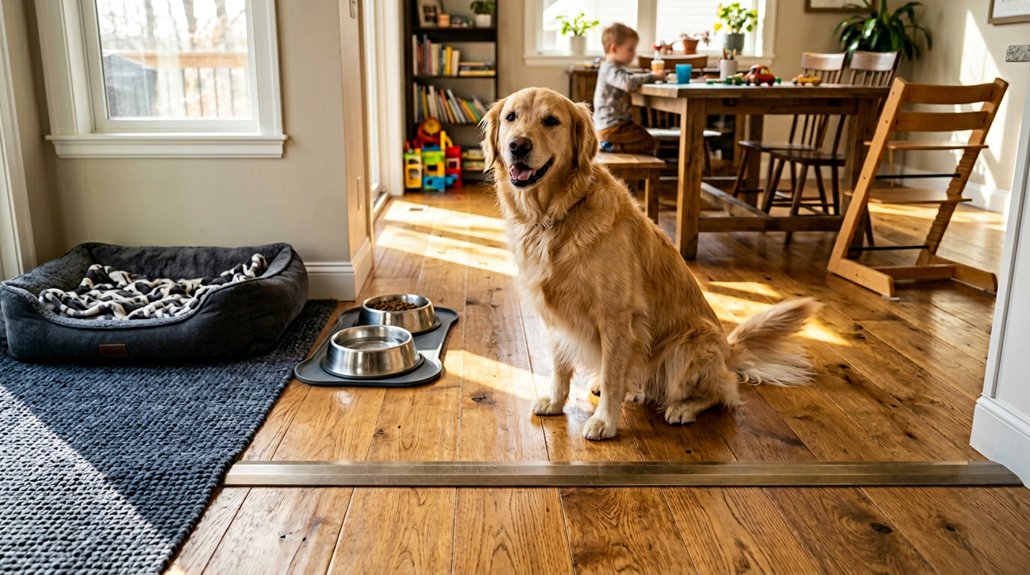
When you’re choosing the right flooring for a pet-friendly home, durability and ease of maintenance should top your list of priorities. Tile options are an excellent choice, offering resilience against scratches and easy cleanup for accidents. Likewise, laminate styles can mimic the look of wood or stone without the vulnerability, making them both stylish and practical. Hardwood benefits include elegance and easy maintenance, especially if you select a harder variety to resist dents and damage. On top of these surfaces, consider rug selections like stain-resistant cowhide or vintage Persian pieces. Not only do they conceal dirt, but they can also add warmth while being pet-proof. Rubber-backed rugs will provide the traction older pets need. These solutions guarantee your floors stay beautiful and functional.
Design Cozy Pet Zones
Creating one or more cozy pet zones in your home is fundamental for your dog’s comfort and well-being. Start by selecting a quiet corner and furnish it with pet zone essentials like a comfortable bed, toys, and possibly a crate, fostering a sense of security. Opt for raised beds to keep your dog off cold floors, ensuring warmth and comfort. Use calming colors in the decor—soft blues or gentle greens—to enhance relaxation. Soft lighting is critical; it helps minimize stress and offers a tranquil retreat during thunderstorms or visits from guests. Make these zones easily accessible, promoting frequent use. By crafting such spaces, you’ll provide a safe haven that’s soothing and essential for managing behavior in various situations.
Incorporate Built-In Pet Features
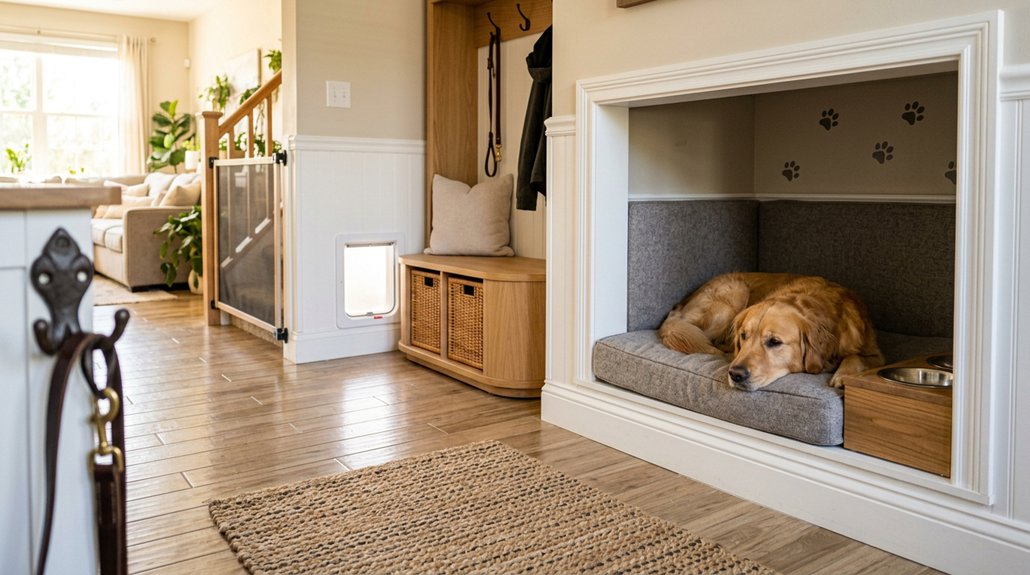
When creating a pet-friendly home, it’s wise to integrate thoughtful built-in features that simplify your daily routine and enhance aesthetics. Consider incorporating pet feeding stations within your kitchen island to streamline meal times and keep spills contained for a tidy dining area. Additionally, discreet litter box enclosures in laundry rooms or closets not only maintain your home’s appearance but also address practical pet hygiene needs effectively.
Integrated Pet Feeding Stations
Incorporating integrated pet feeding stations into your home design can greatly enhance both functionality and aesthetics. By seamlessly building these stations into kitchen islands or cabinetry, you provide a designated space for your dog’s essentials that blends effortlessly with your home’s decor. Using elevated bowls, the stations promote better posture during meals, notably benefiting older or larger breeds by reducing joint strain. Storage solutions integrated within these areas offer a smart way to organize pet food and supplies, keeping your kitchen tidy and clutter-free. Adding spill-proof or splash-resistant surfaces around the feeding station minimizes mess, simplifying clean-up and protecting your flooring. Overall, these thoughtfully integrated features guarantee a harmonious, pet-friendly home where both human and furry needs are efficiently met.
Discreet Litter Box Solutions
Though managing a litter box can often pose a challenge, discreet litter box solutions cleverly integrate these spaces into cabinetry or laundry rooms, effectively camouflaging them while guaranteeing easy access for your furry friend. These hidden litter box options not only blend seamlessly with your home’s decor but also tackle odor management. Furniture-style enclosures resemble decorative storage units, preserving aesthetic harmony. To maintain cleanliness and hygiene, use removable, washable liners inside these enclosures.
Consider custom-built setups with ventilation systems to mitigate odors further, creating a pleasant environment. Incorporating these hidden litter box areas with high-quality surfaces like tile or vinyl helps prevent damage and makes cleanup a breeze. By integrating these solutions, you’ll guarantee that your home stays stylish and pet-friendly.
Ensure Indoor Safety for Pets
Creating a safe indoor environment is essential to ensuring your pet’s well-being, and it begins with some thoughtful adjustments around the home. Start with effective pet proofing strategies by storing hazardous materials like cleaning supplies and medications out of reach on high shelves or in locked cabinets. Use childproof latches to secure any lower cabinets that might house these dangers, minimizing mishaps. Remove or cover any toxic plants—utilize the ASPCA’s Toxic and Non-toxic Plants List to guide your choices. Protect your pet from electrical injuries by hiding electrical cords with cord protectors or behind furniture. Furthermore, maintain a smoke-free environment to shield your pet from the harmful effects of secondhand smoke. These steps form the backbone of a secure haven for your furry friend.
Keep Cleaning Easy and Efficient
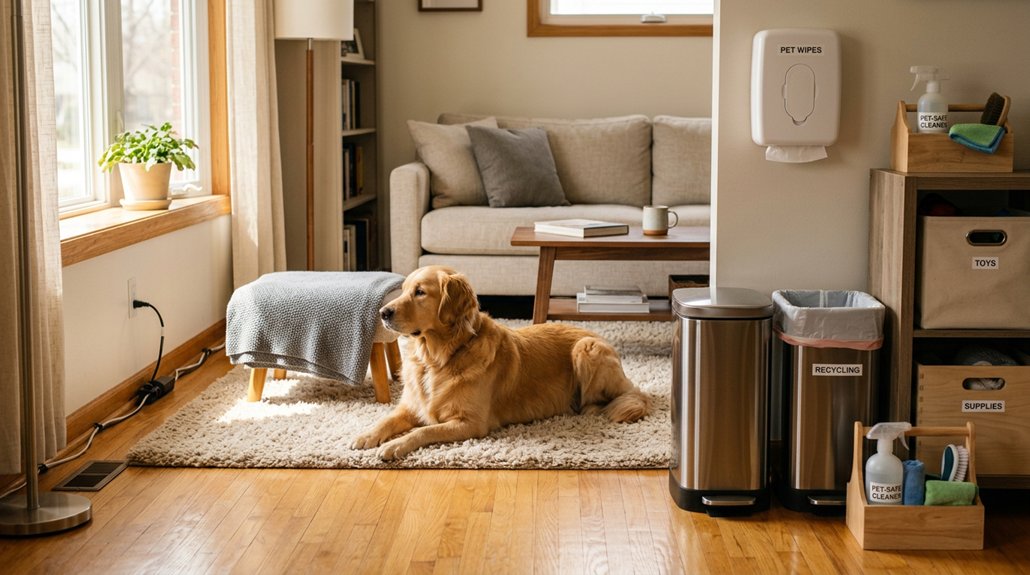
When it comes to keeping your home effortlessly clean despite the presence of pets, implementing smart cleaning strategies is essential. Establishing a pet cleaning schedule can help you maintain a tidy living space with minimal effort. Start by investing in a Roomba vacuum designed for pet hair—it’ll handle daily cleaning and drastically cut down your time spent on fur management. For efficient fur removal from furniture, a Chom Chom Roller works wonders, making fabric cleanup quick between deeper cleans.
Consider using washable slipcovers on your furniture to protect from stains and odors. Machine washable rugs like Ruggable can be easily cleaned, saving you from complex carpet treatments. Finally, brushing your pets outside regularly reduces indoor fur accumulation, enhancing your home’s cleanliness overall.
Make Outdoor Time Safe and Fun
To guarantee your dog’s outdoor time is both safe and enjoyable, start by installing secure fencing with pet-safe latches to prevent any accidental escapes. It’s also essential to provide shaded areas and plenty of fresh water, which help keep your furry friend cool and hydrated, especially during warm days. By combining these safety and comfort measures, you’re creating a controlled environment that encourages fun and exploration while prioritizing your pet’s wellbeing.
Ensure Fenced Play Areas
Guaranteeing your dog’s outdoor play area is secure is vital for both safety and enjoyment. A tall fence, ideally 4-6 feet high, forms the backbone of your escape prevention strategies. It’s important to install pet-safe latches on gates to eliminate accidental openings. Adding regular fenced area maintenance to your routine guarantees that gaps or weak spots, which curious dogs might exploit, are addressed promptly. Inspect the perimeter closely for any vulnerabilities—small openings can lead to big adventures if left unchecked. By securing the play area, you allow your dog the freedom to roam and play safely, granting you peace of mind as they enjoy their outdoor time. Making these proactive adjustments prevents potential escapes and keeps playtime safe.
Provide Water And Shade
It’s important to make outdoor time enjoyable and safe for your dog by making sure they have constant access to water and shade. Establishing good hydration habits is significant, particularly in warm weather. Always provide fresh, clean water to prevent dehydration. Have shade solutions in place, such as trees or canopies, to protect your dog from extreme temperatures. Consider pet-friendly shaded structures like outdoor dog tents or umbrellas. They create comfortable resting spots, helping your dog avoid overheating during extended play. Checking surface temperatures, like asphalt, is essential since hot surfaces can burn their paws. Encourage frequent breaks in shaded areas, letting your dog cool down and recover before continuing their activities. These practices guarantee your dog’s outdoor time is both fun and safe.
Train for Better Behavior at Home
Cultivate a harmonious home environment by training your dog for better behavior. Start with obedience training to establish a consistent routine, ensuring your dog knows when it’s time for walks, play, and bedtime. This routine acts as a foundation for behavioral modification, considerably reducing your dog’s anxiety. Implement positive reinforcement—offer rewards and praise—to encourage desired behaviors and discourage mischief. Short, daily training sessions of 5-10 minutes can sharpen communication between you and your dog, reinforcing commands and curbing negative habits. Use physical barriers like baby gates to limit access to certain areas, maintaining order. Redirect chewing with designated toys, helping your dog learn what’s acceptable to chew, ultimately protecting furniture and personal belongings.
Equip Your Home With Essential Cleaning Tools
With a well-equipped home, managing the messes that come with pets becomes much easier. Start by integrating tools like the Chom Chom Roller to efficiently pick up pet hair, providing an eco-friendly method compared to traditional options. A cleaning schedule should include using Roomba vacuums for automated, effortless hair pickups daily. For air quality, the Germ Guardian Air Purifier is essential, filtering nearly all dust, pollen, and dander, creating a healthier environment. When it comes to tougher messes, the Dyson cordless animal vacuum is invaluable, tackling fur with strong suction and anti-tangle technology. For accidents, Folex effectively handles stains and odors. Finally, make sure you have smart storage solutions to keep these tools ready for quick access when needed.
Frequently Asked Questions
What Is the 7 7 7 Rule for Dogs?
The 7-7-7 rule for dogs advises 7 hours each of sleep, play, and training/socialization daily. It supports dog behavior, offering training tips for exercise needs, home safety, feeding guidelines, socialization strategies, and grooming routines for healthier pets.
What Is the 3-3-3 Rule With Dogs?
The 3-3-3 rule helps manage dog behavior during the adjustment period for rescue dogs. You’ll support them with anxiety management, create safe spaces, use training techniques, guarantee home safety, and introduce socialization methods.
What Is the 10 10 10 Rule for Dogs?
The 10-10-10 rule is your dog’s golden ticket to holistic well-being: 10 minutes of walking, followed by 10 minutes of training for mental gymnastics, and 10 minutes of rest to guarantee pet safety and vigor.
What Smell Do Dogs Hate?
You’ll find dogs often hate citrus scents, vinegar smell, and the peppermint aroma. Lavender oil and coffee grounds can also deter them, while strong spices are unpleasant too. Always make certain these aren’t harmful in your dog’s environment.
Conclusion
Creating a dog-friendly home is like weaving a tapestry of love and practicality. By choosing durable flooring, designing cozy pet zones, and incorporating built-in features, you’re laying the groundwork for a harmonious life with your furry friend. Prioritizing safety, ease of cleaning, and outdoor fun guarantees every moment is cherished. Training and having essential tools at hand complete this masterpiece, turning your home into a haven where both you and your dog can thrive.