Spend at least 30 minutes to 1 hour daily engaging in physical activities like walks or fetch with your dog, along with two hours of quality social interaction. Focus on quality over quantity, using interactive games and training to strengthen bonds. Consistent routines are essential to reduce anxiety, and varying activities tailored to breed and energy levels enhance mental stimulation. A foundation of balanced alone time and social engagement guarantees your furry companion’s happiness. Discover strategies tailored to your lifestyle.
Key Takeaways
- Prioritize 1-2 hours of focused daily exercise, especially for high-energy breeds, to maintain physical and mental health.
- Dedicate at least 30 minutes to 1 hour of active physical and mental exercise each day.
- Ensure at least two hours of daily social interaction to enhance emotional well-being and social enrichment.
- Incorporate quality engagement activities, like interactive games, to strengthen bonds and improve mental stimulation.
- Maintain a consistent daily routine for exercise, feeding, and play to reduce anxiety and support a well-adjusted pet.
Understanding Your Dog’s Time With You
Though it’s tempting to simply spend as much time as possible with your dog, understanding how your time together impacts their well-being is vital. Prioritizing quality over quantity guarantees your dog stays healthy and happy. Engaging in focused play and training strengthens your bond and supports emotional stability. Observing dog behavior, you’ll notice that mental and physical activities, tailored to your dog’s breed and energy level, offer significant benefits. Puppies and active breeds may require 1-2 hours of structured activities, while smaller breeds can be content with shorter engagements. Remember, a balanced time commitment is essential; too much dependency on your presence can lead to separation anxiety. Integrating time alone encourages independence, enhancing overall behavioral health.
Key Factors Influencing Your Dog’s Time Needs
Many factors shape your dog’s time requirements, and understanding them can substantially impact their well-being. Start with breed characteristics; for instance, high-energy breeds often require more exercise to align with their energy levels, possibly 1-2 hours daily. Examine individual temperament, as some dogs have distinct exercise preferences or social needs. Puppies and certain personalities may need structured playtime, while others savor independent activities. Consider training requirements based on their personality and age, as consistent engagement promotes mental health. Lifestyle compatibility is essential; balance your dog’s needs with your schedule. Dogs generally need at least 30 minutes to an hour of combined physical and mental activities. Additionally, factor in social time; guarantee around two hours daily to fulfill their behavioral health needs.
The Importance of Quality vs. Quantity Time
When it comes to spending time with your dog, it’s the focused engagement in play, training, and bonding activities that truly makes a difference in their well-being. Clinical insights show that even brief, intentional interactions can enhance their mental stimulation and strengthen the emotional bond between you and your dog. Prioritizing quality activities, like dedicated daily playtime and calming moments of touch, leads to a more fulfilling and secure relationship for both you and your furry companion.
Focused Engagement Benefits
Invest in quality moments with your dog to foster a deep emotional bond, which is essential for your pet’s happiness and sense of security. Clinically, focused play contributes notably to this connection, allowing your dog to respond better to training and enjoy enriched mental health. Evidence suggests that 30 minutes to 1 hour of dedicated, distraction-free engagement each day—such as interactive games or command practice—can enhance your dog’s well-being. Prioritizing these focused activities over simply spending extended periods together prevents diluted interactions often impacted by dividing your attention with distractions like smartphones. This dedicated engagement strengthens their trust and guarantees you meet their mental and physical needs, creating a balanced environment where your dog thrives emotionally and socially.
Bonding Through Activities
The strength of your bond with your dog often hinges not on the hours spent together but on the quality of interactions you share. Engaging in bonding games and interactive play enriches your dog’s life more than mere time does. Shared experiences like adventure outings and nature walks, paired with sensory exploration, offer vital mental stimulation. Integrate structured training and trust-building exercises, enhancing socialization opportunities and emotional security. Incorporating special treats during these activities fosters positive associations. Clinical insights reveal that dogs thrive on at least 30 minutes to 1 hour of focused physical and mental activities daily. It’s these quality experiences—rather than mere hours spent—that nurture happiness and deepen your connection with your furry companion.
Ideal Daily Activities for Your Dog
To maintain your dog’s health and happiness, a well-rounded daily routine of physical and mental activities is crucial. Aim for ideal playtime by dedicating at least 30 minutes to 1 hour each day to active exercises like walks, fetch, and interactive games. These activities provide essential physical exercise while promoting mental stimulation. To further engage your dog, integrate training sessions and use interactive toys and puzzles to prevent boredom. Additionally, confirm at least two hours of social time daily, divided into smaller segments, to encourage healthy socialization with both humans and other dogs. Finally, don’t overlook quiet bonding moments, such as gentle petting or lounging together, to fortify your emotional connection and provide your dog with comfort and reassurance.
How to Establish a Consistent Routine
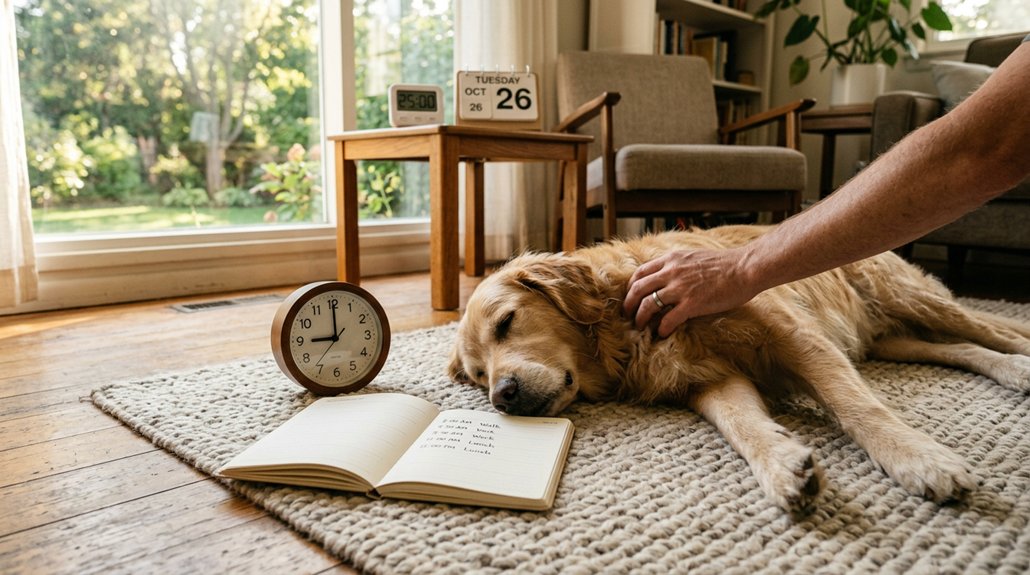
To establish a consistent routine, it’s crucial to maintain a daily schedule that incorporates specific times for exercise, feeding, and play, as this structure promotes security and reduces anxiety in dogs. Balancing your work commitments with time for your pet can be challenging, but it’s essential for their well-being. By ensuring regular, consistent exercise sessions that cater to your dog’s unique needs and energy levels, you enhance not only their physical health but also their mental well-being.
Maintain Daily Schedule
Establishing a consistent daily routine for your dog not only supports their physical health but also enhances their emotional well-being. Begin with a daily walk and consistent feeding schedule to create predictability. Varied play sessions and structured activities like training sessions help meet exercise needs. Incorporate mental challenges, like treat-dispensing toys, during quiet time to stimulate their mind. Social outings guarantee adequate socialization alongside one-on-one engagement. Regular evaluation is essential to tailor your routine to your dog’s specific requirements.
| Activity | Recommendation |
|---|---|
| Daily Walk | 30-60 minutes |
| Feeding Schedule | Set, consistent times |
| Play Variety | Interactive and varied |
| Mental Challenges | Toys and puzzles |
| Social Outings | At least 2 hours interaction |
| Training Sessions | Regular, structured time |
Consistent routines enrich your dog’s life, improving behavior and happiness.
Balance Work And Pet
Finding a balance between work and pet care is essential for maintaining a consistent routine that meets your dog’s needs. You should allocate specific time each day for dog care, integrating walks and play into your morning and evening schedules. For ideal work-life balance, consider adopting flexible dog care strategies, like scheduling 30 to 60 minutes of daily mental and physical activities, which can be split throughout the day to fit your timetable. Your work schedule demands attention, but remember, leaving dogs alone for more than six to eight hours isn’t advisable. If your schedule is tight, explore options like dog daycare or hiring a dog walker. Engage in shorter, more frequent bonding activities to strengthen your dog’s well-being.
Consistent Exercise Routine
Balancing your career with pet care lays the groundwork for your dog’s happiness and well-being, further emphasized by the necessity of a consistent exercise routine. Aim for 30 minutes to 1 hour of daily exercise, tailored to your dog’s breed, age, and energy. Set specific times for walks or play sessions, fostering an anticipatory routine. Incorporate exercise variety—brisk walks, fetch, interactive games—to deliver both mental and physical stimulation. For puppies and highly active breeds, gradually increase intensity and duration, aiming for 1-2 hours to match their fitness level. Employ positive reinforcement to encourage exercise participation, strengthening your bond. These routine benefits guarantee a well-adjusted pet, nurturing their overall health and enhancing the quality of time spent together.
Recognize If You’re Spending Too Much or Too Little Time
Understanding how much time you should spend with your dog is essential for their behavioral and emotional well-being. Conducting a time analysis on your interactions can reveal patterns affecting dog behavior. Spending too little time might result in destructive actions, excessive excitement upon your return, and boredom—clear indicators they need more attention. Conversely, constantly being with your dog without encouraging independence can lead to reliance and separation anxiety during your absence. Experts advise aiming for around 30 minutes to 1 hour of active play daily, combined with frequent bonding moments. Monitoring signs such as loneliness or stress can guide you to adjust your schedule. Prioritize at least two hours of varied social time to guarantee balanced behavioral health.
How to Manage Your Dog’s Time Effectively
Effectively managing your dog’s time is essential for promoting ideal mental and physical health. Focusing on time allocation and activity diversity, you can cater to the core needs of your dog. A mixture of activities guarantees balanced stimulation and fosters social skills. Clinical evidence suggests:
- Allocate 30 minutes to 1 hour daily for physical and mental exercise, sustaining health.
- Include at least two hours of social interaction with humans or other dogs to enhance behavioral well-being.
- Engage in short, stimulating activities like structured play or training sessions to maintain interest.
- Utilize treat-dispensing toys or LickMats for engagement during your busy moments, creating positive alone-time associations.
Prioritizing diverse, structured activities aids in building a strong, secure bond with your dog.
Strategies for Busy Owners to Connect With Dogs
As a busy dog owner, integrating short, frequent play sessions into your day can be essential for maintaining a strong connection with your pet. Evidence suggests using interactive toys, like the LickMat, not only provides mental stimulation but also maximizes the quality of these brief interactions. Additionally, establishing consistent morning and evening routines enriches the relationship, creating moments of bonding even within a packed schedule.
Short, Frequent Play Sessions
Busy owners often struggle to find time for their beloved canine companions. Embracing short, frequent play sessions can make a significant difference, letting you engage your dog without sacrificing your schedule. Expert insights show that consistent quick games foster frequent fun, promoting a healthy bond and mental stimulation. Aim for multiple short interactions throughout the day, accumulating at least 30 minutes of overall playtime.
- 5-15 minute sessions: Perfect duration for meaningful engagement
- Incorporate downtime: Use breaks for activities like fetch or tug-of-war
- Vary activities: Regularly change games to prevent boredom
- Meet exercise needs: Totaling about 30 minutes daily suffices for basic activity requirements
Integrating these strategies seamlessly into your day keeps your dog happy and connected to you.
Utilize Interactive Toys
Interactive toys offer an innovative solution for owners looking to maintain a strong connection with their dogs amidst busy schedules. Engaging in interactive play with tools like treat-dispensing puzzles or the Bite n Brush can provide mental enrichment and physical stimulation for your dog. These toys keep them entertained during your short absences and reduce the risk of boredom-induced behaviors. LickMats add a sensory dimension, rewarding your dog while offering mental challenges. By integrating interactive toys into daily routines, you create a reliable outlet for their energy, ensuring they’re stimulated even when you can’t be directly involved. Short, focused play sessions with varied toys not only meet your pet’s engagement needs but greatly strengthen your bond, keeping them happy and fulfilled.
Morning and Evening Routines
Creating a structured morning and evening routine can greatly benefit both you and your dog, particularly when life’s demands make time management essential. Activating your dog’s morning motivation through a 10-15 minute walk or play session can set a positive tone for the day. Evenings should focus on evening relaxation, where calming activities like gentle petting or cuddling strengthen emotional bonds and provide comfort. Consistency in these routines guarantees emotional stability and physical fitness. Try incorporating:
- Short training sessions: Reinforce commands and stimulate mentally.
- Interactive feedings: Use treat puzzles to challenge and engage.
- Dedicated winding down periods: Enhance emotional connection.
- Total of 20-30 minute interaction: Balance exercise and emotional support.
These strategies will enhance your relationship and your dog’s wellbeing.
Balancing Alone Time With Social Interaction for Your Dog
While it’s natural to want your dog to develop independence, balancing alone time with social interaction is essential for their overall well-being. Dogs need a minimum of two hours of social enrichment daily, dispersed in smaller segments for optimal emotional support. This not only mitigates boredom but also forestalls separation anxiety and unhealthy dependencies. Gradual exposure to solo time is vital, especially for puppies, as it fosters resilience. Yet, dogs left alone for over six to eight hours might show signs of distress, manifesting in destructive or overly enthusiastic behaviors once you return. Prioritizing consistent, quality social interaction is key to maintaining your furry friend’s behavioral health, ensuring they lead a balanced and content life amidst structured alone time.
Engagement Activities to Strengthen Your Bond
Strengthening your bond with your dog is achievable through a variety of engagement activities that cater to both their physical and mental needs. Experts emphasize that structured playtime, like fetch or tug-of-war, for at least 30 minutes daily can uplift your dog’s mood while reinforcing your connection. Furthermore, positive reinforcement during training sessions not only boosts learning but deepens emotional ties. Incorporating both interactive challenges, such as puzzles, and mental stimulation can greatly enhance your pet’s well-being. Consider these shared experiences to enrich your relationship:
- Structured playtime: Energize their spirit with games.
- Positive reinforcement: Use rewarding methods in training.
- Mental stimulation: Engage with toys and puzzles.
- Relaxation bonding: Build trust through gentle petting or snuggling.
Frequently Asked Questions
What Is the 3-3-3 Rule With Dogs?
The 3-3-3 rule explains dog adaptation timeline: 3 days for acclimation stress reduction, 3 weeks for observing behavioral changes, and 3 months for complete emotional comfort. Recognizing these phases guarantees better integration and a stronger bond with your dog.
Which Breed of Dog Is the Most Clingy?
Cavalier King Charles Spaniels are recognized as the most clingy breed due to their attachment styles, seeking consistent attention from owners. Clinically, these dogs demonstrate intense bonds and require regular companionship for emotional well-being and stability.
Am I Spending Too Much Time With My Dog?
You’re likely spending too much time with your dog if you notice signs of dependence. Encourage dog independence with balanced companionship. Provide alone-time activities and gradually extend periods apart to promote healthy coping mechanisms.
What Is the 10-10-10 Rule for Dogs?
The 10-10-10 rule is your golden ticket to enhancing dog bonding. Dedicate time daily: 10 minutes bonding, 10 minutes structured play or training, and 10 minutes relaxation. It balances their mental, physical, emotional needs seamlessly.
Conclusion
Ensuring your dog’s well-being is like painting a masterpiece—each stroke matters. Prioritize quality time over quantity by engaging in enriching activities and establishing a consistent routine. Science shows that a balanced blend of exercise, mental stimulation, and social interaction meets their needs effectively. Don’t let a busy lifestyle become an excuse; a few intentional minutes can deepen your bond. Remember, a happy, well-connected dog isn’t just a pet, but a joyful companion.