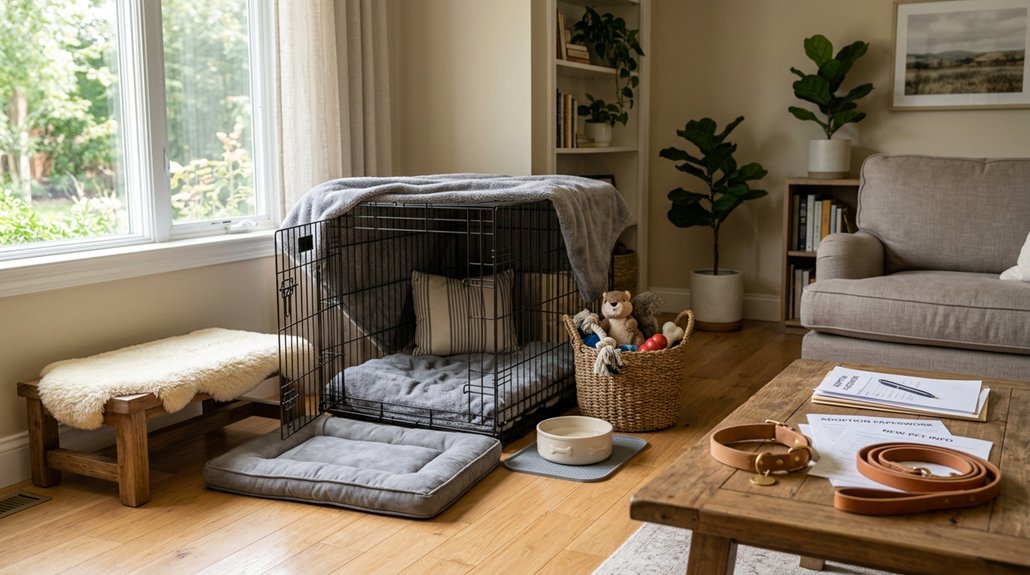
Setting up your house for a new dog involves several thoughtful steps. Gather essential items like a sturdy collar, ID tag, and stainless steel bowls. Choose a quiet spot for your dog’s bed and create a dog-proof environment, securing wires and toxic substances. Inspect your yard for safety, ensuring fences are secure and plants are non-toxic. Establish routines for meals, bathroom breaks, and exercise. Maintain grooming, health checks, and gently teach kids about dog interactions. There’s even more to discover!
Key Takeaways
- Conduct a thorough hazard assessment and dog-proof the home by securing toxic substances and removing small objects and accessible cords.
- Choose a quiet spot for the dog’s bed and place food bowls in an easy-to-clean area.
- Set up baby gates to block dangerous areas and use pet-safe materials for protective measures.
- Regularly inspect and secure outdoor spaces, ensuring fences, plants, and ponds are safe.
- Establish a consistent routine for feeding, bathroom breaks, exercise, and training.
Gather Essential Pet Supplies
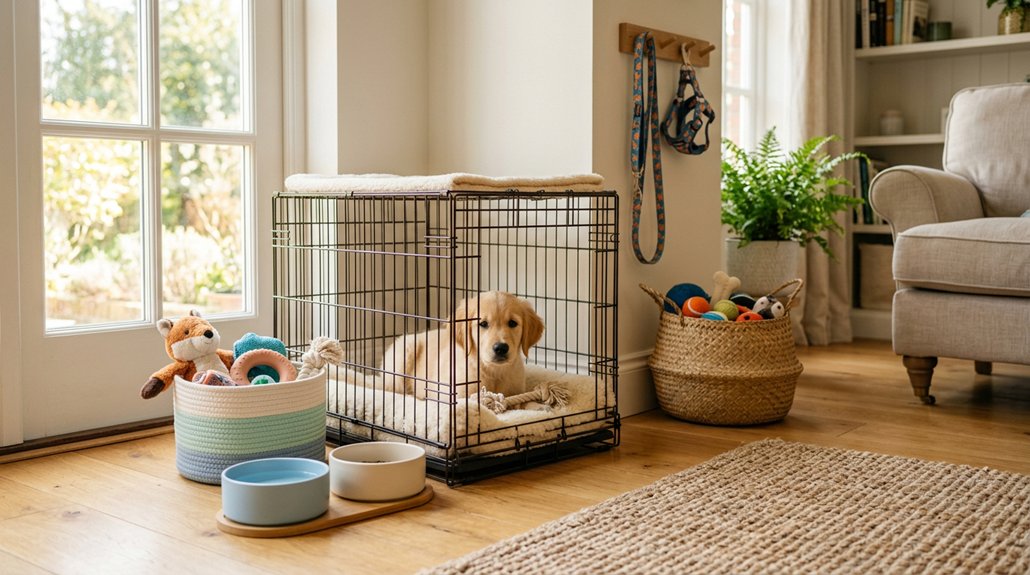
Bringing a new dog into your home is an exciting adventure, but it’s essential to be prepared with all the necessary supplies to guarantee their comfort and safety. Start by purchasing fundamental supplies like a sturdy collar and ID tag with your contact info, ensuring your dog can be easily identified if they wander off. Invest in a six-foot leash for safer, more controlled walks. Training tools like a crate are significant, providing a secure space that assists with teaching boundaries and builds your dog’s confidence. Stainless steel bowls for food and water are recommended for their durability and hygiene. Consult your veterinarian before purchasing dog food. Keep a stockpile of treats that support dental care to make training a rewarding experience for your furry friend.
Choose the Perfect Spot for Your Dog’s Bed and Bowls
When setting up your new dog’s space, focus on selecting a quiet spot for their bed where they’ll feel safe and undisturbed. Guarantee their food and water bowls are in a dedicated, easy-to-clean area, like a mat-covered or tiled floor, to handle any spills efficiently. By considering these simple arrangements, you’ll create a comforting environment that fosters your dog’s well-being and security.
Prioritize Comfort and Security
Creating a cozy and secure environment is essential for your new dog to feel at home. Start by selecting a quiet, low-traffic area in your home for your dog’s bed. This reduces stress and provides a secure spot for rest. Consider using dog bed types tailored to your dog’s breed for comfort. Confirm the bed is an appropriate size, and made from pet-friendly materials for easy cleaning. Place food and water bowls on a mat to catch spills in an accessible spot, away from high-traffic areas. This location minimizes stress and confirms your dog feels secure.
| Feature | Benefit |
|---|---|
| Quiet Location | Reduces distractions |
| Bed Type | Tailored to breed size |
| Accessible Bowls | Easy mealtime access |
| Mat Under Bowls | Prevent spills |
| Pet-Friendly Bed | Simple cleaning and comfort |
Gradually introduce your dog to these areas with treats and positive reinforcement to foster comfort.
Easy Clean-Up Areas
Setting up easy clean-up areas for your new dog’s bed and bowls guarantees a stress-free environment for both of you. Begin by selecting a low-traffic area for your dog’s bed placement, ensuring it’s quiet and inviting. Choose surfaces like tile or laminate flooring to simplify spill management and cleaning. Position food and water bowls on washable mats to easily contain any splashes or drops. This practical approach keeps your space neat and promotes a healthier environment for your pup. Additionally, steer clear of potential hazards by keeping these setups away from electrical cords or low-hanging objects. By thoughtfully arranging these areas, you’ll provide your dog with a comfortable, safe, and easy-to-maintain home they’ll love, while reducing daily clean-up efforts for you.
Create a Dog-Proof Environment
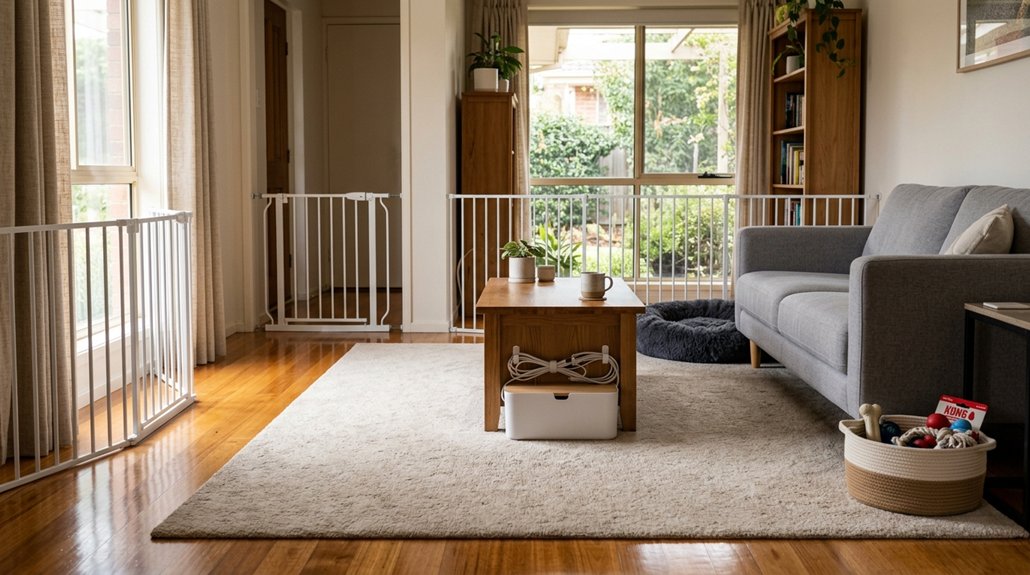
To create a safe haven for your new dog, start by looking at your home from a pup’s perspective to spot potential hazards like loose cords or small chewable objects. Secure all toxic substances in high cabinets and utilize baby gates to block off any dangerous areas, ensuring your dog’s curious nature doesn’t lead them into trouble. By bundling cords and removing tempting items within reach, you’ll prevent accidents and protect your dog’s well-being in their new environment.
Secure Hazardous Items
Taking the time to dog-proof your home is essential to confirm the safety and well-being of your new furry friend. Start with a thorough hazard assessment, using dog proofing techniques such as inspecting your home at dog eye level. Look for accessible hazards like small objects, cords, and plants.
Store items safely:
| Hazardous Item | Dog-Proof Technique |
|---|---|
| Small Objects | Remove from low surfaces |
| Electrical Cords | Wrap or tape to walls/furniture |
| Harmful Chemicals | Lock in cabinets |
| Human Food (chocolate, grapes) | Keep out of reach |
Don’t forget to block fireplaces with screens or gates and eliminate potential choking hazards from accessible areas. This proactive approach confirms your dog’s environment is both safe and welcoming.
Prevent Chewing Accidents
A new dog’s curiosity can sometimes lead to chewing accidents, making it essential to create a dog-proof environment right from the get-go. Start by evaluating your home from a dog’s eye level to spot hazardous items like cords, small objects, and toxic plants. Remove these temptations, ensuring your pup’s safety. Installing baby gates helps restrict access to areas containing valuable or dangerous items until your dog understands household boundaries.
Provide durable chew toy alternatives to satisfy their natural instincts, and practice redirecting behavior by gently guiding them to these toys when they choose inappropriate items. Be sure to supervise your dog initially to reinforce this learning. Keep a limited selection of safe toys available and rotate them periodically to maintain interest.
Safely Hide Electrical Cords
When welcoming a new furry friend into your home, one of the essential safety tasks is managing your electrical cords. Effective cord management prevents your curious dog from getting into trouble. Bundle and secure cords with products like zip ties or cord covers. These tools act as robust chew deterrents, minimizing the chance your pet will be tempted. Position furniture strategically to hide cords and guarantee outlets are not easily accessible. Tape loose wires along floors or walls using sturdy adhesive tape to avoid tangling or pulling incidents. Additionally, protective cord wraps made from pet-safe materials can shield cords from your dog’s inquisitive teeth. Make it a habit to routinely inspect your home for any exposed wires, addressing them promptly.
Secure Your Yard for Dog Safety
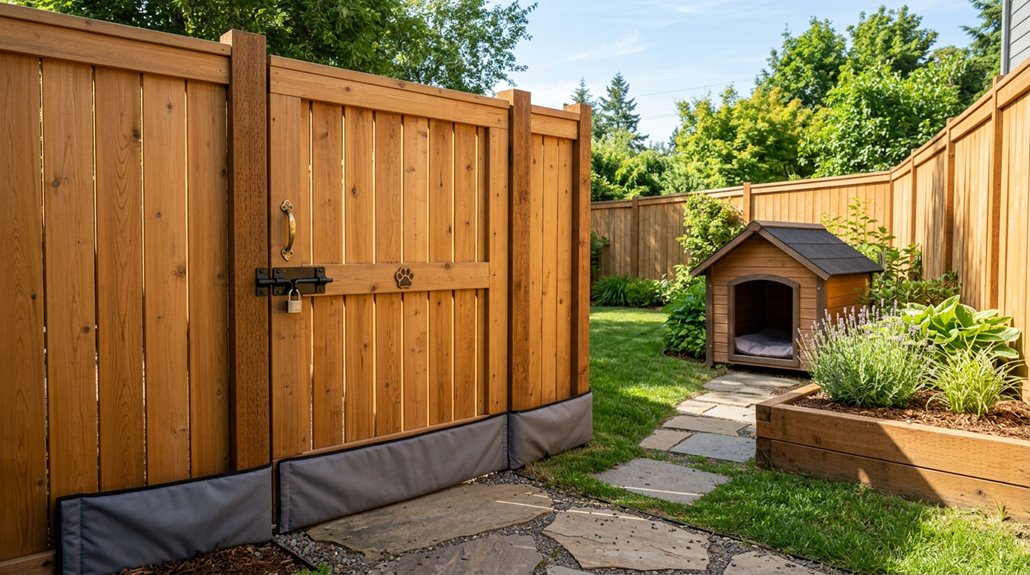
Even though your dog may love the freedom of playing outside, it’s vital to guarantee your yard is a secure environment for them. Start with a thorough fence inspection to detect any gaps or spots they could slip through. Removing potential climbing hazards near the fence will prevent any sneaky escape attempts. Plant verification is essential; verify that none are poisonous to your curious canine, as some common garden plants could harm them. Don’t overlook other dangers, like ponds or pools; confirm they’re properly secured to avoid accidents. Keep trash cans tightly shut to prevent your dog from scavenging harmful items. Your careful attention, demonstrating love and responsibility, will guarantee their outdoor adventures remain safe and enjoyable.
Establish a Routine for Smooth Settling
As you welcome your new dog into your home, establishing a routine is key to ensuring they settle smoothly and comfortably. Start with a structured feeding schedule; consistent meal times can ease anxieties about food availability. Equally important are regular bathroom breaks to reinforce potty training. Aim for these breaks after meals, playtime, and naps. Incorporate a consistent exercise routine too—schedule walks and play sessions twice daily for your dog’s physical and mental health. Training sessions should be brief but frequent, nurturing learning and strengthening your bond. Finally, maintain a calm, consistent environment to reduce anxiety and help your dog feel secure.
| Task | Suggested Timing |
|---|---|
| Feeding Schedule | Consistent meal times |
| Bathroom Breaks | After meals, play, naps |
| Exercise Routine | Twice daily |
| Training Sessions | Short, frequent intervals |
Maintain Regular Dog Grooming and Care
Once your dog feels secure with a set routine, it’s important to guarantee their grooming needs are consistently met. Regular grooming reduces shedding and allergies, keeping your home tidy and your dog’s coat healthy. Begin this process early to familiarize them with grooming techniques, creating a stress-free experience.
Here’s how to maintain their care:
- Brush Often: Use appropriate brushes based on your dog’s coat type to remove loose fur and dander.
- Bathe Regularly: Incorporate bathing in your routine to promote cleanliness, but avoid over-bathing to maintain coat health.
- Trim Nails: Keep nails short to prevent discomfort and ensure easy movement.
- Professional Help: Depending on the breed, occasionally schedule professional grooming to address specific needs expertly.
Each step is essential for their well-being.
Teach Kids to Befriend the Family Dog
Introducing a new dog to your home is a joyful event, but it’s essential to guide your kids in developing a positive and respectful relationship with the family pet. Teach your children to approach the dog calmly, allowing it to sniff their hand first. This simple gesture fosters trust. Emphasize respecting the dog’s space—no disturbing them while eating or sleeping. Encourage gentle petting, focusing on areas like under the chin or the chest, as reaching over the head can seem threatening. Educate your kids about dog body language, helping them recognize signs of stress or discomfort. Remind them that loud noises and sudden movements can be scary, urging them to use soft voices and slow, deliberate actions.
Frequently Asked Questions
What Is the 3-3-3 Rule When Getting a New Dog?
The 3-3-3 rule guides new pet owners like you through adoption tips: 3 days for decompression, 3 weeks for initial bonding, and 3 months to establish routines. This understanding fosters a smooth adjustment and prevents behavioral issues.
Where Should a New Dog Sleep the First Night?
Think of a new dog as a weary traveler seeking shelter. Create a quiet nook with comfort items like familiar blankets or toys. Guarantee ideal sleeping arrangements close to family activity for security, safety, and peaceful rest.
How Long Does It Typically Take a Dog to Adjust to a New Home?
Typically, it takes around three months for a dog to adjust to a new home. You might notice stress signals or cautious behaviors in the adjustment period as they explore their new environment and settle into routines.
What Is the 90 10 Rule for Dogs?
The 90/10 Rule for dogs means 90% structure and 10% play. You’ll optimize dog behavior by implementing this training tip. Keep routines consistent but allow supervised exploration occasionally to balance safety with your dog’s natural curiosity.
Conclusion
You’re now all set to welcome your new furry friend. With essential supplies gathered, and your environment dog-proofed, your home is a cozy, safe haven. Remember, a steady routine and regular grooming keep your dog happy and healthy, just like back in the days when Fido roamed the wild west! Teaching kids to befriend their new furry sibling guarantees harmony for all. Enjoy the wagging tails and the endless love that comes with being a dog parent. You’ve got this!