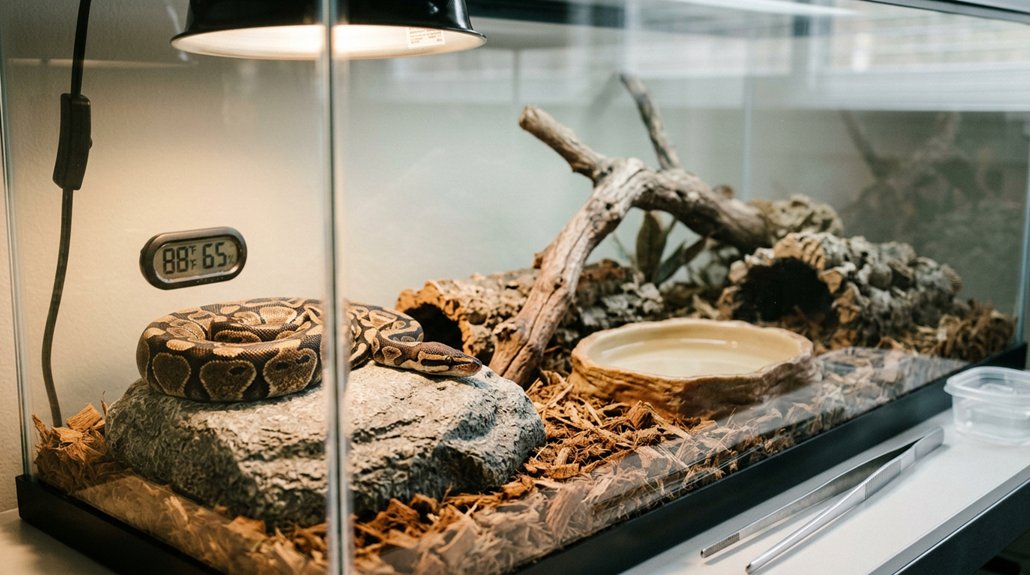
To care for a ball python, start with a 4’x2’x2’ terrarium, maintaining temperatures of 90-95°F on the warm side and 75-80°F on the cool side. Keep humidity at 40-60%, adjusting to 70% during shedding. Feed thawed rodents weekly or bi-weekly, ensuring prey matches the snake’s width. Handle the snake gently, avoiding post-feeding times and during shedding. Monitoring health through weight and behavior is essential. There’s much more to reflect on for your python’s thriving.
Key Takeaways
- Ensure an enclosure of at least 40 gallons with proper ventilation and dimensions of 4’x2’x2’ for adult Ball Pythons.
- Maintain a temperature gradient: 90-95°F on the warm side, 75-80°F on the cool side for thermoregulation.
- Provide humidity levels of 40-60%, increasing to 70% during shedding, using hygrometers for monitoring.
- Feed thawed rodents weekly for juveniles, and every 1-2 weeks for adults, ensuring prey matches snake’s width.
- Handle Ball Pythons gently with minimal stress, wait 48 hours post-feeding, and wash hands before and after.
Getting Started With Ball Python Care
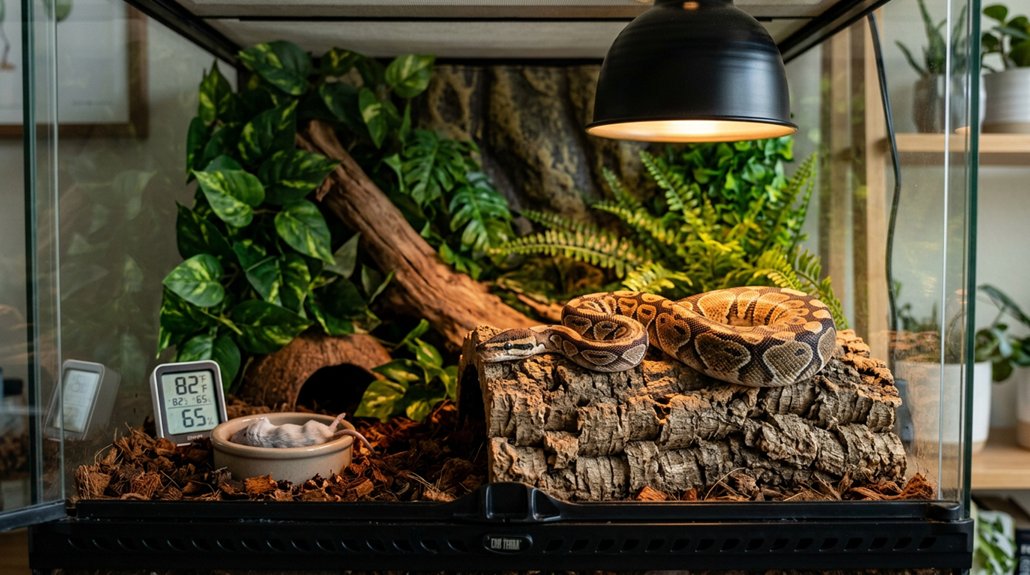
When starting on the journey of caring for a ball python, understanding their natural habitat and behavioral needs is vital to providing ideal care. Recognize that ball pythons, native to Africa, are both terrestrial and semi-arboreal. They exhibit crepuscular behavior, meaning they are most active during dawn and dusk. A common myth is that these snakes are low-maintenance; however, providing a suitable environment requires meticulous attention. It’s important to regulate their tank’s temperature, guaranteeing a warm side of 90-95°F and a cool side of 75-80°F. Humidity should be 40-60%, increased to 70% during shedding. Enriched habitats with hides, climbing structures, and non-irritating substrates promote ball python behavior. Carefully observe these details to make certain your snake thrives.
Choosing and Preparing the Perfect Terrarium
When selecting a terrarium for your ball python, guarantee its volume is at least 40 gallons for adults, although larger sizes are preferable for growth and wellbeing. Maintain an ideal temperature gradient within the enclosure, with a warm side ranging from 88-92°F and a cool side between 75-80°F. This gradient is essential in allowing your snake to thermoregulate effectively and stay healthy.
Suitable Terrarium Size
Selecting the right terrarium size is paramount to ensuring your ball python leads a healthy and enriching life. A juvenile needs a 10-20 gallon space, while adults require a minimum of 40 gallons. Ideally, an enclosure measuring 4’x2’x2’ enhances their quality of life, offering ample room to move. When choosing enclosure materials, consider a front-opening glass terrarium. This choice provides easy access for maintenance and interactions, allowing you to handle and feed your snake more efficiently.
Optimal Temperature Range
Verifying the ideal temperature range in a ball python’s terrarium is essential for its health and comfort. Ball pythons need a warm side of 90-95°F and a cool side of 75-80°F for thermoregulation. This thermal gradient allows your snake to navigate temperature fluctuations safely.
To achieve this, consider these steps:
- Use heating elements like an Arcadia Deep Heat Projector or Halogen Heat Bulb for consistent warmth.
- Regularly use a temperature gun to monitor and maintain the proper temperature, preventing thermal stress.
- Confirm the terrarium has adequate ventilation while keeping humidity between 40% to 60%.
- Create distinct temperature zones, enabling your python to self-regulate based on its comfort level.
Ideal Temperature and Humidity Settings
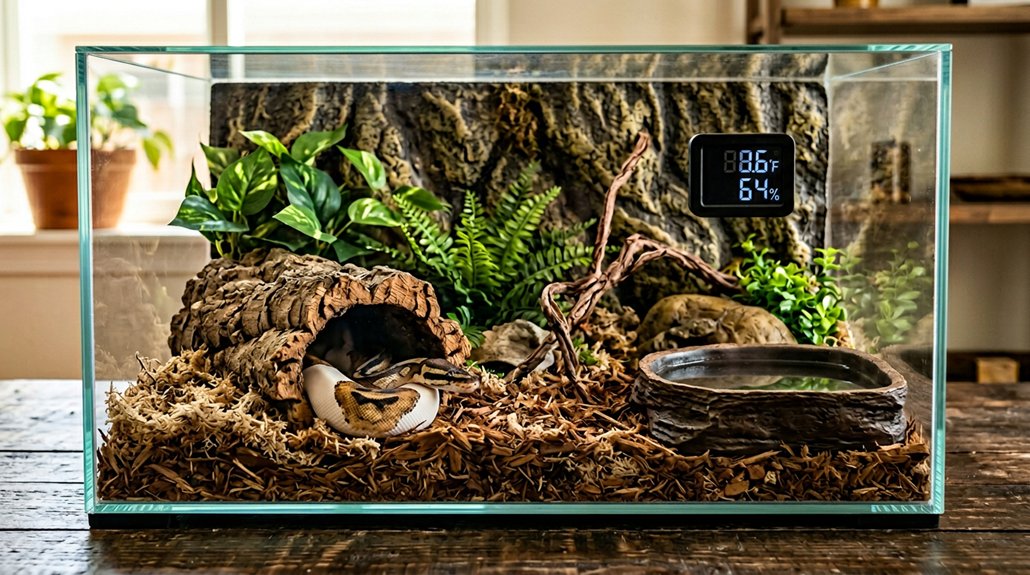
To guarantee your Ball Python’s health, establishing a thermal gradient with temperatures ranging from 90-95°F on the warm side to 75-80°F on the cool side is essential. You’ll want to maintain humidity levels at 55-65%, increasing to 70% during shedding, using digital hygrometers for precise monitoring. Employ temperature guns and recommended heat sources like the Arcadia Deep Heat Projector Bulb to effectively control and maintain the environment’s temperature.
Optimal Thermal Gradient
Proper management of temperature and humidity in a ball python’s enclosure is crucial for its health and well-being. Implementing effective thermal regulation techniques is necessary, as a proper temperature gradient supports their natural behaviors and overall vitality. The importance of a temperature gradient lies in allowing your snake to select its preferred warmth or coolness, aiding in efficient thermoregulation. Utilize these guidelines to achieve ideal conditions:
- Maintain a warm side temperature of 90-95°F and a cool side temperature of 75-80°F.
- Use two thermometers: one at the warm end and one at the cool end for accurate readings.
- Verify humidity levels remain constant between 40% to 60%.
- Elevate humidity to 70% during shedding periods.
These measures will promote your ball python’s health.
Humidity Control Techniques
Achieving ideal humidity in a ball python’s enclosure is essential for its physiological well-being and shedding process. You should maintain a humidity level between 40% and 60%, raising it to 70% during shedding. To guarantee accuracy in these settings, employ humidity measurement methods such as a digital hygrometer. This reliable tool helps you monitor the enclosure’s conditions precisely. For effective humidity control, consider installing a humid hide lined with damp sphagnum moss. It provides a microhabitat where your snake can retreat for maximum moisture during shedding. Regular misting of the enclosure and adding live plants can further stabilize humidity levels. By integrating this humidity control equipment, you create a thriving environment that mimics the ball python’s natural habitat effectively.
Temperature Monitoring Tools
Temperature regulation is a cornerstone of ball python care, necessitating precision and consistency to foster ideal health. Use diverse temperature gauge types, such as digital probes and infrared thermometers, to monitor the environment effectively. Aim for a thermal gradient with a warm end at 90-95°F and a cooler end at 75-80°F, ensuring thermoregulation flexibility.
In addition to temperature, keeping humidity within 40%-60%—rising to 70% during shedding—is essential. Utilize digital hygrometer options to achieve exact measurements. Consistent checks will guard against stress and health complications related to improper conditions.
Here’s a breakdown of recommended tools:
- Digital probes for consistent temperature readings
- Infrared thermometers for spot checks
- Dual thermometers for thorough monitoring
- Digital hygrometers for accurate humidity levels
Substrate and Environmental Enrichment Ideas
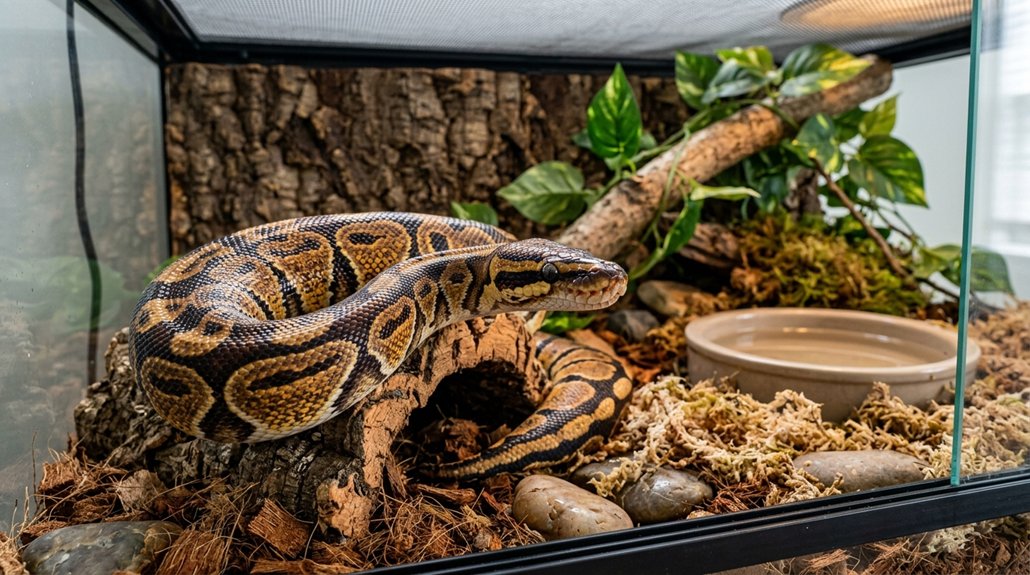
In crafting an ideal habitat for your ball python, attention to substrate selection and environmental enrichment is essential. Recommended substrate types include a mix of organic topsoil, Zoo Med Reptisoil, and play sand in a 2:2:1 ratio, ensuring a safe, comfortable environment. Avoid pine and cedar substrates, which release harmful oils and scents. Environmental enrichment is vital; incorporate hides made from cork bark or commercial shelters in both warm and cool zones to provide comfort and security. Add climbing branches and sturdy foliage to foster natural behaviors and encourage exercise. Regularly change and clean substrates to maintain hygiene, performing thorough habitat cleaning weekly to prevent bacterial growth and provide your python with a healthy living space.
What to Feed Your Ball Python and When
Creating the perfect habitat for your ball python goes hand in hand with understanding their dietary needs. They are obligate carnivores requiring appropriate food such as thawed rodents. Establishing a proper feeding schedule is essential: juveniles eat weekly, adults every 1-2 weeks. Consider rodent sizes matching the snake’s width. Proper meal preparation involves thawing prey to 100°F, vital for mimicking natural predator-prey dynamics while guaranteeing safety, as live prey can cause harm.
For effective feeding techniques, conduct sessions at night using long tongs, minimizing stress. Verify hydration importance by providing fresh water daily. Remember the key points:
- Appropriate rodent size
- Feeding schedule per growth stage
- Night-time feeding for stress reduction
- Daily water replacement
Effective Handling Techniques for Ball Pythons
Before handling your ball python, make certain it’s accustomed to its environment and eating regularly, minimizing stress during interactions. Gently support its body, being mindful of signs of defensive behavior such as striking or rapid movement, which necessitate adjusting your approach to foster a sense of security. Always observe the importance of gentle handling; improper techniques might escalate stress and impact your snake’s overall well-being.
Minimize Stress During Handling
When handling a ball python, minimizing stress is vital for maintaining its health and well-being. A snake experiencing undue stress can display stress signs like excessive hiding or refusal to eat, making it imperative to handle them appropriately. Initially, restrict handling frequency to aid in their acclimation. Always wash your hands thoroughly to prevent unfamiliar scents. Confirm your python has acclimated for two weeks, eating consistently before you begin handling sessions, which should be gentle and supportive.
- Gently support: Use one hand behind the head and another along the body.
- Timeout post-feeding: Avoid handling for 48 hours to prevent regurgitation.
- Shedding caution: Don’t handle during shedding or if eyes appear cloudy.
- Behavior monitoring: Watch for stress signs; if uncomfortable, return the snake to its habitat.
Recognizing Defensive Behavior
Understanding the importance of minimizing stress during handling sets the groundwork for recognizing defensive behavior in ball pythons. When threatened, a ball python may hiss, strike, or even attempt to escape. Handling stress often arises if they’re handled too soon after a meal. Maintain a 48-hour waiting period post-feeding to mitigate regurgitation risks. Assess readiness by observing if the snake displays calmness and responds gently rather than assuming a defensive posture or retreating rapidly. Adequately support them by placing one hand behind the head and the other along the body, instilling security. Additionally, avoid handling when the snake’s eyes appear opaque, indicating a shedding phase, as they often exhibit increased irritability and defensive behaviors during this time.
Importance of Gentle Handling
Gentle handling is paramount when caring for ball pythons, ensuring both their comfort and safety. Employ effective handling techniques by always supporting the snake with a gentle touch. Place one hand behind the head and the other along its body. This provides stability and comfort, reducing stress on the snake. Incorporate the following practices into your handling routine:
- Limit sessions to 1-2 times a week, allowing the snake to acclimate and feel secure.
- Avoid handling 48 hours post-feeding to prevent stress and regurgitation.
- Assess readiness for handling by gently tapping the snake’s head with a paper towel roll.
- Wash hands before and after handling to prevent bacteria transfer and avoid scent confusion.
Recognizing and Supporting Healthy Shedding
While observing your ball python’s shedding cycle, it’s important to recognize the signs of a healthy process to secure their well-being. Typical shedding signs include skin turning dull and opaque, and eyes becoming cloudy. Shedding usually occurs monthly in young pythons, but just a few times a year in adults. Humidity maintenance is critical; levels should stay between 55-65%, but increasing to about 70% can facilitate shedding. By providing a humid hide lined with damp sphagnum moss, you enhance moisture, promoting a smooth, complete shed. Monitor for signs of incomplete shedding, such as retained eye caps or old skin patches, which indicate the need for increased humidity or veterinary evaluation. Regular health reviews promote ideal shedding and avert issues.
Monitoring Health and Identifying Warning Signs
After guaranteeing your ball python sheds healthily, it’s essential to attend to its overall health by closely monitoring any warning signs. Regular health checks involving weight monitoring and observing dietary preferences help maintain ideal health. Be aware of these warning signs:
- Lethargy and lack of appetite: Such behaviors can indicate health issues. Monitor feeding responses closely.
- Respiratory distress: Note wheezing or excessive mucus, as they require immediate veterinary attention.
- Skin elasticity and hydration: Use hydration tips like regular misting. If the skin doesn’t quickly return when pinched, your python may be dehydrated.
- Obesity and stress: Maintain a balanced body shape, avoiding excessive roundness. Observe for stress behaviors like excessive hiding or defensive posturing.
These observations will facilitate timely intervention, fostering a healthy environment.
Preventing Common Ball Python Diseases
To effectively prevent common diseases in ball pythons, it’s crucial to maintain a well-regulated habitat that supports their specific health needs. Implement disease prevention methods by closely monitoring humidity levels, keeping them between 40% to 60%, and raising to 70% during shedding. This practice enhances respiratory health awareness and reduces the risk of infections. Guarantee a temperature gradient from 78°F on the cool end to 95°F on the warm end to avoid metabolic disorders and stress. Maintain a precise feeding schedule to prevent obesity-related complications, and provide fresh water daily to prevent dehydration. Regular health checks are essential; watch for signs of respiratory illness like wheezing. Immediate veterinary consultation is advised if symptoms occur.
Finding Trustworthy Veterinary Care for Your Python
How do you guarantee your ball python receives the best veterinary care? Start by seeking vet recommendations for facilities with reptile specialists, essential for addressing your python’s unique health needs. Select a vet capable of conducting annual health check-ups to preemptively catch issues. Prior to appointments, diligently document the following:
Seek vet recommendations with reptile specialists to ensure your ball python’s unique health needs are met effectively.
- Enclosure conditions: Temperature, humidity levels, and substrate details.
- Dietary habits: Feeding frequency, prey size, and any recent changes.
- Behavioral concerns: Note irregular activities like lethargy or aggression.
- Transport method: Use secure, ventilated containers like snake bags for stress-free travel.
Choose a clinic equipped for extensive reptile care, guaranteeing the presence of diagnostic tools and treatments tailored specifically for snakes. This methodical approach assures your python’s health is reliably managed.
Frequently Asked Questions
How Long Should I Wait Before Handling My Ball Python After Feeding?
You should wait at least 48 hours after feeding your ball python before handling. Following a consistent feeding schedule provides handling tips such as ensuring the snake is active and not defensive to promote a stress-free experience.
How to Care for a Ball Python for Beginners?
You’ll want to start by ensuring proper habitat requirements: a minimum 40-gallon tank and precise humidity levels between 55-65%. Maintain a temperature gradient and match prey size to the mid-body width for safe feeding.
Can a Ball Python Go 2 Weeks Without Food?
Yes, a ball python can go 2 weeks without food if you monitor health indicators like weight and stress signs. Confirm feeding frequency and habitat requirements are right. Healthy adults handle this better than young ones.
Should Ball Pythons Be Fed at Night?
Yes, you should feed ball pythons at night. Their natural feeding habits are crepuscular, so night feeding aligns with their instincts, reducing stress and improving feeding response. Make certain conditions mimic their natural environment for successful feeding.
Conclusion
Taking care of a ball python is a walk in the park once you’re familiar with its needs. With the right terrarium setup, temperature, and humidity, you’ll create a cozy home where your python can thrive. Feeding and handling are essential aspects to guarantee your pet’s well-being. Keep an eagle eye on its health, shedding, and potential diseases. Always have a reliable vet at your fingertips to tackle issues promptly, securing lifelong health for your snake.