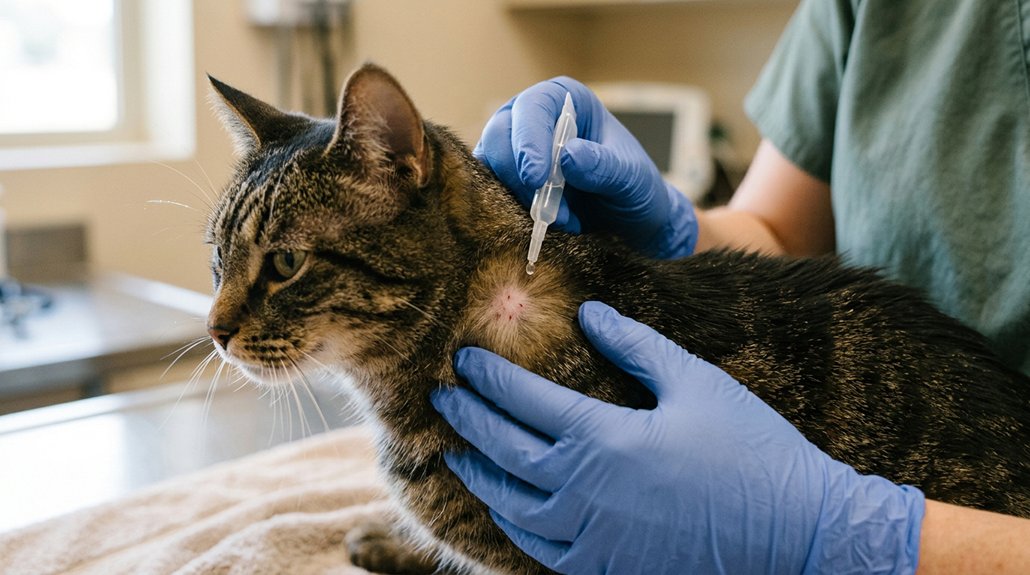
If your cat has fleas, promptly address it with a multi-faceted approach. Identify signs like excessive scratching or hair loss. Use treatments such as vet-recommended topical medications and oral tablets. Treat your home by vacuuming and washing pet bedding to eliminate fleas. Implement long-term strategies like regular flea preventatives and maintaining a hygienic environment. Consult your vet for persistent issues. There’s more to discover about protecting your cat from these relentless pests.
Key Takeaways
- Use veterinarian-recommended flea treatments like topical solutions or oral tablets to address flea infestation on your cat.
- Regularly groom your cat with a fine-toothed comb to check for fleas and assess treatment effectiveness.
- Wash your cat’s bedding and toys weekly in hot water to kill fleas and their eggs.
- Vacuum carpets, furniture, and pet areas frequently to remove fleas and prevent reinfestation.
- Treat all pets simultaneously and maintain consistent use of vet-approved flea preventatives for long-term control.
Identify Signs of Fleas on Your Cat
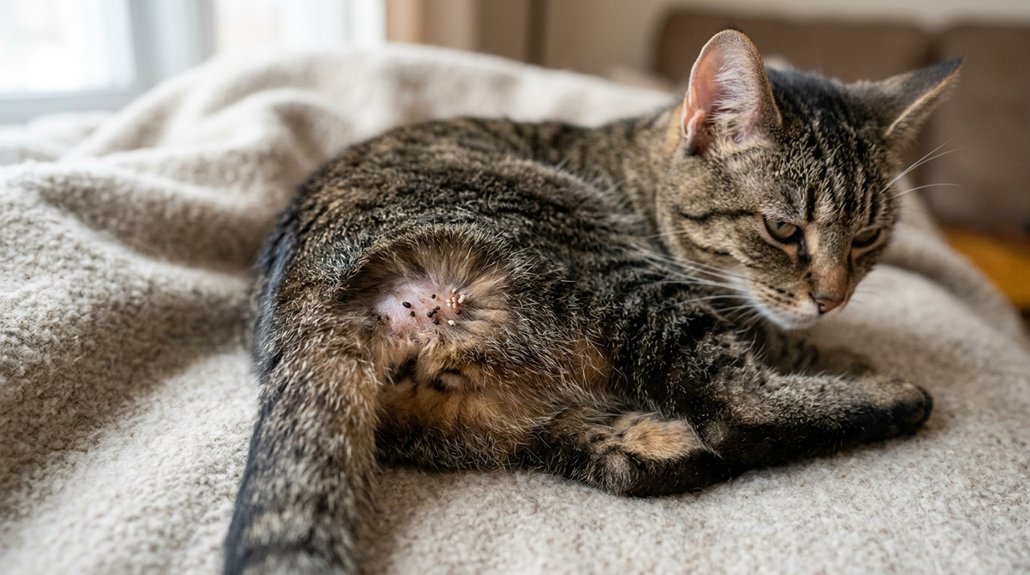
Identifying signs of fleas on your cat is essential to managing an infestation swiftly and effectively. Observe your cat’s behavior closely. Frequent itching and scratching, primarily around the back legs, signal flea behavior. This is often due to your pet seeking itch relief from bites. Look for hair loss on the cat’s back half, possibly from excessive licking or biting in response to irritation.
Examine the fur meticulously—flea dirt, which resembles black specks, appears remarkably against a damp paper towel. This is a strong indicator of an infestation. Additionally, check for visible skin irritation, redness, or scabs resulting from constant scratching. Moreover, if household members experience unexplained insect bites or rashes, it could reflect a broader flea problem.
Use Effective Flea Treatments for Cat Fleas
Combatting a flea infestation effectively demands the use of veterinarian-recommended treatments, such as topical medications or oral tablets, which target adult fleas and help prevent future infestations. To achieve thorough control over the flea life cycle, consider a multifaceted approach:
Veterinarian-recommended treatments are crucial in effectively combating flea infestations and preventing future outbreaks.
- Combine treatments: Use topical solutions, oral tablets, flea collars, and shampoos to target various flea life stages. This layered method maximizes effectiveness.
- Synchronize interventions: Treat all pets in your home at the same time to prevent reinfestation. Fleas can easily migrate between hosts, undermining your efforts.
- Regular grooming: Employ a fine-toothed flea comb to monitor treatment success by capturing live fleas and flea dirt.
While veterinarian solutions take precedence, natural remedies like regular cleaning of pet carriers can bolster your strategy.
Treat Your Home to Eliminate Cat Fleas
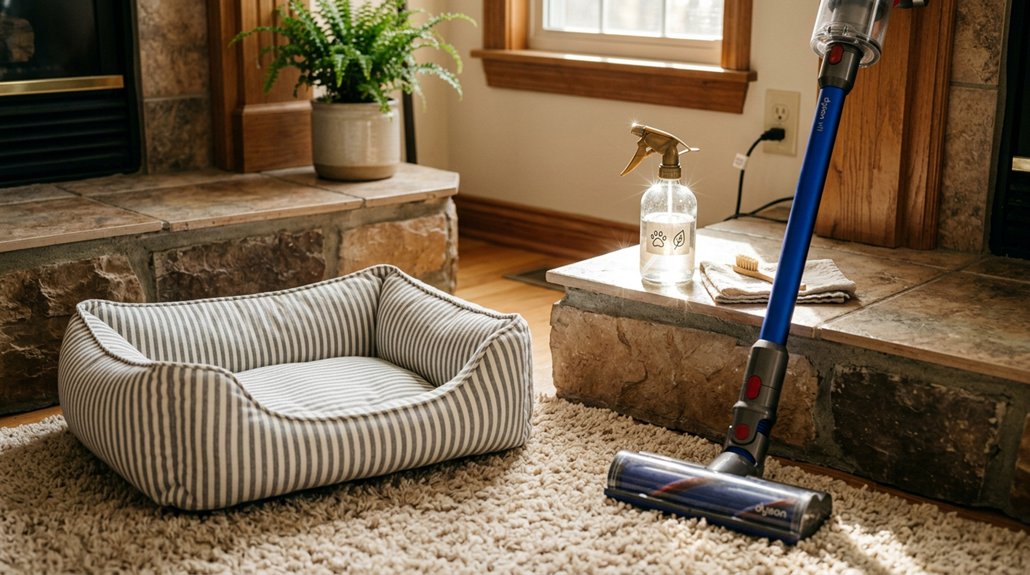
Although treating your cat is essential, addressing the environment they reside in is equally important for flea eradication. Effective home cleaning can greatly reduce flea populations. Vacuum carpets, upholstered furniture, and pet areas regularly, making sure to immediately dispose of the vacuum bag. Wash pet bedding in hot, soapy water to kill fleas and their eggs. Use flea products, like sprays or bombs, designed for indoor use, and consult your veterinarian about cat-safe insecticides.
| Tip | Details |
|---|---|
| Vacuum Regularly | Dispose of the vacuum bag promptly to prevent eggs hatching. |
| Hot Wash | Clean pet bedding and fabrics in hot, soapy water. |
| Flea Sprays/Bombs | Follow all label instructions for safety and effectiveness. |
| Consult Vet | Choose pet-safe insecticides with your vet’s guidance. |
| Consider Professionals | Severe infestations may need a professional pest control service. |
Implement these strategies to guarantee a flea-free home.
Implement Long-Term Flea Prevention Strategies
Implementing long-term flea prevention strategies guarantees your home remains free of these persistent pests. It’s essential you treat all pets in the household simultaneously, avoiding migration of fleas between animals. Be aware, flea myths often suggest that natural remedies alone can solve the problem, but expert-recommended treatments yield more reliable results. To prevent re-infestation, maintain a routine strategically targeting potential flea environments:
Ensure all household pets are treated simultaneously to effectively prevent flea migration and infestation.
- Vacuum Regularly: Focus on carpets, furniture, and pet areas; immediately dispose of vacuum bags outdoors.
- Wash Fabrics: Clean your cat’s bedding and toys weekly in hot water to eradicate eggs.
- Yard Maintenance: Implement flea-specific insecticides and remove debris where fleas might thrive.
Always combine these strategies with consistent veterinary-approved flea preventatives for thorough control.
Talk to Your Vet About Difficult Cat Flea Issues
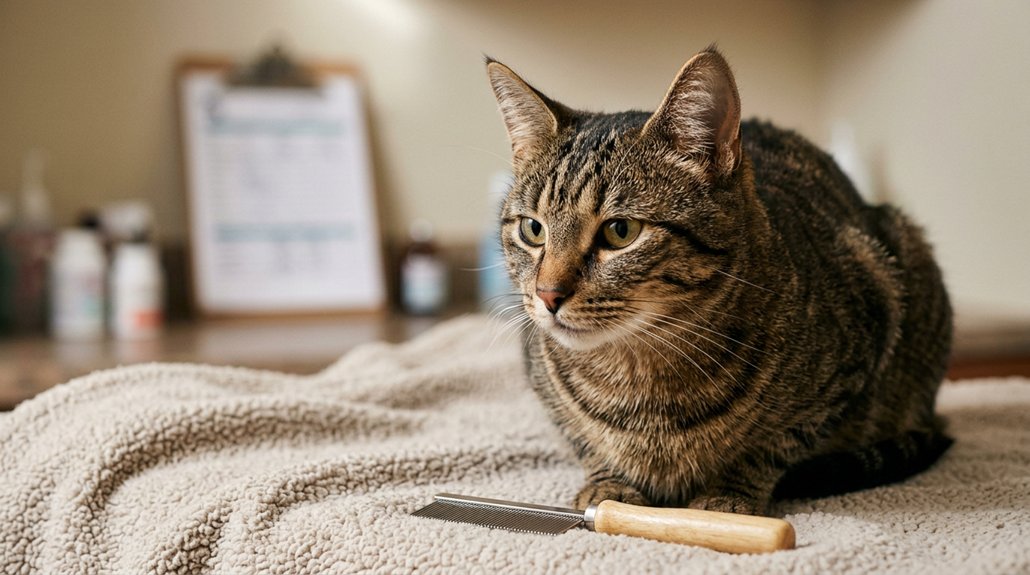
If persistent flea problems plague your cat, it’s essential to consult your veterinarian for expert advice. A vet can identify the specific stage of the flea life cycle causing issues and prescribe the most effective treatments. Fleas can lead to significant health implications, such as anemia—evident through lethargy and pale gums—and skin irritations due to allergic reactions. Your vet will assess for these conditions and recommend suitable interventions to alleviate your cat’s discomfort.
Additionally, professional advice is vital in choosing effective flea prevention products, as not all over-the-counter options provide adequate protection. Regular veterinary check-ups guarantee your cat’s overall health is monitored, and ongoing flea treatments are successful in eradicating these pests, preserving your pet’s well-being.
Frequently Asked Questions
Do I Need to Treat My House if My Cat Has Fleas?
Yes, you’ll need to treat your house for fleas. Effective flea prevention techniques include frequent vacuuming of carpets and furniture. Use vacuuming tips like immediately disposing of bags. Wash fabrics often and apply pet-safe flea sprays carefully.
What Immediately Kills Fleas on Cats?
Just like a magician’s trick reveals wonder, flea collars and topical treatments work wonders quickly. Both eliminate fleas efficiently—the collars offer protection, while treatments start exterminating the invaders within hours, ensuring you’re not caught off guard.
What Is the 3-3-3 Rule of Cats?
The 3-3-3 rule outlines how your cat’s behavior will evolve as they settle in: first three days hiding, next three weeks exploring cautiously, and after three months, exhibiting comfort and trust. This aids flea prevention.
What Do You Do if Your Indoor Cat Has Fleas?
Examine your cat for fleas, focusing on specific areas. Utilize a flea comb, administer vet-recommended treatments, and clean thoroughly. For effective flea prevention strategies, maintain routine treatments and manage the indoor environment to eliminate reinfestations.
Conclusion
Imagine your cat lounging peacefully, no longer scratching and biting at relentless invisible foes. That’s the serene reality you can achieve by addressing fleas with methodical action and vigilant care. As chaotic as the battle might seem, with a mix of proper flea treatments, diligent home cleaning, and strategic prevention, peace and comfort prevail. Consult your vet for complex cases, ensuring a thorough approach. Your cat’s tranquility, juxtaposed against the chaos of fleas, is well worth the effort.