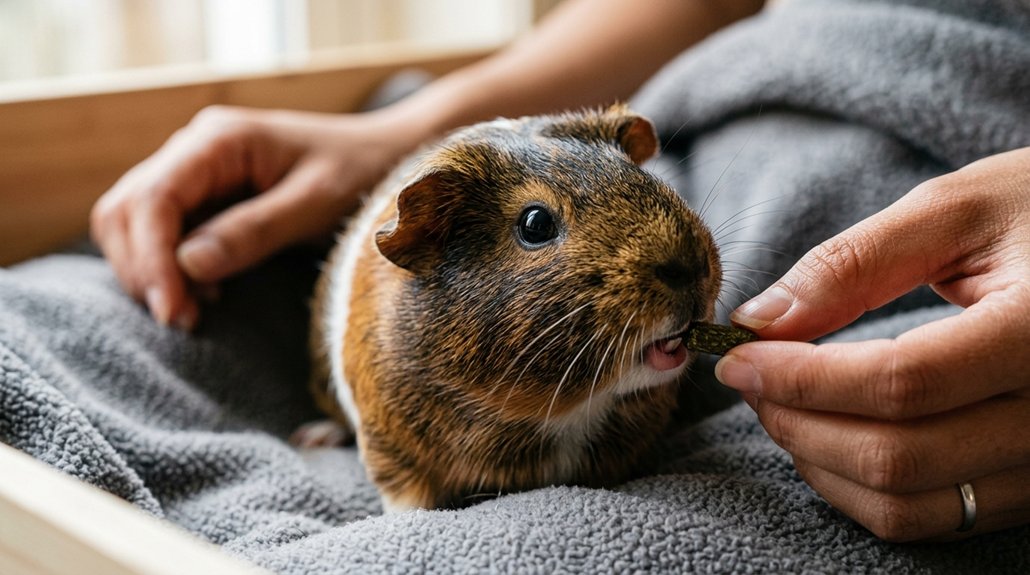
To handle a guinea pig that bites or nips, first understand their behavior: biting may be due to curiosity, stress, or dominance. Use firm, consistent commands and protective gear during handling. Establish a stress-free environment with suitable habitat enrichment and minimize loud noises. Treats can aid in building trust, gradually fostering positive associations. Document and analyze aggressive incidents, while ensuring regular health check-ups. Professional advice might be necessary if problems persist. More insights await you.
Key Takeaways
- Use gentle handling and approach guinea pigs at chest level to minimize fear and reduce biting behavior.
- Implement a firm, consistent “NO” to discourage nipping and analyze interactions that may trigger biting.
- Utilize high-value treats to build trust and create positive associations with handling sessions.
- Ensure the habitat is spacious and stress-free with enrichment activities and suitable bedding to reduce aggression.
- Document and analyze biting patterns to identify stress triggers and adjust handling techniques accordingly.
Immediate Steps to Handle Biting
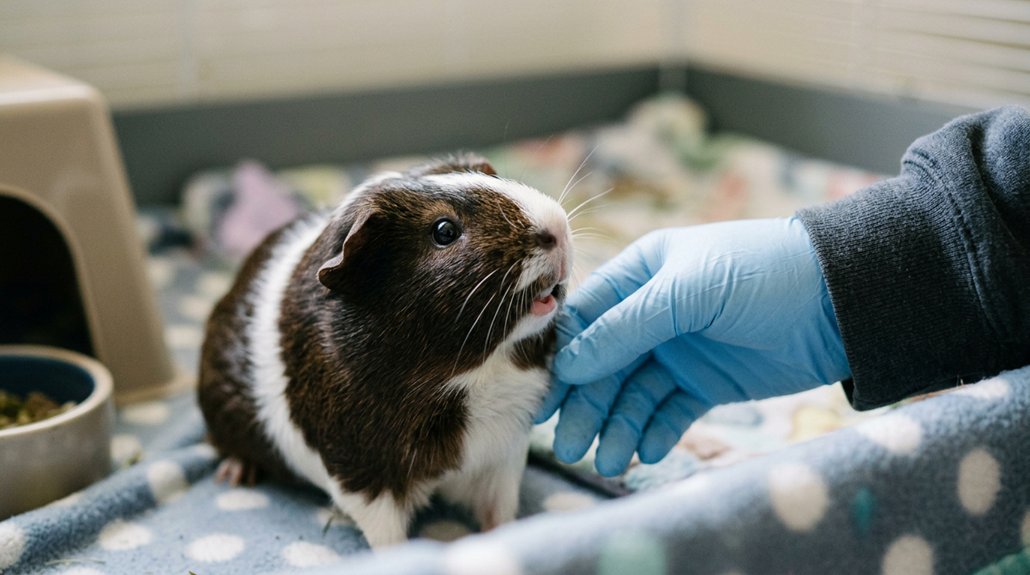
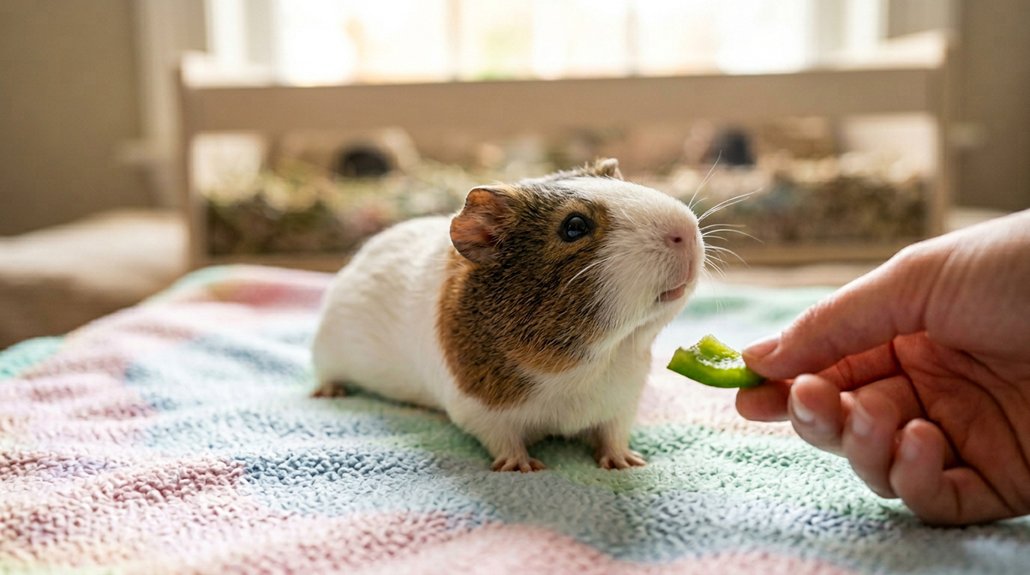
Addressing a biting guinea pig requires immediate and decisive action. Implement a firm, consistent “NO” whenever your guinea pig nips, providing clear negative reinforcement without inducing fear. Wearing gloves is advisable during handling to prevent injuries. Analyze social interactions and contexts, such as feeding strategies or particular handling techniques, which might trigger the behavior. Adjust your approach in response to these observations. Offering safe treats like bell peppers during handling sessions can establish positive associations, reducing anxiety-induced biting. Gradually build trust through controlled social interactions, approaching gently during floor time and rewarding calm behavior, fostering confidence. These immediate steps integrate evidence-based techniques to effectively mitigate your guinea pig’s biting tendency while ensuring a harmonious coexistence and promoting positive behavioral outcomes.
Understanding Guinea Pig Biting Behaviors
Understanding guinea pig biting behaviors requires an examination of underlying reasons such as curiosity, dominance assertion, and perceived threats. It’s essential to differentiate non-aggressive nibbles, often stemming from exploration, from more ferocious bites signaling distress. Monitoring body language and employing gradual desensitization methods, supported by evidence-based practices, can facilitate safer interactions and reduce biting incidents over time.
Reasons Behind Biting
When analyzing guinea pig biting behaviors, it’s important to acknowledge that these animals often bite as a response to fear, pain, or a need for dominance. Fear responses are typically triggered by environmental stressors such as unclean habitats or isolation. Additionally, hormonal influences, especially in unneutered males, can exacerbate aggressive behaviors, particularly when other males are present.
Understanding the underlying causes of biting behavior is critical.
| Trigger | Description | Management Strategy |
|---|---|---|
| Fear | Response to threats or stressful handling | Provide a safe, calm environment |
| Pain | Reaction to injury or discomfort | Regular health checks |
| Dominance | Assertion of hierarchy, often observed in males | Neutering can help mitigate aggression |
| Hormonal Influences | Increased aggression due to testosterone in males | Separation or neutering |
| Environmental Stressors | Impact from poor living conditions or lack of socialization | Maintain clean, enriched environment |
Accurate observation aids in creating effective interventions.
Recognizing Non-Aggressive Nibbles
Recognizing non-aggressive nibbles in guinea pigs is essential for differentiating harmless exploratory behavior from genuine aggression. Young guinea pigs often use their mouths to explore, resulting in gentle nibbling signals. These occur when they mistake fingers for food, especially if they smell it on your hands. Accidental bites in such contexts do not indicate malice. Observing body language is key; if a guinea pig nibbles during handling or appears enthusiastic to return to its cage, it’s likely expressing discomfort rather than aggression. Understand that gentle nips often contribute to social hierarchy establishment rather than hostility. Engaging in regular positive interactions and offering treats can mitigate such behavior, fostering a trusting bond between you and your guinea pig.
Creating a Safe, Stress-Free Home for Your Guinea Pig
To foster a safe and stress-free environment for your guinea pig, it’s vital to prioritize the quality and structure of their living space. Guarantee the habitat is spacious, clean, and well-ventilated, which reduces stress and encourages healthy behavior. Incorporate enrichment activities by providing a variety of hiding spots and chew toys to stimulate mental and physical health. Address social dynamics by guaranteeing multiple food and water sources, minimizing territorial disputes among guinea pigs. Utilize appropriate bedding materials like soft fleece or paper-based products for enhanced comfort. Limit exposure to loud noises and sudden movements to maintain a calm atmosphere. Continuous gentle socialization will build trust, reducing anxiety and associated biting tendencies over time. This strategy effectively supports a harmonious guinea pig habitat.
Effective Handling Techniques to Reduce Biting
To effectively manage and reduce biting behavior in guinea pigs, it’s essential to employ calm handling practices by approaching them gently at chest level, which can greatly minimize fear-related aggression. Utilizing protective handling gear, such as gloves, during initial interactions serves as a safety measure while your guinea pig acclimates. Incorporating these techniques with positive reinforcement, like offering treats, creates a foundation of trust and encourages desirable behavior.
Calm Handling Practices
While handling a guinea pig, it’s important to establish calm and effective practices to prevent biting. Utilize gentle approaches and positive reinforcement to enhance comfort and trust. Start by washing your hands and wearing clean clothing to reassure them of safety. When initially handling, consider using gloves to serve as a barrier, aiding acclimatization while safeguarding your hands. Hold the guinea pig securely at chest level or in your lap to minimize their insecurity.
| Handling Technique | Benefit |
|---|---|
| Handwashing | Guarantees safety, reduces stress |
| Gloves | Protects, assists acclimatization |
| Chest-level holding | Increases stability |
| Gradual introduction | Reduces anxiety |
| Body language observation | Adjusts handling for calmness |
Observing body language is vital for identifying stress, allowing adjustments to maintain a tranquil environment.
Discourage Biting Habits
Although guinea pigs are generally docile creatures, they’ve been known to bite when scared or stressed. To effectively discourage biting habits, implement structured handling techniques. Start by using gloves or a towel to safely handle your guinea pig while building trust. Incorporate positive reinforcement by offering treats during sessions, establishing gentle behavior and positive associations. Employ gradual desensitization: introduce short interactions initially, then extend them carefully, minimizing stress. Observing your guinea pig’s body language is essential—adjust your methods if signs of fear or discomfort appear before reaching for or petting them. Continuously monitor their environment for potential stressors, ensuring ample space and enriching activities, reducing anxiety and promoting a serene demeanor. These evidence-based strategies will discourage biting behavior effectively.
Protective Handling Gear
After establishing techniques to discourage biting habits, it’s important to evaluate the role of protective handling gear in reducing bites. Employing thick gloves is essential during initial handling phases, providing a crucial barrier while allowing your guinea pig to adapt to human touch. Complement protective gear with handling techniques such as enveloping the guinea pig in a towel or soft blanket. This creates a secure environment, curtailing anxiety-induced biting. Furthermore, utilize treats to reinforce positive interactions, linking handling with pleasurable experiences. Maintaining the guinea pig at chest level or on your lap further consolidates security, diminishing fear-driven biting. Regular assessment of your guinea pig’s body language can guide adjustments in protective gear and handling methods, ensuring tailored interventions for stress management.
Using Treats to Build Trust
Creating a positive association with human interaction through the use of high-value treats is essential in managing a biting guinea pig. Employ treat varieties such as fresh vegetables or fruits to initiate bonding activities. Hand feeding these treats lets your guinea pig explore hands in a non-threatening manner, fostering trust and reducing biting tendencies. Consistent treat offerings during each interaction are critical. Gradually introduce treats while handling, reinforcing positive behaviors and enhancing their comfort with human presence. Evidence indicates that this approach encourages guinea pigs to connect humans with rewards over fear, effectively decreasing nipping incidents. Combine positive reinforcement with treats and gentle handling techniques to optimize trust-building, facilitating an environment where guinea pigs feel safe and secure.
Solving Persistent Biting Issues in Guinea Pigs
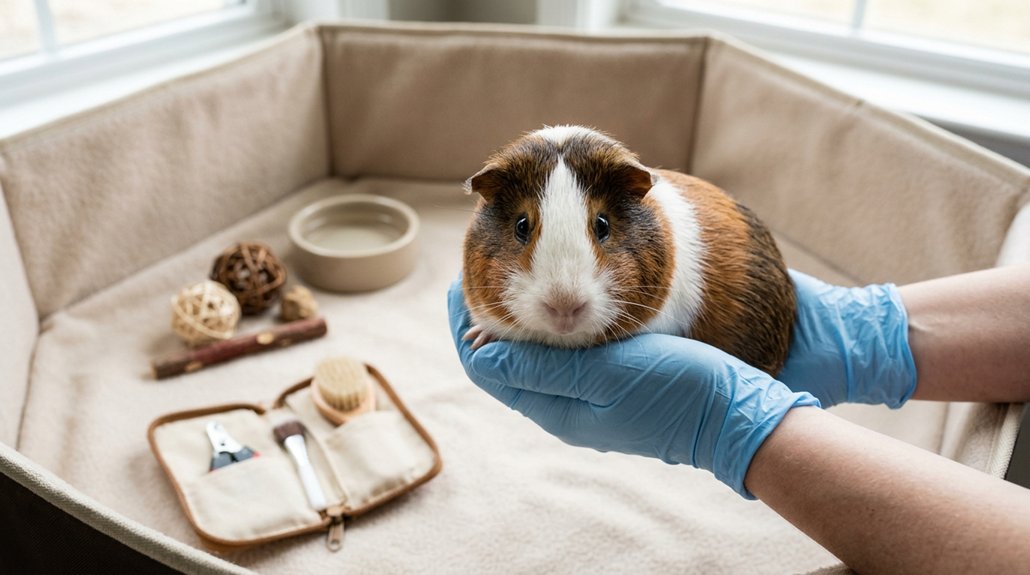
Addressing persistent biting issues in guinea pigs requires a structured approach rooted in understanding their behavior and environment. Observing guinea pig body language is essential for identifying stress triggers and refining bite prevention strategies. Fear or discomfort, often signaled through vocalizations or teeth chattering, can be alleviated by adjusting handling techniques. Desensitize them to human interaction gradually with treats to promote trust. Confirm their environment is clean, spacious, and enriched, decreasing stress. Consistent health check-ups are critical to rule out medical conditions contributing to aggression.
Here’s a concise guide:
| Observation | Action | Outcome |
|---|---|---|
| Teeth chattering | Adjust handling | Reduce stress |
| Environment | Improve conditions | Alleviate loneliness |
| Health check-up | Regular vet visits | Identify pain sources |
| Use treats | Build positive ties | Enhance trust |
| Consistency | Gentle engagement | Foster harmonious bond |
Maintain patience and consistency throughout.
Seeking Professional Help for Persistent Problems
When persistent biting issues with your guinea pig don’t resolve through environmental or behavioral adjustments, seeking professional help is essential. A veterinary consultation is vital to rule out underlying health concerns. Experienced veterinarians assess for pain or medical conditions that could drive biting behavior. If health issues are absent, proceed with a pet behavior specialist trained in guinea pigs for behavior modification techniques. These experts provide tailored strategies designed to enhance trust and reduce aggression. Documenting biting incidents and patterns aids professionals in crafting effective interventions. Engaging with organizations such as Porcellus Place Guinea Pig Rescue NY offers additional insights. Meanwhile, online forums provide continuous support and shared experiences from fellow guinea pig owners, helping to manage persistent biting effectively.
Ensuring Long-Term Harmony Among Guinea Pigs
Establishing a peaceful coexistence among guinea pigs is fundamental for their well-being after resolving individual behavioral issues. A well-structured environment promotes healthy social interactions and reduces conflict, ensuring long-term harmony. Implement habitat enrichment techniques by providing ample living space, distinct hiding locations, and sufficient food sources to alleviate territorial disputes. For effective integration, introduce new guinea pigs in neutral areas, minimizing dominance and aggression. Prioritize regular health check-ups to avert conflicts prompted by pain or illness. Analyze social dynamics and temperaments to form suitable pairings, maintaining tranquility. Use positive reinforcement during interactions and employ distraction strategies to reinforce non-aggressive behavior.
- Ample Space: Incorporate distinct areas to decrease territorial conflicts.
- Health Check-ups: Identify health issues that may cause aggression.
- Neutral Introductions: Use calm introductions to prevent dominance.
Frequently Asked Questions
How to Handle a Guinea Pig That Bites?
Address guinea pig behavior by using bonding techniques. Wear gloves initially for safety. Observe body language to identify bite triggers. Apply positive reinforcement with treats. Firmly say “NO” when biting occurs, offering space to prevent stress.
How Long Do Guinea Pigs Fight for Dominance?
Think of dominance fights like a storm passing over a sea. Guinea pigs’ behavior involves asserting social hierarchy, lasting mere seconds to minutes. Extended conflicts imply unresolved hierarchy issues necessitating environmental adjustments, akin to reinforcing the ship against gales.
What Does It Mean When a Guinea Pig Nips You?
When a guinea pig nips you, it often signifies exploration or discomfort. Understanding guinea pig behavior requires recognizing these nips as communication about environmental stresses, unmet needs, or social dynamics, allowing for tailored, evidence-based handling strategies.
How to Train Your Guinea Pig to Not Bite?
An ounce of prevention is worth a pound of cure. Implement positive reinforcement with treats after non-biting interactions and apply socialization techniques, gradually exposing your guinea pig to handling, thereby reducing the likelihood of biting behavior.
Conclusion
Imagine your guinea pig as a cautious explorer traversing a vast, new world. Every nip is a whisper of communication, a signal of discomfort. By decoding these signals and crafting a harmonious habitat, you become their trusted guide, transforming apprehension into trust. Utilizing evidence-based techniques—gentle handling, strategic use of treats, and environmental modifications—you lay the groundwork for a peaceful coexistence. Should challenges persist, seek professional advice, ensuring your explorer’s journey is filled with confidence and companionship.