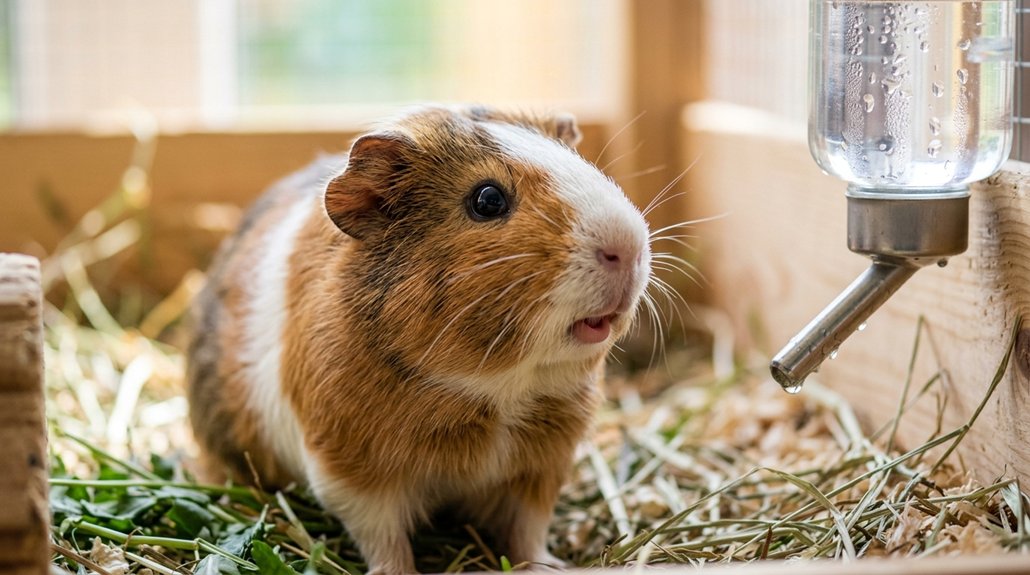
Guinea pigs squeak for various reasons, and each sound conveys specific messages about their emotions and needs. The “weaking” sound often signals hunger and excitement, especially near food. Contented guinea pigs emit soft chatting sounds, while a rumble shredding can indicate dominance or courtship intentions. Purring has dual meanings—it may suggest comfort or hint at irritation, depending on body language. Understanding these vocalizations helps you better cater to your pet’s emotional and physical needs, offering deeper insights ahead.
Key Takeaways
- Guinea pigs “weak” when they anticipate food, indicating hunger or excitement.
- Persistent squeaking often reflects a guinea pig’s expectation for nourishment.
- Soft purring during meals suggests contentment and relaxation.
- Loud purring may signal irritation or a need for personal space.
- Rumble sounds convey dominance or courtship in social interactions.
Decoding Guinea Pig Sounds: What Do They Mean?
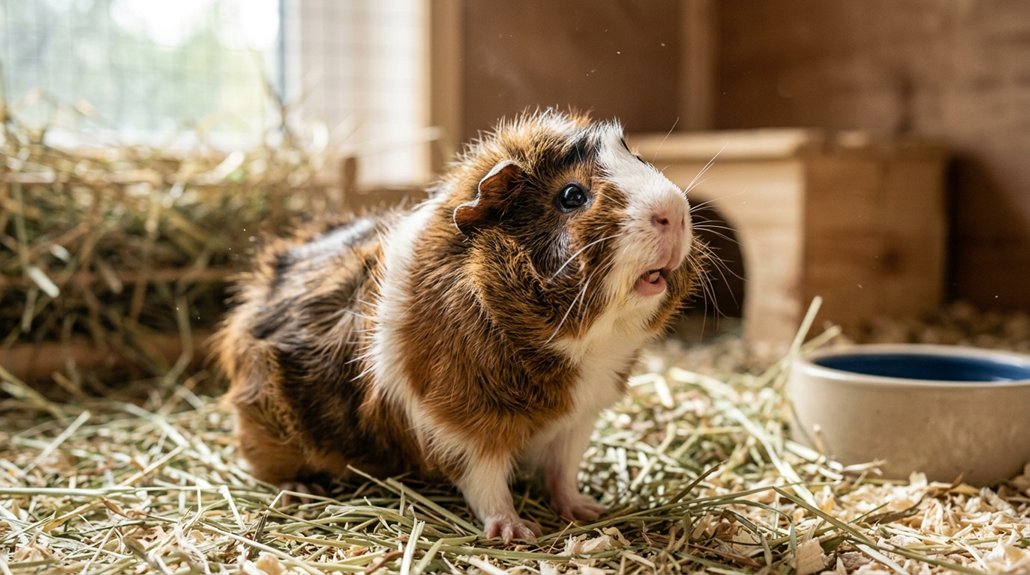
Understanding the array of sounds produced by guinea pigs is essential for decoding their messages, many of which reveal insights into their needs and emotions. Squeak variations, such as “weaking,” often arise from specific auditory stimuli in their environment. These noises frequently serve as emotional cues, signaling anticipation or excitement when you approach or open the fridge. Yet, guinea pigs express a broader emotional spectrum through their sound repertoire. For example, the low rumble of “rumble shredding” signals dominance or courtship, depending on situational context. Meanwhile, a purr could indicate either contentment or a plea for space. By keenly observing these sound patterns, you can better interpret and respond to your guinea pig’s emotional state, enhancing their well-being and your relationship.
Recognizing Hunger Squeaks in Guinea Pigs
When deciphering the auditory signals of guinea pigs, one particularly perceptible sound to recognize is their hunger squeak, or “weaking.” This distinct vocalization, often loud and persistent, serves as an unambiguous cue reflecting their expectation for nourishment. It’s a common behavior in domestic guinea pigs, sometimes triggered by familiar sounds like footsteps or the opening of the fridge, indicating their awareness of feeding routines. Recognizing these hunger signals guarantees their dietary needs are met, thereby maintaining their health.
| Behavior | Observational Insight |
|---|---|
| Weaking Intensity | Domestic guinea pigs are louder than wild ones |
| Trigger | Footsteps, fridge opening |
| Purpose | Reminder of feeding time, indicating food desire |
Paying attention to these patterns helps you accommodate their needs effectively.
Guinea Pig Chatting Sounds and Contentment
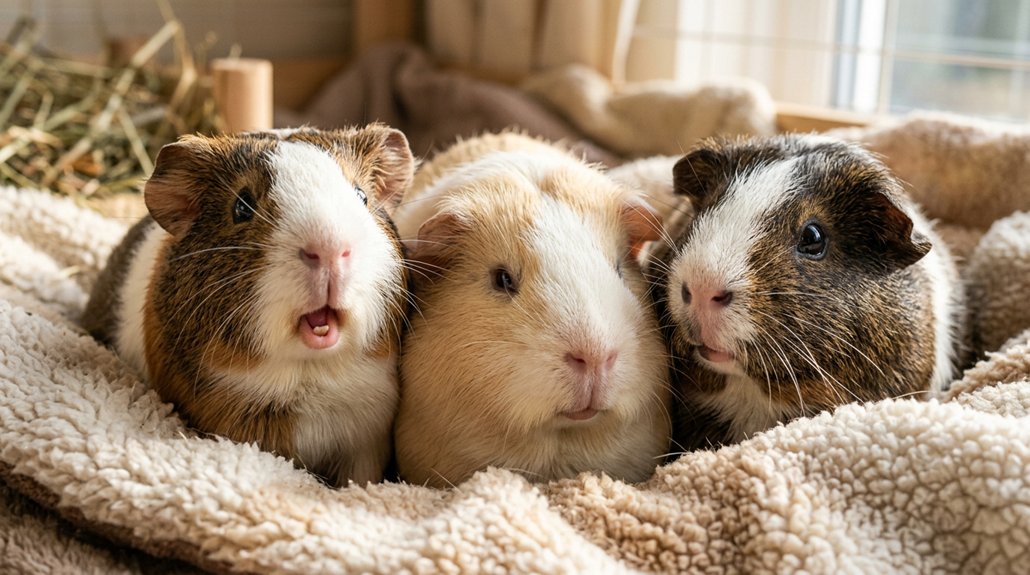
While observing guinea pigs, you may notice their chatting sounds, which are soft, relaxed background noises that signal a state of contentment. These chatting behaviors often emerge as they explore or rest, signifying their happiness and comfort within their environment. Analytically, these sounds act as contentment signals, adding depth to the social dynamics in a group setting. It’s not just sound; it’s a behavioral layer reflecting their interaction with surroundings and companions. Listening for these audio cues becomes a tool for gauging emotional states, especially for attentive owners. Recognizing when guinea pigs consistently exhibit these sounds can affirm their security and ease. Consequently, understanding chatting behaviors offers valuable insights into the overall well-being of these engaging creatures.
Why Do Guinea Pigs Rumble Shred?
Rumble shredding, a distinctive low-frequency vocalization often peppered with rear shaking, serves as a multifaceted communication tool in the social repertoire of guinea pigs. By engaging in this behavior, guinea pigs demonstrate dominance behavior, essential in establishing their standing within social interactions. Males frequently perform rumble shredding to attract females or navigate conflicts, thereby asserting their place in the social hierarchy. Notably, females also engage in this behavior to affirm their ranking, illustrating that these signals aren’t just about gender but about social structuring. The complexity of rumble shredding lies in its contextual interpretation; while it lacks a singular meaning, its occurrence offers significant insights into the nuanced social dynamics among guinea pigs, whether in domestic environments or the wild.
Is Your Guinea Pig Purring? Comfort or Annoyance?
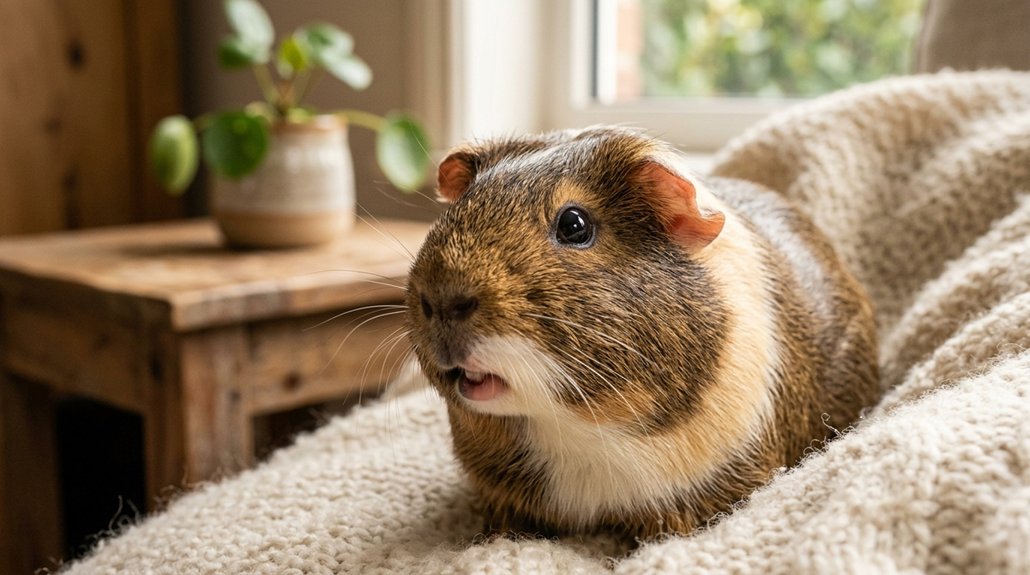
Ever wonder if your guinea pig’s purring signifies comfort or irritation? Purring signs can be complex, so context and body language are your best guides. A soft, gentle purr often suggests contentment, especially during mealtime or exploration activities. However, if the purring is louder, it might indicate your guinea pig feels crowded or needs personal space—possibly suggesting annoyance. Observe their environment: Are they in a relaxed posture, or do they appear tense? After surgery, some guinea pigs purr softly, signaling they find comfort in accessible food, aiding recovery. Evaluating the purring’s tone and intensity, along with the situation, will help you discern if your guinea pig is enjoying itself or expressing discomfort. Stay attentive and empathetic.
Frequently Asked Questions
Does Squeaking Mean a Guinea Pig Is Happy?
Squeaking isn’t always a sign that your guinea pig is happy. Instead, consider it part of their vocal communication or squeaking habits, indicating needs like food or attention. Context is essential to understanding their squeaking intentions accurately.
Is It Good or Bad When a Guinea Pig Squeaks?
It’s both good and bad. Assess the squeak types to determine squeaking reasons. Excited squeaks signal positivity, while pain squeaks suggest distress. Insight into these responses helps you improve your guinea pig’s overall well-being and comfort.
What Is the Number One Cause of Death in Guinea Pigs?
The main cause of death in guinea pigs is respiratory infections. Investigate whether you’ve provided ideal guinea pig health by ensuring proper ventilation and avoiding common illnesses through routine vet visits and maintaining excellent living conditions.
Do Guinea Pigs Recognize Their Owners?
Yes, guinea pigs recognize their owners through specific behaviors. Their ability to distinguish familiar voices and actions highlights owner bonding. These recognition skills are manifested in excited reactions and behavior differentiation, underscoring the depth of their social attachment.
Conclusion
You’ve listened patiently, deciphered their squeaks, and thought you understood your furry friend’s language. But what if there’s more? Imagine decoding the subtle rumble shred, sensing their contentment in those soft chats. Are you mistaking purring for comfort when it’s annoyance? It’s a complex symphony that invites continuous exploration. Your guinea pig’s vocalizations are a rich tapestry, hinting at needs and emotions yet to be fully unearthed. What secrets are they still keeping?