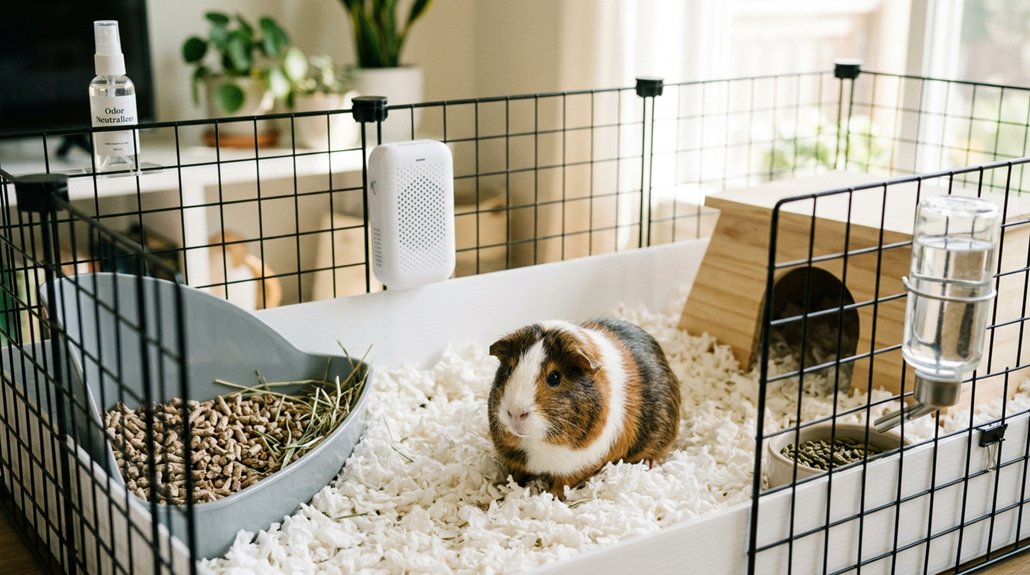
To control odor in a guinea pig cage, start with daily spot cleaning to remove droppings and soiled bedding. Choose absorbent materials like aspen shavings or recycled paper, and consider ventilating the cage to reduce odor buildup. Use a vinegar and water mix for cleaning without harsh smells, and refresh bedding every 5-7 days. Implement these strategies for a fresher environment, and there’s much more to ensuring ideal living conditions for your guinea pig.
Key Takeaways
- Perform spot cleaning 2-3 times daily to remove droppings and soiled bedding effectively.
- Select absorbent bedding like aspen shavings or fleece to manage moisture and odors.
- Use vinegar and water mixture for safe cleaning without harsh residual smells.
- Replace bedding completely every 5-7 days for optimal odor management.
- Ensure proper airflow in the cage to reduce odor buildup effectively.
Identifying Major Causes of Cage Odor
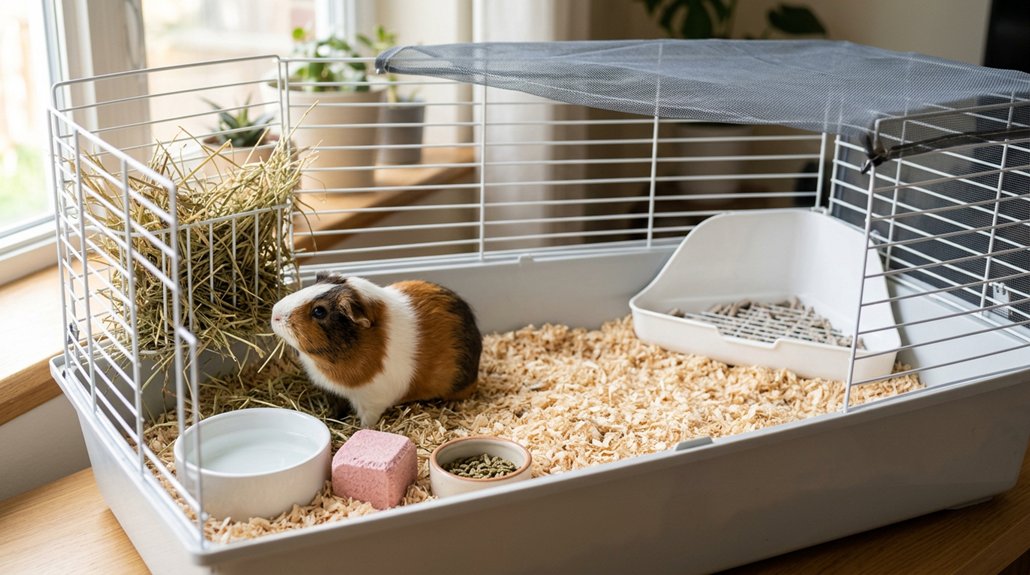
Pinpointing the reasons behind a smelly guinea pig cage is vital for effective management. You should note that guinea pigs defecate frequently, approximately every 15 minutes, resulting in a potential accumulation of 100 droppings daily. This feces frequency necessitates diligent monitoring to minimize odors. Additionally, male guinea pigs produce stronger odors due to more active grease glands, demanding extra cage cleanliness. Monitoring urine is equally important because foul-smelling urine can signal urinary tract infections or underlying health issues. Regular health assessments guarantee that these odor issues are swiftly addressed. Moreover, leftover food, especially buried vegetables, can rot and add to the cage’s stench. Implement proactive urine monitoring and feces management strategies to maintain a fresh environment for your guinea pigs.
Spot Clean Effectively Every Day
Although guinea pigs are delightful companions, managing their living environment requires diligence to prevent unpleasant odors. Effective daily cleaning and waste management are essential. Here’s a structured approach:
- Frequent Spot Cleaning: Perform spot cleaning 2-3 times daily. Use a small scoop to remove fresh droppings and soiled bedding, particularly in high-traffic areas prone to odor buildup.
- Designated Bathroom Maintenance: Regularly clear waste from their bathroom areas to control odor and reinforce their bathroom habits.
- Daily Inspection for Debris: Check for and remove leftover food and decaying vegetables to prevent smells and deter pests.
- Refresh Bedding Regularly: Assess bedding for excess moisture or soil, reforming your habit of replacing them to maintain a fresh and healthy environment.
Choose Bedding That Controls Odor
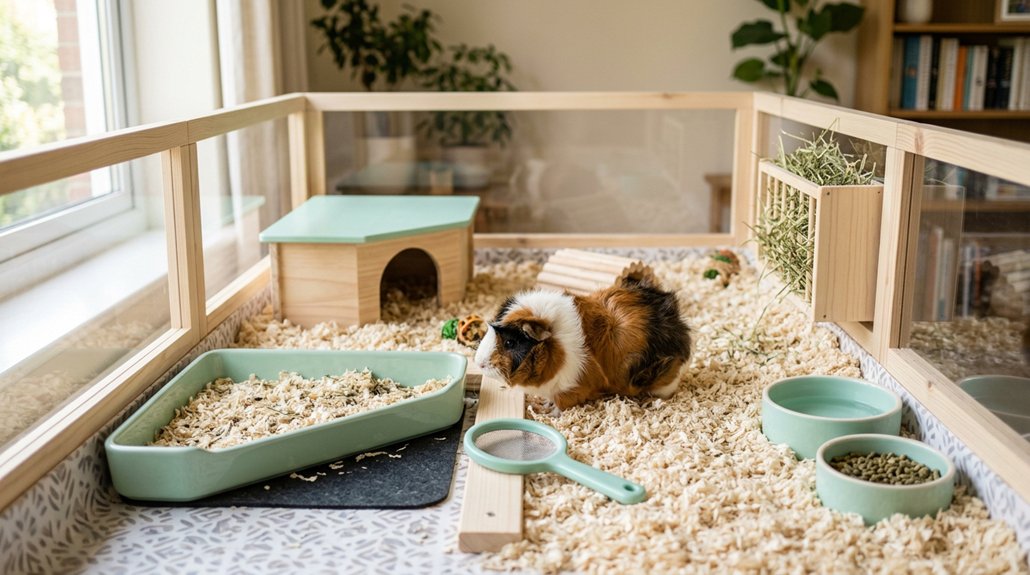
Spot cleaning isn’t the only strategy for maintaining a fresh guinea pig cage; the choice of bedding plays a pivotal role in odor control as well. Selecting the right bedding types is essential for preventing unpleasant smells. Opt for absorbent materials, such as aspen shavings or recycled paper, that effectively neutralize odors and keep the environment dry. Fleece bedding, aside from being eco-friendly, requires a moisture-absorbent layer beneath to prevent odor retention. Additionally, include odor-neutralizing additives in the bedding to enhance its efficiency. Avoid cedar shavings, which may retain strong odors. Use washable pee pads strategically in high-traffic areas to capture moisture efficiently. Be diligent in monitoring bedding condition and aim for full changes every 5-7 days to maintain ideal odor control.
Clean Safely Without Leaving Harsh Smells
When ensuring the cleanliness of a guinea pig cage, it is crucial to use cleaning agents that don’t leave harsh odors or residues. Here’s how you can effectively clean the cage:
- Vinegar Mixture: Use a 1:1 mixture of vinegar and water. Let it sit for 5-10 minutes on surfaces to neutralize odors without any lingering scent.
- Unscented Soap: Opt for unscented dish soap with warm water for general cleaning to avoid irritating your guinea pig’s sensitive nose.
- Avoid Harsh Chemicals: Choose commercial cleaning products specifically labeled as safe for small pets to steer clear of bleach and harmful residues.
- Baking Soda: Place baking soda beneath bedding layers to absorb odors, ensuring it’s inaccessible for ingestion.
Employ these methods for a safe, odorless cage environment.
Make Your Cage Airy to Cut Down Smells
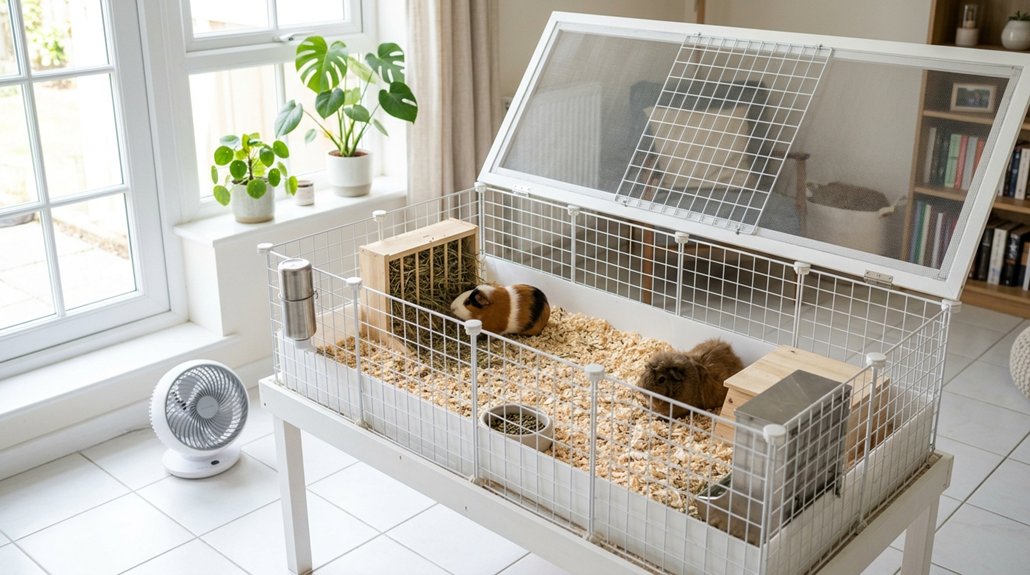
Airing out your guinea pig’s cage is crucial for controlling odors and maintaining a healthy living environment. To enhance cage ventilation, make certain there’s at least 10.5 square feet per two guinea pigs. This space facilitates airflow improvement, important in minimizing odor buildup. Opt for C&C cage designs, utilizing wire grids and plastic sheets, which greatly boost air circulation. Position the cage in a well-ventilated area of your home, where opening windows freshens the air, further reducing lingering smells.
Incorporate absorbent materials like puppy pads or fleece liners beneath bedding. These materials wick away excess moisture, effectively managing odors. Additionally, adjust the cage’s layout with varying levels or corners, enabling airflow improvement and offering comfortable escape routes, ultimately dispersing odors efficiently.
Promote Healthier Living Conditions for Odor Reduction
To effectively reduce odors in your guinea pig’s cage, start by optimizing cleaning frequency with regular spot cleaning and a thorough full cage clean using guinea pig-safe solutions like a vinegar-water mix. Choosing absorbent bedding materials, such as fleece liners or paper-based options, will wick moisture away and help minimize odor buildup. Additionally, maintaining proper airflow with sufficient space contributes greatly to healthier living conditions that naturally reduce odor.
Optimize Cage Cleaning Frequency
In attempting for ideal cage cleaning frequency, achieving a balance is essential for both odor control and the well-being of your guinea pigs. Tailor your cleaning routines to their specific habits for a healthier environment. Properly timed and structured cleaning can greatly reduce unwanted odors. Here’s a systematic approach:
- Daily Spot Cleaning: Conduct 2-3 daily spot cleaning sessions to remove droppings and soiled bedding.
- High-Traffic Areas: Change bedding in these zones every two days, particularly designated toilet spots, to minimize odors.
- Weekly Full Clean: Every 5-7 days, completely clean the cage, revitalizing your guinea pig’s habitat.
- Monitor and Adjust: Keep an eye on individual guinea pig habits to adjust cleaning as some may produce more odors due to diet, age, or health.
Choose Effective Bedding Materials
After establishing an effective cleaning schedule, selecting the right bedding materials is a crucial step in managing odor and supporting guinea pig health. Opt for absorbent options like aspen shavings, paper bedding, or fleece liners. These materials have excellent moisture-wicking abilities, efficiently managing odors through superior bedding texture and longevity. Incorporate moisture-absorbing pee pads in high-traffic areas to maintain dryness, enhancing bedding durability and simplifying cleaning. Regularly replace the bedding every 5-7 days and engage in spot cleaning 2-3 times daily to further reduce unwanted odors. Additionally, consider reusable fleece bedding for its eco-friendly attributes and cost-effectiveness. Evaluate the efficacy of various bedding types consistently, adapting based on odor retention for ideal guinea pig living conditions.
Employ Safe Odor Solutions
Effective odor management in guinea pig cages requires using safe solutions that promote a healthier habitat. By leveraging natural deodorizers and odor absorbing materials, you can greatly enhance the living conditions for your pets. Here’s how:
- Vinegar and Water Solution: Implement a 1:1 ratio of vinegar and water for cleaning. This eliminates odors without leaving harmful residues.
- Routine Cleaning: Conduct spot cleaning 2-3 times daily and complete cage cleaning every 5-7 days. Regular maintenance helps maintain a fresh environment.
- Absorbent Bedding: Utilize materials like fleece liners or paper bedding to effectively manage moisture and odors.
- Additional Measures: Place puppy pads in high-traffic areas to capture urine efficiently, reducing odor concerns.
Adopting these practices will create an ideal, odor-free habitat.
Frequently Asked Questions
What Can I Put in My Guinea Pig’s Cage to Stop It From Smelling?
Use unscented, absorbent bedding options like aspen shavings or recycled paper. Consider odor absorbers such as activated carbon filters. Regularly replace bedding and clean the cage. Balanced diets can help manage odors effectively.
Why Does My Guinea Pig Cage Stink so Bad?
Think of your guinea pig cage like a garden that, without proper maintenance, becomes overgrown and smelly. It’s crucial to focus on cage maintenance, managing odor control by regularly cleaning, replacing bedding, and eliminating moisture.
What Is the Number One Cause of Death in Guinea Pigs?
The number one cause of death in guinea pigs is respiratory issues. Poor cage conditions impact guinea pig health by promoting ammonia buildup, exacerbating infections. Guarantee proper ventilation and cleanliness to prevent respiratory problems and extend your guinea pig’s lifespan.
Do Guinea Pigs Smell Bad in the House?
Yes, guinea pigs can emit noticeable odors. Did you know they produce waste up to 100 times daily? Maintaining guinea pig hygiene through proper odor prevention measures like regular cleaning and choosing absorbent bedding mitigates these smells.
Conclusion
Mastering guinea pig cage odor control involves daily spot cleaning, selecting odor-controlling bedding, and ensuring proper ventilation. Most importantly, promoting healthy living conditions greatly reduces unpleasant smells. For instance, consider Sarah, who noticed a dramatic difference after switching to a high-quality paper bedding and increasing her cage’s airflow. By adopting these strategies, you’ll create a fresher environment for your guinea pigs, leading to happier, healthier pets and a more pleasant living space overall.