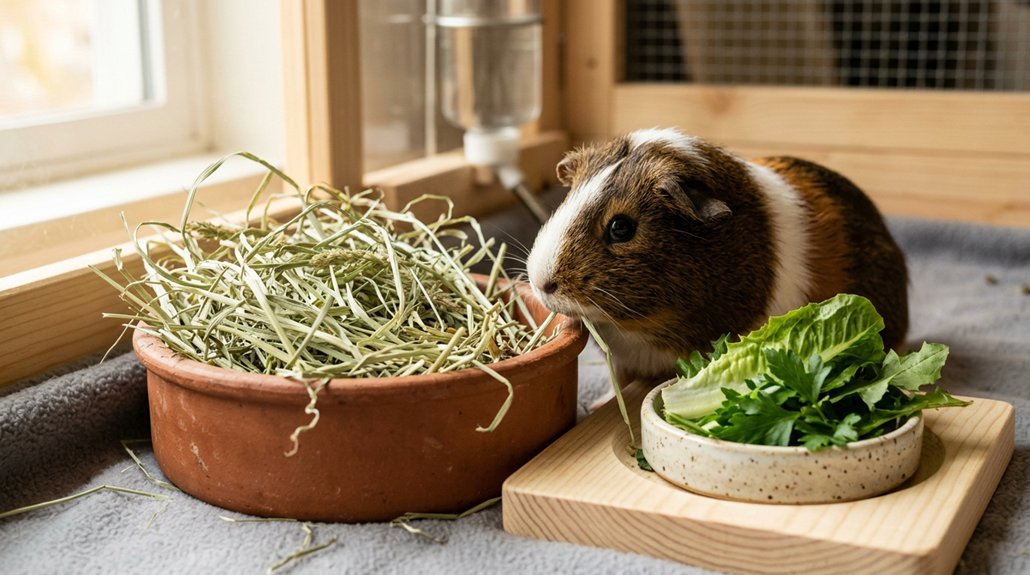
Feed your guinea pig a balanced diet daily: 1/8 cup of high-quality, vitamin C-fortified pellets, and unlimited fresh hay, ideally timothy or orchard for adults. Include 1/2 to 1 cup of fresh vegetables rich in vitamin C, like peppers or broccoli. Fruits should be occasional treats due to their sugar content. Confirm portion control to prevent obesity, and adjust as needed for health, age, and activity levels. Discover more about maintaining optimum health and energy.
Key Takeaways
- Provide adult guinea pigs with 1/8 cup of vitamin C-fortified pellets daily, ensuring freshness.
- Offer 1/2 to 1 cup of fresh vegetables daily, prioritizing leafy greens and vitamin C-rich options.
- Allow unlimited access to high-quality hay, making up 80-85% of their diet.
- Limit fruit to occasional treats due to high sugar content.
- Adjust feeding quantities based on age, health status, and activity level to prevent obesity.
Daily Servings: Pellet and Vitamin C Guidelines
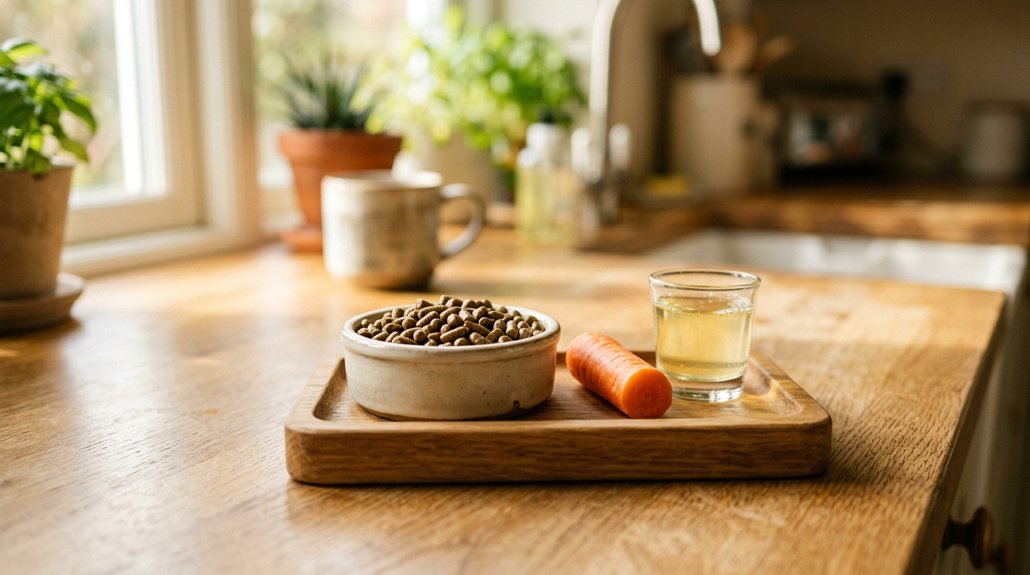
Providing your guinea pig with the right amount of food and nutrients is essential for its health. Adult guinea pigs should receive approximately 1/8 cup of high-quality, vitamin C-fortified pellets daily. Freshness is vital—ensure pellet freshness by serving new pellets each day and checking the “best before” date to preserve their nutritional content. Guinea pigs can’t synthesize vitamin C, so they rely on their diet to meet the daily requirement of about 30 mg. Monitor your pet’s pellet intake closely to adjust for health status, age, and activity, which can prevent obesity or weight issues. Removing any uneaten portions promptly helps avoid spoilage. For baby guinea pigs, consider slightly increasing the pellet quantity to support their growth.
Why Hay Matters Most for Your Guinea Pig
While many aspects of a guinea pig’s diet are important, hay reigns supreme. About 80-85% of what your guinea pig eats should be fresh grass hay, which is essential for their digestive health. Here’s why hay matters so much:
- Digestive Health: Continuous access to hay helps activate the gut, preventing obesity, gut stasis, and various gastrointestinal issues.
- Dental Health: Good-quality hay maintains dental health by naturally wearing down their continuously growing teeth.
- Hay Types: Timothy or orchard hay suits adults perfectly, while alfalfa, richer in calcium, benefits younger or pregnant guineas in moderation.
Providing unlimited hay isn’t just about nutrition; it aligns with their instinctual grazing behavior, ensuring they’re healthy and satisfied.
Proper Portions for Vegetables and Fruits
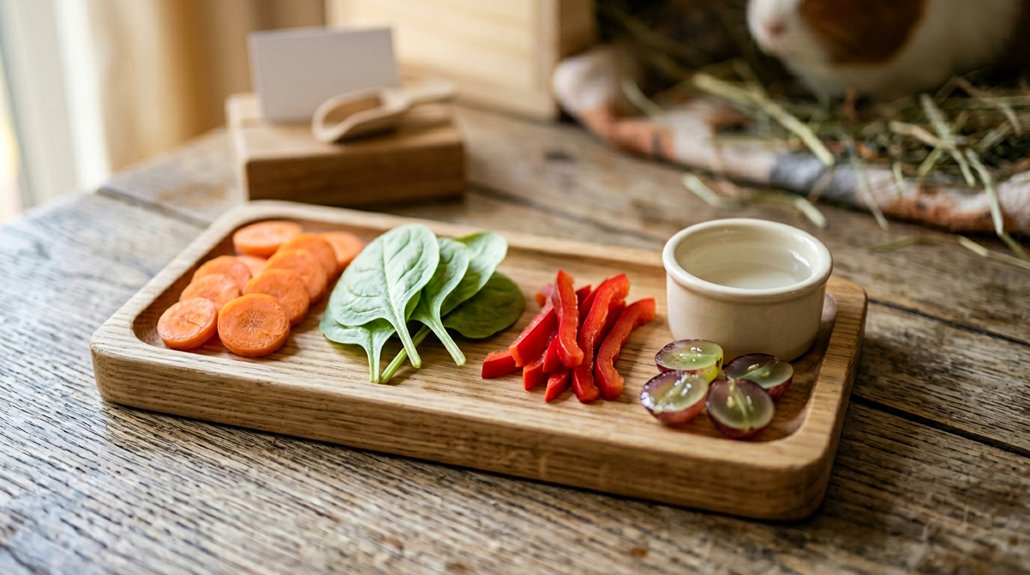
With hay forming the cornerstone of a guinea pig’s diet, it’s equally essential to understand the role that vegetables and fruits play in their nutrition. Each guinea pig should receive about 1/2 to 1 cup of fresh vegetable varieties daily. Leafy greens should dominate this portion. To guarantee sufficient vitamin C intake, include vegetables such as red or green peppers and broccoli. Fruits, due to their sugar content, should be occasional treats rather than part of their daily intake. When introducing new foods, do so gradually. Monitor their digestive response over a few days to avoid adverse effects. Always remove uneaten perishable items promptly to prevent spoilage. Providing varied, fresh produce guarantees your guinea pig’s nutritional balance and well-being.
Maintaining Guinea Pig Weight and Fitness
To guarantee your guinea pig maintains a healthy weight and ideal fitness, it’s vital to focus on their diet and activity levels. Providing dietary variety is significant. Start with high-quality grass-based pellets, offering about 1/8 to 1/4 cup daily. Supplement this with unlimited fresh grass hay, their primary food source. Incorporate vegetables for added nutrition, making certain they consume 1/2 to 1 cup daily, concentrating on leafy greens and vitamin C-rich choices.
Remember the importance of portion control in preventing weight issues. If your guinea pig faces weight challenges, adjust their diet:
- Reduce pellet intake to 1/4 cup.
- Eliminate treats.
- Maintain constant access to fresh hay and vegetables.
Regular check-ups of their food intake and droppings are vital for early detection of dietary issues.
The Role of Diet in Exercise and Weight Control
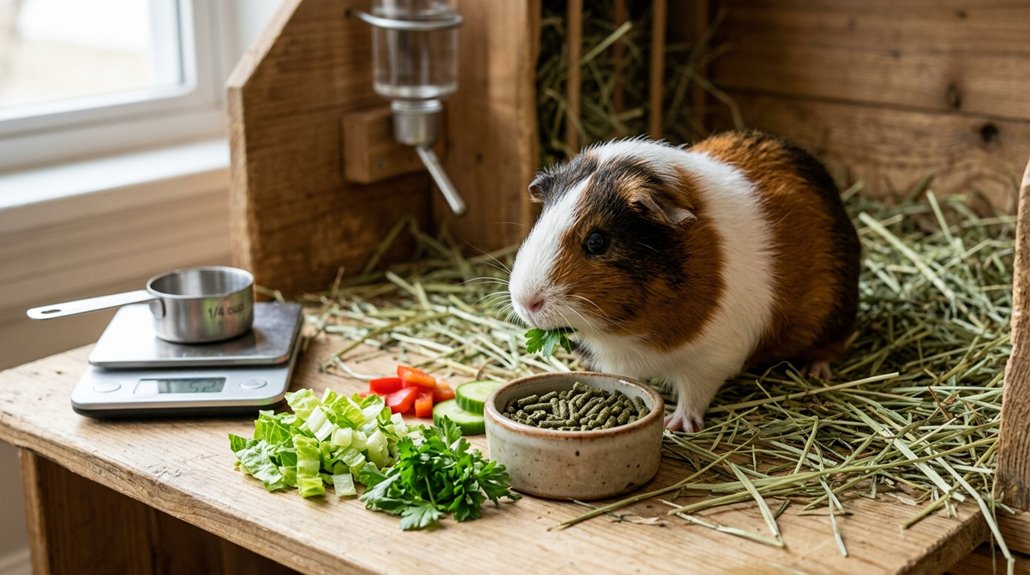
Maintaining your guinea pig’s fitness goes hand in hand with a strategic dietary approach. Emphasizing dietary variety and nutrient balance, provide unlimited fresh grass hay as 80-85% of their diet to support digestive health and encourage natural grazing, which boosts exercise. Supplement this with approximately 1/8 cup of vitamin C-fortified pellets daily to safeguard essential nutrient intake, reducing obesity risks. Fresh vegetables, 1/2 to 1 cup daily, promote foraging behavior, enhancing exercise and assisting weight control. Limit sugary fruits to occasional treats to prevent dietary imbalances. Regularly monitor their food intake and weight, and foster an enticing environment for physical activity and mental stimulation. This thorough dietary strategy is essential in preventing obesity and maintaining overall health.
Frequently Asked Questions
How Many Times Should a Guinea Pig Eat in a Day?
You should establish a feeding schedule where your guinea pig receives its daily portion split across two or three meal times. Guarantee unlimited hay is always available, while pellets and veggies are measured to maintain their health.
What Is the Main Cause of Death in Guinea Pigs?
The main cause of death in guinea pigs is often related to dietary deficiencies like vitamin C deficiency. Additionally, dental issues, respiratory diseases, and guinea pig diseases like bladder stones can also lead to serious health complications and death.
What Are 5 Signs Your Guinea Pig Is Happy?
Like a symphony of joy, you’ll notice happiness indicators in guinea pig behavior: active playfulness, soft purring, social grooming, regular nibbling on hay and veggies, and relaxing stretches. These signs reveal a content and thriving pet.
Can Guinea Pigs Go 2 Days Without Veggies?
No, don’t let guinea pigs go 2 days without veggies. Consistent vegetable variety is essential for guinea pig nutrition, ensuring they get necessary vitamin C and preventing deficiencies that could lead to serious health issues like scurvy.
Conclusion
Remember, like puzzle pieces forming a perfect mosaic, your guinea pig’s dietary needs create a harmonious balance essential for health and vitality. A diet rich in hay, the cornerstone of their nutrition—akin to bread sustaining civilizations—guarantees digestive health. Pellet portions controlled by vitamin guidelines and fresh produce complete their nutritional portrait. Your vigilant care, akin to a watchful guardian, safeguards their weight and fitness. Dietary precision is their key to thriving, mirroring ancient principles of balanced living.