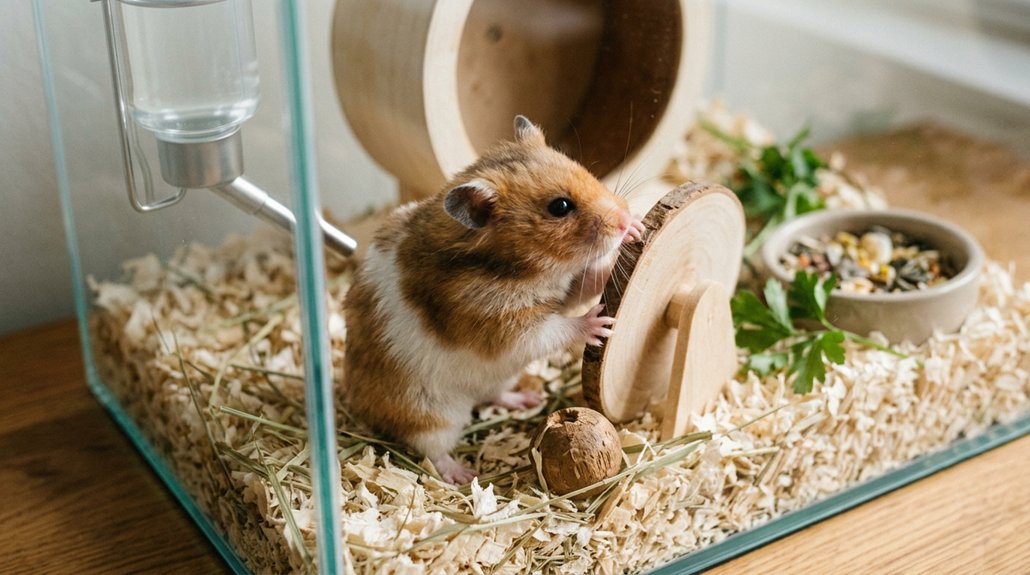
Before getting a hamster, understand their nocturnal habits and solitary nature. Adopt from ethical sources to promote welfare and reduce overpopulation. Set up a spacious habitat with safe bedding and enrichment to replicate natural behaviors. Confirm a balanced diet rich in protein, while limiting sugary treats. Regularly clean the cage and find an exotic animal vet for health check-ups. Building trust through gentle handling is key, and there’s more vital information ahead to enhance your hamster’s care.
Key Takeaways
- Adopt from shelters or ethical sources to support animal welfare and prevent cruelty in the pet trade.
- Respect their nocturnal nature by handling them gently during their active evening hours.
- Ensure their habitat meets space requirements and includes enrichment items to mimic natural environments.
- Feed a balanced, protein-rich diet, using high-quality foods and mindful of their dental health needs.
- Schedule regular veterinary care with an exotic animal specialist and maintain an emergency fund for unforeseen medical expenses.
Why Adopt: Ethical Considerations in Hamster Ownership
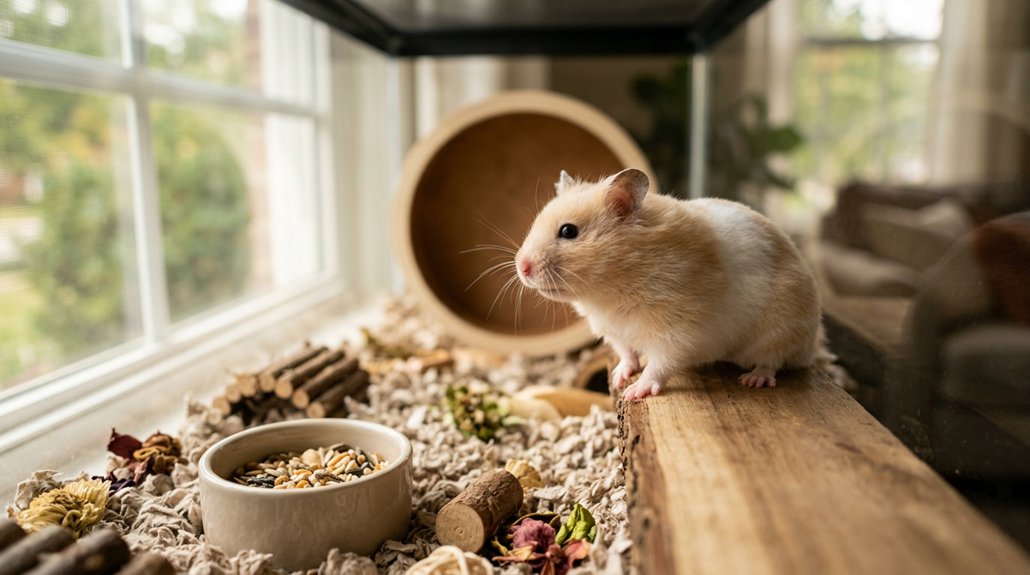
When considering a hamster as a pet, it’s important to understand the ethical implications of your decision, and adopting rather than buying is a significant ethical choice. One of the adoption benefits is circumventing the pet trade, which often subjects small mammals to cruel conditions. By adopting, you’re helping animals in rescues and shelters find much-needed homes, providing them a loving environment. Additionally, ethical sourcing from reputable organizations like the RSPCA guarantees your actions contribute positively by reducing overpopulation, avoiding needless euthanasia, and promoting animal welfare. Committing to adoption encourages responsible pet ownership, fostering a community that values ethical considerations over profit. This informed choice supports not only the animals but also a broader culture of compassion and care.
Hamster Behavior: Night Owls and Lone Wolves
When considering a hamster as a pet, it’s crucial to understand their nocturnal tendencies and solitary nature, especially for breeds like the Syrian hamster. You need to respect their evening activity schedule and avoid disrupting them during the day, as they can become aggressive if woken from sleep. Proper handling and consistent interaction from a young age can help them develop trust, making them less skittish and more comfortable in your presence.
Nocturnal Lifestyle Habits
Hamsters, being primarily nocturnal creatures, typically wake around 9:30–10:00 PM, ready to engage in their activities such as running on wheels and exploring their environment. These nocturnal habits are vital for their well-being but can lead to bedtime disturbances for their human caregivers. The lively nighttime activities might generate noise, potentially affecting your sleep if their habitat is nearby.
Hamsters can display aggression if disturbed during the day due to their nocturnal nature, sometimes leading to biting. As a result, it is important to respect their sleep cycle by minimizing daytime disruptions. Providing a secure, spacious environment allows them to thrive and facilitates natural behaviors during their active hours. Understanding these habits enables you to create a harmonious coexistence with your nocturnal pet.
Territorial Solitude Preference
Ever wondered why your hamster prefers solitude over companionship? It’s rooted in their territorial behavior and social dynamics. Most hamsters, like Syrian and Chinese breeds, thrive in solitary environments due to their strong territorial instincts. Housing them alone prevents aggression and conflict, essential for a peaceful existence. While Roborovski dwarf hamsters can be housed in pairs, they may establish hierarchies, leading to fights—a challenge for newcomers. This solitary nature aligns with their nocturnal lifestyle, where they’re active at night, potentially disturbing others if housed together. To accommodate their tendencies, offer an enriched environment with hiding spots and foraging opportunities. Observing rather than frequent handling respects their preference for minimal interaction, fostering their natural, independent behavior effectively.
Handling and Interaction Tips
Many find that fostering a healthy relationship with your pet hamster requires understanding their distinct behavioral patterns. As nocturnal creatures, hamsters are most active around 9:30-10:00 PM. Hence, it’s best to align interaction frequency with their nocturnal schedule, ensuring minimal stress during their daytime slumber. Syrian hamsters thrive in solitude, so house them alone to prevent territorial aggression.
Handling techniques are essential for acclimating your hamster to human interaction. Begin gently, approaching calmly and quietly, especially during the initial weeks, to make them feel secure. Regular handling, limited to their awake periods, helps nurture trust. Consider these guidelines for ideal bonding and to respect your hamster’s natural behaviors, promoting a harmonious coexistence and enriching companionship.
Setting Up a Hamster Paradise: Cage and Room Essentials
To create the ideal living space for your hamster, start by selecting a cage that offers ample room for activity and exploration—800 square inches for larger breeds and 640 square inches for dwarfs. Confirm the cage setup includes secure surroundings, with all openings smaller than half an inch for larger hamsters, and a quarter-inch for dwarfs. Choose bedding options like paper bedding or aspen to guarantee comfort while avoiding cedar, which emits harmful fumes. Regular maintenance, including daily spot cleanings and weekly deep cleaning, is essential. Also, maintain a temperature range of 65 to 75 degrees with adequate ventilation. Add enrichment items like chew toys, tubes, and hiding spots to replicate their natural environment and support physiological needs.
Feeding Hamsters: What You Need to Know
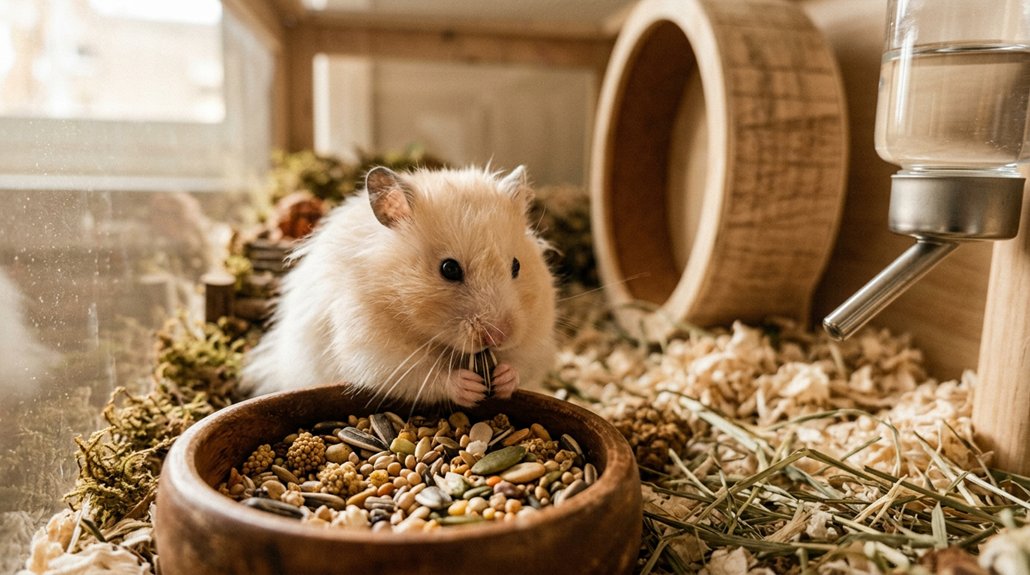
To guarantee your hamster thrives, it needs a protein-rich diet, using options like Mazuri Rat and Mouse Lab blocks and Higgins Sunburst seed mix, meeting the essential nutrient requirement of 18-20% protein. Safe treats, such as fresh fruits and vegetables, should be given sparingly to prevent diabetes. Always provide clean, distilled water using both dishes and bottles, while incorporating scatter feeding and chew items to support their foraging instincts and dental health.
Essential Nutrients Requirement
Though small in size, hamsters have specific dietary needs that must be met to secure their wellbeing. One key area to evaluate is preventing nutritional deficits. Hamsters require a diet with 18-20% protein, essential for maintaining their health. Utilize high-quality protein sources like Mazuri Rat and Mouse Lab blocks combined with seed mixes such as Higgins Sunburst to meet these needs. Providing these staples guarantees balanced nutrition and prevents deficiencies.
Additionally, their diet can include unseasoned scrambled eggs and limited fresh fruits or veggies as occasional treats, but do so sparingly to prevent the risk of diabetes. Confirm fresh, distilled water is available daily, using both water dishes and bottles, while scatter feeding facilitates natural foraging and mental stimulation.
Safe Treat Options
Providing a balanced diet is only part of ensuring your hamster’s well-being; knowing about safe treat options is equally important. When choosing treats, prioritize treat variety to give your pet stimulation without upsetting its delicate digestive system. Safe options include small pieces of vegetables, unseasoned scrambled eggs, and seed treats, which provide essential nutrients. Always practice treat moderation, especially with sugary items like fresh fruits, to avoid diabetes. Introduce new treats gradually to monitor any adverse reactions. It’s vital to avoid commercial treats loaded with sugars and artificial components, as they can severely impact your hamster’s health. Finally, always research the specific dietary requirements of your hamster’s species, as each type may have unique nutritional needs.
Feeding Equipment Essentials
A key element in maintaining your hamster’s health is the right feeding equipment, which plays a significant role in diet management. Opt for feeding tools like Mazuri Rat and Mouse Lab blocks or Higgins Sunburst seed mix to guarantee a balanced diet rich in 18-20% protein. Incorporate scatter feeding to promote natural foraging and enhance psychological well-being. Hydration solutions are equally vital; provide both water bottles and dishes filled with distilled water to assure consistent, clean access. Avoid sugary foods and excessive fresh fruits, opting instead for small vegetable treats to prevent diabetes. Additionally, supply chew items such as wood blocks or willow balls to maintain dental health, given the continuous growth of hamster teeth.
Maintaining Hamster Health: Cleaning and Exercise

An essential aspect of maintaining your hamster’s health is regular cage cleaning, which involves spot cleaning every couple of days and conducting a thorough deep clean weekly. This routine guarantees ideal hamster hygiene, reducing the risk of illness and promoting a healthy environment. Equally important, exercise routines are crucial for your hamster’s physical and mental well-being. A safe wheel, at least 11 inches in diameter, is necessary to support their natural running behavior without strain. Beyond the wheel, offer a variety of toys and chew items to prevent boredom and meet their instinctual needs. Regularly enrich their habitat with safe exploration areas, monitoring for signs of distress or illness, to make certain your hamster thrives both physically and emotionally.
Handling Hamsters: Building Trust and Reducing Stress
Handling hamsters is a delicate process that requires patience and understanding to build trust and reduce stress. Start this trust-building journey by handling your hamster from a young age to encourage comfort with human interaction. Approach your pet calmly and quietly, especially during the first weeks in a new home, as they’re easily startled and might bite when frightened. Aim for minimal, gentle interactions during calm periods, ensuring they feel secure while handled. Regular, gentle handling contributes considerably to stress reduction, gradually reducing skittishness and biting tendencies. Pay close attention to your hamster’s body language; signs of stress or discomfort, such as attempts to escape or vocalizing, indicate a need for a break. This careful approach fosters curiosity and friendliness.
Hamster Health Check-Ups: Finding the Right Vet
Selecting the right veterinarian for your hamster is vital, especially one who specializes in exotic animals. An exotic vet understands the unique health needs and conditions of hamsters, making them the best choice for your pet’s care. Regular health monitoring through wellness exams is critical to detect hidden health issues early. After adopting or rescuing a hamster, these exams help catch problems like wet tail, respiratory infections, or tumors before they worsen. Building a relationship with a vet beforehand guarantees prompt access to care, important since hamsters often conceal symptoms. To prepare for unforeseen medical needs, consider setting aside an emergency fund of around $500. Regular check-ups with an exotic vet can safeguard your hamster’s health and enhance their quality of life.
Frequently Asked Questions
Do Hamsters Smell in Your Room?
Yes, hamsters can smell in your room if hygiene is lacking. Regular cleaning and choosing the right bedding, such as avoiding cedar and pine, play essential roles in minimizing odors and maintaining a fresh living environment.
Can I Leave a Hamster Alone for 4 Days?
Leaving your hamster alone for four days isn’t a walk in the park. Reliable hamster care is essential; guarantee a strict feeding schedule, plenty of water, and a clean environment by having someone check on its needs.
How Do You Say “Hi” in Hamster Language?
You can’t directly say “hi” in hamster language, but understanding their behavior helps. Observe pet communication through ultrasonic calls, body language, or scent marking. Recognize friendly hamster behavior by their comfort in burrowing and exploring activities.
Is a Hamster a Good Beginner Pet?
Did you know hamsters live around 2-5 years? They’re great beginner pets due to easy hamster care. However, pet responsibilities include vet visits, spacious housing, and knowing they’re nocturnal, requiring night-time interaction to prevent skittishness.
Conclusion
Embracing hamster ownership is like opening a delightful, yet intricate puzzle. It’s not just about having a furry ball of cuteness but understanding their nocturnal tendencies and solitary nature. You’ll need to create a safe and enriching environment, provide nutritious meals, and promote their health through exercise and vet care. Handling them gently and building trust will reduce stress and strengthen your bond. With mindful care, your hamster can thrive and become a cherished companion.