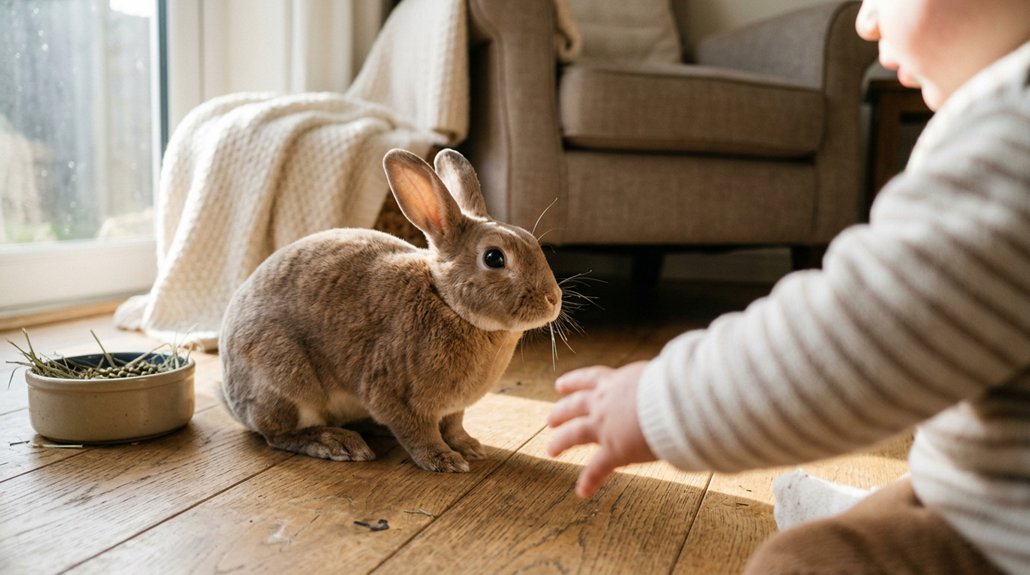
Rabbits can be wonderful pets, offering strong social bonds and quiet companionship, perfect for apartments. They’re intelligent and can be trained, but require a lot of care and daily attention. Understanding their dietary needs and providing ample space is essential. They’re often misunderstood as low-maintenance, but they need an enriched, rabbit-proof space. Consider the long-term commitment and potential vet costs. Exploring further will help you understand if a rabbit suits your lifestyle.
Key Takeaways
- Rabbits form strong social bonds but require significant time for interaction and enrichment.
- They are quiet and suitable for apartments but need ample space and exercise.
- Misconceptions about low maintenance lead to the need for a committed owner.
- A specialized high-fiber diet and regular vet visits are crucial for health.
- Proper habitat setup and cautious handling are essential for a safe environment.
Discover the Joy of Rabbit Companionship
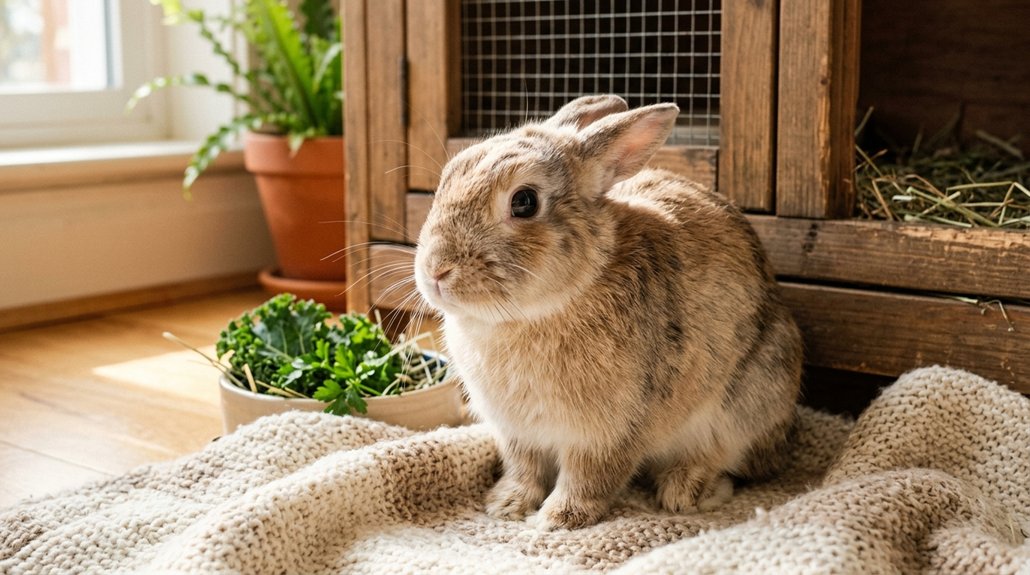
Anyone who has experienced the joy of rabbit companionship understands that these delightful creatures offer more than just soft fur and twitching noses. You’ll find that their social nature means they bond strongly with you through specific rabbit behaviors, like gentle grooming and nudging for attention. These are not just charming quirks; they’re essential bonding activities that strengthen your connection. Rabbits, with their intelligence, are also enthusiastic learners. You can use positive reinforcement techniques to train them in tricks and even agility courses, transforming quiet evenings into engaging sessions for both of you. Additionally, their quiet demeanor and minimal space requirements make them ideal for apartment living. Regular social interaction keeps them mentally stimulated, ensuring a happy, healthy pet.
Overcoming Rabbit Care Challenges
When considering a rabbit as a pet, it’s important to understand the challenges inherent in their care. Rabbits demand significant time and effort to thrive; mastering socialization techniques and offering behavioral enrichment are key to preventing boredom and behavioral issues. Here are three tips to tackle these challenges:
- Rabbit-proof your home: With their natural chewing and digging instincts, protecting furniture and wires is imperative. Make certain your home is safe from potential damage and hazards.
- Dietary needs: Maintain a high-fiber diet of unlimited grass-based hay and fresh greens. This is crucial for your rabbit’s digestive health and overall well-being.
- Space and exercise: Create a spacious environment with a minimum size of 24 square feet for daily exercise. Extended enclosures enhance behavioral enrichment and guarantee your rabbit’s happiness.
Addressing Rabbit Care Myths
How often have you heard that rabbits are low-maintenance pets? This is one of many common misconceptions in rabbit care. They require as much dedication as cats or dogs, needing spacious living quarters and careful dietary management. Financially, you’re looking at considerable expenses for vet visits, as regular check-ups ($100-$150) and spaying/neutering ($200-$500) are essential.
Rabbits also aren’t always fond of being held, making them less suitable for small children without proper supervision. Additionally, their diets can’t include just any greens; hay and specific leafy greens are important to avoid digestive issues.
Here’s a quick comparison:
| Myth | Reality | Result |
|---|---|---|
| Easy starters | High commitment required | Long-term responsibility |
| Small cages suffice | Need spacious enclosures | Promotes health |
| All greens are safe | Restricted diet needed | Prevents health problems |
| Enjoy being held | May dislike handling | Needs cautious interaction |
Creating a Happy Home for Your Rabbit
What makes a home truly joyous for a rabbit? It’s all about creating a space that meets their physical and mental needs. A spacious enclosure of at least 24 square feet is essential for them to move and stretch. Here are some enclosure essentials and toy varieties to keep in mind:
- Spacious Enclosures: This allows your rabbit ample room for daily exercise, crucial to their health.
- Toys of Variety: Provide safe chewing toys like cardboard and wood to satisfy their instincts, preventing destructive behavior.
- Regular Cleaning: A clean environment prevents respiratory infections and skin ailments. Litter training aids in maintaining hygiene.
Lastly, confirm the rabbit’s living area is safe, especially if cohabiting with other pets, considering their natural hunting instincts.
Deciding on Rabbit Ownership
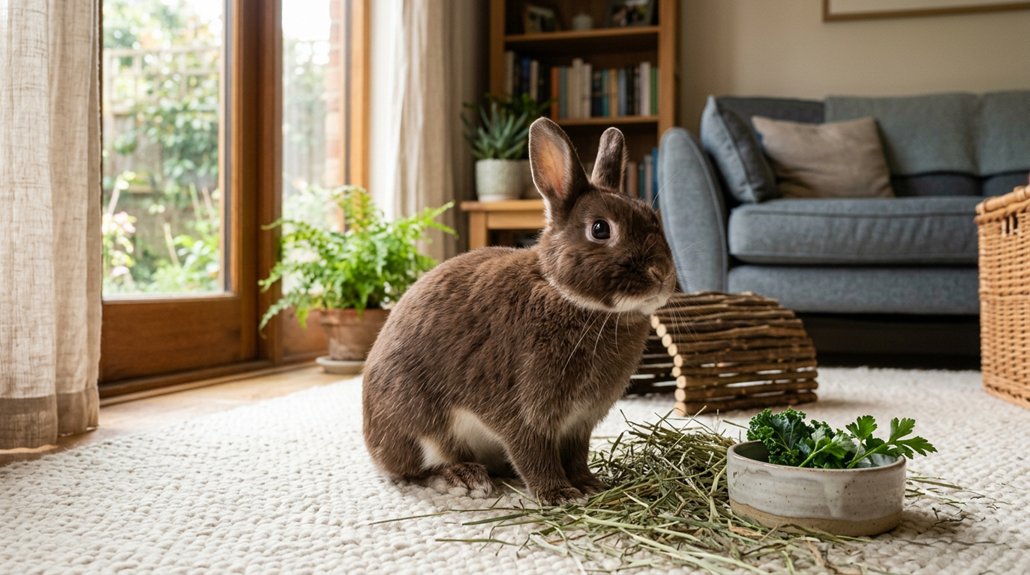
After creating a joyful environment for your rabbit, the next step is evaluating whether rabbit ownership aligns with your lifestyle. Rabbits, known for their playful and curious personality traits, thrive in interactive environments but require significant time commitment. Consider if you’re ready to invest time in daily interaction and maintain their specialized diet, which includes unlimited grass hay and fresh vegetables. A rabbit typically lives around 10 years, demanding a long-term commitment, including annual veterinary visits and possibly surgeries like spaying or neutering.
Furthermore, rabbits need a spacious living area of at least 24 square feet for exercise, along with careful consideration of how they’ll coexist with other pets. Analyzing these factors guarantees a compassionate and responsible decision regarding rabbit ownership.
Frequently Asked Questions
What Is the Downside of Owning a Rabbit?
Owning a rabbit can be challenging due to health concerns and behavioral issues. You’ll need to manage their sensitive diet, provide spacious living areas, and guarantee specialized vet care, while understanding their natural instincts to chew and dig.
What Is the 3 3 3 Rule for Rabbits?
The 3-3-3 rule for rabbit care shows 75% of rabbits exhibit trust after three months. Initially shy, their behavior evolves: three days to acclimate, three weeks revealing personality, three months forming a bond with you.
Do Pet Bunnies Like Being Held?
Pet bunnies usually don’t enjoy being held due to their prey instincts. Focus on bunny behavior and pet bonding by interacting gently and building trust. This approach puts them at ease, potentially leading them to seek your affection voluntarily.
How Does a Rabbit Say “Sorry”?
Your rabbit’s got regrets? Look for an adorable nudge or grooming session—rabbit body language speaks volumes. It’s not just fluff; it’s a heartfelt mea culpa, showcasing their nuanced rabbit communication skills worthy of Shakespearean drama.
Conclusion
Choosing to welcome a rabbit into your world is like opening a book filled with fluffy pages of joy and delicate challenges. These furry adventurers offer companionship, but require care and understanding to thrive. Be prepared to sift through myths and embrace the nuances of rabbit ownership, crafting a home as cozy as a bunny’s den. Weigh the pros and cons with wisdom and compassion, ensuring that when you hop into rabbit ownership, it’s a hop of harmony.