
Before getting a rabbit, know they can live 8 to 14 years, requiring dedication to their health and well-being. You’ll need a spacious, safe enclosure and carefully bunny-proof your home. Rabbits need companionship to thrive, so consider adopting in pairs and guarantee they’re neutered. Their diet should focus on hay and leafy greens, not sugary treats. Be prepared for costs, from daily care to vet visits. Discover more insights into responsible rabbit ownership ahead.
Key Takeaways
- Rabbits have a lifespan of 8 to 14 years, requiring a long-term care commitment.
- Proper housing includes a spacious, safe enclosure of at least 3m x 2m x 1m.
- Rabbits are social animals that require companionship to prevent negative behaviors.
- Their diet should primarily consist of grass hay, supplemented with leafy greens.
- Ownership can be costly with ongoing expenses for food, supplies, and veterinary care.
How Long Do Rabbits Live? What You Need to Know
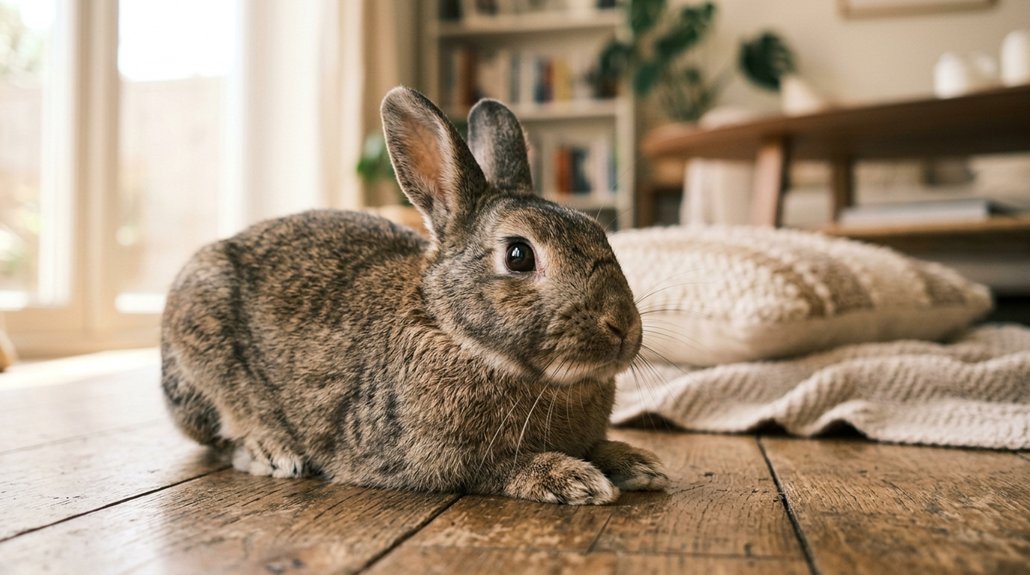
How long can you expect a rabbit to be part of your family? With a typical rabbit lifespan ranging from 8 to 14 years, some breeds may live up to 15 years or more with diligent care. Proper health management plays a critical role in their longevity. You’ll need to prioritize a balanced diet and regular veterinary check-ups, as rabbits often hide symptoms of illness. Females, especially, should be spayed to reduce the risk of uterine cancer, which can affect up to 80% of unspayed rabbits by ages 4-6. Adopting a rabbit is a long-term commitment, requiring you to plan for future care needs. Effective health management guarantees they thrive throughout their life, providing companionship for years.
Crafting a Safe Rabbit Home
As you embrace the long-term commitment of having a rabbit, it’s imperative to set up a safe and suitable home environment for them. Your rabbit enclosure should be an indoor space at least three metres by two metres, with a height of one metre. Choose safe materials for the structure, guaranteeing the bottom is solid to protect their delicate feet—avoid typical pet store cages as they’re often inadequate. “Bunny-proofing” your home is essential, too; assure electrical cords, small objects, and toxic plants are out of reach. Regular cleaning of the enclosure, ideally once or twice weekly, keeps it sanitary. Finally, enrich their habitat with toys and safe chew items to promote their mental stimulation and overall well-being.
Why Companionship Matters for Rabbits
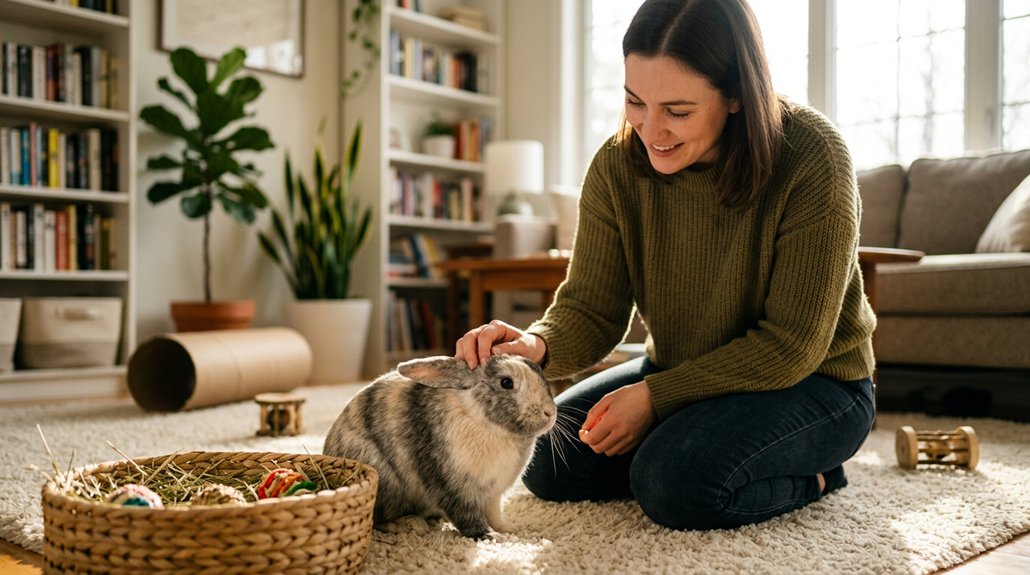
When considering the social nature of rabbits, it is vital to understand that these animals are inherently sociable and flourish with companionship. Rabbits naturally live in large groups in the wild, highlighting the importance of social bonding for their emotional well-being in a domestic setting. A solitary rabbit might exhibit negative rabbit behavior, such as aggression or depression, due to loneliness. Having at least one other rabbit can greatly improve their mental health and happiness.
To facilitate healthy interactions, neutering is recommended; it prevents unwanted litters and fosters better bonding. Affectionate behaviors, like grooming and chin rubbing, signal their need for connection. Remember, bonding requires patience. Carefully monitored introductions and compatible pairings are key to enhancing their overall quality of life.
Why Rabbits Can’t Live on Carrots: Essential Diet Tips
Understanding a rabbit’s companionship needs is just the beginning of responsible care; their dietary requirements demand equal attention. Contrary to popular belief, rabbits can’t thrive on carrots alone, a common diet misconception that jeopardizes their delicate digestive health. To guarantee a balanced diet, focus on these key components:
- Grass Hay: Essential for gut motility, Timothy or orchard hay should be the primary component, aiding in teeth wear and digestive health.
- Leafy Greens: Daily servings of dark leaf lettuces and collard greens provide essential nutrients, enhancing variety and wellbeing.
- Treats Sparingly: High-sugar foods like carrots should be reserved as occasional treats to prevent digestive disruptions.
- Gradual Diet Changes: Introduce new foods slowly, monitoring for adverse reactions to avoid gastrointestinal issues.
Access to unlimited fresh water is also crucial.
Understanding Rabbit Care Costs
Considering the financial implications of rabbit ownership is essential for prospective pet owners. Rabbits are surprisingly more costly than cats or guinea pigs, trailing only after dogs regarding care expenses. The initial investment includes adoption fees and supplies such as cages, toys, and food dishes. Ongoing expenses require careful budgeting for daily care—food, bedding, grooming, and habitat maintenance. Annual veterinary check-ups, particularly with rabbit-savvy vets, are vital yet potentially expensive, especially given specific breed predispositions to various health conditions. Average rabbit lifespans range from 8 to 14 years, during which unplanned health issues can emerge, necessitating costly emergency treatments. Planning for potential living space modifications enhances safety but can also contribute to the financial burden.
Frequently Asked Questions
What Is the 3 3 3 Rule for Rabbits?
The 3 3 3 rule helps with rabbit socialization. In three weeks, they adjust. Three months builds trust. Beyond that, their true personality shines. Combine this with a balanced diet, like fresh veggies and hay, for their well-being.
Can a Bunny Be Left Alone for 2 Days?
You shouldn’t leave a bunny alone for two days. They’re social creatures needing daily interaction. Plan their care by guaranteeing they’ve company, or arrange a sitter. Confirm their essentials are met—food, water, toys—to supplement necessary alone time.
How Do Rabbits Say “I’m Sorry”?
Just by chance, your rabbit might lower its ears and adopt a relaxed posture. Bunny behavior includes offering treats or playful gestures. Their body may convey apologies through gentle grooming or cautious approaches. Understanding rabbit body language is key.
Why Do Rabbits Scream at Night?
Rabbits scream at night due to fear or stress, often from disturbances. Their nighttime behavior reflects natural prey instincts. Ensuring your rabbit’s environment is secure and familiar helps ease anxiety, mitigating such alarming vocalizations in their communication.
Conclusion
Before welcoming a rabbit into your home, picture a long-term commitment that frames your days with their twitching noses and soft, scampering feet. As you prepare a cozy, safe haven and calculate the cost of their care, remember that their needs extend beyond a simple carrot snack. Think of the essential companionship they crave, illustrating a vibrant, interconnected life. Your attentiveness today sows the seeds for their healthy, happy years ahead, blending care with caution.