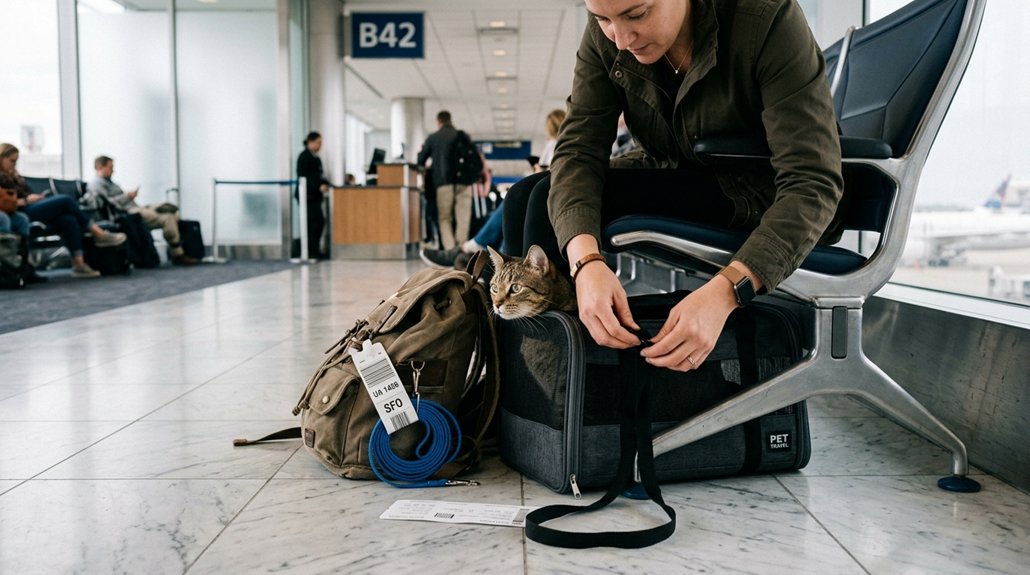
Flying with a cat requires careful planning for a smooth journey. Choose an airline with favorable pet policies, book in-cabin travel well ahead, and budget for pet fees and certifications. Acclimate your cat to the carrier, use pheromone sprays, and have vet checks for vaccinations. At the airport, handle security calmly, and keep comfort items ready. During the flight, monitor your cat’s stress levels. There’s much more to explore for ensuring your cat’s comfort and safety.
Key Takeaways
- Compare airlines to find those with favorable in-cabin pet policies and book early.
- Prepare necessary health documents and vaccinations at least 10 days before traveling.
- Acclimate your cat to the carrier with familiarity and comfort well in advance.
- Maintain calm through airport security and consider requesting a private screening room.
- Use familiar items and calming sprays to ease anxiety during and after the flight.
Selecting the Best Airline for Your Cat’s Needs
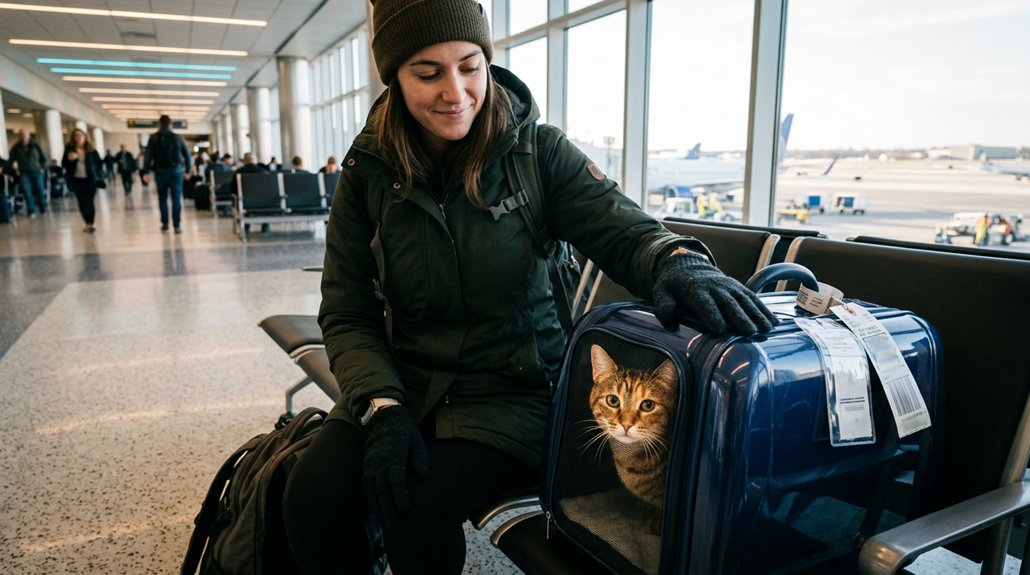
When planning to travel with your feline companion, how do you guarantee their journey is as comfortable and stress-free as possible? Start by conducting thorough airline comparisons focused on pet policies. These policies vary markedly regarding carrier dimensions, pet fees, and allowed pet numbers. Opt for airlines that permit in-cabin travel for cats, which reduces stress compared to cargo travel. Verify pet booking availability, as limits per flight mean advanced reservations are vital. Check the airline’s specific health and vaccination requirements to confirm compliance, including a veterinarian-issued health certificate if needed. Favor airlines renowned for excellent pet travel experiences—those with pet-friendly policies, knowledgeable staff, and positive customer reviews highlight their commitment to safely accommodating your feline friend.
Acclimating Your Cat: Carrier Preparation
Begin acclimating your cat to the carrier by making it a comfortable and inviting space, incorporating cozy bedding, toys, and treats to foster a positive association. Gradually expose your cat to short car rides in the carrier, rewarding them with treats to reinforce calm behavior and instill confidence. To guarantee a smooth journey, familiarize your cat with the carrier well ahead of your trip, consulting reputable resources like *The Cat Bible* for additional strategies to ease travel anxiety.
Gradual Carrier Familiarization
Although many cats view their carriers with trepidation, gradual acclimatization can transform it into a space of comfort and familiarity. Start by promoting carrier exploration; leave the carrier open and accessible in your home. Place cozy bedding, treats, and familiar toys inside to create positive associations. At first, reward your cat for voluntarily entering the carrier with treats. Over time, begin closing the door for brief periods, gradually extending the duration as your cat becomes more comfortable. This helps guarantee they don’t see it as a trap. Once your cat is comfortable, incorporate short car rides to acquaint them with travel-related sounds and motion. For detailed training steps, consult resources like *The Cat Bible* to further optimize the process.
Positive Reinforcement Techniques
Enhancing your cat’s carrier experience through positive reinforcement can greatly ease the travel process. Gradually introduce the carrier by placing it in their usual environment, complete with cozy bedding and toys. Use treats or catnip to build a positive association, facilitating exploration and comfort. Feeding your cat inside the carrier before a trip reinforces its safe perception, vital for reducing anxiety. For effective behavioral training, practice short car rides with your cat secured, so they acclimate to traveling.
| Step | Action | Benefit |
|---|---|---|
| Carrier Introduction | Place in environment | Encourages exploration |
| Positive Association | Use treats and catnip | Builds comfort |
| Feeding Inside | Give meals in the carrier | Associates with safety |
| Practice Car Rides | Short trips in carrier | Reduces travel anxiety |
Concluding, gradual exposure and positive experiences fundamentally prep your cat for air travel.
Creating a Safe Space
To safely acclimate your cat to the carrier, often start by making it a comfortable and inviting space well ahead of your travel date. Begin your carrier setup by placing it at home with soft bedding, familiar toys, and a few treats inside, encouraging your cat to associate it with positive experiences. Using positive reinforcement can ease apprehension; reward your cat with treats or praise each time they enter the carrier. Initially, leave the carrier door open; then, gradually close it for short periods, allowing your cat to get used to confinement. Practice safe travel by introducing short car rides in the carrier, helping acclimate them to transport. Verify the carrier meets airline safety and comfort specifications, offering enough space for your cat’s ease.
Budgeting for Your Cat’s Travel Expenses
Planning a trip with your feline companion requires careful budgeting to guarantee a smooth journey without unforeseen financial hiccups. Begin by examining airline-specific pet fees for in-cabin travel, as they vary widely and can impact your overall travel budgeting. Consider your carry-on limitations since your cat counts as a personal item, which might necessitate checking additional luggage. Confirm your chosen carrier meets airline specifications to avoid last-minute purchases. Additionally, factor in costs for health certificates and vaccinations needed pre-flight. It’s prudent to have pet insurance to manage unexpected costs, such as emergency vet visits, en route. Finally, plan for potential extras, like pet supplies or travel comforts, to keep your cat content throughout the trip. Budgeting precisely guarantees a hassle-free adventure.
Preparing for Vet Visits and Health Checks
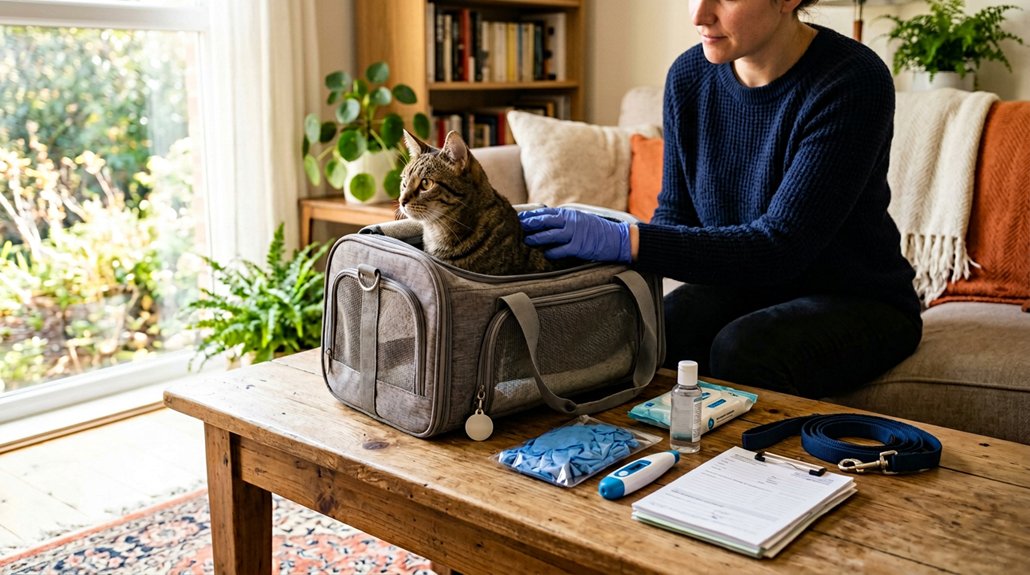
Before you commence your journey, it’s essential to guarantee your cat is in top health by scheduling a wellness check with your veterinarian. Aim to do this a few weeks ahead of travel—the earlier, the better. During the visit, you’ll need to discuss travel vaccinations, making certain your cat’s rabies and other required shots are current. Airlines often mandate veterinary paperwork, such as a health certificate issued within 10 days of travel, to confirm your cat’s wellness and vaccination status. If your destination has additional requirements like microchipping, plan accordingly. Address any anxiety your cat might experience by consulting your vet, who can recommend calming supplements or medications. This proactive approach guarantees seamless travel and prioritizes your cat’s health and comfort.
What to Pack for Your Cat’s Comfort
After guaranteeing your cat’s health is in top shape for the flight, the next focus should be on packing strategically for your furry friend’s comfort throughout the journey. Start with essential pet items like your cat’s favorite blanket or toy to provide a sense of familiarity. Include collapsible food and water bowls to maintain hydration and nutrition during layovers. Bringing along sufficient treats is not only rewarding but helps alleviate travel stress. Pee pads are essential for avoiding messes in the carrier on long flights. Confirm you have veterinary records and health certificates, which are important for airline compliance and your cat’s health monitoring. Finally, pack any necessary medications to address health needs while guaranteeing a smooth, stress-free journey.
Navigating Airport Security: Stress-Reduction Tips
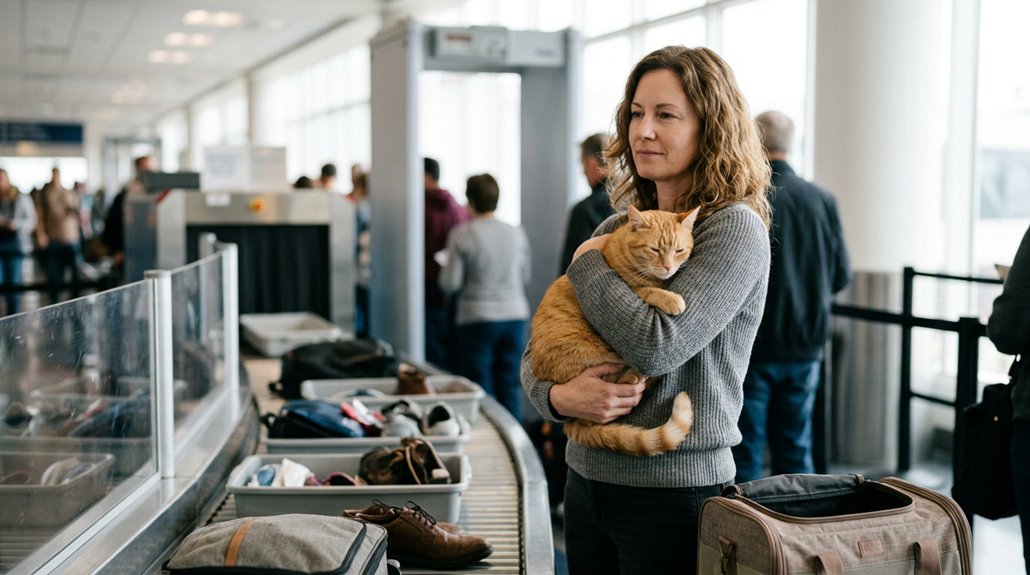
When flying with your cat, it’s crucial to navigate airport security with strategies designed to minimize stress for both you and your feline companion. Understanding security protocols will aid in effective stress management. Remove your cat from their carrier when approaching the screening area and securely carry them through the metal detector. If your pet is particularly anxious, don’t hesitate to request a private screening room for a calmer experience. Prepare for the possibility of hand swabs if your cat’s carrier needs further inspection. Allow plenty of time for the entire process, maintaining a composed demeanor to help your cat stay relaxed.
- Ensure your cat’s harness and leash are secure.
- Be patient throughout the screening process.
- Seek assistance if needed.
- Keep calm to reassure your cat.
How to Keep Your Cat Calm During the Flight
To guarantee your cat remains calm during the flight, place familiar items like a favorite blanket or toy in their carrier to create a sense of security. Keep a supply of treats handy to reward calm behavior, helping to ease your cat’s anxiety throughout the journey. Additionally, maintaining your own calm demeanor and considering the use of calming pheromone sprays can support your pet in feeling more relaxed during the flight.
Familiar Items for Comfort
A sense of familiarity can greatly ease your cat’s travel stress. Incorporate comfort items and travel routines to maintain relaxation. Here are key items to evaluate:
- Favorite Blanket or Toy: These familiar items create a secure environment, reducing anxiety.
- Regular Bedding: Include a small piece in the carrier to provide comfort through known scents.
- Calming Pheromone Sprays: Apply them to the carrier or belongings to soothe your cat with familiar chemical cues.
- Familiar Sounds: Play recordings from home to envelop your cat in comforting auditory cues.
Keep these items within easy reach in the carrier, allowing you to quickly reassure and reward your cat with treats, reinforcing calm behavior. This strategic inclusion creates a serene travel experience.
Managing Cat’s Anxiety
While flying with a cat can be nerve-wracking, employing effective anxiety management techniques will help keep your feline calm during the flight. Start by gradually introducing calming pheromone sprays, such as Feliway, in the weeks leading up to your trip. This creates a sense of security and familiarity, reducing anxiety symptoms. Choose a soft, airline-approved carrier for comfort and proper ventilation. Inside, place familiar objects like a favorite blanket or toy to soothe your cat. Monitor your cat’s behavior and be prepared with treats to reward calm behavior throughout the flight. Consult your veterinarian about anxiety management options, discussing both medicinal and natural remedies. With these calming techniques, you’re well-equipped to make the journey smoother for both you and your pet.
Frequently Asked Questions
What Is the 3-3-3 Rule With Cats?
The 3-3-3 rule guarantees pet safety during cat travel: acclimate your cat three days before journey, secure comfort and reassurance during, then allow adjustment in new environment three days after. It eases stress and anxiety efficiently.
What Do I Need to Do Before Flying With My Cat?
Before flying, dot every ‘i’ and cross every ‘t’ by confirming your airline’s pet policies and securing health certificates. Acclimate your cat to its carrier, pack essentials, and notify the airline to guarantee a smooth journey.
What Is “I Love You” in Cat Language?
In cat communication, “I love you” is expressed through slow blinking, kneading, purring, head-butting, and following you around. Each behavior reflects feline affection, showcasing trust, comfort, companionship, and their unique ways of marking you as family.
How Do Cats Go to the Bathroom When Flying?
Cats typically don’t go to the bathroom on short flights due to stress. However, for longer journeys, consider pee pads as bathroom options. Confirm proper hydration and research airline policies for possible bathroom breaks during layovers.
Conclusion
Before you venture on your journey with your feline companion, remember that preparation is key to ensuring both your and your cat’s comfort. Consider Clara, who successfully flew cross-country with her tabby, Milo, by planning diligently—choosing an airline with pet-friendly policies, acclimating Milo to his carrier, and packing his favorite blanket. Follow these expert tips to minimize stress and maximize comfort, ensuring a smooth flight experience where both you and your beloved pet arrive happy and relaxed.