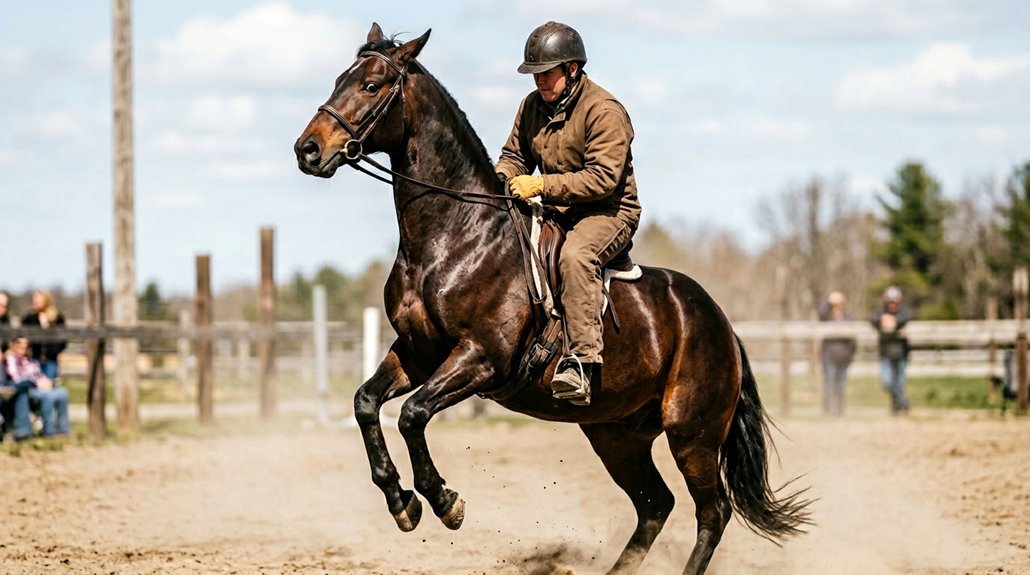
When a horse becomes dangerous, stay calm, avoid sudden movements, and maintain a safe distance to de-escalate aggression. Identify triggers like overcrowding or pain, and document incidents to spot behavior patterns. Use calming supplements and reinforce positive behavior through consistent rewards. Ascertain the horse’s basic needs are met to reduce stress-related aggression. Regular vet check-ups can reveal underlying health issues. By understanding these strategies, you’ll be better equipped for effective behavior management.
Key Takeaways
- Maintain a calm and composed demeanor to de-escalate the situation and ensure personal safety.
- Back away slowly to a safe distance if the horse shows early aggression signs like pinned ears or raised tail.
- Remove environmental stressors like overcrowding or competition for food to reduce aggression triggers.
- Implement routine veterinary check-ups to identify and address any health-related causes of aggressive behavior.
- Use positive reinforcement, such as treats or praise, to encourage and reward desired behaviors in the horse.
Immediate Steps to Ensure Safety When a Horse Is Aggressive
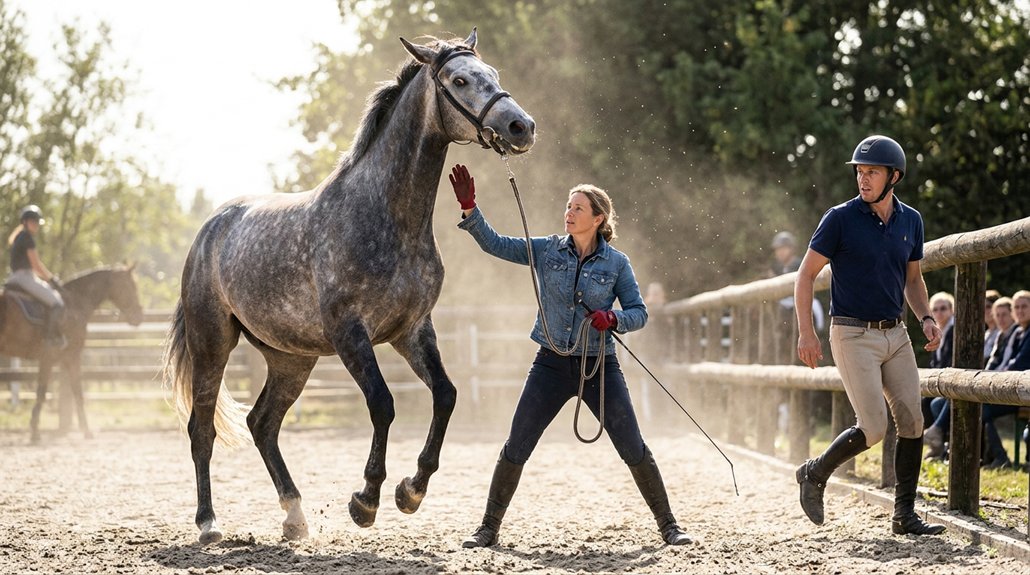
When encountering a horse that’s behaving aggressively, it’s crucial to remain calm and composed since this helps to de-escalate the situation. Your calm demeanor can prevent escalating the horse’s fear or aggression. Avoid sudden movements and make sure you’re maintaining a safe distance, ideally several feet away, which minimizes risk of harm. Pay attention to early warning signs like pinned ears or raised tails, and respond by slowly backing away to a safe distance. Consider redirecting the horse’s focus calmly or removing environmental triggers, such as other animals or stressful stimuli. If necessary, employ calming techniques or consider supplements to reduce anxiety during high-stress situations. Your analytical approach creates a supportive and secure atmosphere, fostering safer interactions with the horse.
Identify Aggression Triggers in Horses
Although it might seem intimidating at first, identifying the triggers for aggression in horses can greatly improve safety and understanding in your interactions. Recognizing different aggression types is essential. Environmental factors like overcrowding or limited resources can lead to aggression through perceived threats or competition. Trigger recognition also extends to pain-induced aggression, often indicated by behaviors such as pinned ears or resistance during handling. Observing resource guarding, where aggression arises from past scarcity experiences, helps identify specific triggers. Additionally, note if behavioral triggers occur during routine activities, like grooming or saddling, linked to previous discomfort. Maintaining a detailed diary of aggressive incidents helps spot patterns, enabling you to address underlying causes analytically and empathetically.
Spot Early Signs of Aggression
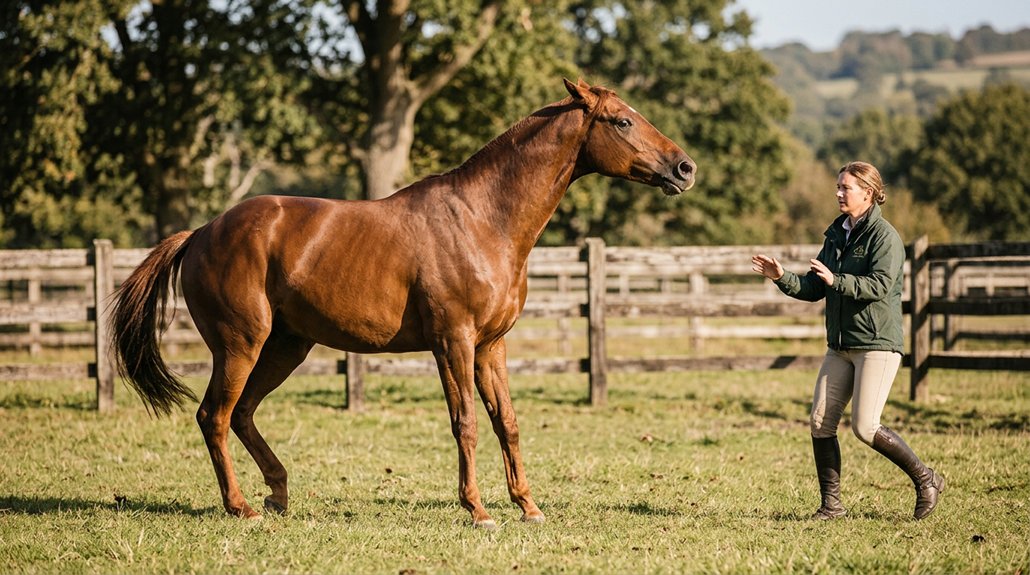
Spotting early signs of aggression in horses involves recognizing subtle behavioral changes like flattened ears or a sudden, rapid tail swish. It’s essential to identify these early warning signs and monitor any incidents to pinpoint patterns or triggers. By doing so, you can adjust your approach in time, reducing risks and fostering a safer environment for both you and your horse.
Recognize Subtle Behavioral Changes
Early identification of subtle behavioral changes in horses can prevent dangerous situations from arising. Recognizing these behavioral nuances is critical. Watch for subtle signals like flattened ears, rapid tail swishing, or a tense posture. They’re often horses’ initial expressions of discomfort or stress. Pay attention to any avoidance of human contact or unexpected shifts in temperament during routine tasks; these too can indicate an underlying issue. Keeping a detailed diary of such incidents could reveal patterns and potential triggers. By understanding these subtle behavioral shifts and integrating them into your daily observations, you create an opportunity for timely intervention. Consult professionals to gain insights into your horse’s body language and environment, bolstering your ability to manage and prevent aggression effectively.
Identify Early Warning Signs
Recognizing early warning signs of aggression in horses is essential to ensuring safety for both the animal and those handling it. You need to be attentive to flattened ears and rapid tail swishing, as these often precede more overt aggressive behaviors. Such signs may indicate frustration or discomfort. Horses might resort to these subtle cues when they’re feeling tense or uneasy, usually before lunging or biting. Pay close attention to their body language during routine tasks like grooming or saddling. If you notice tensing muscles or sudden posture changes, the horse could be on the brink of aggressive reactions. Addressing these signs promptly helps alleviate fears or discomforts, reducing the risk of escalation and enhancing both your safety and the horse’s well-being.
Monitor Patterns and Triggers
After grasping the early warning signals, understanding the patterns and triggers of aggressive behavior in horses becomes essential. By honing your pattern recognition and trigger analysis skills, you gain insights into the horse’s behavior. Here’s how:
- Maintain a Diary: Consistently document incidents to pinpoint recurring triggers, such as interactions with certain individuals or specific environments.
- Track Timing: Identify times of day when aggression spikes. Such monitoring reveals underlying stress or fatigue patterns vital for mitigating risk.
- Observe Situational Cues: Scrutinize specific triggers like feeding or grooming, adjusting management to preempt aggression.
Observe body language for cues of pain or frustration—flattened ears or swishing tails—indicating that proactive adjustments can prevent escalation. Through careful analysis, you foster a safer, more understanding relationship with your horse.
Essential Tools for Managing Aggression
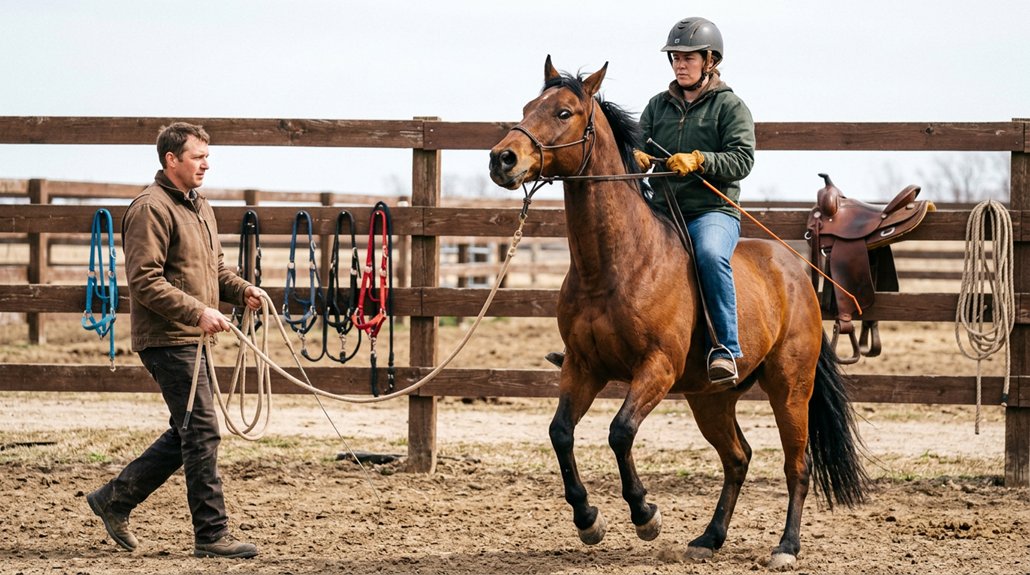
When dealing with a horse that exhibits aggression, there’s a toolkit of strategies that can make a significant difference in managing their behavior. Start by mastering communication techniques that recognize early warning signals like pinned ears and rapid tail swishing. This awareness allows for swift intervention, preventing potential escalation. Stress management is another essential tool; employing distance as a strategy can help keep both you and the horse safe by minimizing exposure to triggers. Additionally, using calming supplements during tense situations and setting boundaries with pressure halters reinforces positive behavior while establishing leadership. Foster trust through consistent, positive interactions, as a secure, trusting relationship is crucial for enhancing the horse’s emotional well-being and reducing aggressive tendencies long-term.
How Environment Influences Aggression
You’re certainly aware that a horse’s environment plays a critical role in its behavior, and identifying specific triggers is essential in managing aggression effectively. When a horse feels cramped or threatened, or has to compete for resources, these stressors can amplify aggressive behavior. By adjusting these factors—such as ensuring ample space and predictable routines—you can create a more secure and calm atmosphere, which greatly reduces the risk of aggression.
Identifying Environmental Triggers
Understanding how environmental factors influence aggression in horses is critical to guaranteeing their well-being and safety. Horses thrive in environments that respect their social structure and minimize resource competition. Overcrowded spaces or inadequate resources can disrupt herd dynamics and increase stress, fueling aggression. It’s essential to recognize these triggers to mitigate conflict.
Here’s what you should consider:
- Evaluate Space: Guarantee ample room for horses to roam, which respects their natural social structures and reduces tension.
- Assess Resource Distribution: Make sure food and water are accessible to all, minimizing resource competition that fosters aggressive behaviors.
- Review Management Practices: Maintaining consistent routines and handling helps decrease confusion, which otherwise might trigger aggression.
Modifying Stressful Situations
Recognizing environmental triggers is just the beginning; modifying those stress-inducing situations is the key to curbing aggression in horses. Stress reduction involves addressing overcrowding and ensuring ample resources and space. Behavior modification thrives in stable environments, removing elements such as food competition. Analyze your horse’s environment regularly to spot stressors like insufficient shelter or social isolation.
| Stressor | Solution | Impact |
|---|---|---|
| Overcrowding | Increase space | Lower aggression levels |
| Food competition | Separate feed areas | Reduce biting/lunging |
| Adjustment stress | Gradual transitions | Calmer demeanor |
Vet Check-Ups to Identify Health-Related Aggression
To dive deeper into origins of aggression:
- Document Aggression Episodes: Keeping a diary assists vets in analyzing patterns and potential health-related triggers.
- Monitor Changes During Activities: Notice behaviors during saddling or performance; discomfort might indicate underlying issues.
- Prompt Intervention: Early veterinary care prevents aggression linked to untreated health issues, guaranteeing safer conditions for all.
With thorough assessment, you guarantee your horse receives the care needed for both their health and your safety.
Use Positive Reinforcement for Behavior Change
Identifying health-related causes of aggression is only one piece of the puzzle; promoting behavioral changes through positive reinforcement is another essential element. By rewarding desired behaviors with treats, praise, or affection, you’ll encourage safe, calm interactions with your horse. The key is reward timing—reinforce the desired behavior immediately to guarantee that your horse associates the action with the reward. This approach fosters trust building, reducing anxiety and aggression over time. Consistent implementation helps replace negative behaviors with appropriate responses. Additionally, through gradual desensitization, you enable your horse to overcome fear-based reactions, creating a calmer demeanor in stressful situations. Ultimately, you’ll cultivate a more trusting relationship, making handling sessions safer and more positive for both you and your horse.
Ensuring Horses’ Basic Needs for Greater Calmness
While it may seem straightforward, guaranteeing your horse’s basic needs are met is critical for fostering calm behavior. Focus on these key areas:
Guaranteeing your horse’s basic needs fosters calm behavior and reduces aggression.
- Forage Access: Horses need forage for at least 15 hours a day. Their small stomachs require frequent feeding to avert hunger-fueled aggression. Consistent access to hay or pasture is essential.
- Social Interaction: Horses are social creatures. Providing opportunities for interaction with other horses will meet their social needs, fostering a supportive environment and reducing aggression.
- Movement & Space: Adequate space to move freely prevents frustration. Regularly assess your horse’s living conditions to guarantee they offer comfort, space, and security.
Meeting these needs minimizes stress, competition, and associated aggressive behaviors. Addressing these areas creates a calmer, more predictable environment, reducing the danger.
Frequently Asked Questions
What to Do When Your Horse Becomes Dangerous?
When your horse becomes dangerous, promptly identify horse behavior patterns. Make certain you’re following safety measures, staying calm and observant. Consult professionals to address underlying issues, enhancing training methods and providing a supportive environment to mitigate aggression.
What Is the 1/2/3 Rule for Horses?
The 1/2/3 Rule for horses involves recognizing warning levels to guarantee safety protocols. Focus on handling techniques by addressing subtle signals early, preventing escalation. Understand and respect your horse’s boundaries to strengthen communication and trust.
Why Has My Horse Suddenly Turned Aggressive?
Your horse’s aggression could be due to underlying pain or discomfort, environmental stress, or behavioral changes. Evaluate potential aggression triggers like injuries, social dynamics, or inadequate handling to identify the cause and address the problem empathetically.
What Are the First Signs of Strangles in a Horse?
Imagine your horse’s serene pasture suddenly feels grim. Fever symptoms emerge, painting urgency in its eyes, swollen lymph nodes appear as anticipated troublesome bulges. Nasal discharge becomes yellow, drooling reveals discomfort, affecting respiratory ease. Vaccination’s importance becomes clear.
Conclusion
In managing a dangerous horse, you recognize triggers, spot early signs, employ essential tools, and understand the influence of environment. You consult vets to rule out health issues, and use positive reinforcement for change. Guarantee your horse’s basic needs are met to promote calmness. By doing all these, you maintain safety, foster trust, and build a more harmonious relationship. It’s about patience, it’s about understanding, and importantly, it’s about taking the steps to guarantee safety and calmness.