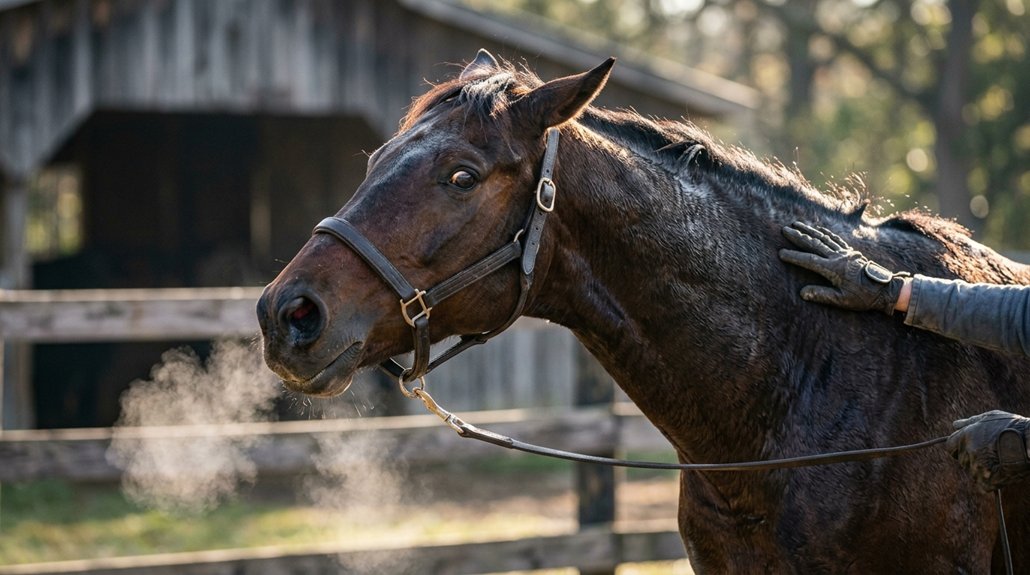
To handle a nervous or spooky horse, understand their triggers by observing sudden movements, noises, and new objects. Create a calm training environment, stay composed, and use positive reinforcement to reassure them. Gradually expose the horse to intimidating stimuli and practice in distraction-free settings to build confidence. Boost your own confidence through deep breathing and visualization techniques. By patiently empathizing and adapting, you’ll foster a stronger bond, guiding you towards deeper insight and trust.
Key Takeaways
- Identify and understand triggers causing the horse to spook, such as sudden movements or unfamiliar objects.
- Create a tranquil environment and maintain a calm demeanor to foster trust and reduce anxiety.
- Gradually desensitize the horse to frightening stimuli by controlled exposure and consistent groundwork exercises.
- Use positive reinforcement, including treats and verbal praise, to encourage calm behavior and strengthen positive associations.
- Build rider confidence through mindset shifts, breathing exercises, and celebrating small victories to reduce mutual anxiety.
Recognizing Triggers of Spooking
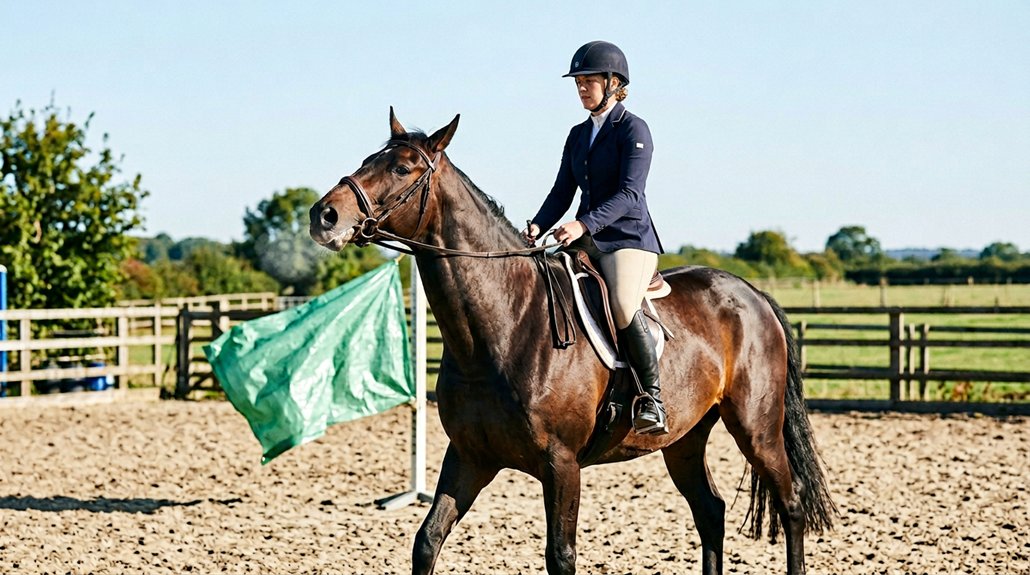
Understanding what triggers a horse to spook is essential for ensuring their well-being and safety. You’re performing trigger identification when you observe sudden movements, unexpected noises, and unfamiliar objects altering their behavior. Each horse may react differently, especially those with past traumas, which magnify their sensitivity to stimuli. When conducting an environmental assessment, note how changes in lighting or nearby nervous horses affect your horse’s anxiety levels. A careful assessment means keeping an eye on their reactions and noting patterns. By consistently exposing your horse to various environments and employing groundwork exercises, you can gradually desensitize them to potential triggers. Over time, familiarization with these stimuli builds their confidence, encouraging them to react calmly and reducing the risk of spooking.
Create a Relaxing Training Environment
Establishing a tranquil training environment is foundational to helping a nervous horse gain confidence. You set the tone with your calm demeanor, which fosters trust, minimizes anxiety, and guides your horse toward a more relaxing atmosphere. Practicing regularly in a well-managed, distraction-free area is essential. Consistency in routine instills security, making your horse feel at ease and boosting confidence over time.
Observe how your horse reacts to different surroundings and adjust the setting to eliminate potential stressors. Introduce new stimuli gradually, allowing your horse to acclimate at their own pace. Alongside, incorporate positive reinforcement, like verbal praise or treats, to encourage relaxation. A carefully crafted environment supports a horse’s mental and emotional comfort, laying the groundwork for a more rewarding training experience.
Desensitize Spooky Horses Gradually
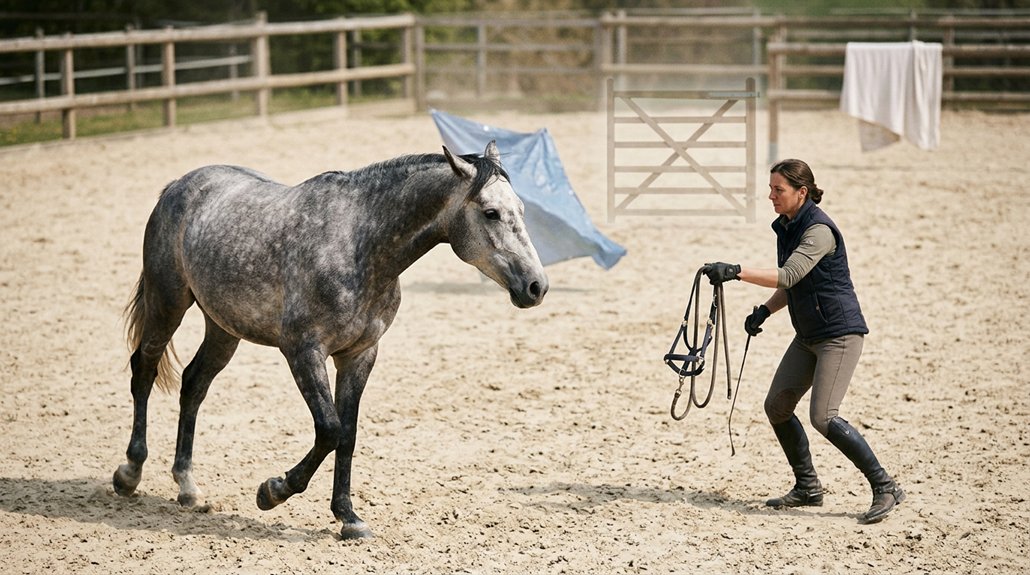
When it comes to desensitizing a spooky horse, gradually exposing them to scary stimuli is key to fostering confidence. Begin by letting your horse observe potentially frightening objects or environments from a safety distance. This initial separation helps them feel secure. Over time, decrease this distance, allowing for gradual exposure. Use controlled environments where your horse feels calm, promoting positive experiences. Groundwork exercises are essential, letting them explore at their own pace without becoming overwhelmed. Consistent, calm body language reinforces a sense of safety and trust. As you lower the safety barrier, observe your horse’s reactions closely. Each small step they take toward confronting their fears is progress—encouragement and patience lead the way to success.
Encourage Desired Behavior With Positive Reinforcement
While tackling a horse’s nervousness, positive reinforcement plays a pivotal role in shaping more desirable behaviors. Giving timely rewards, like treats or praise, can build positive associations and guide your horse toward calmness when encountering spooky stimuli. It’s about mastering reward timing: offering rewards promptly after your horse exhibits calm behavior solidifies the learning process and encourages repeats.
Observationally, consistent behavior shaping builds trust and confidence. By focusing on eliminating unwanted responses, you foster relaxed habits through desensitization techniques. An empathetic approach guarantees you reward only desired actions, avoiding reinforcement of spooking. Consider the following to enhance training:
| Technique | Benefit | Outcome |
|---|---|---|
| Treats | Strong motivation | Positive associations |
| Verbal Praise | Trust-building | Confidence enhancement |
| Gentle Gestures | Comfort | Relaxation in horses |
Boost Rider Confidence to Handle Spooking
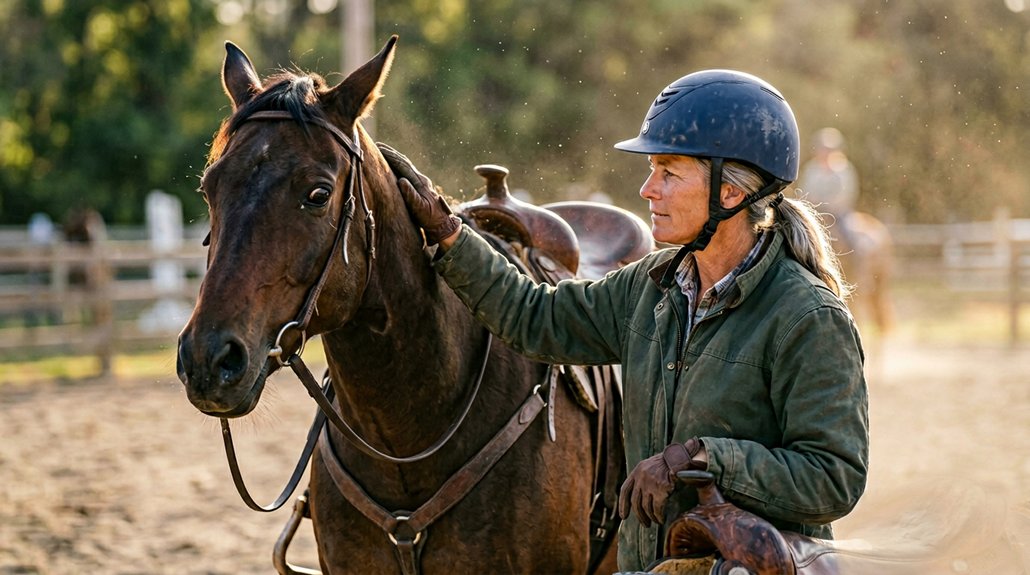
Despite the best intentions, it’s important to acknowledge how a rider’s nerves can transfer to their horse, amplifying anxiety during spooking situations. Adopting mindset shifts is essential; staying calm and composed can alleviate your horse’s stress. Practice supportive techniques like deep breathing and visualization to manage tension. Preparing for potential spooking involves maintaining situational awareness and planning routes to avoid anxiety triggers. Engage in consistent training, introducing new stimuli gradually to increase both your and your horse’s confidence in diverse settings. Celebrate small victories—it’s these incremental successes that strengthen your bond and build trust over time. By fostering a relaxed environment and embracing these strategies, you can effectively handle spooking and enhance your overall riding experience.
Frequently Asked Questions
How to Calm Down a Spooky Horse?
You’ve got to apply safety techniques by remaining calm and deliberate. Address environmental factors by slowly introducing new stimuli, monitoring your horse’s body language, and providing positive reinforcement to nurture confidence, empathy, and composure in your horse.
What Is the Best Calmer for Spooky Horses?
Studies show that 65% of horse owners notice improvement with herbal supplements like valerian root and chamomile. Balance these with training techniques to address the root causes of spookiness, considering your horse’s unique sensitivity and nutritional needs.
How to Calm Down a Nervous Horse?
You can calm a nervous horse by incorporating groundwork exercises to build trust and using desensitization techniques gradually. Observing their reactions helps you adjust methods empathetically, ensuring a supportive environment that encourages a positive, relaxed response.
How to Make a Spooky Horse More Confident?
Studies show 80% of horses respond positively to desensitization techniques over time. You’ll build your horse’s confidence by employing these methods alongside positive reinforcement. Reward small triumphs, observe progress patiently, and watch your horse become braver each day.
Conclusion
In understanding how to handle a nervous or spooky horse, patience truly is a virtue. By recognizing triggers and creating a calm training environment, you can gradually desensitize even the most anxious horse. Positive reinforcement encourages the behavior you want to see, while boosting your own confidence guarantees you’re prepared when spooking occurs. Remember, the bond between you and your horse is a partnership—approach with empathy, and you’ll both find your strides together.