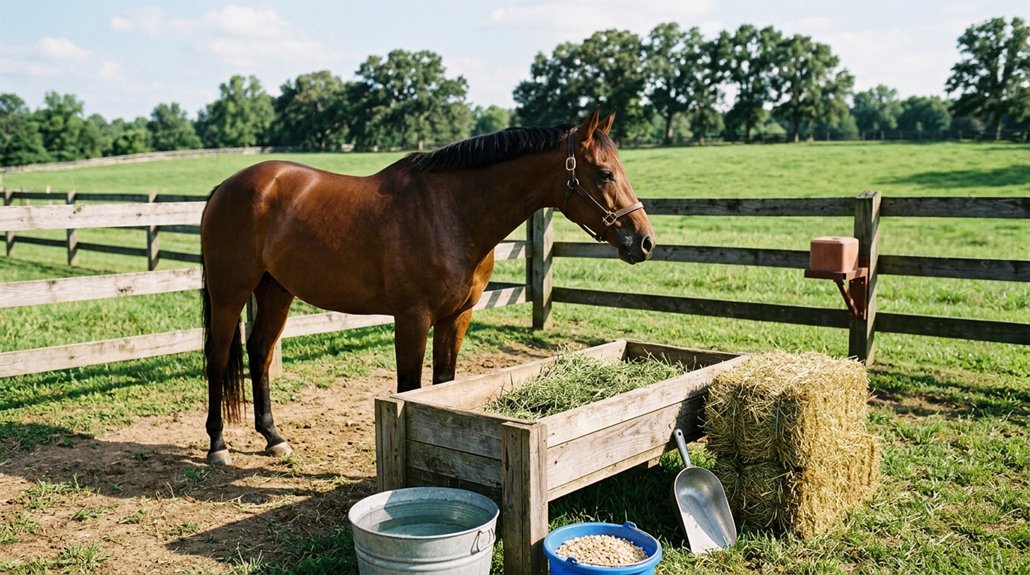
To guarantee your horse’s proper health, prioritize a diet rich in high-quality forage, providing 1.5-2% of their body weight daily, along with unlimited fresh water. Limit grains and concentrates to supplement energy needs, not surpassing 0.5% of body weight, to avoid digestive issues. Monitor health using the Henneke scoring system and adjust the diet as needed. Understanding the balance between forage, grains, and thorough monitoring is critical for maintaining ideal equine health and uncovering more insights.
Key Takeaways
- Provide horses with 1.5-2% of their body weight in high-quality forage daily for optimal health.
- Ensure fresh, clean water is accessible at all times, with horses requiring 10-15 gallons daily.
- Limit grains to no more than 0.5% of body weight to prevent colic and laminitis.
- Regularly assess horse condition using the Henneke scoring system for informed dietary adjustments.
- Balance carbohydrates, proteins, vitamins, and minerals to prevent nutritional deficiencies.
Feeding Basics for Beginner Horse Owners
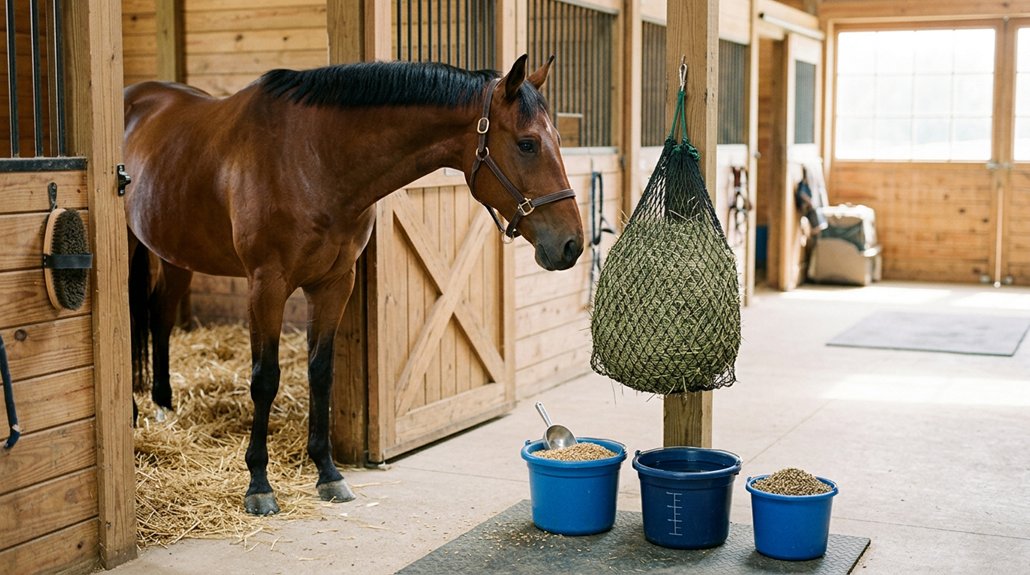
Feeding a horse for ideal health begins with understanding their dietary needs, which require consuming 1.5-2% of their body weight in forage daily. Select high-quality hay or pasture as primary forage types and adhere to a consistent feeding schedule. Feed your horse small meals 2-3 times a day to prevent digestive issues like colic. Water requirements are equally essential; make certain fresh, clean water is readily available since the average horse drinks 10-15 gallons per day, potentially more in hotter conditions or after exertion. Regular weight monitoring using the Henneke scoring system helps adjust diets effectively. While crop scoop sizes vary, measuring feed portions precisely contributes to stable feeding frequency and best nutrition. Make certain grains and supplements only enhance forage-based nutrition.
What Does Your Horse Really Need to Eat?
To maintain your horse’s ideal health, you’ll need to focus on a diet dominated by high-quality forage, which should constitute 1.5-2% of their body weight daily for effective digestion and nutrient absorption. Forage provides essential vitamins A, D, and E, but to meet all their nutritional requirements, particularly under heavy workload, you might need to incorporate grains or concentrates while ensuring they don’t exceed 50% of the diet to prevent digestive issues. Regularly utilizing the Henneke scoring system and consulting with a veterinarian or an equine nutritionist will help you tailor the dietary balance of carbohydrates, proteins, vitamins, and water, ensuring deficiencies don’t compromise your horse’s health.
Essential Nutrients Overview
While understanding the fundamental needs of your horse may seem challenging, breaking it down into essential nutrients provides clarity. Your horse’s diet should focus on key elements:
- Carbohydrates and Proteins: Carbohydrates are their primary energy source, while 8%-10% crude protein keeps their muscles healthy.
- Mineral Requirements: Guarantee a balanced intake of calcium, phosphorus, and sodium in their diet through quality forage or supplements to avoid deficiencies.
- Vitamin Sources: For vitamins A, D, and E, rely on ample forage supply. However, consider supplements for horses with limited turnout.
Water remains indispensable—providing access to 10-15 gallons daily is crucial, increasing with heat or activity. Prioritizing these fundamental nutrients fosters optimal health and performance for your horse.
Forage and Grain Balance
After understanding the fundamental nutrients essential for your horse’s health, it’s important to explore how to balance forage and grain in their diet effectively. Horses thrive on forage types such as grass and legume hays, with a focus on consuming 1.5-2% of their body weight in dry forage daily. For a 1,000-pound horse, this translates to about 15-20 pounds of hay or pasture. Alfalfa hay, rich in protein and calcium, suits growing or lactating horses, while timothy hay provides balanced fiber. Regarding grain limitations, concentrates should not exceed 0.5% of body weight, catering mainly to high-performance or young horses. Overfeeding grains can disrupt digestion, risking colic or laminitis. Regular weight assessments guarantee diet adjustments align with your horse’s specific needs.
The Importance of Forage in Your Horse’s Diet
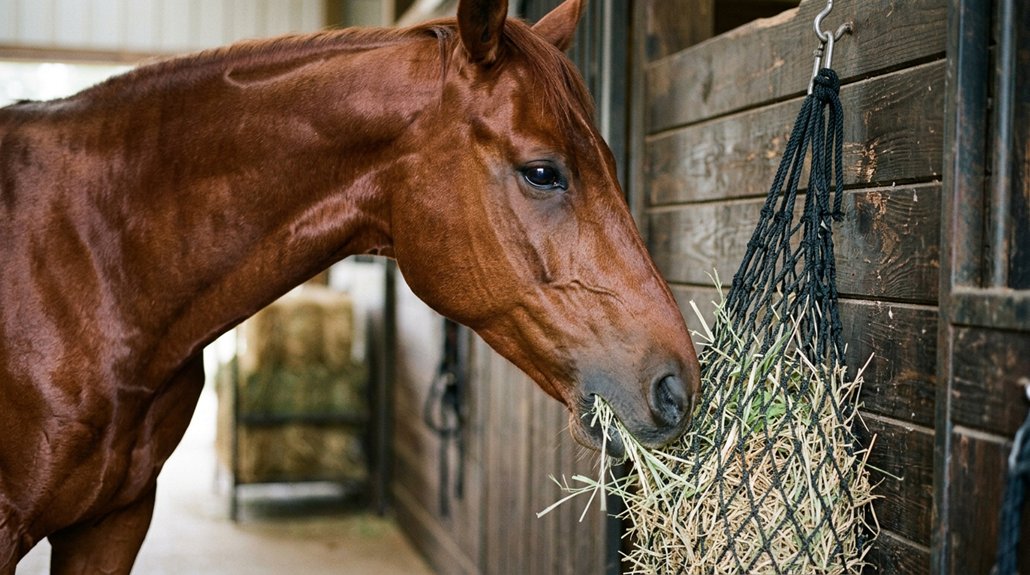
In maintaining a horse’s ideal health, high-quality forage, consisting primarily of green pasture and premium hay, is indispensable. You’re ensuring proper digestion and nutrient absorption when 80-90% of your horse’s diet consists of grass and hay, with approximately 15-20 pounds needed daily for a 1,000-pound horse. Implementing nutrient-rich grazing management practices, including proper pasture management and rotational grazing, can help prevent overgrazing, protect against toxic plants, and maintain the pasture’s nutritional quality.
Benefits of Green Pasture
Green pasture is an essential component of a horse’s diet, offering important nutrients such as fiber, vitamins, and minerals crucial for maintaining health. The pasture benefits include balancing nutrient intake, promoting a natural feeding pattern, and reducing the reliance on concentrated feeds. For proper nutrient balance, it’s vital that horses graze 12-18 hours daily, consuming roughly 1.5-2% of their body weight in forage.
To guarantee optimal intake from green pasture, consider:
- Nutrient Density: Pastures rich in vitamins A and E bolster immune function.
- Rotational Grazing: This manages pasture growth, prevents overgrazing, and sustains nutrient-rich grass availability.
- Natural Carbohydrates: Quality pasture supplies sufficient carbohydrates, minimizing the need for additional grains.
Implementing these practices supports overall horse wellness and dietary adequacy.
Role of Quality Hay
While quality hay is often overshadowed by the allure of lush green pastures, it remains a cornerstone for maintaining a horse’s dietary health. It guarantees your horse receives essential nutrients and fiber, indispensable for digestion and gut health. Horses should consume 1.5-2% of their body weight in forage daily—about 15-20 pounds for a 1,000-pound horse. Hay quality is significant; opt for dust-free, mold-free, and weed-free hay harvested at an early leafy stage for maximum nutrients. Timing these nutrients matters, especially for growing or lactating horses; legume hay like alfalfa, rich in protein and calcium, is recommended. Remember, spatial rotation and soil management won’t be covered at this moment, as they pertain to grazing management strategies.
Nutrient-Rich Grazing Management
The symbiosis between hay and pasture forms the backbone of a horse’s diet, maximizing nutritional intake and promoting ideal health. Implement effective grazing strategies to guarantee your horse consumes essential nutrients. Horses need approximately 1.5-2% of their body weight in forage daily. Prioritize pasture health by applying rotational grazing, preventing overgrazing, which can deplete key nutrients. Here’s how to optimize forage:
- Grazing Rotation: Move horses periodically to maintain grass health and nutritional quality.
- Forage Quality: Focus on young, leafy grasses over mature ones for superior nutrition.
- Soil Management: Conduct soil tests to identify nutrient deficiencies; eliminate toxic plants to safeguard grazing.
Integrate fresh hay when pasture is scarce, guaranteeing consistent fiber intake year-round.
Choosing the Right Forage Types for Your Horse
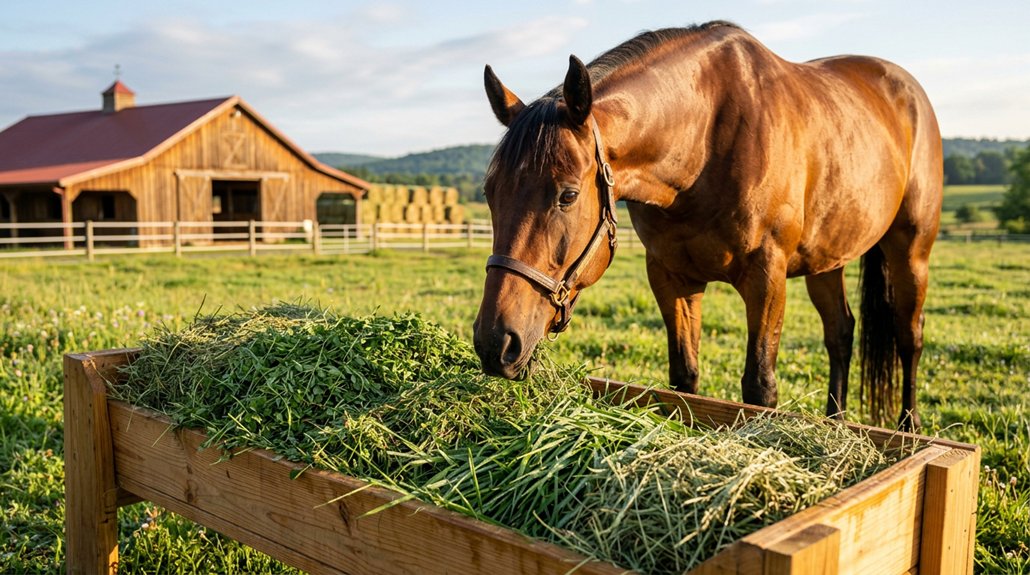
Selecting the appropriate forage types for your horse is essential for maintaining its overall health and well-being. Start with high-quality grass or legume hay tailored to your horse’s specific needs. Alfalfa, known for its high protein and calcium content, is ideal for growing or performance horses, while other hays provide different benefits depending on their forage variety. Aim to feed 1.5-2% of your horse’s body weight in daily forage; for instance, a 1,000-pound horse would need 15-20 pounds. Prioritize hay quality by choosing hay harvested at an early leafy stage, ensuring peak nutritional benefits. Maintain pasture quality by allowing 1-2 acres per horse, preventing overgrazing. Regular soil and hay testing can pinpoint deficiencies, enhancing dietary balance.
When to Balance Forage With Grains and Concentrates
Incorporating grains and concentrates into your horse’s diet can be essential when their energy demands surpass what forage alone can provide. Horses engaged in heavy exercise or lactating have increased energy requirements, necessitating a balanced intake. To safely integrate grains without compromising digestive health, consider:
Integrate grains and concentrates to meet your horse’s heightened energy needs when forage isn’t enough.
- Monitor Body Weight: Horses may require up to 1.5-2% of body weight in total feed daily; forage remains primary, but grains shouldn’t exceed 0.5% to prevent colic.
- Gradual Introduction: Introduce grains over 5-7 days to adapt their digestive tract, guaranteeing smooth shift from an all-forage diet.
- Use the Henneke Scoring System: Regularly assess your horse’s condition; adjust concentrates based on dietary assessment and energy needs.
These practices guarantee your horse’s health is ideal when energy demands rise.
Best Practices for Feeding, Grazing, and Pasture Management
Balancing energy demands with grains and concentrates sets the stage to enhance overall feeding and grazing strategies. Effective grazing techniques are essential for maintaining your horse’s health and your pasture’s liveliness. Horses need 1.5-2% of their body weight in forage daily; for a 1,000-pound horse, that’s about 20 pounds of hay or pasture. Implementing pasture rotation prevents overgrazing and sustains the forage supply, reducing the risk of nutritional deficiencies. Regular soil testing guarantees pastures remain nutrient-rich while identifying any required adjustments. Remove toxic plants and weeds to create a safe grazing area. Providing high-quality hay indoors during winter or when pasture is inadequate secures continuous roughage intake. Monitoring weight and condition will fine-tune these practices for peak health.
How to Monitor and Adjust Your Horse’s Diet Effectively
When managing your horse’s diet efficiently, consistent monitoring and precise adjustments are essential for maintaining ideal health. Start with regular diet evaluation using the Henneke scoring system to perform a condition assessment linked to activity levels. Aim for optimal forage of 1.5-2% of your horse’s body weight daily. For instance, a 1,000-pound horse requires 15-20 pounds of forage.
Monitor and adjust by:
- Observing behavior and appetite changes—this could indicate health issues needing dietary tweaks.
- Implementing gradual dietary changes over 5-7 days to prevent digestive upset, especially when introducing new feeds or supplements.
- Keeping a detailed feeding record with notes on intake, weight changes, and responses to diet modification guarantees informed adjustments in the future.
Frequently Asked Questions
What Is the Healthiest Food for a Horse?
You should prioritize a diet rich in high-quality forage types to meet your horse’s nutrient requirements. Grass hay and alfalfa are particularly beneficial, providing essential nutrients and fiber. Balance with limited concentrates to prevent digestive issues.
What Is the 1/2/3 Rule for Horses?
The 1/2/3 rule guarantees dietary balance by guiding feed types: feed at least 1% body weight in forage, a maximum of 0.5% in grain, and no more than 3% total to maintain proper nutritional intake.
Are Horses Good for Diabetics?
Horses are fantastic partners for diabetes management. Their care involves equine nutrition that supports stable glucose levels for you and them. It’s a rewarding, therapeutic, and physical interaction promoting health in human and horse alike.
What Is the Number One Cause of Death in Horses?
Colic tops the list of fatal threats to horses, causing about 60% of deaths. You can’t overlook prevention, which involves excellent horse nutrition, consistent access to forage, gradual dietary changes, and vigilant body condition monitoring.
Conclusion
As you navigate the complexities of equine nutrition, remember that “an ounce of prevention is worth a pound of cure.” Prioritizing high-quality forage is essential, as it forms the cornerstone of your horse’s diet. Balance this with grains and concentrates when necessary, ensuring you’re meeting your horse’s specific nutritional needs. Regularly monitor and adjust their diet based on health and activity levels. Your informed decisions will promote longevity and vigor in your horse, ensuring their overall well-being.