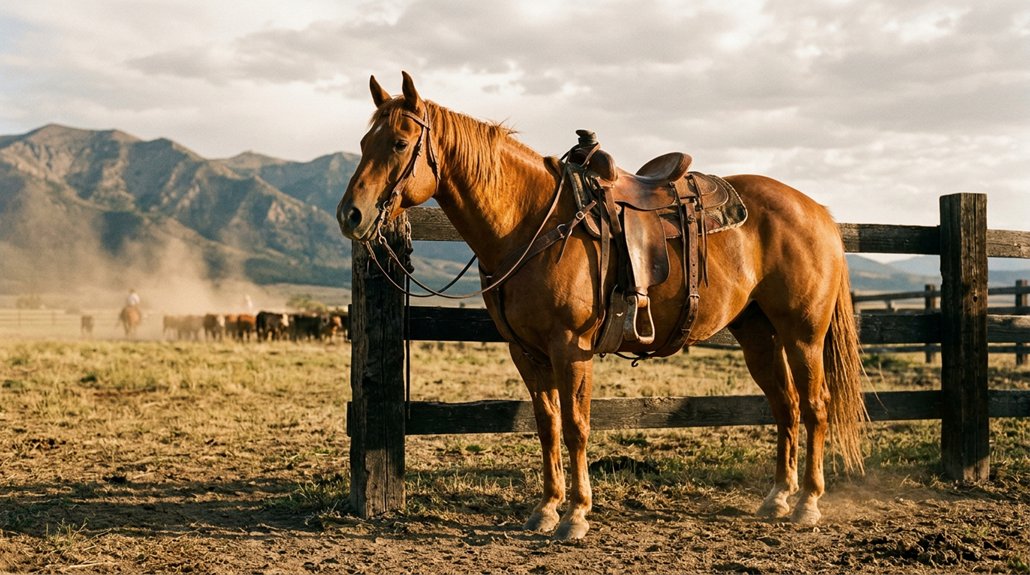
When it comes to ranching and outdoor work, you’ll want a horse breed known for versatility, calmness, and stamina. American Quarter Horses dominate the scene, showcasing incredible adaptability and a reliable temperament. Paint Horses and Appaloosas are excellent choices too, known for their endurance and agility. Mustangs offer resilience, thriving in tough environments, while Draft Horse Crosses provide strength for heavier tasks. Each breed brings unique attributes to the table, enhancing your ranching efficiency and experience further.
Key Takeaways
- American Quarter Horses dominate ranch environments due to their calm demeanor and exceptional versatility in tasks like cattle driving and roping.
- Paint Horses are versatile, trained for both ranch work and competitive activities, with distinctive coat patterns.
- Appaloosas are valued for stamina and sure-footedness, making them ideal for long ranch drives and rugged terrains.
- Mustangs boast natural resilience and excel in challenging environments with proper training.
- Draft Horse Crosses offer the strength and size needed for arduous tasks and heavy workloads on the ranch.
Leading Ranch Horse Breeds
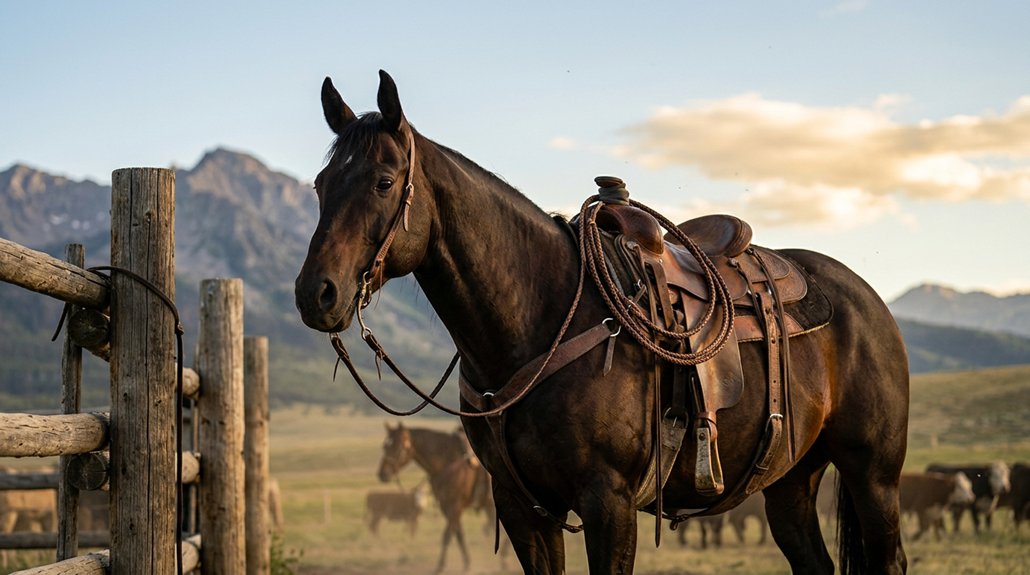
When considering the leading ranch horse breeds, it’s important to recognize the diverse qualities these equines bring to ranch work. The American Quarter Horse stands out, making up 60-70% of ranch horses thanks to its calm disposition, cow sense, and versatility. Those ranch horse characteristics make it a prime candidate for any serious ranch job. Meanwhile, Paint Horses, known for their striking coat patterns, share similar skills with Quarter Horses, representing 15-20% of ranch horses. Appaloosas aren’t just pretty; their unique spotted coats come with remarkable endurance, making them some of the best ranch horses out there. Mustangs, acclaimed for endurance and hardiness, excel in challenging environments. Draft Horse crosses offer strength and size, ideal for heavier work requirements.
Characteristic Insights for Ranch Horses
Understanding the characteristic insights of ranch horses involves recognizing the distinct attributes that make each breed excel in specific tasks. The American Quarter Horse, dominating with its 42.1% presence, owes its prowess to impeccable breeding practices, emphasizing agility and calm demeanor. With training techniques focusing on cattle driving and roping, this breed shines in complex ranch roles. Paint Horses, notable for their coat patterns and 6.8% popularity, display versatility, trained for both work and competition. You’ll find Appaloosas prized for endurance and sure-footedness on long ranch drives, showcasing breeding meant for stamina. Mustangs, naturally resilient, adapt well through robust training techniques, maneuvering tough terrains effortlessly. Draft Horses blend strength and calm, tailored through breeding for heavy workloads.
Why Temperament Is Crucial for Ranch Horses
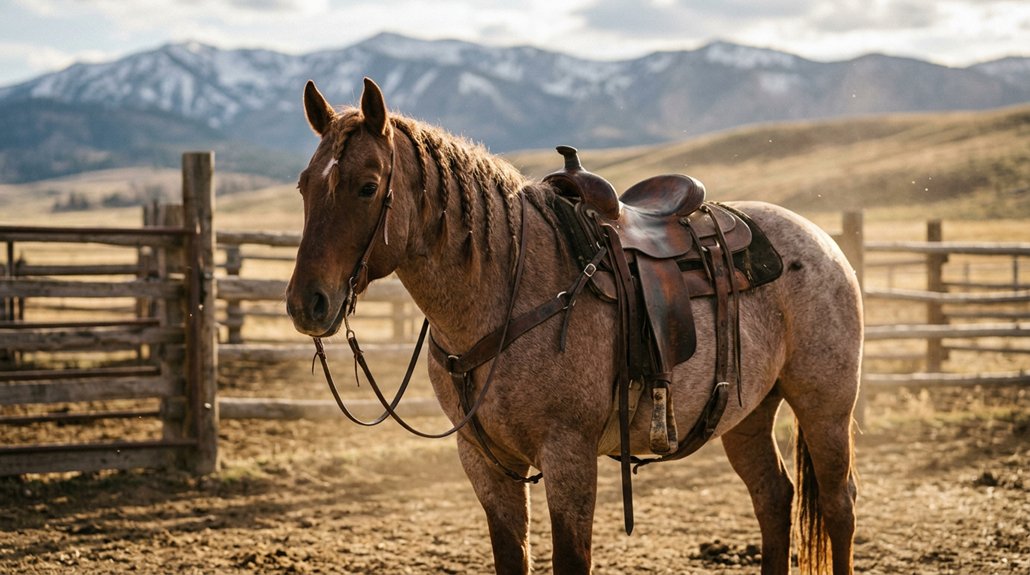
While selecting the right horse for your ranch, you’ll quickly discover that temperament is a critical consideration. A horse with a calm demeanor is invaluable when faced with the unpredictability of beginner riders and the dynamic ranch environment. Horses with a patient nature are essential; they not only teach inexperienced riders but also boost their confidence and skill level. A gentle, intelligent horse thrives in ranch tasks, adeptly handling diverse daily interactions, from working cattle to accommodating various riders. Ranches often prioritize horses with proven calm dispositions, enhancing both rider safety and the overall guest experience. These temperament traits guarantee your horse is not only manageable but also a reliable partner in all ranch endeavors, optimizing their effectiveness and utility.
Essential Traits for Evaluating Ranch Horse Performance
In evaluating ranch horse performance, focus on core traits essential for their demanding role. Start with soundness and durability as top evaluation criteria. Horses, working 2-4 hours daily, require strong legs and robust hooves for long-term demand. Pay attention to surefootedness—vital for safely traversing rocky trails, a performance metric ensuring rider security.
Temperament shouldn’t be overlooked; a calm disposition with a forgiving nature makes a horse adaptable, especially for riders with varying skills. Consider low maintenance requirements—breed hardiness often translates to fewer vet visits. Furthermore, assess workload capacity, gauging agility, intelligence, and work ethic. These performance metrics indicate how well a horse adapts to diverse ranch tasks, ensuring they’re well-suited for rigorous environments.
Why Versatility Is the Key for Ranch Horses
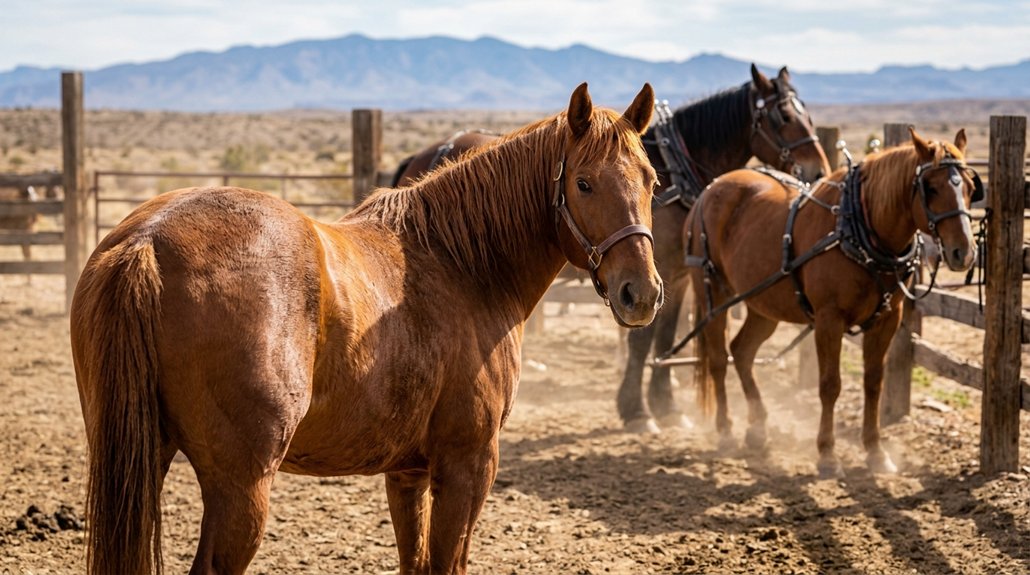
A versatile ranch horse serves as the backbone of efficient ranch operations, allowing one horse to perform an array of tasks ranging from cattle work to trail riding without needing numerous specialized horses. Breeds like the American Quarter Horse and Appaloosa excel in these multi-tasking roles due to their agility and adaptability. Their inherent strength and intelligent responsiveness make them indispensable under varying working conditions. They shift smoothly between tasks such as roping and herding, essential for a busy rancher aiming for efficiency.
The horse’s high adaptability and strong work ethic enable seamless task shifts, critical for tackling the varied challenges of a ranch. Remaining calm under pressure and demonstrating keen livestock handling skills are must-have qualities, making these horses reliable partners in daily operations.
Frequently Asked Questions
What Is the Best Breed of Horse for Ranch Work?
You’d find that many ranchers prefer the American Quarter Horse for its versatility, but considering gaited horses like the Missouri Fox Trotter could offer smoother rides and impressive endurance capabilities, enhancing efficiency during long ranching hours.
What Is the 20% Rule With Horses?
Heed the 20% Rule: guarantee efficient horse training and nourish needs. Keep carrying weight within 20% of your horse’s heft for sustained stamina. Balancing burden and brawn boosts their well-being, prolonging performance through careful consideration of nutrition.
What Horses Are Good for Cowboys?
You’d find American Quarter Horses ideal for cowboys, given their agility in practical tasks and cowboy skills. With proper horse training, breeds like Paints or Appaloosas also excel due to their versatile nature and strong build.
What Is the Lowest Maintenance Horse?
When it comes to low maintenance breeds, it’s like finding a diamond in the rough. Mustangs, with their wild roots, embody easy care horses. Their resilience, forged by nature, guarantees they thrive with minimal intervention.
Conclusion
When it comes to selecting the best horse breeds for ranching, remember: “You can’t judge a book by its cover.” It’s the temperament, versatility, and performance of the horse that truly matter. Look for breeds known for their stamina, agility, and intelligent responses to the demands of outdoor work. With the right horse, you’ll gain a reliable partner that will handle diverse tasks with ease. Prioritize these traits, and your ranch will thrive with capable, adaptive equine help.