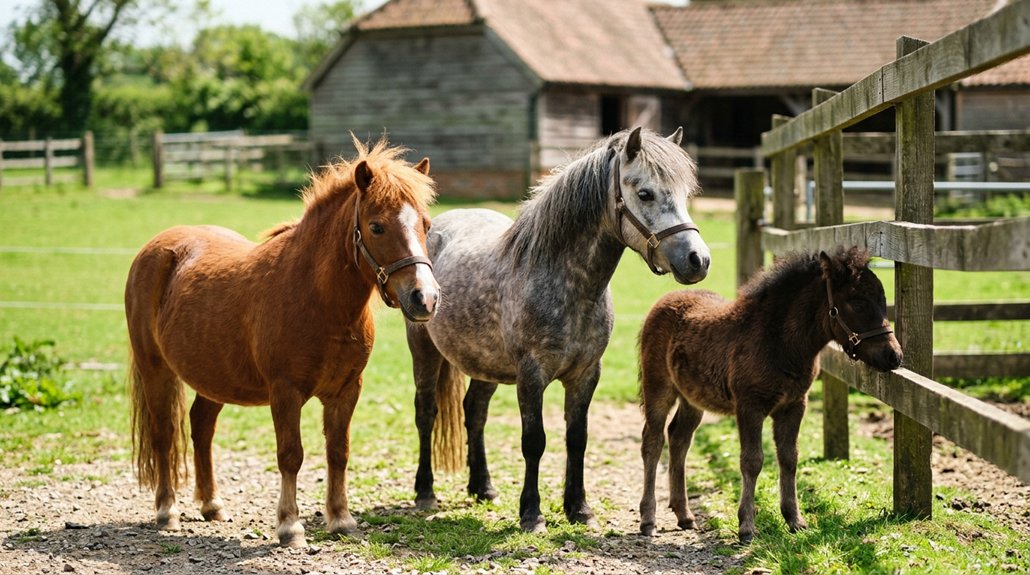
Choosing small horse breeds like Shetland and Welsh Ponies offers beginners a supportive environment. These breeds, with their gentle temperaments and manageable size, are particularly suited for young riders. Their calmer nature decreases intimidation and reduces fall injury risks. Additionally, evaluating individual behavior guarantees horse-rider compatibility, essential for novice learning experiences. Proper care—regular hoof maintenance and dietary management—enhances well-being. Expanding your knowledge will reveal more about selecting and caring for your ideal beginner horse.
Key Takeaways
- Small horse breeds like Shetland and Welsh Ponies are ideal for beginners due to their manageable size and gentle temperament.
- The American Quarter Horse and Appaloosa are beginner-friendly breeds known for their calm and predictable behavior.
- Beginner-friendly small breeds reduce injury risk from falls and provide a less intimidating experience for new riders.
- Assessing individual horse behavior ensures compatibility with beginner riders, promoting a positive learning experience.
- Regular care, including hoof maintenance and balanced diet, is crucial for the health of all horse breeds.
What Makes Small Horses Safe and Comfortable for Beginners
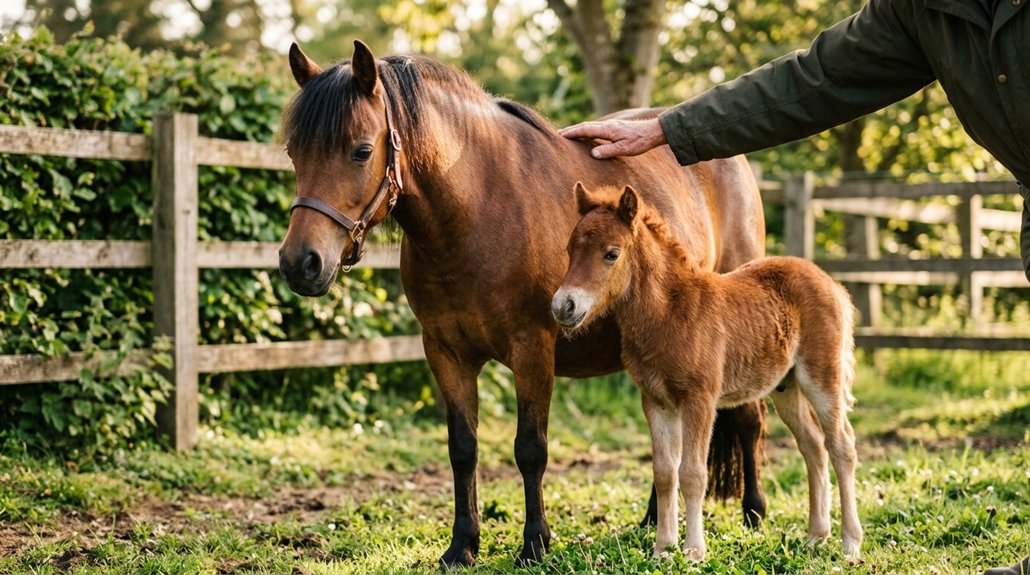
When considering the ideal match for novice equestrians, small horse breeds offer distinct advantages that foster safe and comfortable riding experiences. These breeds, often under 14.2 hands high, present several key safety features, such as reduced intimidation due to their stature, which greatly mitigates injury risk from falls. Their manageable size allows young riders to control them effortlessly, enhancing both confidence and skill acquisition. You’ll find that breeds like the Shetland and Welsh Ponies possess gentle, easy-going temperaments, forming a harmonious beginner experience. Additionally, the American Quarter Horse and Appaloosa, known for their calm demeanor, provide security through their predictable behavior. These qualities, combined with a trainable nature, guarantee small breeds facilitate a supportive environment for learning.
Essential Traits of Beginner-Friendly Horse Breeds
When choosing a horse for a beginner, you’ll want to prioritize a gentle temperament, as it notably contributes to a positive learning experience. Size is vital too, especially for younger riders, since smaller breeds like ponies provide a safer and more approachable experience due to their manageable stature. However, remember that an individual horse’s behavior can vary within breeds, so it’s important to assess each horse’s unique disposition to confirm it’s truly suitable for beginners.
Gentle Temperament Preference
Understanding the importance of temperament in horse breeds is essential when selecting a mount suitable for beginners. Opting for gentle breeds such as the American Quarter Horse, Appaloosa, or Welsh Pony guarantees a safe experience, especially for novice riders. These breeds are renowned for their calmness and adaptability, offering a confidence-building environment critical for new equestrians. Their easy-going nature and responsiveness contribute greatly to a beginner’s success and safety. However, it’s important to recognize that individual behavior may vary even within these gentle breeds. You should evaluate each horse’s disposition to ascertain compatibility with the rider’s needs.
- American Quarter Horse: Calm and well-mannered
- Appaloosa: Gentle and steady
- Welsh Pony: Patient and adaptable
- Pony of the Americas: Responsive and kind
- Shetland Pony: Manageable and supportive
Size Matters for Kids
Selecting the right horse breed for children requires careful consideration of size, temperament, and safety features. Small breeds, under 14.2 hands, like ponies, cobs, and miniature horses, offer an ideal match for young riders. Their manageable stature makes them less intimidating, enhancing confidence and comfort. By focusing on training techniques tailored to these breeds, you guarantee that the horse is responsive and gentle, which is vital for a child’s learning and development. Choosing the right riding gear for smaller breeds is equally important, as it needs to fit properly to promote safety and effective control. Additionally, smaller horses inherently lower the risk of injury during falls, thanks to their reduced height, making them a safer option for beginners.
Importance of Individual Behavior
While choosing a beginner-friendly horse, it’s vital to assess individual behavior, as temperament plays a substantial role in shaping a novice rider’s experience. Conducting a thorough behavior assessment is important since even gentle breeds can exhibit diverse temperaments. Traits like calmness and resilience contribute greatly to a positive learning environment, encouraging safety and confidence. Research indicates consistent training from a young age fosters favorable temperament traits, enhancing a horse’s responsiveness and engagement with beginners. Smaller breeds, due to their approachable stature, are often more trainable and less intimidating.
Key factors in behavior assessment and temperament evaluation:
- Calmness in stressful situations
- Ability to learn and adapt
- Emotional stability
- Consistent responsiveness to commands
- Positive interaction with handlers
Prioritizing temperament guarantees a rewarding experience.
Small Horse Breeds: Top Picks for Young Riders
When considering small horse breeds for young riders, it’s essential to focus on breeds that offer both safety and adaptability. The versatility of Welsh Ponies and Cobs allows them to participate in a range of equestrian activities, while training techniques enhance riders’ skills as they mature. Shetland Ponies, known for their compact stature, serve as gentle introductions to horse riding. Meanwhile, the Miniature Horse provides an engaging way to develop fundamental riding skills, although best suited for lighter riders. Pony of the Americas, notable for its athleticism, supports young riders in developing advanced skills.
| Breed | Height Range (hands) |
|---|---|
| Shetland Pony | Under 10 |
| Welsh Pony | 11 to 16 |
| Miniature Horse | Under 14 |
These breeds guarantee safe, progressive learning in equestrian activities.
How Do You Choose the Right Horse Breed for Your Child?
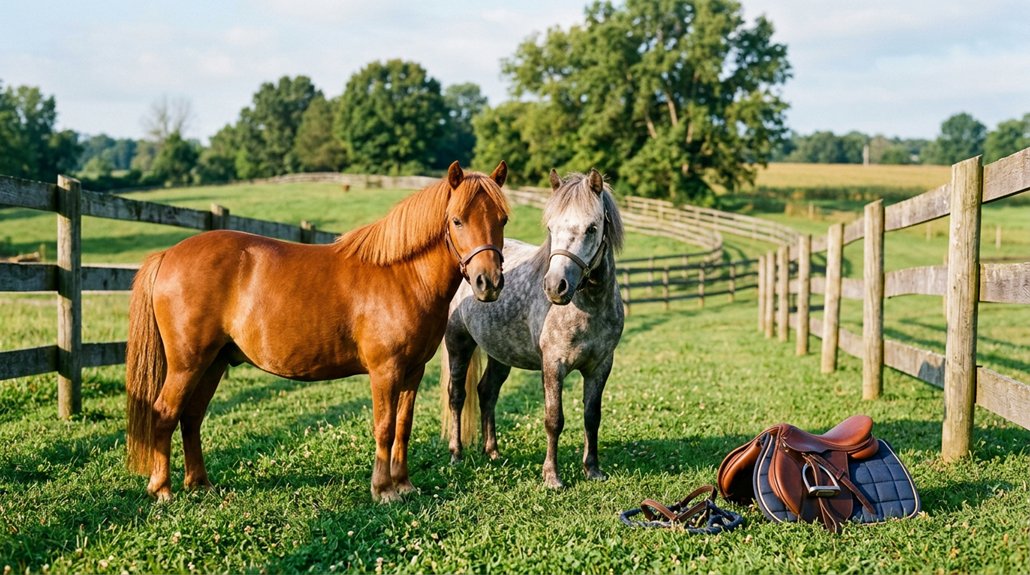
Choosing the right horse breed for your child involves a strategic understanding of several key aspects, thereby ensuring the experience is safe and enjoyable. Prioritize breeds with gentle temperaments like the American Quarter Horse and Appaloosa, suitable for beginner riding styles. Opt for smaller breeds such as Shetland Ponies, less intimidating due to their height. Evaluate the horse’s individual behavior alongside breed traits; not every horse within calm breeds suits young riders. Avoid high-energy breeds like Arabians—these demand experienced handling. Choose versatile breeds like the Pony of the Americas, adept for diverse riding activities. Remember, adequate horse maintenance is essential for longevity and safety.
- Consider temperament suitable for beginners
- Choose less intimidating small breeds
- Evaluate behavior beyond breed traits
- Steer clear of high-energy types
- Select adaptable, versatile horses
Tips for Caring for Small Horses and Ponies
Caring for small horses and ponies requires specialized attention to confirm their unique needs are met effectively. Begin with hooves maintenance; due to their size, they can develop specific hoof health issues, so schedule trimming every 6-8 weeks. Dietary needs are distinct for smaller breeds; provide high-quality hay and grain, along with necessary supplements. Carefully monitor their weight to prevent obesity. They need a clean, dry shelter and plenty of space for daily exercise to maintain their health. Ensure regular veterinary check-ups, including vaccinations and dental care, to address any health concerns promptly. Finally, incorporate gentle training and socialization; this reinforces positive behavior, allowing them to thrive in various roles, from riding activities to being excellent companions.
Common Mistakes When Choosing Beginner Horse Breeds
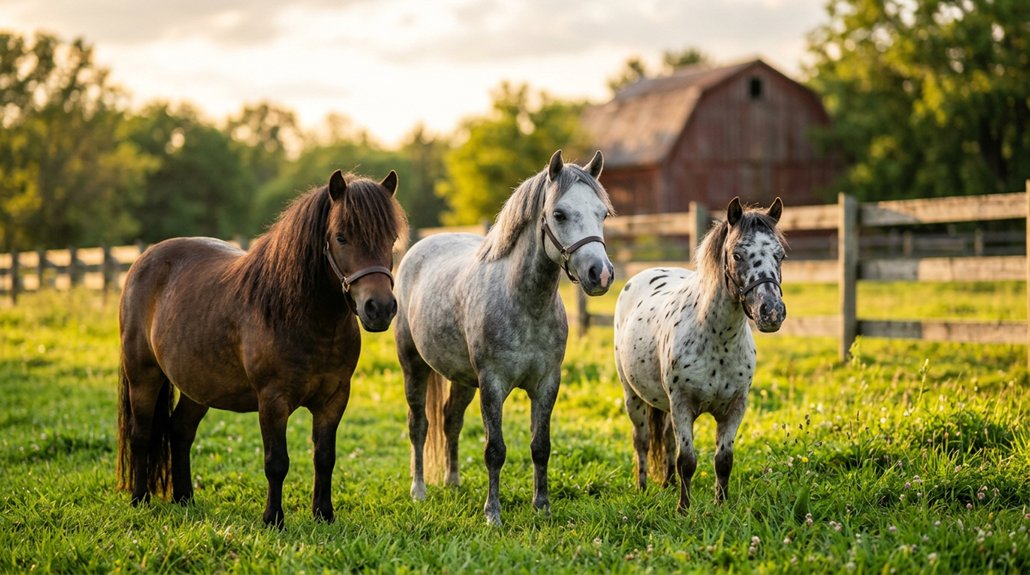
Selecting a beginner horse breed often poses challenges due to common misconceptions among new riders. Many assume high-energy breeds like Arabians or Thoroughbreds are ideal, not realizing their sensitivity can be overwhelming. Beginners often prioritize appearance over temperament, overlooking the need for a calm, gentle horse. Additionally, some forget to evaluate individual horse behavior, assuming breed reputation guarantees a suitable match. First-time buyers might also lean towards larger breeds for perceived stability, not realizing smaller horses and ponies under 14.2 hands offer more comfort and control.
New riders often choose high-energy breeds, overlooking the importance of temperament and size suitability.
Common pitfalls include:
- Misjudging the breed’s temperament versus aesthetics.
- Neglecting individual horse behavior evaluations.
- Overlooking the specific care needs of a breed.
- Opting for high-energy breeds unsuited for beginners.
- Choosing larger horses mistakenly believed to be more stable.
Frequently Asked Questions
What Is the Best Small Horse Breed for Beginners?
For beginners, you’d appreciate the American Quarter Horse. Its calm nature and adaptability make it ideal. Familiarize yourself with small horse traits and beginner riding tips for a smooth introduction to equestrian activities and safe learning experiences.
What Is the 20% Rule With Horses?
The 20% rule dictates that horses shouldn’t carry over 20% of their body weight, essential for understanding horse behavior and ensuring comfort during training basics. It prevents fatigue and promotes the horse’s balance, safety, and performance.
How Does a Horse Say “I Love You”?
A horse says “I love you” through equine behavior like nuzzling or resting its head on you. Its body reflects affection with relaxed postures, soft vocalizations, and allogrooming, demonstrating the strong emotional connection it’s forming with you.
What Pony Breeds Are Best for Beginners?
For beginners, opt for Shetland Ponies, Welsh Ponies and Cobs, Miniature Horses, and American Quarter Horses. They’re known for their friendly pony breeds, ideal riding experiences, and durability, offering suitable options as you learn equestrian skills.
Conclusion
Choosing the right small horse or pony for a beginner can seem challenging, but coincidentally, the traits that make them safe and comfortable often overlap. Favor breeds known for their gentle temperament, strength, and resilience; they’re often ideal for young riders. When considering maintenance, understand their dietary and exercise needs. Ultimately, picking the appropriate horse isn’t just about size or breed—it’s about fostering a bond that enriches both rider and horse in a symbiotic dance of confidence and trust.