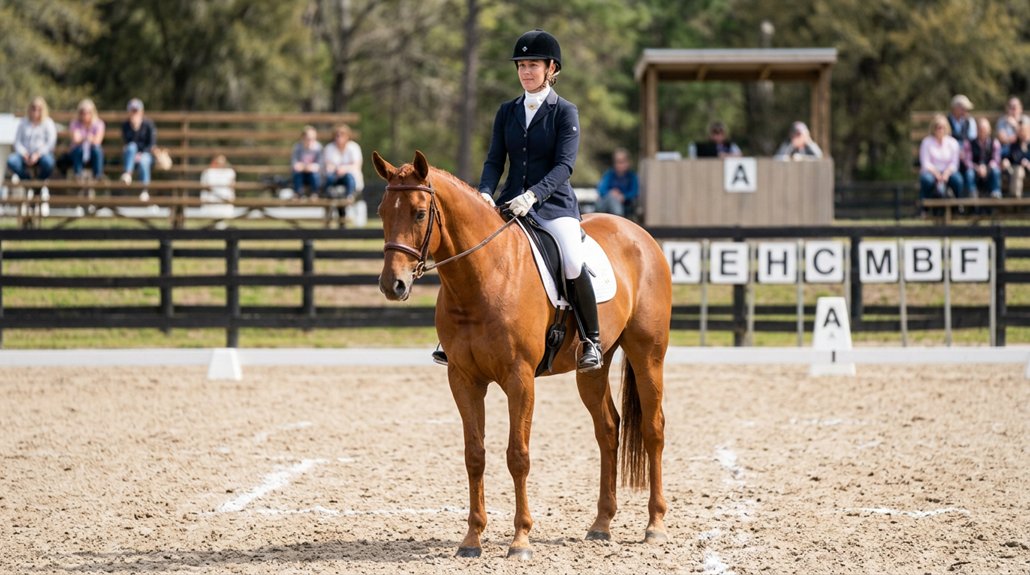
To match a horse to your experience level, start by evaluating whether you’re a beginner, advanced beginner, intermediate, or advanced rider. Choose a horse with a temperament and training that complements your skills for safety and confidence. Consider your riding goals and guarantee the horse meets these aspirations, whether for recreational riding or competition. Engage in trial rides to assess compatibility. If you explore further, you’ll discover more tips for a successful match.
Key Takeaways
- Accurately assess your riding level to determine the appropriate horse temperament that fosters confidence and safety.
- Prioritize a horse with characteristics matching your skill level, minimizing the risks of frustration or accidents.
- Evaluate the horse’s temperament, observing for calmness and willingness to learn, especially important for beginners.
- Clearly communicate your riding goals and preferences, such as trail riding or dressage, to ensure alignment with horse capabilities.
- Utilize trial rides to gauge horse behavior in varied environments and ensure compatibility with your experience level.
Evaluating Your Experience and Choosing the Right Horse
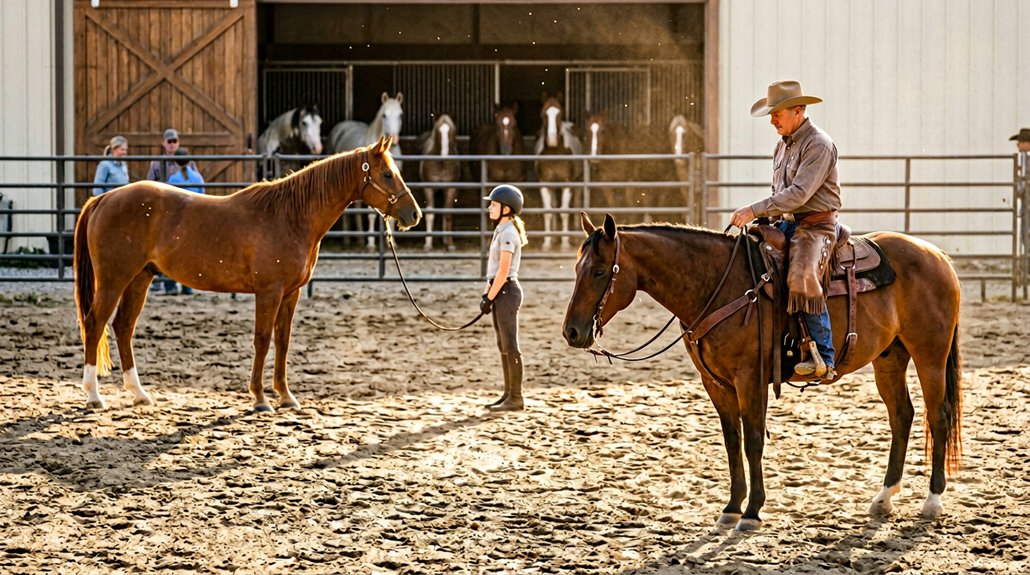
How exactly can you determine the right horse for your riding experience? Start by accurately evaluating your riding level—be honest about whether you’re a beginner, advanced beginner, intermediate, or advanced. Each level demands different horse breeds and riding techniques. As a beginner, look for a calm, well-schooled horse that helps build confidence with straightforward commands. Advanced beginners might enjoy a horse responsive to basic aids and groundwork, enhancing your riding foundation.
Intermediate riders need a horse that tests their skills without overwhelming them, ensuring progressive development. Remember to align your choice with long-term goals too, whether it’s jumping or dressage, each requiring specific breed attributes and training. Communicate your experience openly with trainers and sellers to find your perfect equine match.
The Importance of a Safe Match
When it comes to pairing horse and rider, prioritizing a safe match is essential to confirm both well-being and enjoyment. Confirming compatibility minimizes safety concerns and prevents accidents, particularly for novices who may lack the skills for more challenging horses. A mismatched partnership can lead to frustration, diminishing both rider confidence and the horse’s demeanor.
To enhance this experience, consider these components:
| Key Aspect | Importance | Benefit |
|---|---|---|
| Experience | Aligns skills with horse’s nature | Increased safety |
| Temperament | Matches horse’s and rider’s behaviors | Builds a trusting relationship |
| Regular Assessment | Prevents compatibility issues | Promotes successful partnerships |
| Skill Level | Confirms appropriate challenge | Fosters confidence |
| Enjoyment | Enhances learning environment | More fulfilling rides |
Proper selection confirms a rewarding and secure experience, supporting your long-term success in the sport.
Determine Your Riding Goals
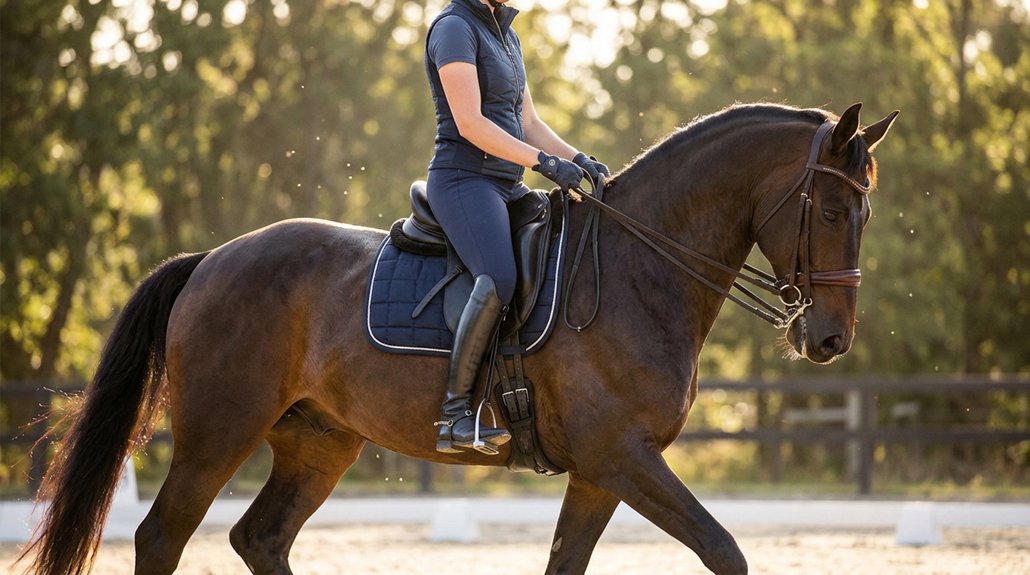
A safe match between horse and rider not only lays the groundwork for confidence but also sets the stage for achieving your riding ambitions. Start by clearly defining your short-term goals (1 year) and long-term goals (5 years) to guarantee your horse choice aligns with your future aspirations. Articulate whether you’re aiming for recreational riding, competitive disciplines, or skill advancement. Identify your desired experiences, be it showing, trail riding, or jumping, and seek horses with the requisite training and temperament. Establish a realistic timeline for reaching your riding goals so you choose a horse that can develop alongside you. Regularly assess your progress and adjust your goals as necessary, confirming your equine partner remains suitable as your skills grow.
How to Know if a Horse Is Right for You
When determining if a horse suits you, start by evaluating its temperament, as a calm and willing companion is ideal for beginners, whereas advanced riders might prefer a spirited character. Align the horse’s potential with your personal riding goals to guarantee it supports both your current skills and future ambitions. It’s essential to verify the horse’s training level complements your experience, fostering confidence and safety during your riding journey.
Assessing Horse Temperament
Choosing the right horse involves understanding its temperament, which directly impacts your riding experience. Pay attention to behavioral cues and temperament indicators as you assess a horse. Calm and gentle horses are often ideal for beginner riders, providing a stable learning environment. When observing a horse’s behavior during interactions, notice how it responds to stimuli and whether it displays any anxiety or aggression. Look for signs of a horse’s willingness to learn and enjoyment of work, which typically enhance the experience for intermediate and advanced riders. Get hands-on experience at stables to directly gauge the horse’s temperament. By doing so, you’ll be able to determine whether the horse’s character matches your comfort level, promoting a harmonious relationship as both of you evolve.
Evaluating Personal Riding Goals
Ever wonder how to guarantee you’re selecting the perfect horse for your riding journey? Start by clearly defining your short-term goals (1 year) and long-term aspirations (5 years). Whether you’re aiming for recreational riding or aspiring to compete, aligning a horse’s training and temperament with your experience is essential. Beginners should prioritize calm, well-trained horses, while advanced riders can seek more challenging mounts. Consider how often you’ll ride. It’s important to match the horse’s energy level with your schedule to prevent behavior issues. Assess your desired discipline—like trail riding or dressage—and identify traits crucial for this. Keep communication open with trainers or knowledgeable individuals who can offer insights and help tailor your choice to your precise requirements.
Match Training With Experience
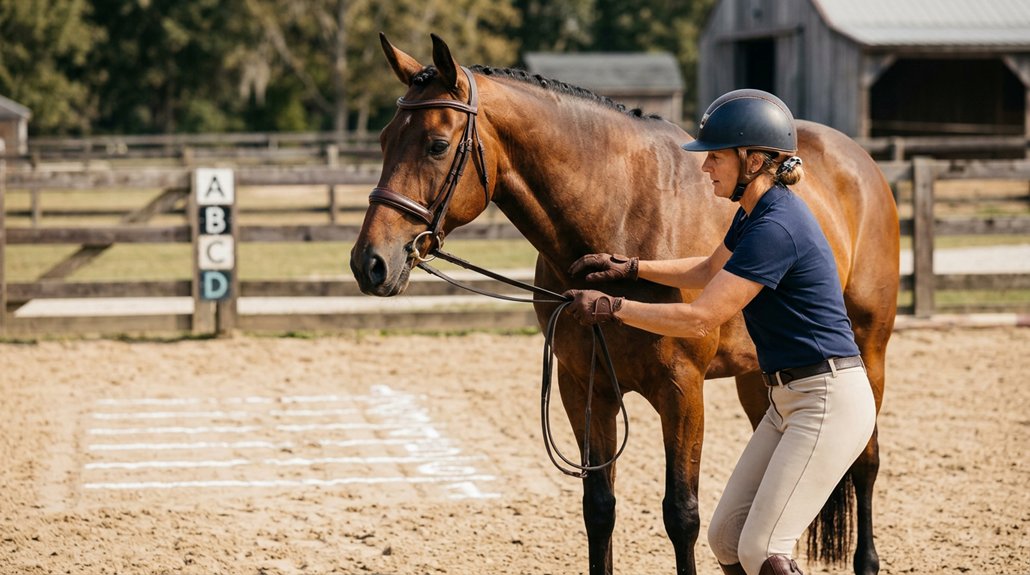
Finding the right horse can feel challenging, but matching your training with your experience level is critical for a successful partnership. Training considerations should reflect your level of skill development. As a beginner, focus on schoolmasters for a safe learning environment.
| Rider Level | Horse Type |
|---|---|
| Beginner | Well-trained schoolmaster |
| Advanced Beginner | Calm, well-schooled horse |
| Intermediate | Various temperaments; avoid overly spirited |
| Advanced Intermediate | Complex training needs |
Advanced beginners might enjoy interacting with calm, well-schooled horses while intermediate riders thrive with a variety. However, the goal should be realistic skill development. Advanced intermediates benefit from more demanding training strategies, enhancing their competency. Seasoned riders aim for horses trained in specific disciplines, allowing them to excel in advanced forms like dressage.
Energy Levels in Choosing the Right Horse
Once you’ve aligned your training expertise with your horse’s capabilities, consider how energy levels play a significant role in the perfect match. Maintaining energy balance is essential for rider compatibility, especially if your typical riding schedule is limited. A calm and willing horse is ideal for beginners, promoting skill development without overwhelming the rider. Higher-energy horses require frequent exercise and better behavior management, aligning more closely with experienced riders who can handle increased responsiveness. Without adequate exercise frequency, a high-energy horse might become spooky or pushy, complicating behavior management for novices. Balancing your riding time with your horse’s exercise needs enhances not only rider confidence but also the horse’s welfare and performance, cultivating a successful and rewarding partnership.
Avoiding Mismatched Horse Selections
Selecting the right horse involves getting down to the nitty-gritty of your riding abilities and understanding the significance of a well-matched partnership. First, rider self-assessment is essential. Overestimating your skills by even a notch can land you on a powerful steed that might challenge your safety and progress. Horses come with varied character traits, from spirited to serene; identifying yours helps in aligning energies. Instruct your mind to see it like this:
| Riding Level | Horse Character Traits |
|---|---|
| Beginner | Calm, Patient |
| Intermediate | Steady, Responsive |
| Advanced | Energetic, Challenging |
| Expert | Spirited, High Performance |
Continuously evaluate your skills and sync them with your horse’s temperament. Embrace honest assessments and relish a harmonious riding experience.
Communicating Your Preferences
A successful partnership with a horse doesn’t stop at determining your riding level and aligning it with a suitable temperament—articulate your riding preferences and goals clearly. Communicate your preferences by specifying your experience level as beginner, intermediate, or advanced. This guarantees an ideal match and proper riding group assignments. Share your experiences, including your comfort with horse temperaments, whether you’re drawn to calm and gentle or more energetic horses. Detail your riding goals, like trail riding or dressage, so potential horses match your aspirations. Reflect on past challenges and successes to highlight your skills and improvement areas. Be honest about your availability and commitment, which affects the horse’s energy and training needs, fostering a fulfilling equestrian journey.
Trial Riding and Making Your Final Choice
During your trial ride, focus on evaluating the horse’s temperament first, ensuring it aligns with your comfort level and riding style. Then, observe the compatibility between you and the horse in responding to cues and how confident you feel while riding. With these insights, you’ll be equipped to confidently finalize your decision, selecting a horse that truly matches your experience level and long-term riding goals.
Assessing Horse Temperament First
Trial riding provides a valuable opportunity to assess a horse’s temperament and decipher how it might mesh with your experience level. By observing horse behavior during the trial, you’re able to identify critical temperament indicators. To make an informed decision, consider these factors:
- Reaction to Stimuli: Note how the horse responds to traffic or other horses to gauge spookiness or calmness.
- Command Acceptance: Determine how readily the horse accepts your commands, reflecting its willingness to work.
- Interaction: Observe the horse’s interaction with you. Does it maintain a positive demeanor?
- Work Ethic: Confirm the horse shows enthusiasm and positivity during the trial.
These observations are essential in selecting a horse that matches your skill level, guaranteeing a harmonious partnership.
Observing Riding Compatibility
Once you’ve got a handle on the horse’s temperament, it’s time to focus on how you both perform under saddle. Trial riding is essential to evaluate riding dynamics and comfort assessment. Ride the horse in various situations—group, trails, lessons—to observe its behavior and responsiveness to commands. Your comfort and confidence should be the priority, ensuring they align with your experience and goals. Pay attention to how the horse responds to cues, as this indicates training level and adaptability.
Here’s a quick guide to help assess compatibility:
| Situation | Observations Needed | Compatibility Focus |
|---|---|---|
| Group Riding | Interaction with others | Social comfort |
| Trail Riding | Response to environment | Outdoor compatibility |
| Lesson Setting | Reaction to commands | Training adaptability |
| Riding Dynamics | Rider’s comfort level | Confidence boost |
| Feedback | Insights from others | Informed decisions |
Finalizing Decision Confidently
While solidifying your decision, guarantee you’re thorough in evaluating the horse through trial rides that test compatibility with your skill level. Trial rides are essential for determining how well a horse responds to your cues and fits your expectations. Enlist instructor guidance to gain professional insights and guarantee a well-rounded evaluation. Follow these steps:
- Observe behavior: Note the horse’s temperament and responsiveness to your directives during each trial.
- Diversify environments: Ride in various settings to see how the horse adapts to changes.
- Vary paces: Test different speeds to confirm the horse’s stability and your ability to manage shifts.
- Discuss with seller: Voice any concerns or queries about behavior and suitability.
This meticulous approach builds confidence in your final choice.
Frequently Asked Questions
What Is the 1/2/3 Rule for Horses?
The 1/2/3 Rule helps you pair your skill level with horse temperament and riding disciplines. If you’re a beginner, choose calm horses. Intermediate riders should handle spirited horses, while advanced riders can manage challenging mounts confidently.
What Is “I Love You” in Horse Language?
In “horse language,” “I love you” is expressed through soft body language, gentle vocalizations, and trust-building actions. Watch for relaxed ears, a calm demeanor, affectionate nickers, and mutual grooming, which all indicate a deep emotional bond.
What Are the Levels of Horse Experience?
Imagine a world of whispering hooves. You’re steering levels from timid first timers to advanced riders. Beginner horses await your intermediate skills. Temperaments change with every step, demanding authority. Know your place in the saddle.
What Is the 20% Rule With Horses?
The 20% Rule advises you to ride a horse just slightly above your current skill level, enhancing 20% rider confidence. Adhering to this guideline in horse care guarantees proper pairing, fostering growth and a safer riding experience.
Conclusion
In matching a horse to your experience level, you’ve commenced an epic quest worthy of legends. Your safety and joy depend on finding that mythical perfect partner. With your newfound wisdom, discern your riding dreams and align them with a horse’s energy and training. Remember, mismatched choices are as perilous as riding a dragon! So, communicate clearly, engage in trial rides, and make your decision with unwavering confidence—your equestrian destiny awaits.